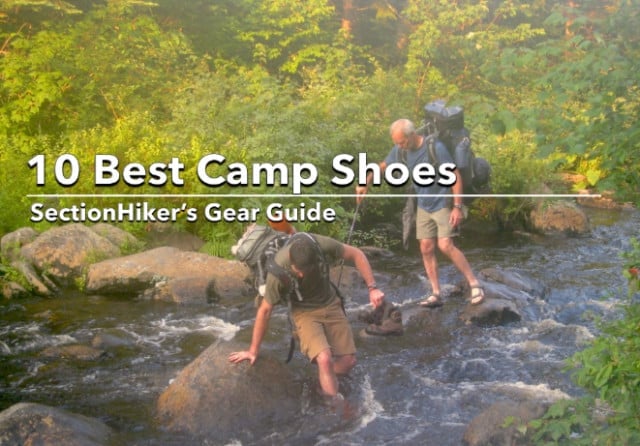
Many backpackers carry camp shoes to help their feet recover after a hot day of hiking or to change into for water crossings to keep their socks and hiking footwear dry. Sandals, water shoes, slides, plastic clogs, and minimalist footwear are all popular choices because they are ultralight-weight. They’re also indispensable for showering in hostels and at campgrounds to avoid contracting athlete’s foot from others. Check out our Camp Shoe and Water Shoe Selection Guide below for a full discussion of the factors you should consider.
1. Birkenstock Arizona EVA Foam Sandals
Don’t let the brown color of these Birkenstock Arizona EVA Foam Sandals fool you: they are not leather but EVA foam, making them very light and waterproof. Their anatomically shaped EVA footbeds cradle your feet and feature Birkenstock’s original contoured footbed for true Birkenstock comfort. With adjustable straps, these 1-piece EVA sandals are waterproof, washable, and ultra-lightweight. Available for men and women, they only weigh 8 oz/pair.
2. Xero Z-Trail Sandals
Xero Z-Trail EV sandals provide an ultralight, minimalist, and barefoot-like feel, making them highly comfortable for camp use and water crossings due to their quick-drying polyester webbing and zero-drop design. The sandals offer excellent ground feel and stability thanks to a flexible sole and adjustable straps that secure the foot well, though they have minimal structure, arch support, or toe protection. Available for men and women, their barely-there feel and cushioning from foam soles make them comfortable for extended wear during recovery periods around camp after a long day of hiking.
3. Crocs Classic Clogs
Crocs Classic Clogs have been a backpacker favorite for decades. They make great camp shoes to help your feet recover and provide enough toe protection and ankle/heel support for safe stream crossings. Easy to clean and quick to dry, they have built-in ventilation ports for breathability and drainage. They’re best attached to the outside of your backpack since they’re bulky. You’ll also want to wear them with socks when the insects are out. Cros also comes in lots of fun colors if you want to let your freak flag fly. Average weight per pair: 12 oz. Sizing is unisex.
4. Zpacks Ultralight Camp Shoes
The Zpacks Ultralight Camp Shoes weigh 2.3 oz/pair and are made with nylon fabric and breathable Lycra mesh for lightweight protection and ventilation. They have a 4mm foam sole that shields feet from rough terrain and provides comfort during downtime without the bulk of traditional camp shoes or wet trail runners. These shoes are compact, collapsible, and lighter than sandals, offering slipper-like comfort and easy packability in small backpack spaces. They also function well as shower sandals. If you prefer a camp shoe with a closed back, check out Zpack’s 2.5 oz/pair Deluxe Camp Shoes.
5. Merrell Hydro (Next Gen) Mocs
Merrell’s Hydro (Next Gen) Mocs are cool and comfy shoes to wear in camp, for water sports, or down at the watering hole on a hot summer night. These slip-on water shoes are made with single-density injected EVA with a 2mm lug depth for secure traction on wet surfaces. They have an articulated heel and a contoured arch for support. The sizing is generous, so if you usually wear a half size in footwear, we suggest sizing down in this product rather than ordering the ½ size larger. These are great for water crossings and trails with many stream-to-land transitions. Sizing is unisex; the weight per pair is 11-15 oz.
6. Classic Fitkicks
Fitkicks are lightweight water-friendly footwear with spandex/synthetic uppers with a cushioned neoprene insole and non-marking rubber outsole. They’re great for swimming at the water hole, stream crossings, the beach, kayaking, paddleboarding, or camping. They have a supportive grip strap that molds around the top of your foot and a reinforced toe guard up front. The flexible outsole makes them easy to pack, and they’re machine washable. Available for men and women, the average weight per pair is 9 oz.
7. PolyFab AirPuff One 3D Printed Shoes
PolyFab AirPuff One 3D Printed Shoes are ultralight (4.6 oz /pair) plastic mesh shoes that are ideal for use in wet conditions or around water. The 3D printed construction allows for precise shaping, providing excellent arch support and a contoured footbed that adapts to the natural curves of your feet. They have wide toe boxes so your toes can splay and relax, while the textured sole offers reliable traction on various surfaces. These technical features combine to deliver durability, comfort, and functionality in a sleek, modern slide.
8. Shamma Elite Warrior Sandals
Shamma Elite Warriors (7 oz/pair) are ultralight, flexible sandals designed for minimalists who need reliable footwear for camping and water crossings. With a zero-drop platform and wide toe box, they provide barefoot-like comfort while maintaining excellent traction on wet and slippery surfaces thanks to the 5mm Vibram sole and aggressive tread. Their lacing system ensures a secure, comfortable fit even during active water use. Built with durable materials, these sandals are practical for outdoor adventures where durability and quick drying are essential.
9. OOFOS OOahh Sport Slide Sandals
OOFOS OOriginal Sandals are waterproof recovery sandals made with a super comfortable foam that helps your feet recover after high-mileage hiking days or trail runs. They have a non-slip footbed and sole that provides excellent arch support and relief from plantar fasciitis. They even float! These sandals are best used for camp and easy water crossings, but don’t provide the protection you’d want for deeper streams. The average weight per pair is 12 oz.
10. Crocs Crocband Flip Flops
Crocs Crocband Flip Flops are waterproof and durable flip flops that have massage-pod footbeds to help improve foot circulation and recovery after a hard day of hiking. Lugs on the bottom provide excellent traction and plenty of protection so rocks and pebbles don’t poke up through the footbed. They’re easy to clean, quick to dry, and pack flat. They also come in a wide variety of colors. Average weight per pair: 8 oz.
Camp and Water Crossing Shoes: Selection Guide
A wide range of factors make good camp shoes or water shoes for stream crossings. While almost all water crossing shoes make acceptable camp shoes, many camp shoes lack the protection or traction needed for more challenging stream crossings, where you can’t see your feet or the bottom. Packability, weight, warmth, and insect protection are also essential factors to consider when choosing a camp shoe or one that can double-duty for water crossings.
If you hike in well-drained hiking boots, shoes, or trail runners, it’s worth asking yourself if you even need camp shoes or stream-crossing shoes, or whether you’d rather not carry them and use your existing shoes as camp shoes and stream-crossing shoes instead. There’s no right or wrong answer; it all depends on your priorities. There are times when it’s nice to slip on a warm, dry pair of camp shoes while cooking dinner at camp.
Packability
If you plan on backpacking, it’s best to get a camp shoe or water shoe that’s easily packable with an upper that folds flat against the sole. Shoes with folding uppers are easily packed in pockets, and if they’re wet, in the front stretch mesh pocket of many backpacks. While you can hang bulky camp shoes on the outside of a pack, they can get torn off by passing vegetation or simply fall off because you didn’t secure them well.
Protection While Crossing Streams
Shallow streams are usually easy to cross because you can see your feet and the streambed bottom. But you’ll want camp shoes or water shoes that provide more foot protection if you have to cross deeper streams and rivers where you can’t see the streambed or sunken obstructions like sticks and logs. Water shoes that provide more protection around the toes and sides of your feet, have a firmer sole, and better ankle support, are advantageous in such circumstances. We never recommend crossing barefoot.
Athlete’s Foot Prevention
There’s nothing worse than picking up a case of Athlete’s Foot in public showers in hiker hostels, bunkhouses, or public campgrounds. Protect yourself by wearing camp shoes in the shower and letting your feet dry thoroughly after hiking all day in hot, sweaty hiking boots or trail runners. It takes forever to get rid of, especially if your day-to-day footwear doesn’t have a chance to dry out at night.
Weight
Many backpackers are obsessed with the weight of their gear and leave comfort items behind because they’re not strictly necessary, or they carry lighter-weight alternatives. In general, shoes that are only for camp tend to be lighter-weight than those designed as water shoes.
Warmth
If you’re camping or crossing streams in cold weather, you may want to opt for camp shoes or water shoes that encase your foot and your ankle more like a wetsuit bootie rather than sandals or slides. Don’t underestimate how cold mountain streams can get, even in summer, especially if you have to ford wide streams. The same holds for standing around camp in colder weather. Camp shoes/water shoes with fewer ventilation ports will be warmer.
Insect Protection
If you’ve ever gotten a mosquito bite on your foot, you know how itchy and unpleasant they can be. Unfortunately, insects become more prevalent in the evening, just as you’re cooking dinner in camp. Water shoes with neoprene or lycra uppers are generally more insect-proof than sandals, slides, and clogs. Wearing a sock with a relatively open shoe may still not provide enough insect protection for your needs, something to consider.
Bread Bags
If you’re an extreme ultralighter looking to shave every ounce from your gear list, bring bread bags or more durable turkey basting bags for camp use so you can wear wet shoes without getting dry socks wet.
SectionHiker never accepts payment for gear reviews or editorial coverage. When you buy through affiliate links on our site, we may earn a small commission at no extra cost to you. Help us continue to test and write unsponsored and independent gear reviews, hiking and backpacking FAQs, and free hiking guides.