Walk into a bar that opened a decade ago and look at the stools. If the owner bought cheaply the first time, these are not the originals. They are the third or fourth round, each set bought to replace the last as seats cracked, finishes flaked, and bases wobbled their way to the dumpster. The math of buying cheap is quiet but relentless, and it ends in a landfill.
Furniture waste rarely makes the headlines, but the numbers are sobering. Americans throw out more than 12 million tons of furniture in a single year, and roughly 80 percent of it is buried rather than recycled. Every replacement stool is a small contribution to that pile. The forward-looking move for an operator is to break the replacement cycle at the start, and durable barstools with backs built on powder-coated steel are how that cycle gets broken.
The Real Cost Hides in the Reorder
A cheap stool looks like a bargain on the invoice. The trouble shows up eighteen months later when the welds loosen and the seat starts to peel. Now the owner pays again, plus the labor to swap them out and the lost stool nights while the order ships.
Buy once at a higher number and the spreadsheet flips. One solid stool that lasts ten years costs less per year than three flimsy ones bought across the same decade, and it never empties a seat on a busy Friday. The cheap option was always the expensive one. It was just billed in installments.
What Powder Coating Actually Does to Steel
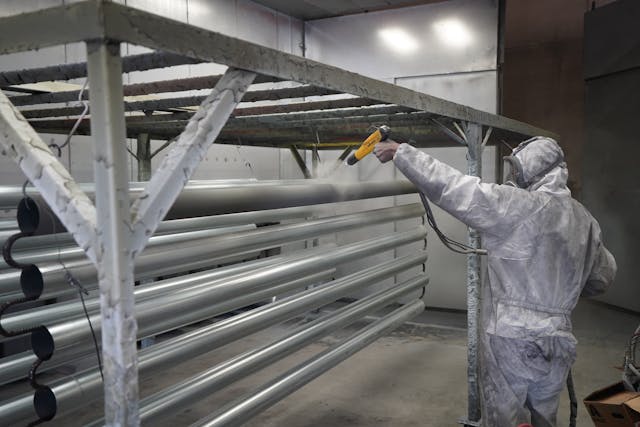
The finish is where most stools live or die, and this is where the gap between cheap and durable opens widest. Liquid paint sits on the surface and chips when the metal flexes. A powder coating is applied dry, then baked until it cross-links into a hard shell that moves with the steel instead of flaking off it.
That bonded shell can hold up in direct sun for two decades without a refresh, while ordinary paint needs to be redone every few years. For a bar that means a stool that still looks new long after a painted one would have gone shabby, scratched, and out the back door.
Why Corrosion Decides a Stool’s Lifespan
Bars are wet places. Spilled drinks, mopped floors, humid summer nights, and the occasional patio shift all work on bare metal. Once moisture reaches steel, corrosion begins, and rust does not stop at the surface. It eats into the base until the stool is unsafe to sit on.
Powder coating seals the steel against that moisture in a way that thin paint cannot, because the layer is thicker and bonded rather than brushed. The result is a base that resists the slow rust most cheap stools surrender to within a couple of seasons. Keep water off the steel, and the stool simply lasts.
Durability Is a Sustainability Strategy
The greenest piece of furniture is the one you never have to replace. Every stool that stays in service is a stool not manufactured, not shipped, and not buried, and that is the cleanest environmental win an operator can claim without changing a single supplier or sourcing a single recycled fiber.
Set against a furniture waste stream where only a tiny fraction is ever recovered for recycling, buying for the long haul does more good than most green gestures. A bar that furnishes once and keeps its seats for a decade quietly takes itself out of the replacement-and-discard loop that fills the dumpsters.
A Buyer’s Checklist for Stools That Stay
Before signing off on a stool order, an operator can pressure-test it against a few questions:
- Is the frame steel, and is it powder-coated rather than spray-painted?
- Are the welds at the base continuous and clean, not tacked?
- Does the seat have a back that eases strain and invites longer sits?
- Will the finish hold up to daily spills and mopping?
- What does the stool cost per year of expected service, not per unit?
A stool that passes all five rarely comes back as a reorder, which is the whole point.
The Quiet Economics of Buying It Once
Cheap furniture sells a feeling of savings that evaporates on the second purchase. By the time an owner has bought the third set of stools, the durable option would have cost less, looked better the entire time, and kept several hundred pounds of steel out of the ground. The savings were always an illusion, payable later with interest.
The next decade belongs to operators who treat furniture as infrastructure rather than a consumable. A powder-coated steel stool is a small bet on permanence in a business that throws away too much, and it pays back in seats that stay full, invoices that stop repeating, and a dumpster that never sees the same stool twice.


