Published May 27, 2026 05:15AM
May 2026: Our favorite women’s backpacking tee shirt is the Ibex Women’s Springbok Sport Tee for its trifecta of softness, light weight, and durability. Our top sun layer is the Backcountry Tahoe Sun Hoodie, which is lighter and cooler than the dozens of others we tested this season. This year, we also added the Wild Rye Remi Shirt (Best Collared Shirt) and updated all of our products with the latest pricing and information.
Make no mistake, these pieces are all business when it comes to performance: They wick sweat, banish chafing, and survive skirmishes with rocks and scrub. But each one also has a softer side that won the hearts of our trail-loving tester team. Beyond wowing us with their fit and comfort, this season’s top performers inspired affection and sometimes, true love. Here’s what made us swoon.
At a Glance
Best Sun Hoodie
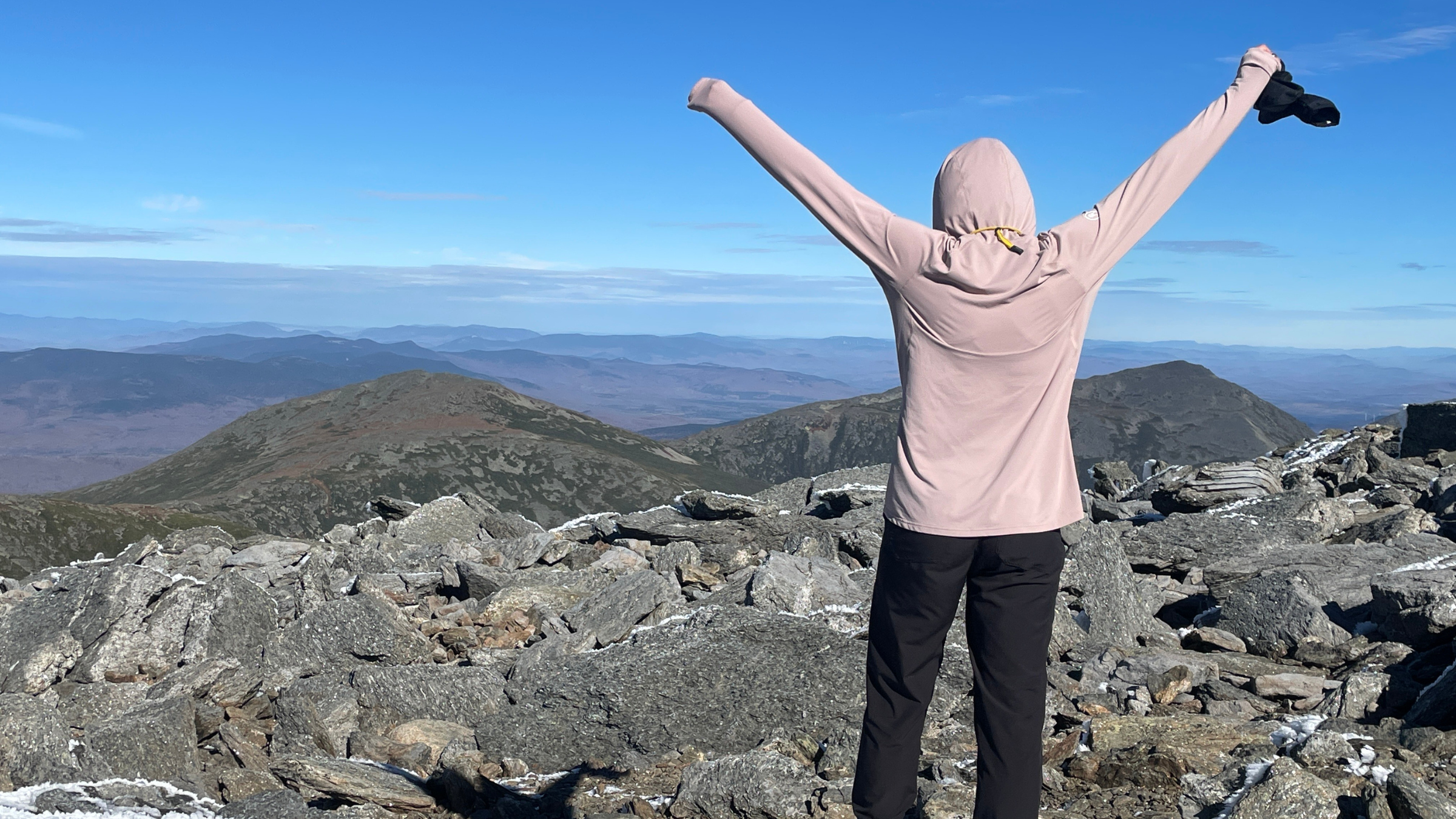
Backcountry Tahoe Sun Hoodie
Weight: 5 oz.
Sizes: XS-XL
Pros and Cons
+ Breathable
+ Covers hands
– Gets stinky
This UPF 50+ hoodie feels lighter and cooler than the stacks of other sun shirts we tested, making it our top pick for the hottest, heaviest weather conditions—like a humid 88-degrees in Pennsylvania’s Laurel Mountains. The textured, Bluesign-approved fabric sits airily on the skin, and the polyester (with 12 percent spandex) wicked sweat as fast as testers produced it. On the Upper Colorado River and in the White Mountains of New Hampshire, this sun hoodie shielded wearers without smothering them.
“The arms are really long and covered the backs of my hands without any tugging in the sleeves,” one reports. Gusseted underarms provide the freedom of movement that testers wanted when paddling and fly-casting. Testers also loved the fit of the generous hood, which was large enough to provide shade across the eyes and face. As with most synthetics, odor does accumulate after multiple days’ wear, but it’s not egregious—and the relatively low price sets it apart from the pack.
Best Tank
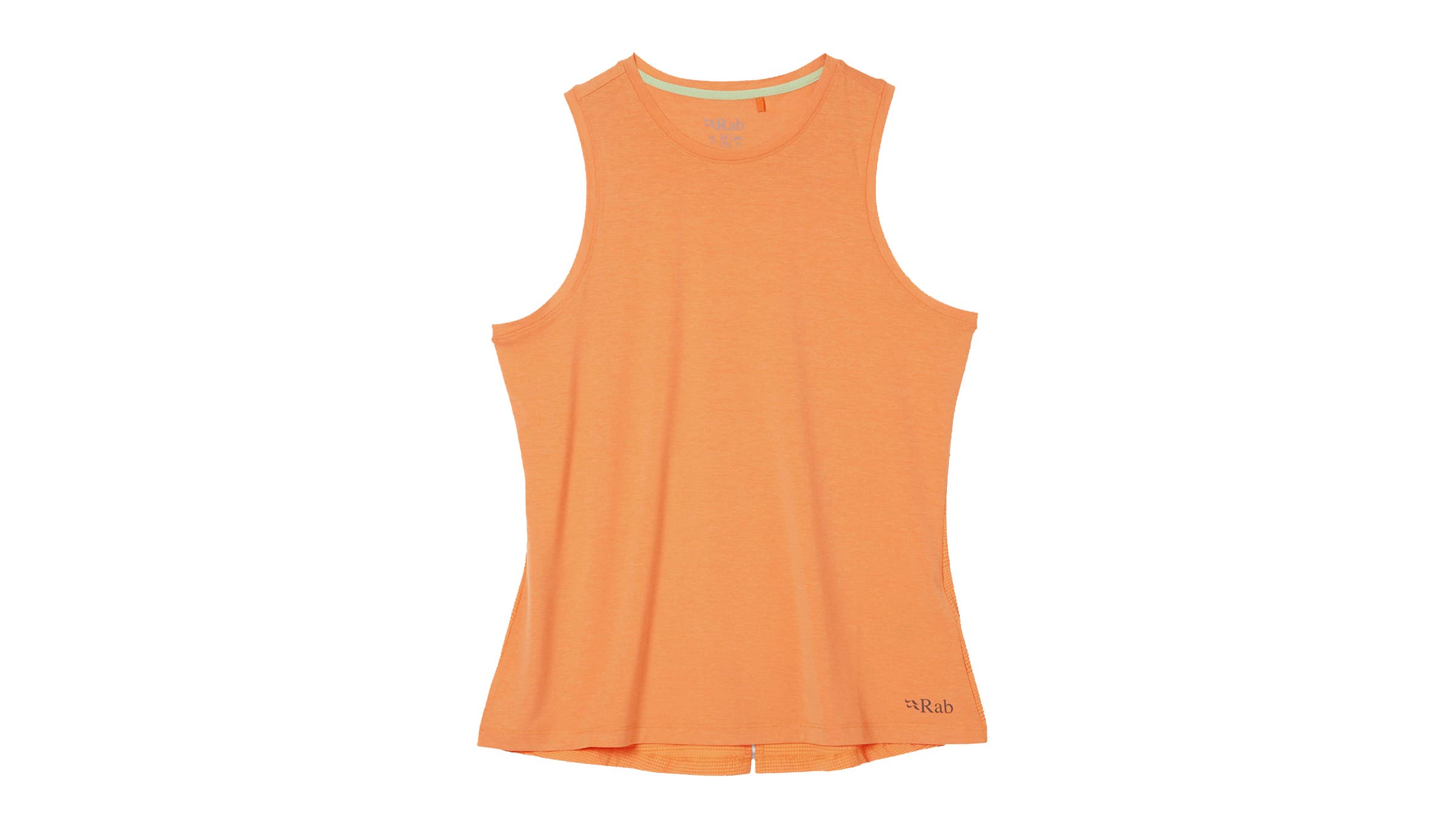
Rab Rivelin
Weight: 3.8 oz.
Sizes: XS-XL
Pros and Cons
+ Doesn’t chafe
+ Great ventilation
– Limited sun protection
The Rivelin might be the airiest tank we’ve ever worn. Vertical vents along the center back seam both look stylish and improve airflow to a notoriously sweat-prone zone. Lightweight, fast-wicking fabric (83 percent recycled polyester, 12 percent lyocell, and 5 percent elastane) is woven with star-shaped yarns (rather than round ones) to provide more sweat-sucking surface area and speed cooling. Those design choices kept one tester surprisingly comfortable through steamy, 88-degree conditions while hiking 3,330-foot Mount Tremont in New Hampshire’s White Mountains. Panels of even stretchier fabric (14 percent elastane and 86 percent polyester) encircle the arms for unfettered movement. And the crewneck and shoulder straps provide just enough skin coverage to alleviate chafing from rough pack straps.
Best Tee
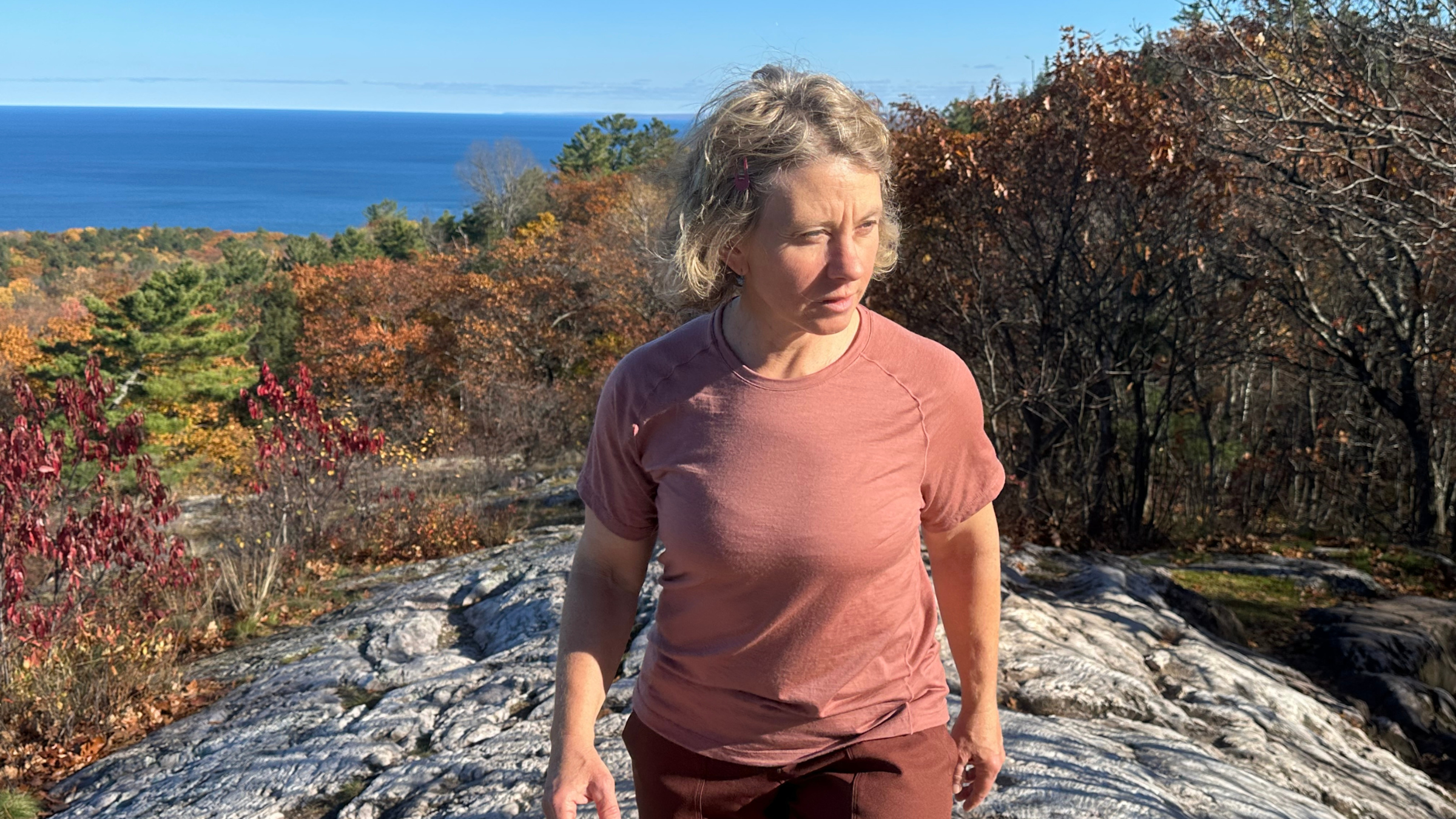
Ibex Women’s Springbok Sport Tee
Weight: 3.7 oz.
Sizes: XS-XXL
Pros and Cons
+ Soft
+ Durable
– Visible sweat stains
Soft, lightweight, and durable: That’s the Holy Grail for merino wool shirts, and the Springbok delivers on all three attributes better than other merino-based tees we tested. Part of its magic is fine, 18.4-micron merino fibers that simply don’t itch (even our wool-averse hiker tolerated it for a half-day). The fabric is thin enough for comfort in hot conditions, including an 80-degree hike at Michigan’s Pictured Rocks National Lakeshore. Yet its durability is excellent, thanks to 12-percent nylon and 5-percent elastane for extra stretch. Testers deemed it just enough synthetic fabric to guard against abrasive pack straps without accumulating odor or compromising feel. The offset shoulder seams use merrow stitching (which is unusually soft and unobtrusive) to prevent chafing even under extreme conditions—including 16 hours of continuous wear. And the gusseted underarms let hikers reach for distant pole-plants. But like most wool blends, this fabric doesn’t dry particularly fast and does create obvious sweat stains.
Best Wind Shell
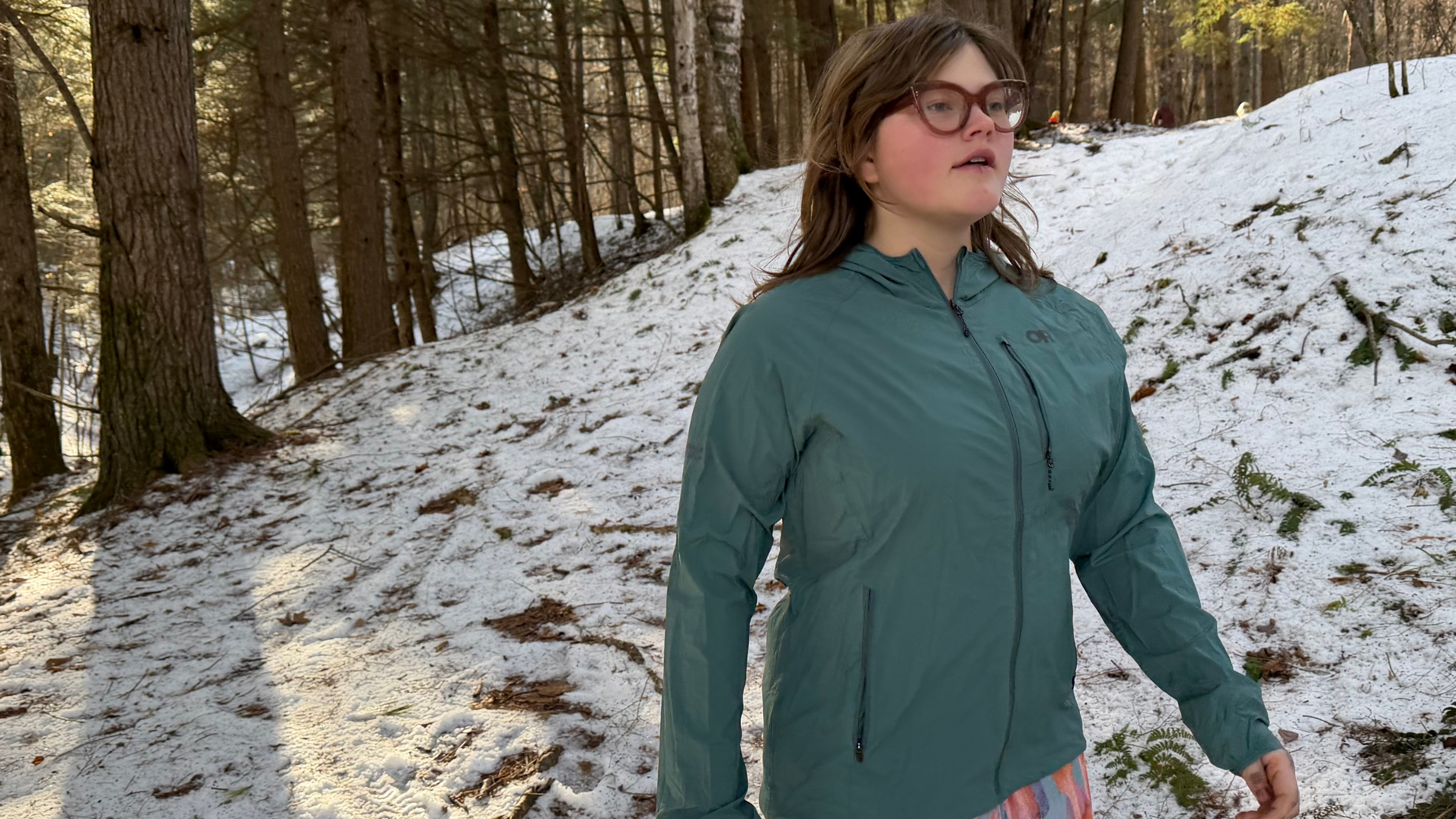
Outdoor Research Shadow Wind Hoodie
Weight: 4.5 oz.
Sizes: XS-XXL
Pros and Cons
+ Non-clingy fabric
+ Hood stays put
– Poor water-resistance
So many wind layers are ultralight and ultra-clammy, but the Shadow Wind impressed us with its comfort—even while taking on serious vert. “I didn’t overheat during the final push to the summit,” said our Maine-based tester, noting that sweat didn’t accumulate at all in breezy conditions below 65 degrees during testing. The jacket’s differentiator is its stretch-woven material that feels unconfining and includes a lightly-textured inner that allows some space between skin and fabric.
The 20-denier, Bluesign-approved, 90 percent nylon/10 percent spandex fabric blend effectively blocked gusts up to 20 mph and included a PFAS-free DWR that shed drizzle but wet out in longer rainstorms. The brimmed hood wraps tight around the face and stays put in wind, too. Three zippered pockets hold snacks, and the jacket packs down to the size of a grapefruit—small and light enough for emergency use on day hikes and trail runs.
Paid Advertisement by Topo Athletic
Topo Athletic Ultraventure 4
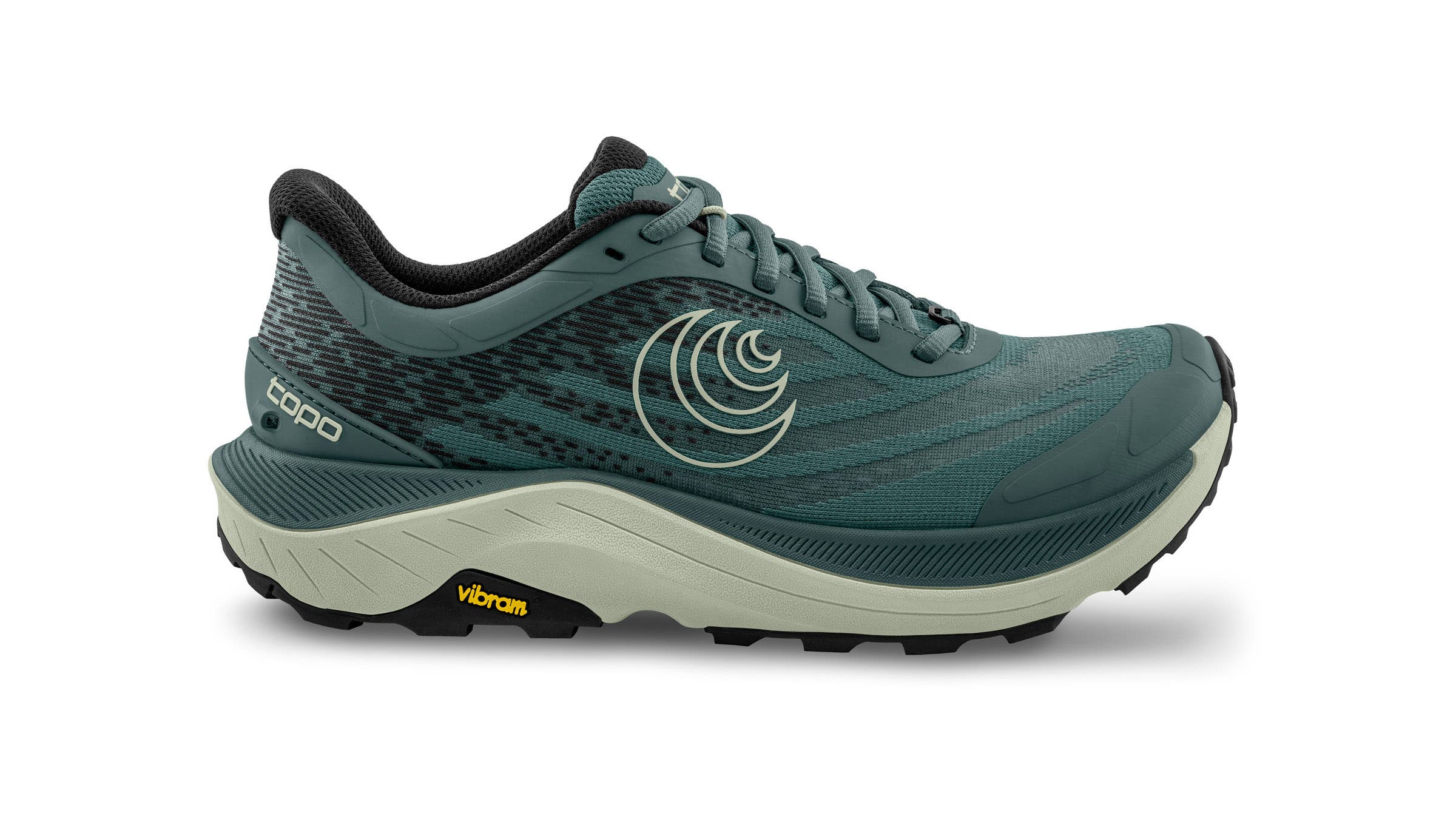
This is Topo Athletics’s best-selling trail runner for a reason. Between the plush platform, roomy toe box, and lightweight ZipFoam™️ midsole, you’ll never have to compromise on comfort or performance. The Vibram®️ XS Trek EVO outsole provides excellent multi-surface traction, so you can transition from moderate trails to road running without missing a beat.
Best Collared Shirt
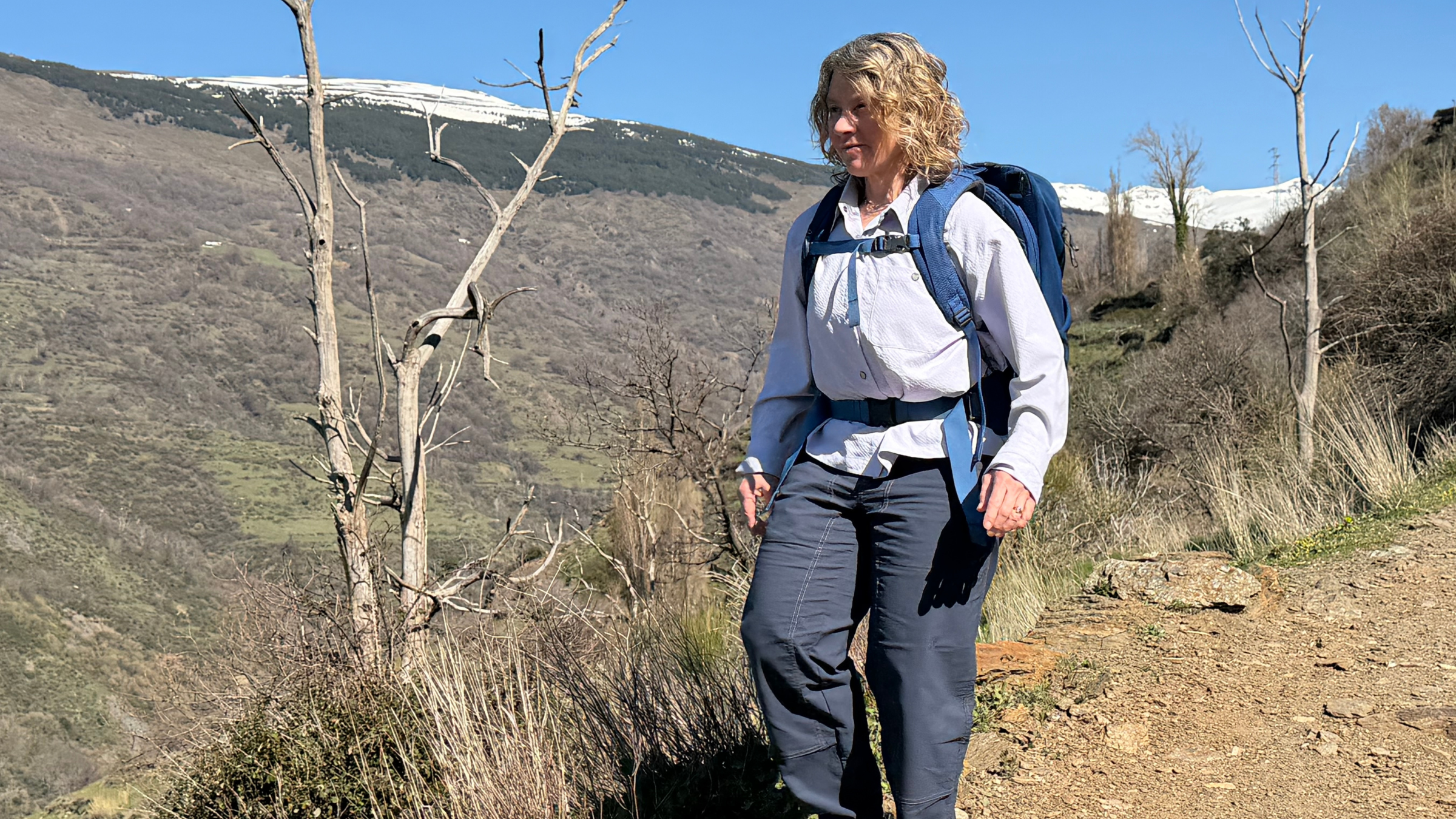
Wild Rye Remi Shirt
Weight: 5.9 oz.
Sizes: XS-XXL
Pros and Cons
+ Cooling
+ Cute
– Some pocket chafing
Featherweight, waffle-textured fabric made this snap-front collared shirt the coolest collared button-down that we tested. “I wore it on hot days even when I wasn’t hiking because the fabric wicks sweat so well,” reports our lead tester after trips in Maine’s humid Appalachians and Utah’s sun-nuked canyons. The textured polyester (61-percent recycled) hides sweat stains, and the baggy cut promotes airflow. The collar prevents chafing from a pack’s shoulder straps, UPF 40 protection blocks harmful rays, and the shoulder yoke lends Western flair while also locating seams away from a pack’s pressure points. Some wearers found the cropped length to be too short to tuck beneath a pack’s hip belt, but that suited most hikers just fine.
Honorable Mentions
Patagonia Capilene Cool Ultra ($59): Our top-scoring synthetic tee features 100-percent recycled polyester that dries in a blink and feels weightless in the hottest, most oppressive conditions. Sure does get stinky though.
Abode Outside Woodland Hoodie ($69): This versatile, summerweight synthetic sweater features sustainable materials (42 percent viscose and 28 percent recycled polyester) and a built-in neck gaiter that testers appreciated on blustery summits and around the campfire, although it lacks the low-bulk and breathability of a layer like the Patagonia R1.
Chill Angel Sereni-Tee ($99): Made of 100-percent ultrafine merino, this is the softest wool hiking shirt we’ve ever tested. But durability suffers: Regular chafing from backpack straps causes pilling and worse.
How to Choose Women’s Hiking Shirts
Fit is paramount. Apparel that doesn’t suit your shape can prove uncomfortable on the trail. It’s also likely to languish in your closet because you won’t feel excited about wearing it. Once you’ve found apparel that fits, consider its fabric content. Different fibers deliver various performance benefits and drawbacks:
- Nylon resists abrasion and dries fast, but can feel rough against the skin.
- Polyester is softer to the touch, but sometimes less durable. Unless treated with an odor-resistant finish, it also gets stinky after contact with body sweat and bacteria.
- Elastane (sometimes branded as spandex) provides stretch but slows the fabric’s dry time.
- Merino wool is breathable, temperature-regulating (it cools you in warm weather and insulates you in chilly conditions), and naturally odor-resistant, but can be less durable than synthetics.
Finally, consider how garment features may dovetail with the rest of your hiking kit. Is the shirt’s hem long enough to stay tucked beneath the buckles of a waist pack? Are the chest pockets accessible underneath pack straps? By forecasting how your apparel will integrate into your ensemble, you can avoid buying pieces that disappoint you while hiking.
How We Test
- Number of Testers: 9
- Number of Products Tested: 40
- Number of Miles Hiked: 267
- Loftiest Summit Tagged: 14,429 feet
- Most Continuous Steps Climbed: 2,744 (Manitou Incline)
- Pounds of Porcini Foraged: 21
Women defy generalization. No single “women’s fit” can celebrate all bodies. And a woman’s definition of a great hike is just as varied: for some, it might involve shadowing a toddler for an eighth of a mile, for others, pushing themselves through a 100-mile ultra.
So, to make our reviews relevant for the broadest possible audience, we recruited testers from a diverse pool. For starters, we recruited women hikers of various sizes, from XS to XL. But we didn’t stop there: We asked our testers to report on the micro-details that affect whether a hiking top makes or breaks the grade. Large breasts, extra-long arms, swimmer’s shoulders, sensitive skin—these and other realities helped us evaluate and winnow out the products that didn’t fit and feel comfortable on an array of women’s bodies. These hikers also tested in varying climates across the U.S. and Canada, including Maine’s dense forests, the Rockies’ wind-bitten summits, Utah’s sandstone canyons, and California’s arid hills.
Meet Our Tester Team
Over the 20 years that Kelly Bastone has been subjecting her 4’11” frame to the gear-testing mission, she’s watched the outdoor industry make significant improvements to the fit and function of women’s apparel. Yet even now, pants rarely earn her approval (properly fitting her pear shape requires an above-average attempt at patterning). Living in Maine puts a wealth of testing opportunities at her doorstep—she hikes, mountain bikes, and fly-fishes from the Atlantic to the Appalachians.
For her testing squad, she recruited Lake Tahoe area trekker and climber Jessica Hamilton, Colorado River hiker and rafter Sabrina Motta, Minnesota trail worker and paddler Kate Ratkovich, and a range of additional women representing various outdoor experiences and body types.


