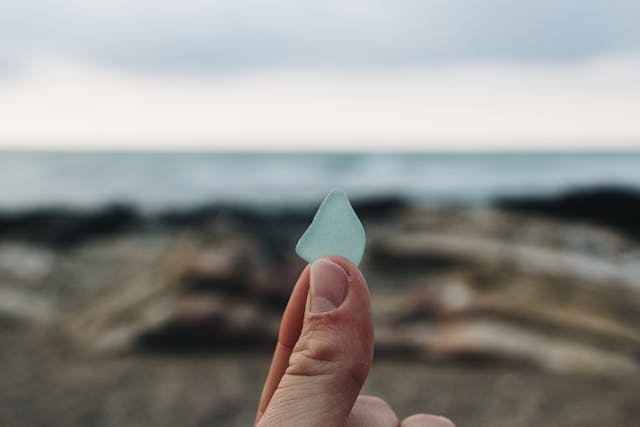
Sea glass starts as something ordinary — a bottle, a jar, a plate — and ends up as something people hunt for on beaches around the world. After years of being tumbled by waves, ground against sand and rocks, and worn smooth by the tides, a broken shard of glass transforms into a rounded, frosted gem that collectors call sea glass.
It is not rare in the way diamonds are rare. It is rare in the way that patience is rare. The ocean makes it slowly, on its own schedule, and no two pieces are exactly alike.
What Is Sea Glass?
Sea glass is broken glass that has been naturally smoothed and frosted by water, sand, and time. Most pieces started life as bottles, jars, plates, windows, or other glass objects that ended up in the ocean — through dumping, shipwrecks, coastal erosion, or simply being swept off a beach during a storm.
Over years — sometimes decades — the ocean rolls these shards across rocks and sand. The sharp edges wear away. The glossy surface becomes cloudy and textured, like frosted glass. What began as a hazard becomes something entirely different: smooth, tactile, and beautiful.
Sea glass is sometimes called “mermaid’s tears” or “ocean gems.” It is collected, displayed, and set into jewelry. It is also, at its origin, a piece of marine debris — a fact that adds a layer of history to every piece you find.
Key characteristics of genuine sea glass:
- Edges that are fully rounded, with no sharpness
- A frosted or pitted surface (called patina) rather than a glassy shine
- A slightly uneven, worn shape
- Safe to handle without risk of cutting
If a piece can cut your finger, it is not sea glass yet. It is still broken glass.
Sea Glass vs. Beach Glass: What Is the Difference?
These terms are often used interchangeably, but collectors draw a distinction.
| Feature | Sea Glass | Beach Glass |
| Water source | Saltwater oceans and coastal bays | Oceans, lakes, rivers, or bays |
| Surface texture | Heavily frosted from salt and abrasion | Can be frosted or smoother depending on conditions |
| Common locations | Ocean beaches and tidal shorelines | Any shoreline, including freshwater |
| Collector value | Generally higher, especially from saltwater | Also collectible, especially from the Great Lakes |
Saltwater tends to produce a more pronounced frosted surface because salt accelerates the chemical etching of the glass. Freshwater beach glass can still be smooth and beautiful — Great Lakes beach glass, in particular, has a devoted collector community.
How Sea Glass Forms
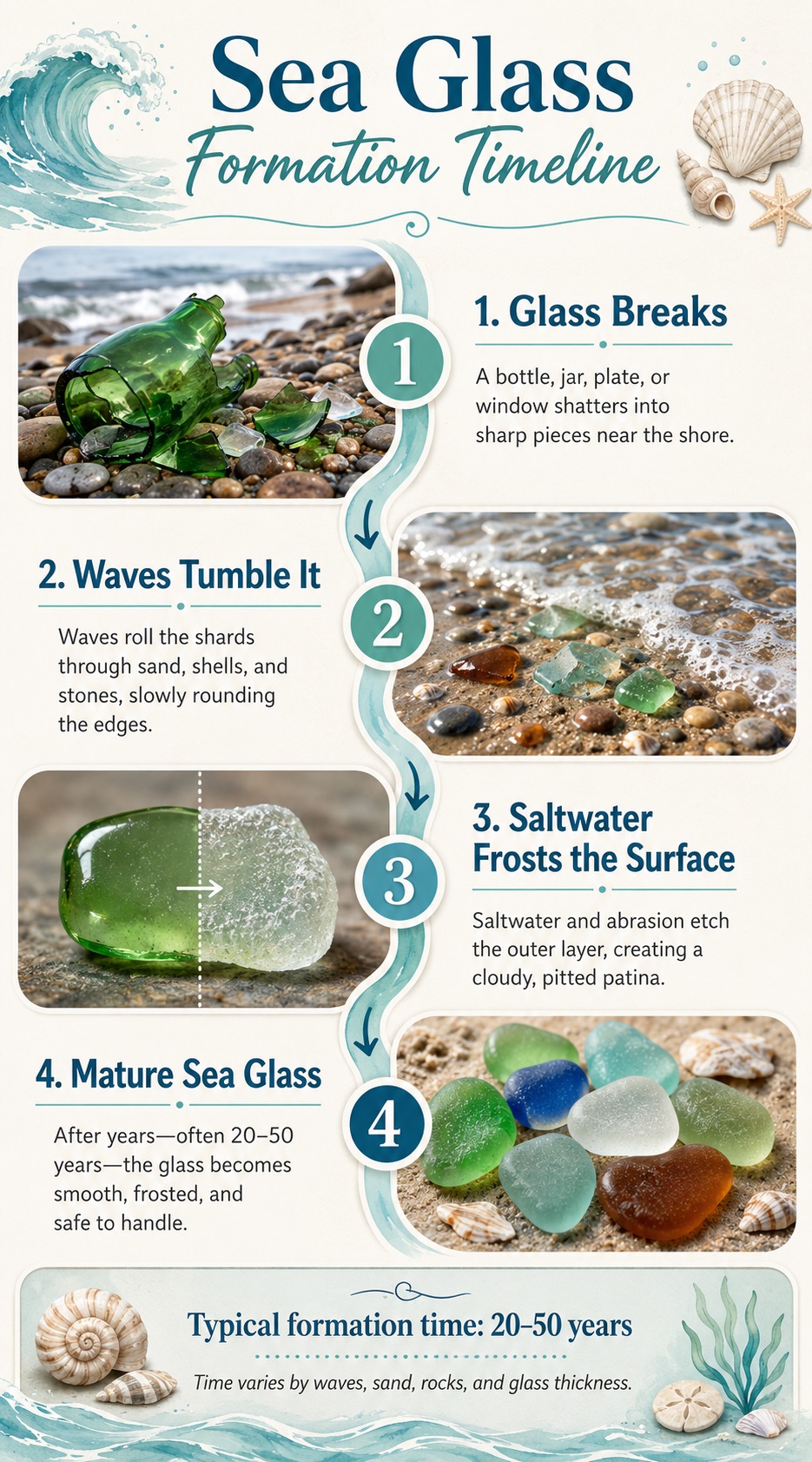
Sea glass forms through time, water, sand, and motion. There is no magic in it. The sea does the work slowly.
Stage 1: The Glass Breaks
A bottle may hit rocks and break. A jar may wash off a pier. Old glass may fall from a ship or beach.
At first, the glass has sharp edges. Its surface is smooth and shiny.
Stage 2: Waves Wear It Down
Waves move the glass back and forth. The piece rubs against sand, stones, shells, and rocks.
This wears away the sharp edges. It also scratches the surface. The glass starts to look round and soft.
Stage 3: Saltwater Changes the Surface
Saltwater also changes the glass. It slowly wears the outer layer.
This helps create the frosted look. Small pits form on the surface. These tiny marks scatter light, so the glass no longer looks clear and shiny.
Stage 4: The Glass Becomes Mature
Many pieces need about 20 to 50 years to become real sea glass.
A mature piece has smooth edges. It has a deep frosted look. It also feels safe in your hand.
The time can change from beach to beach. Strong waves make glass wear faster. Rough sand also speeds up the process. Thick glass takes longer than thin glass.
A heavy bottle base needs more time than a thin piece from a wine glass.
Sea Glass Colors and What They Reveal
Color is one of the first things people notice about sea glass. Each color tells a small story. It can show what the glass once was. It can also hint at how old or rare it is. Some colors are common because many bottles and jars used those colors. Other colors are rare because they were made in small amounts.
Common Sea Glass Colors
White or Clear
White sea glass is the most common color.
It started as clear glass. After years in the sea, it turns cloudy and white.
It often comes from food jars, drinking glasses, windows, and clear bottles.
Brown
Brown is also very common.
It can look light amber or dark chocolate. Many beer bottles and medicine bottles used brown glass.
Brown glass helped block sunlight. This helped protect what was inside the bottle.
On many good beaches, you can find brown sea glass often.
Green
Green sea glass is common and popular.
It often comes from wine bottles, soda bottles, and other drink bottles.
Green pieces can be light mint, olive, or deep emerald. A smooth, rich green piece can still look very special.
Uncommon Sea Glass Colors
Soft Blue
Soft blue is less common than white, brown, and green.
It can come from old medicine bottles, makeup jars, and home glass from the early 1900s.
Soft blue pieces may look like cornflower blue or periwinkle.
Aqua and Teal
Aqua and teal sea glass are favorites for many collectors.
These colors often have a bright coastal look. They can come from old mason jars, old Coca-Cola bottles, and glass insulators.
Glass insulators were once used on telegraph and phone lines.
Jade or Seafoam Green
Jade and seafoam green are a bit rarer than normal green.
They often come from older glass or certain bottle makers.
Rare Sea Glass Colors
Cobalt Blue
Cobalt blue is a prized find.
It was used for poison bottles, ink bottles, medicine bottles, and decor glass.
A smooth cobalt blue piece is a great beach find.
Purple or Amethyst
Purple sea glass can come from two main sources.
Some purple glass was made that way. It came from decor glass, dishes, or old bottles.
Some clear glass turned purple over time. Older clear glass often had manganese in it. Sunlight can change that glass to purple after many years.
This color shift can be a clue that the glass is old.
Pink
Pink sea glass is not common.
It can come from old tableware, art glass, or decor items.
True pink is harder to find than pale purple or faded red.
Yellow
Yellow sea glass is very rare.
It can come from uranium glass, old decor glass, or older factory glass. Some uranium glass can glow under UV light.
Red and Orange
Red and orange are among the rarest sea glass colors.
Red glass was used for signal lights, old car tail lights, special bottles, and decor glass.
It was costly to make. Some red glass needed gold or copper to get the color. So less of it was made.
A smooth red piece is one of the best finds for many collectors.
Black
Black sea glass is easy to miss.
It can look like a small dark stone. But if you hold it up to strong light, you may see hidden color. It may show deep olive, brown, amber, or purple.
True black sea glass often comes from very old, thick bottles. Many of these bottles were used for ale, wine, or spirits.
Black pieces are often thick and heavy. That can be a sign of age.
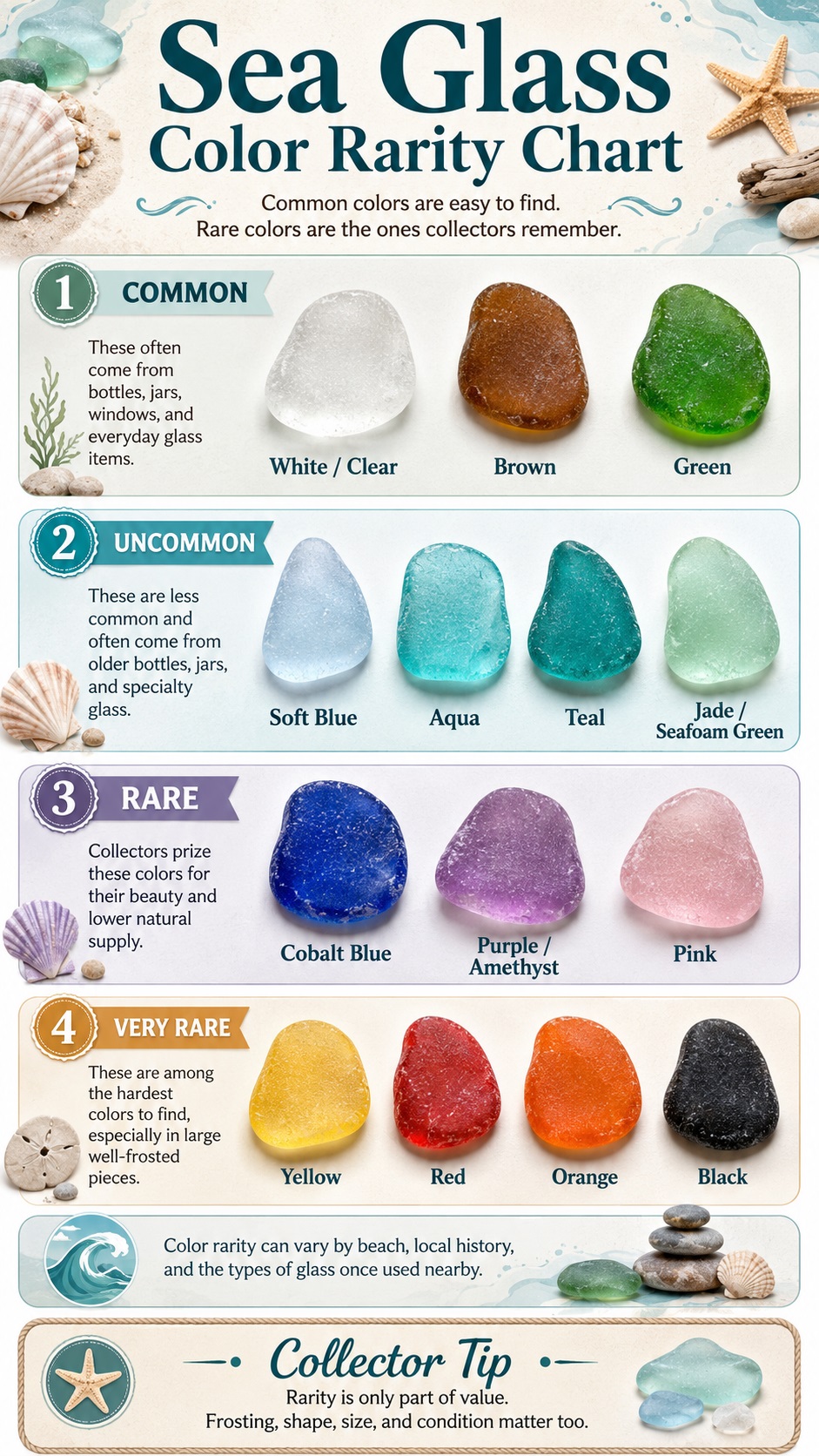
Sea Glass Color Rarity Scale
| Rarity Level | Colors |
| Common | White, clear, brown, green |
| Uncommon | Soft blue, aqua, teal, jade, seafoam |
| Rare | Cobalt blue, purple, amethyst, pink |
| Very rare | Yellow, red, orange, black |
Types of Sea Glass by Origin
Collectors also sort sea glass by where it came from. The source can affect the color, shape, weight, and age.
Bottle Glass
Bottle glass is the most common type.
It can come from wine bottles, beer bottles, soda bottles, and medicine bottles.
Bottle bases are often thick and heavy. Side pieces are often thinner.
Tableware Glass
Tableware glass comes from plates, cups, bowls, and dishes.
It can be thicker than bottle glass. Some pieces still show lines, patterns, or raised marks.
These marks can help collectors guess what the piece once was.
Decorative and Art Glass
Decorative glass can create rare and bright pieces.
It may show swirls, layers, or odd colors. These pieces are often very collectible.
Industrial and Ship Glass
This glass can come from old ports, ships, factories, and coastal work sites.
It is often thick, dark, and unusual in shape. This type can include black glass and other rare colors.
Sea Glass Marbles
Sea glass marbles are special finds.
They keep a round or almost round shape, even after years in the sea. They may come from old toys, decor jars, marble-stopper bottles, or factory use.
A frosted sea glass marble is rare.
Sea Pottery and Ceramics
Sea pottery is not true sea glass. But people often find it in the same places.
It comes from old plates, tiles, cups, and porcelain. The sea smooths the edges just like it does with glass.
Some pieces still show glaze, prints, colors, or trim. That makes them fun to collect.
How Sea Glass Is Graded
Serious collectors and jewelers often grade sea glass by quality.
There is no single rule used by everyone. Still, many collectors use three main grades.
Grade A: Collector or Jewelry Grade
Grade A sea glass is the best quality.
It has:
- Fully smooth edges
- No sharp points
- Deep, even frosting
- No new chips or breaks
- A nice, balanced shape
- A good size for jewelry or display
Grade A pieces feel safe in the hand. They look worn by the sea, not freshly broken.
These pieces are often used in rings, pendants, earrings, and display jars.
Grade B: Craft Grade
Grade B sea glass is still useful and pretty.
It has:
- Mostly smooth edges
- Small uneven spots
- Good frosting on most sides
- Some lighter or thinner frosting
- Small chips, if they are not new
This grade works well for crafts. People use it in mosaics, frames, garden art, and home decor.
Grade B pieces are also good for filling jars or trays.
A rare color can make Grade B glass more special. For example, a red piece with small flaws can still interest collectors.
Grade C: Tumbling or Recycling Grade
Grade C sea glass is not fully ready yet.
It may have:
- Sharp or angled spots
- Uneven shape
- Weak frosting
- Clear shiny areas
- Edges that need more wear
This grade is not best for jewelry. It can still work for bulk decor or craft use.
Some people tumble Grade C glass to make it smoother.
What Determines Sea Glass Value
Sea glass value is not based on color alone.
A rare color in poor shape can be worth less than a common color in perfect shape. Collectors look at many things at once.
Color Rarity
Color has a big effect on value.
Red, orange, yellow, and black are often the most valuable colors. Cobalt blue and purple are also prized.
Brown and clear glass are very common. They usually have low value unless the piece has an unusual shape, size, mark, or story.
Frosting Quality
Good sea glass has a deep, soft, matte look.
The frosting should cover most of the surface. It should look even and natural.
Thin or patchy frosting can mean the glass is young. It can also suggest that it was tumbled by a machine.
Shape and Balance
Shape matters a lot for jewelry.
Jewelers like smooth, balanced pieces. Oval, triangle, round, and teardrop shapes are often easy to set.
Collectors also like odd shapes. Pieces with natural holes, button shapes, or “cornflake” shapes can be special.
Size
Large pieces are less common.
Glass often breaks into smaller bits over time. So a large smooth piece can be more valuable.
A large rare-color piece is even harder to find.
Thickness
Thick glass can show age.
Older bottles and jars often used thicker glass. This can make a piece more interesting to collectors.
Very thin pieces can still look nice. But they may not work well for jewelry because they can be harder to set.
Signs of Age
Some marks can help show how old a piece is.
These include:
- Raised letters
- Mold lines
- Bottle base marks
- Round pontil scars
A pontil scar is a round mark left from old glassmaking tools.
Very old glass, especially from before 1900, can be more prized.
Place of Origin
Where the glass came from can also affect value.
Some beaches are famous for sea glass. These include Glass Beach in Fort Bragg, Seaham in England, and beaches in Bermuda.
Sea glass from a well-known place can sell for more. It can also mean more to collectors because it has a clear story.
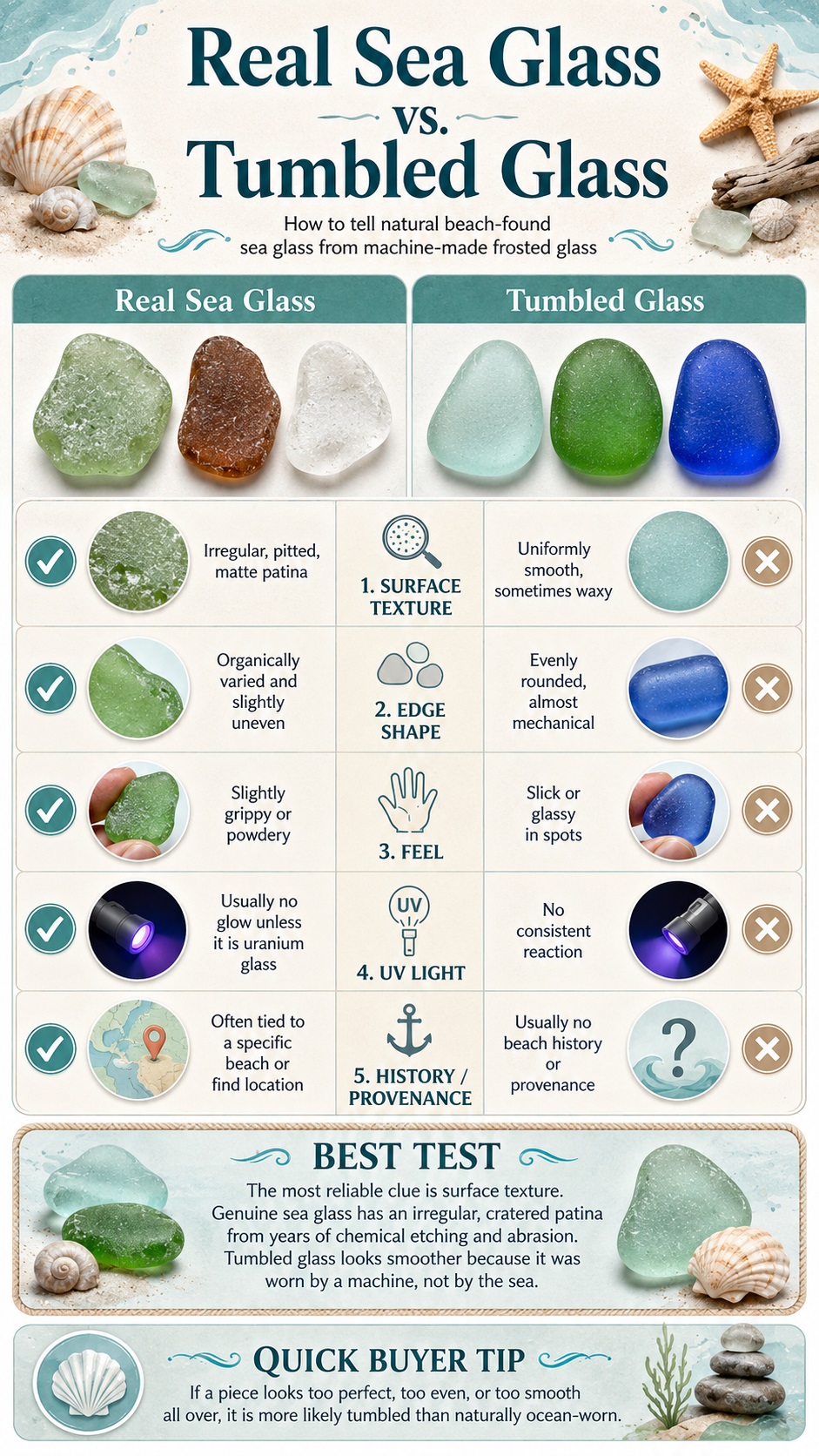
Real Sea Glass vs. Tumbled Sea Glass
Sea glass has become very popular. Because of this, some sellers now offer machine-tumbled glass.
Tumbled glass is easy to make. Broken glass is placed in a rock tumbler with rough grit. After hours or days, it comes out smooth and frosted.
Tumbled glass is not bad. It works well for crafts, home decor, mosaics, and school projects.
The problem starts when people sell it as real beach-found sea glass. Real sea glass takes years to form in nature. Tumbled glass does not.
How to Tell Real Sea Glass from Tumbled Glass
| Test | Real Sea Glass | Tumbled Glass |
| Surface | Uneven, pitted, matte | Smooth, even, sometimes waxy |
| Edges | Natural and uneven | Too round and even |
| Feel | Slightly rough or powdery | Slick in some spots |
| UV light | Usually no glow, unless uranium glass | No clear rule |
| History | Comes from a known beach | Often has no beach history |
The best test is the surface.
Real sea glass has tiny pits and marks. These come from years of saltwater, sand, and waves.
Tumbled glass often looks too smooth. It was shaped by a machine, not by the sea.
Where to Find Sea Glass
Sea glass is found where old glass entered the water.
The best beaches often have three things:
- A rocky shore
- Strong waves or tides
- A history of ships, towns, dumps, or factories
Rocks help grind the glass. Waves keep it moving. Old coastal activity gives the beach more glass to work with.
Best Sea Glass Beaches Around the World
Glass Beach, Fort Bragg, California, USA
Glass Beach is one of the most famous sea glass beaches in the world.
It was once a coastal dump site. Over time, waves turned broken glass and pottery into smooth beach pieces.
Collecting is restricted in some areas. Always check the current rules before you visit.
Seaham Beach, County Durham, England
Seaham is famous for rare and colorful sea glass.
A glass factory once dumped waste glass into the sea near this coast. Today, collectors find bright pieces, odd shapes, and multi-color “end-of-day” glass there.
Bermuda
Bermuda has a long sea history.
Ships, storms, and island life helped place old glass near its shores. Many collectors find thick and older pieces on Bermuda beaches.
Great Lakes, USA and Canada
The Great Lakes are freshwater, not saltwater. So the glass is often called beach glass.
Lake Erie and Lake Michigan are well known for it. Strong waves and old industry helped create many smooth pieces.
Some beaches on Puerto Rico’s north coast are known for good sea glass.
Collectors sometimes find rare colors linked to old rum, sugar, and coastal trade.
Other Good Regions
Other good places include:
- Maine
- Rhode Island
- New Jersey
- Pacific Northwest beaches
- Cornwall and Devon in England
- Prince Edward Island in Canada
- Parts of Japan’s Sea of Japan coast
Tips for Finding Sea Glass
Go at low tide. This gives you more beach to search.
Go after a storm. Storm waves can bring buried glass to the surface.
Check the wrack line. This is the line of seaweed, shells, and debris left by the last high tide.
Look on cloudy days. Soft light helps you see frosted glass better.
Search rocky or pebbly areas. Glass needs rocks and sand to become smooth.
Bring a mesh bag. Sand and water can drain out as you collect.
Check local rules first. Some parks and protected beaches do not allow collecting.
Collecting, Cleaning, and Displaying Sea Glass
Cleaning Sea Glass
Rinse sea glass in fresh water after you collect it. This removes salt, sand, and dirt.
For dirty pieces, soak them in warm water with mild dish soap. Then scrub gently with a soft toothbrush.
Do not use harsh chemicals. They can harm the frosted surface.
Let each piece dry fully before you store it.
Sorting Sea Glass
Many collectors sort sea glass by color.
You can also sort it by:
- Beach
- Date found
- Size
- Shape
- Age
- Object type
Some pieces come from bottles. Others come from plates, marbles, jars, or tiles.
Displaying Sea Glass
Sea glass looks good in small jars, bowls, trays, and shadow boxes.
You can also label each group by beach and date. This adds more meaning over time.
Storing Sea Glass
Store sea glass loosely.
Do not pack heavy pieces against thin ones. Heavy pieces can chip lighter pieces over time.
Keep displays out of strong sun for long periods. Some old glass colors can change with long sun exposure.
Sea Glass in Jewelry and Crafts
Sea glass is often used in jewelry and crafts.
People use it in:
- Rings
- Pendants
- Earrings
- Bracelets
- Mosaics
- Picture frames
- Wind chimes
- Candle holders
- Vase fillers
- Garden stones
For jewelry, Grade A pieces work best. These pieces have smooth edges, good shape, and strong frosting.
Jewelers use several methods.
Wire wrapping holds the glass without drilling it.
Bezel settings hold the glass inside a metal edge.
Drilled settings need a special drill bit and water. The water helps stop the glass from cracking.
For crafts, smaller or lower-grade pieces work well.
A Brief History of Sea Glass
Sea glass became common in the late 1800s and early 1900s.
During that time, more glass was made. Many towns, ships, and factories also dumped waste into the sea.
Old bottles, jars, dishes, and factory glass washed into the water. Waves then shaped them for many years.
Glass from about 1880 to 1960 is often prized. It has had a long time to become smooth and frosted. It also came from a time when glass colors and formulas were more varied.
After the mid-1900s, things changed.
Ocean dumping rules became stricter. Plastic replaced glass in many products. Recycling also kept more glass out of the waste stream.
Because of this, less new sea glass is being made today.
Old, well-frosted sea glass is now harder to find. That is one reason collectors value it so much.
The North American Sea Glass Association, also called NASGA, began in the early 2000s. It helps teach collectors, support grading ideas, and host sea glass events.
Collectors meet at festivals to buy, sell, display, and compare their best finds.
Sea Glass and Marine Debris – The Other Side of the Coin
Sea glass is pretty and all, but it starts out as discarded glass so it’s a part of the marine debris story.
Marine debris is basically anything human related that ends up in the ocean. This stuff can get there through all sorts of means – like being dumped off a boat, or getting washed off a beach and into the ocean.
Once the glass ends up in a shoreline system, it can just keep breaking, moving and getting worn down for ages.
Now – I’m not saying it’s a bad thing to collect sea glass when local rules allow it, but there is a difference between finding old glass and creating new hazards.
A broken bottle on a beach can still cause some serious harm to people, pets and wildlife, even before the sea gets a chance to smooth it out.
Common Myths About Sea Glass
“All sea glass is very old.”
Not always.
A piece may be 150 years old. Another piece may be only 15 years old.
Age depends on the beach, waves, glass type, and local history.
Collectors look at frosting, thickness, marks, and shape to guess age.
“Any blue piece is valuable.”
Not all blue glass is rare.
Pale blue and soft blue are uncommon. Cobalt blue is usually more valuable.
The shade matters.
“Tumbled glass is worthless.”
Tumbled glass has value for crafts and decor.
It only becomes a problem when sellers call it real sea glass.
When labeled honestly, tumbled glass is a useful product.
“More time in the sea always means better sea glass.”
Time helps, but conditions matter more.
Glass in a calm, sandy bay can stay sharp for years. Glass on a rocky beach with strong waves can smooth much faster.
“Sea glass only comes from oceans.”
Sea glass usually means saltwater glass.
But lakes, rivers, and bays can also smooth glass. This is often called beach glass.
Great Lakes beach glass is highly collectible.
“You can always tell fake sea glass by feel.”
Not always.
Skilled tumbling can fool new buyers. When paying a high price, ask where the piece came from.
A clear beach history adds trust.
Frequently Asked Questions
What is sea glass in simple terms?
Sea glass is broken glass shaped by water, sand, and waves.
It starts as a bottle, jar, plate, or other glass item. Over time, the sharp edges become smooth. The surface turns frosted and matte.
How long does sea glass take to form?
Most mature sea glass takes about 20 to 50 years.
Some pieces take longer. It depends on waves, sand, water, and glass thickness.
What is the rarest sea glass color?
Red, orange, and yellow are among the rarest colors.
True black sea glass is also very rare. Rarity can change by beach because each place has a different history.
Is sea glass valuable?
Some sea glass has real value.
Large, rare-color, Grade A pieces can sell for higher prices. Red or orange pieces in great shape can sell for strong prices.
Most sea glass is still collected for fun, crafts, decor, and small resale.
How do I tell real sea glass from tumbled glass?
Real sea glass has an uneven, pitted surface.
It also has natural shapes and edges. Tumbled glass often looks too smooth, too even, or too perfect.
Can I collect sea glass from any beach?
No.
Rules change by place. Some beaches, parks, and protected areas do not allow people to remove sea glass, shells, stones, or other items.
Always check local rules first.
Why is some sea glass white?
White sea glass usually started as clear glass.
The sea did not turn it truly white. Instead, the surface became frosted. That frosted surface makes clear glass look cloudy or white.
What is “end-of-day” glass?
End-of-day glass was made from leftover molten glass at the end of a work shift.
Glass workers sometimes mixed colors to make small items. When these pieces become sea glass, they can show swirls and color blends.
Seaham Beach in England is famous for this type.
Is sea glass the same as beach glass?
They are close, but not always the same.
Sea glass usually means glass shaped by saltwater. Beach glass is a wider term. It can include glass from lakes, rivers, bays, and oceans.
Summary
Sea glass starts as waste. Over time, the sea turns it into something people love to find.
Its color can show what it once was. Its frosting can show how long it has moved through sand and water. Its shape and weight can hint at whether it came from a bottle, jar, plate, or other object.
Clear, brown, and green are common. They often come from bottles and jars.
Blue, aqua, and purple are more exciting finds. Red, orange, yellow, and black are the colors many collectors remember.
Sea glass is loved because it has beauty, age, and history. Each piece was once broken. Then nature shaped it into something worth keeping.


