News
Reliance Jio, Bharti Airtel and Vodafone-Idea argue there is no need for separate licencing process for vehicle-to-everything (V2X) spectrum
India’s mobile operators are this week clashing with technology and automotive groups over the handling of the wireless spectrum crucial to delivering V2X services.
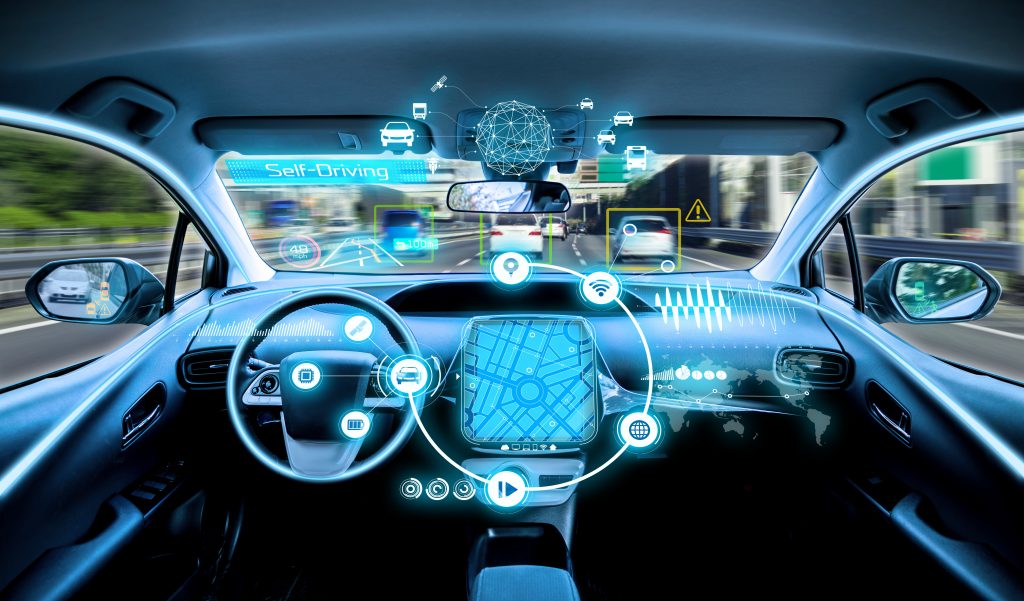
V2X technology – encompassing the wireless exchange of real-time data with other vehicles (V2V), road infrastructure (V2I), pedestrians (V2P), and mobile networks (V2N) – is expected to have a major impact on road safety, but its technical deployment is contentious.
Last month the Telecom Regulatory Authority of India (TRAI) initiated a consultation on a new V2X framework, hoping to create an environment supporting the rapid rollout of V2X technology. The regulators proposal includes the allocation of 30 MHz of 5.9GHz-band spectrum for initial Cellular Vehicle-to-Everything (C-V2X) deployments, with an additional 20 MHz reserved for future Intelligent Transportation Systems.
This week, the Cellular Operators Association of India (COAI), representing mobile operators Reliance Jio, Bharti Airtel, and Vodafone Idea, has submitted a response to the consultation, arguing that the spectrum should be auctioned commercially, like traditional mobile spectrum, rather than specially allocated.
The operators broadly claim that the V2X services of the future will fundamentally rely on 4G and 5G, and so should be treated as typical mobile spectrum under the “same service, same rules” principle.
They also claim that the creation of a separate authorisation would result in the needless duplication of telecoms infrastructure, a process which is both expensive and inefficient.
However, this view runs contrary to those held by organisations like the Broadband India Forum (BIF) and the 5G Automotive Association (5GAA), which argue that V2X technology is primarily focussed on public safety and thus warrants being allocated on a shared, non-exclusive basis. This, they claim, will allow for a faster rollout of the technology in key areas.
Indeed, the Indian government is highly motivated to clear the way for V2X’s deployment as soon as possible. India’s roads are some of the most dangerous in the world, seeing the equivalent of roughly one death every three minutes in 2023.
As TRAI weighs the competing arguments, the outcome of the consultation will help determine not only how V2X services are deployed, but also who captures value from the emerging connected mobility ecosystem. With operators pushing for a commercial spectrum model and automotive and technology stakeholders prioritising rapid, safety-driven deployment, regulators face a delicate balancing act between fostering innovation, ensuring efficient spectrum use, and addressing an urgent road safety challenge.
The decisions taken in the coming months will likely shape India’s intelligent transport landscape for years to come.
How is AI supercharging the UK’s digital economy? Join the discussions at Connected Britain 2026
Also in the news
TELUS and L-SPARK give Canadian startups access to AI supercomputer
Belden to acquire RUCKUS Networks for $1.85bn
VMO2 taps Suffolk solar farm for 10 years of clean energy


