Soft robots have a “cardiovascular” problem. While their bodies can deform and bend, their hearts, the pumps that keep them moving, have remained bulky and rigid. Researchers at the University of Bristol have created a “soft” miniature pump that weighs about as much as a single dried pumpkin seed, but can generate enough hydraulic pressure to power soft robotic systems without bulky compressors or rigid mechanical pumps.
One of the biggest challenges in soft robotics, the field of robotics that says robots can be flexible and/or squishy, is that while the robots themselves can be made from lightweight, flexible materials that stretch and deform like living organisms, the systems required to power and control them remain rigid and bulky. Although there have been recent developments in soft robotics that use heat, most soft robots rely on hydraulic and pneumatic systems to move fluid through their artificial muscles and actuators.
These components are often much larger and heavier than the robots they control, forcing many designs to remain tethered to stationary equipment via tubes and cables. This severely limits portability and real-world usability, making it difficult to deploy soft robots in applications such as wearable assistive devices, medical implants, haptic feedback systems, search-and-rescue robots, and miniature inspection machines.
Existing attempts to miniaturize these pumping systems often involve compromises, such as rigid mechanical components, high operating voltages, complex fabrication processes, or sacrifices in pumping performance. Roboticists have long sought a compact, energy-efficient pumping technology that can be fully integrated into soft robotic systems without undermining the flexibility and adaptability that make soft robotics attractive in the first place.
This is exactly what the researchers have developed. Their technology, christened the Liquid Metal Magnetohydrodynamic Actuator (LIMA) pump, is a miniature soft pump designed to replace bulky compressors and rigid pumping systems that currently limit soft robotic technologies. At the astonishing size of a pea and weighing just 0.2 g, the pump serves as a compact, self-contained fluid power source capable of generating hydraulic pressure and fluid flow while operating at less than 0.1 volts.

Saba Firouznia
Unlike conventional pumps, which rely on mechanical components to physically push fluid through a system, the LIMA pump uses electromagnetic forces acting on a droplet of liquid metal to create motion. This feature eliminates many of the rigid moving parts that make traditional pumps difficult to integrate into flexible robotic systems.
Here’s how it works. The pump operates on the principle of magnetohydrodynamics, the science of how magnetic fields interact with electrically conductive fluids. The device contains a tiny droplet of liquid metal suspended in a fluid-filled, soft channel. Directly beneath the channel sits a tiny neodymium magnet, which generates a magnetic field through the droplet. When a small electric current is passed through the liquid metal, the interaction between the current and the magnetic field generates a Lorentz force that causes the liquid metal droplet to oscillate within the channel, repeatedly displacing the surrounding fluid.
This repeated displacement creates pressure differences within the channel, generating a pumping action that drives fluid through connected soft robotic systems. Because the conductive liquid itself is the moving element, there is no need for complex mechanical assemblies or rigid transmission systems. Basically, the liquid metal droplet simultaneously acts as the motor, piston, and actuator.
The researchers exploited several unique properties of liquid metals to make their invention a real breakthrough. For starters, liquid metals possess extremely high electrical conductivity, allowing them to respond efficiently to very small electrical inputs.
Traditional soft robotic actuators often require tens, hundreds, or even thousands of volts to generate useful movement. The low millivolt-to-sub-volt operating levels of the Bristol team’s pump further enhance its suitability for integration with compact batteries and wearable electronics. The “magic” here is that the liquid metal is so conductive that it can carry very high currents at extremely low voltages. Of course, the voltage levels will increase as the system is scaled up, but they will still remain relatively quite low for a robotic pumping system.
Liquid metals also have high surface tension, which helps maintain the droplet’s integrity during operation; there’s no mixing with the surrounding fluid, nor can the droplet wear out. Lastly, their fluid nature allows them to deform and move freely within soft structures with minimal frictional losses.
Beyond moving fluid, the researchers argue that the technology could perform several functions simultaneously within a soft robotic network. The flowing fluid can transport hydraulic power to actuators, carry chemical substances such as drugs or sensing agents, and potentially transmit information signals through fluidic pathways. This multifunctionality elevates the pump beyond a mere miniature compressor replacement. It has the potential to become an integrated platform for power delivery, control, and communication within soft robotic systems – basically a heart.
“It’s a really exciting development, which overcomes the existing barriers of stiff bulkiness and offers something miniature, portable and more adaptable. These enhanced characteristics mean it could be deployed to better effect in existing uses like lab-on-a-chip devices for disease diagnosis and also with new ones, ranging from micro pumps for robotic clothing to tiny actuators environmental sampling. The sky really is the limit,” says Saba Firouznia, study lead author.
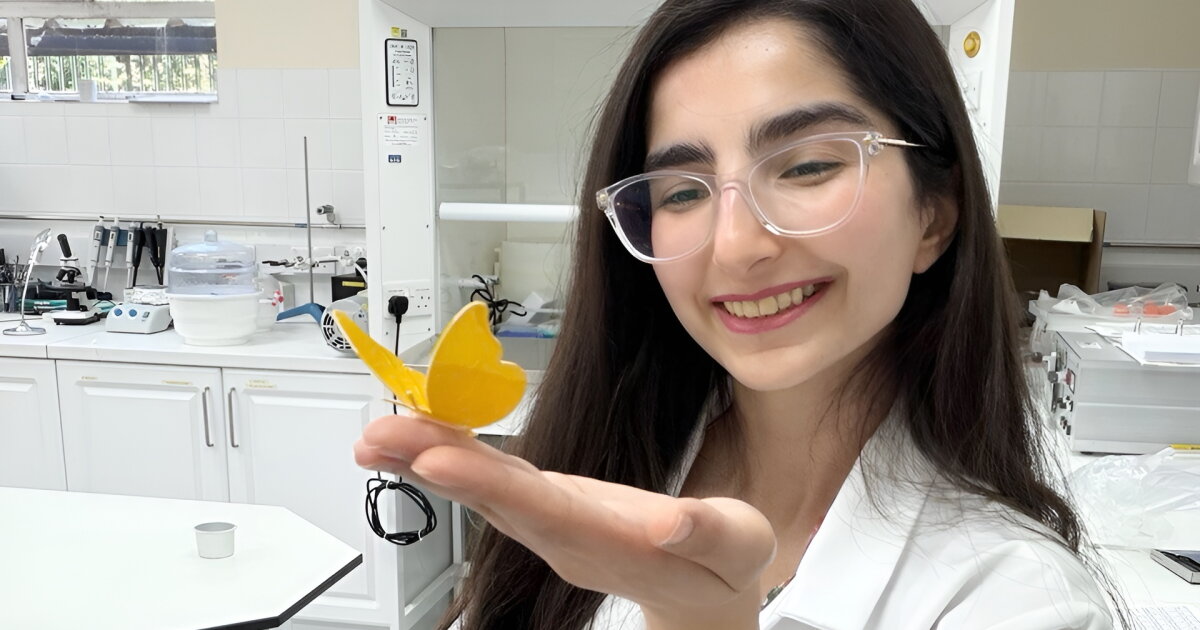
To demonstrate the technology’s capabilities, the researchers integrated the LIMA pump into three different prototype systems. The first was a robotic butterfly whose lightweight wings flap via fluid-powered actuation generated entirely by the pump, demonstrating its ability to produce useful mechanical motion despite its tiny size and extremely low power requirements.
Saba Firouznia
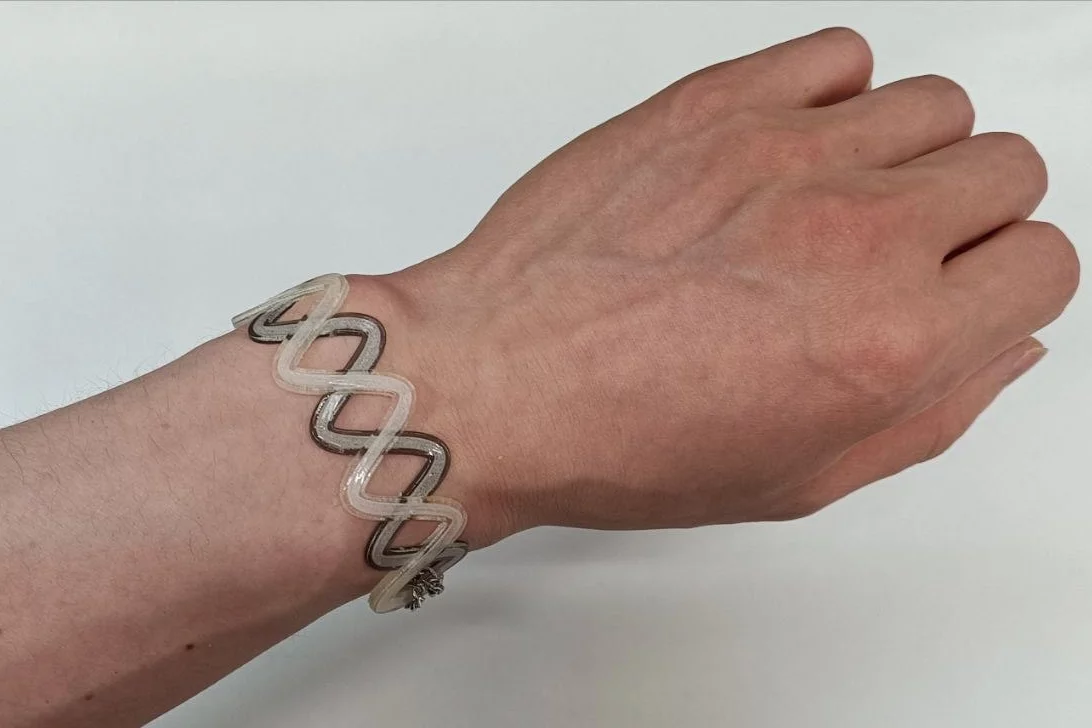
The second prototype was a wearable bracelet that changed color by circulating fluid through adaptive materials, illustrating how the technology could be used in smart clothing or responsive displays that alter their appearance on demand. The third was a haptic interface consisting of a soft fingertip pouch connected to an adjustable wristband. By controlling fluid flow within the system, the device can gently squeeze the wearer’s finger and wrist to recreate realistic touch sensations, demonstrating potential applications in virtual reality, teleoperation, rehabilitation, and next-generation wearable interfaces.
While these awesome prototypes are all early-stage demonstrations, they offer a glimpse of what could become possible when soft robots no longer need to drag around bulky pumps and compressors. Future applications could range from smart medical implants and wearable assistive devices to adaptive textiles and even edible robots, all powered by what is effectively a tiny liquid-metal heart.
A paper on the research was published in the journal Nature Communications.
Source: University of Bristol


