
KEH is one of the largest pre-owned camera sales operations in the world, and the headquarters can be found in the Peach State. KEH is also the biggest and longest-standing supporter of the PetaPixel YouTube show, so we were excited to finally had an opportunity to visit the warehouse and see the operation for ourselves.
Amongst the thousands of items for sale at KEH, there is a secret vault that houses some of the rarest cameras that have been acquired over the decades. Our editor-in-chief, Jaron Schneider, had a crazy idea to get me to try one of these very limited cameras during our stay in Atlanta. Even crazier, KEH agreed. My challenge was to choose one of these treasures and take it for a spin, and my choice ended up surprising everyone.
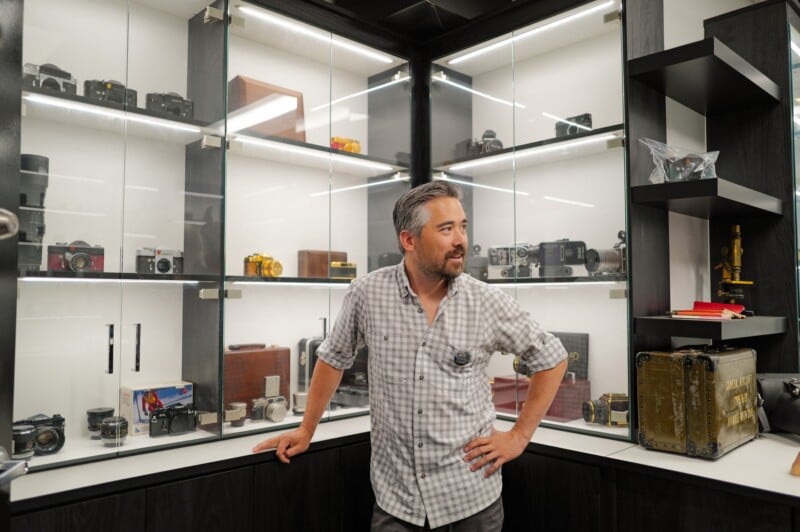
In the vault, you will find limited edition Rolleiflex TLRs, every collectible Leica imaginable, Nikon rangefinders, Alpa SLRs, and a wide assortment of 24K gold-plated models.
However, what grabbed my eye was a camera that I had never seen before: the tiny and unassuming Minolta TC-1 sat tucked away in the corner, and I was immediately enamored. I didn’t love the idea of walking around Atlanta with a gold-plated limited-edition TLR, but this little TC-1 seemed ideal and was begging to be used.
I soon discovered that there is a lot more to this tiny camera than meets the eye.
A Beautiful Body Design
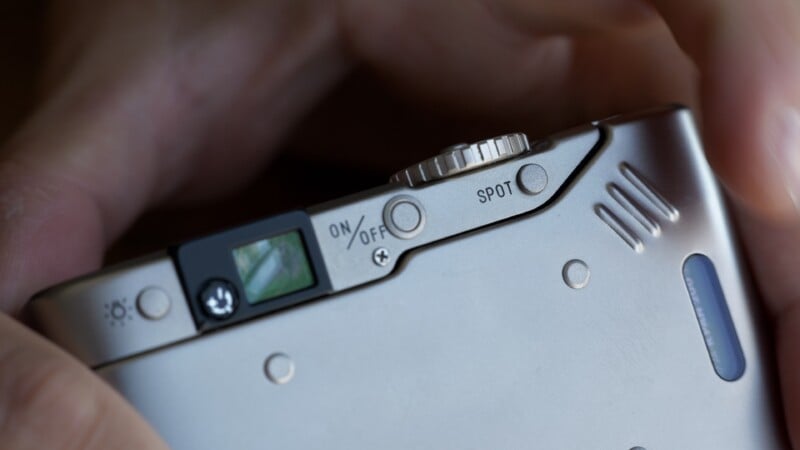
Released in 1996, the Minolta TC-1 is a premium 35mm compact film camera that competes directly with other prestigious models such as the Ricoh GR1V and Nikon 28 Ti. It is about as small as you can make a 35mm film camera, and the beautiful titanium shell keeps the weight down to eight ounces (225 grams). I absolutely loved the size and unassuming design that make the TC-1 perfect for everyday carry.

This is a fully autofocusing camera that exposes film primarily in an aperture priority mode. The TC-1 handles all film loading and rewinding automatically, although you can force a rewind at any time. Drop a disposable lithium CR123A into the base plate, and you are ready to go.
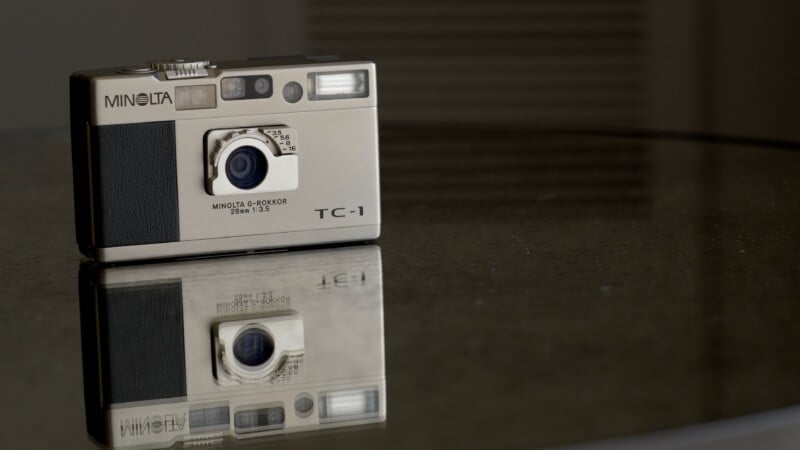
Because room for buttons and controls is at a premium, the TC-1 uses a single mode dial on top of the camera along with a two-position switch to control the camera. At first, I assumed this setup would be frustrating to use, but it was far more elegant than expected. Spinning the dial allows you to change ISO, flash controls, exposure compensation, self timer, and even manually focus the lens across various distances.
I’ve Never Seen a Lens Like This
Speaking of the lens, the Minolta Rokkor 28mm f/3.5 is easily one of the sharpest optics you’ll find on a camera, especially one of this size. It also has one of the most novel designs I’ve ever seen, with the whole lens assembly extending from behind a titanium plate cover when you are ready to shoot.
This assembly is incredibly rigid and has a toothed aperture wheel that I found quite easy to use. You can switch between f/3.5, f/5.6, f/8, and f/16, although, oddly, f/11 is missing. Rather than using an aperture blade design, the dial rotates a series of perfectly circular apertures within the lens, which gives a smooth and pleasing look to the out-of-focus areas of the image.
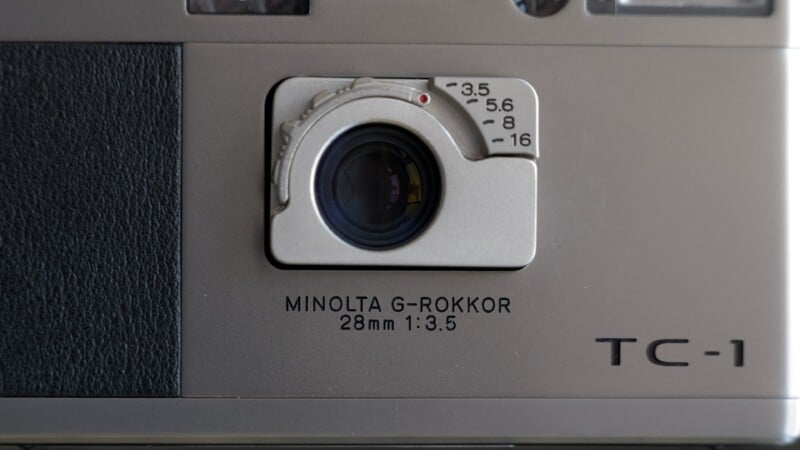
Those round aperture rings deliver soft-looking backgrounds and smooth transitions of focus. Shallow depth of field is not a common occurrence when using this relatively slow 28mm lens, but when you do get softer backgrounds, the results are pretty. Regardless, the images out of the TC-1 are crisp and striking.
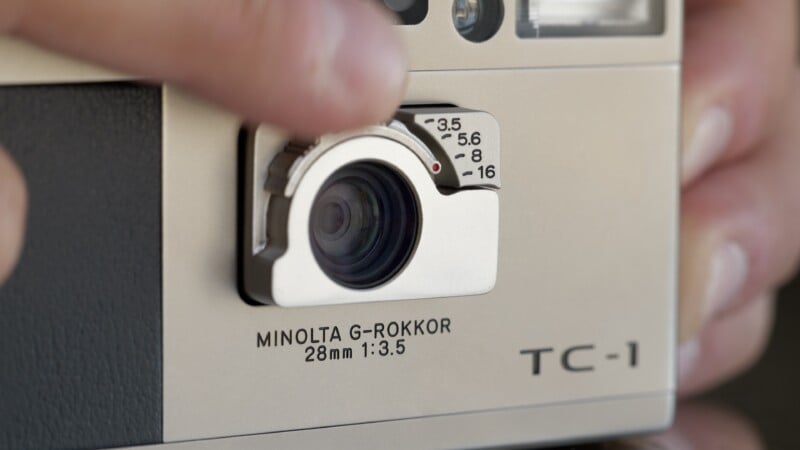
There is an LCD screen on the top of the camera that shows all pertinent information. Shots remaining, focusing distance, battery life, and more can be seen here at a glance.
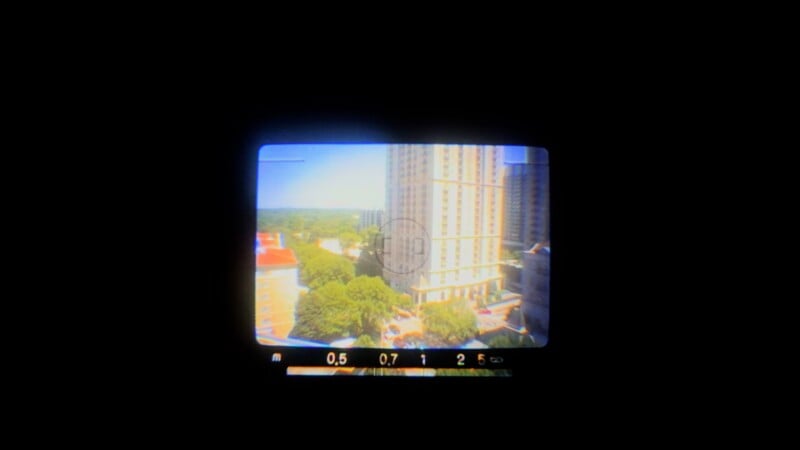
The viewfinder on the TC-1 is quite small, but it’s also very bright and has a focusing distance scale and shutter speed display. The TC-1 can expose from eight seconds to 1/750 second, but only when using f/3.5 and f/5.6. At any other aperture the leaf shutter will only fire up to 1/350 second as its fastest speed. When shooting at f/3.5, the Minolta can automatically engage its Automatic Aperture Priority Compensation mode, if the brightness of the scene is above 11.5 EV.

This unique option allows the camera to compensate for the extra light by limiting it to an f/13.5 equivalent aperture via the shutter mechanism as opposed to the aperture rings. This feature is handled automatically by the camera’s light meter and provides the camera with a bit of an automatic mode option and a way to handle overly bright situations, especially when using faster film. However, I feel that it has a detrimental effect on the look of the bokeh in this mode only.
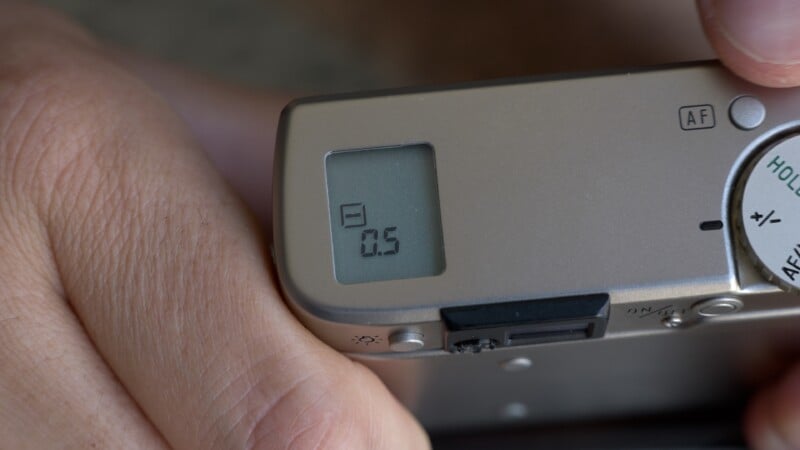
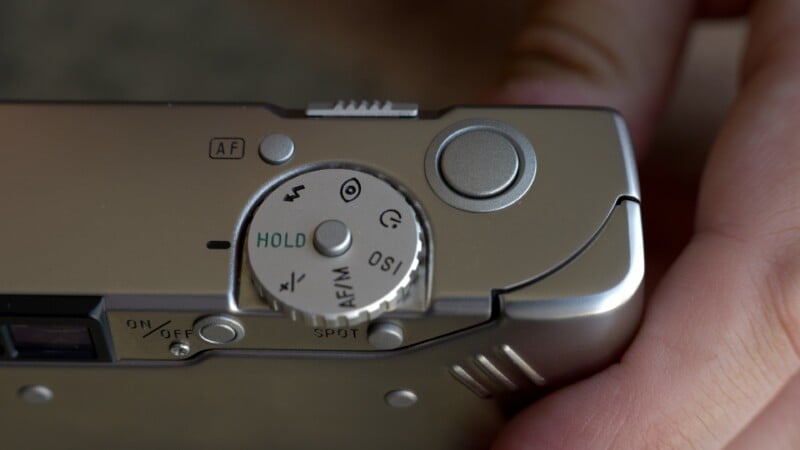
The metering is largely handled by a pretty standard center-weighted averaging meter. However, the TC-1 also happens to have a spot meter controlled with a simple button press right next to the grip. This meters only the small central circle in the viewfinder and provides an accurate way to gauge the light if you have the knack for it. Throughout the day, I largely relied on the standard light meter and rode the exposure compensation setting on the top dial so that I could make quick adjustments.
Compactness and Capability
The focusing motor is a noisy one, and makes for a predictable, if somewhat slower, shooting experience. The camera focuses on the center of the viewfinder spot, and it was easy to lock and recompose. The distance scale at the bottom of the viewfinder gives you a rough idea of where the lens is focused, and I did toy around with manual focusing for the occasional close-up shot.
I was worried that the shutter delay on the TC-1 was severe, but it turns out that the shutter trips very soon after the camera focuses. After every picture taken, the lens resets and makes a motorized sound that threw me off at first. The TC-1 felt simple and easy to use in faster situations, and I was confident that most of my shots were in focus and timed properly.



After a long day of shooting around town, the PetaPixel team headed to a local Beers and Cameras event to meet with the local photographers. This provided an excellent backdrop to test out the built-in flash on the TC-1.
The electronic flash is quite compact, providing enough power at the wider aperture ranges to light up nearby subjects. There is an option to allow the shutter to go a little longer to bring back some ambient background light as well. Don’t expect the flash to fill in a group of people at a farther distance without using higher speed films as well.



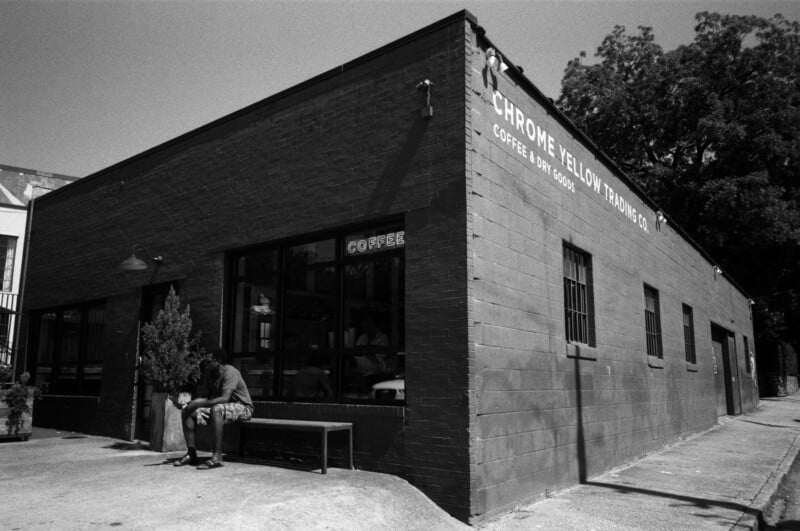
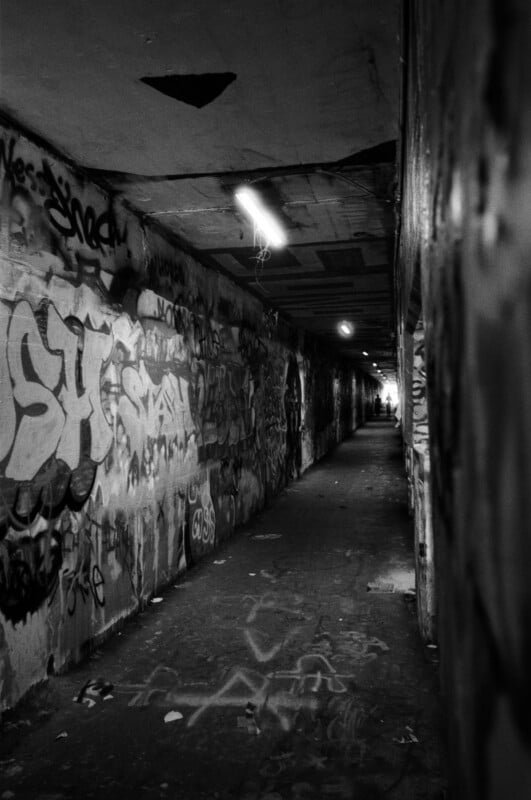
Of course, the joy — and stress — of using a film camera is the surprise you get when you first look at your developed negatives. I shot a roll of Agfa APX100, Oriental Seagull 400, and Kodacolor 100. The rolls were developed by the excellent people at Blue Moon Camera in Portland, Oregon, and upon return, it was clear to see the detail that the Minolta Rokkor lens captured.
Side note: PetaPixel members can get 10% off all lab services. That includes processing, scanning, printing, enlargements, even drum scanning.

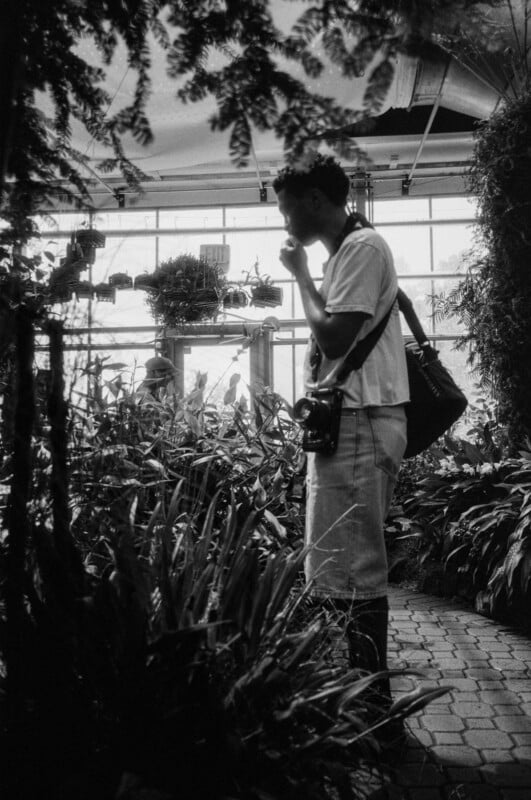
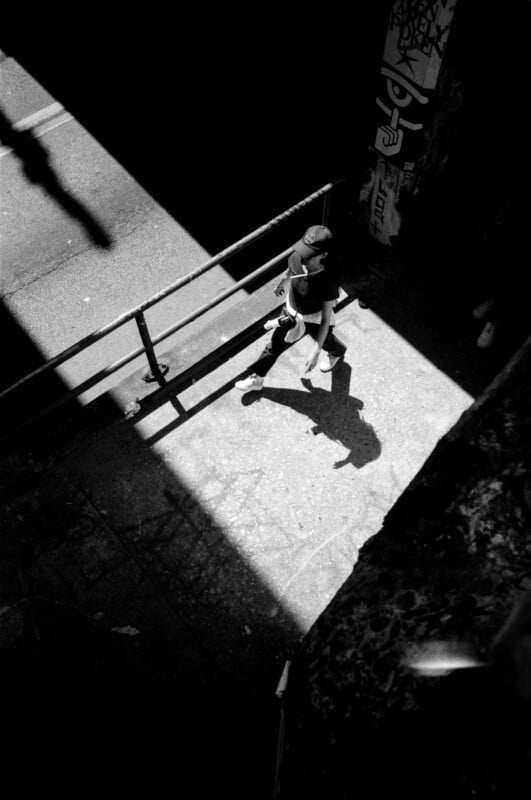

This is a very sharp lens with clean contrast and only some minor vignetting. I did take some shots over the iconic Jackson Street bridge, though, and at first I thought there was a major ghosting issue. I’m now convinced that this particular TC-1 has a slight light-leak that mostly shows up in brighter conditions. That aside, there is something about the images out of the TC-1 that are just appealing. An intangible quality to the photos out of this little camera help it to punch well above it’s weight.




What drew me to the TC-1 so strongly was the simple fact that I had never in my lengthy career ever heard of it. Part of the joy of playing with so many different cameras over so many years is the surprise and wonder to be found in a new camera design. At first, I was concerned that the TC-1 would be a quirky and frustrating experience, but it turns out that the opposite was true.




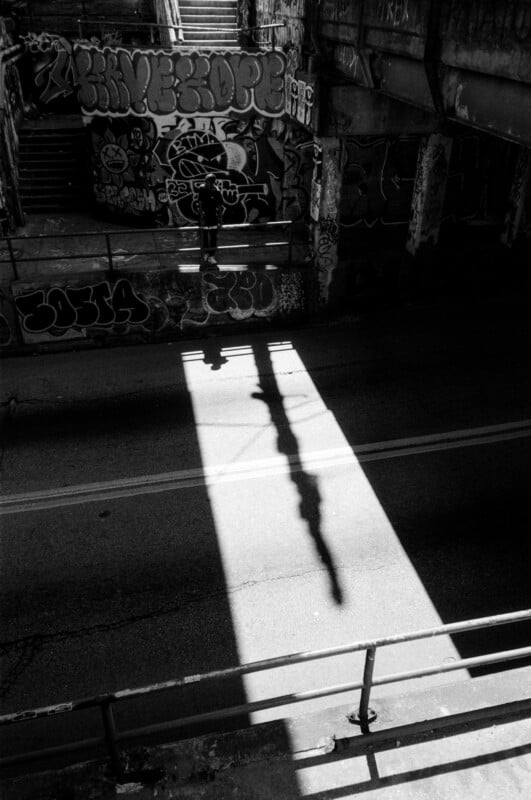

This is a premium and understated camera that will surprise you with just how technically precise it is, and by the quality of the images such a small package can deliver.
It is every bit the contender against the illustrious Ricoh GR cameras or Nikon Ti series. If I were looking for a premium compact film camera, I’d pass by the Contax T cameras and Leica Miniluxes, and wander the streets with a Minolta TC-1 in my pocket.
Full disclosure: KEH is a sponsor of the PetaPixel YouTube Channel. KEH has no input on editorial content.


