Updated June 19, 2026 09:01AM
Big Agnes’s Copper Spur tents have been a hit since their introduction in 2008, and for good reason: they’re among the lightest freestanding double-wall tents on the market. With BA’s most recent slate of shelters, called the VST line, the Colorado-based brand is taking another step towards the world of ultralight gear. The lineup includes three single-wall tents: the freestanding Sarvis, the semi-freestanding Pitchpine, and the trekking pole-assisted String Ridge.
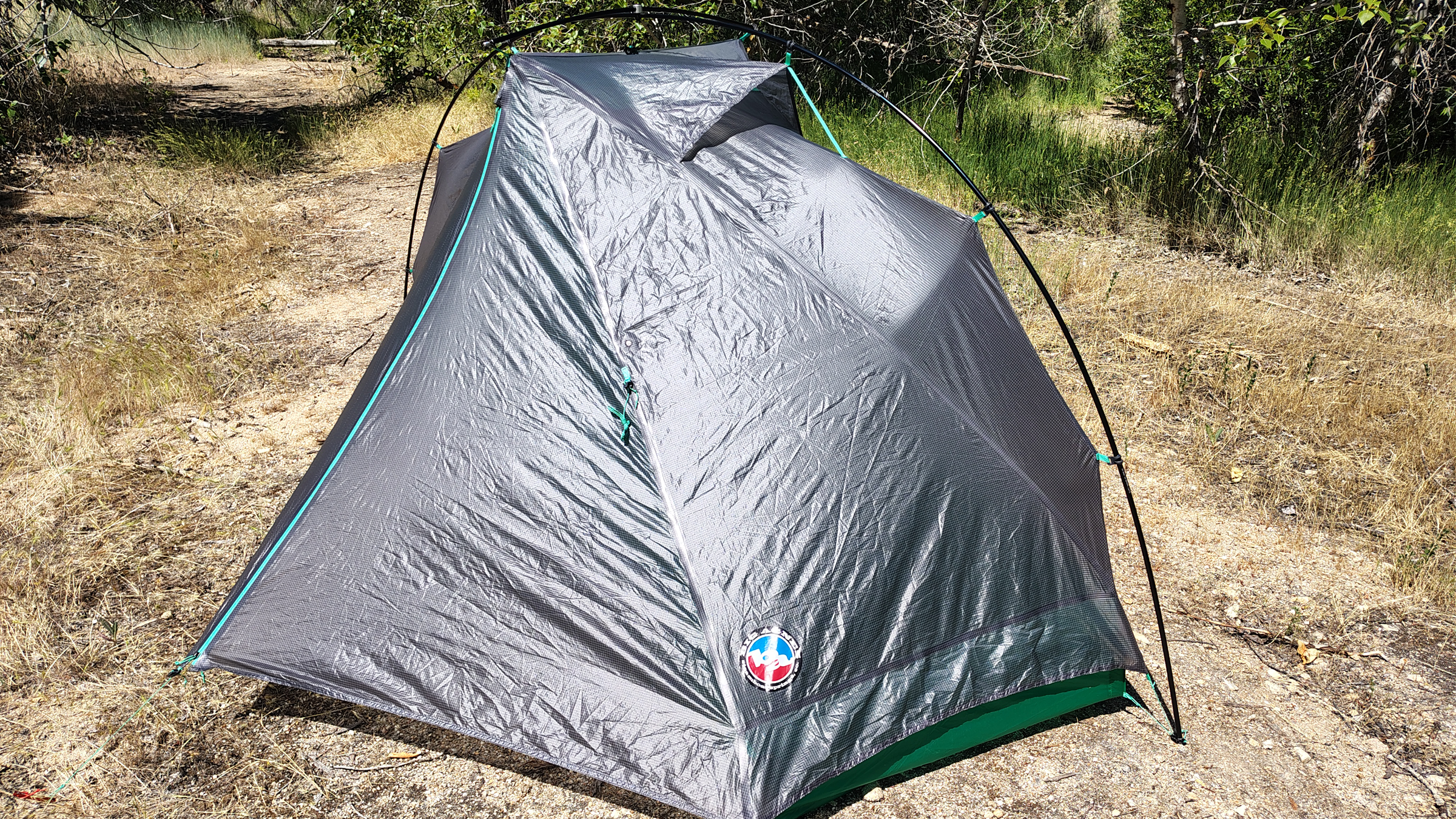
Of the three, we were immediately drawn to the Pitchpine 1.5, a spacious one-person tent that straddles the divide between ultralight and traditional shelter. Compared to other non-freestanding single-wall tents, it also comes with an eye-popping price tag of $650. We’ve been testing a sample this spring to see if the unconventional design is worth the splurge.
Design
If you’re drawn to the Pitchpine, it’s probably due to the design. This tent has a unique mix of features that aren’t shared by many tents in its weight class. Like most ultralight tents, it’s non-freestanding and single-walled. But unlike most of its rivals, it doesn’t require trekking poles. Instead, there’s a single tent pole that arcs from the head to the foot of the tent diagonally, and a small spreader bar at the top. It’s kind of like a traditional tent with two crossing poles, but with one pole replaced by simply staking out the corners. That single pole, plus four stakes, provides a surprisingly simple set-up and spacious interior at a fairly low weight.
Our sample weighed in at 31 ounces out of the box. The tent and pole alone weighed 27.2 ounces, just 0.1 ounces over Big Agne’s stated trail weight. It ships with eight lightweight stakes, but if you sub in four carbon stakes (the minimum needed for a fair-weather pitch), you could hit the trail at under 28 ounces. In the included stuff sack, it packs down to about 18 inches long by 4 inches wide and tall. If you pack the pole separately, the tent itself can pack down to about the size of a cantaloupe.
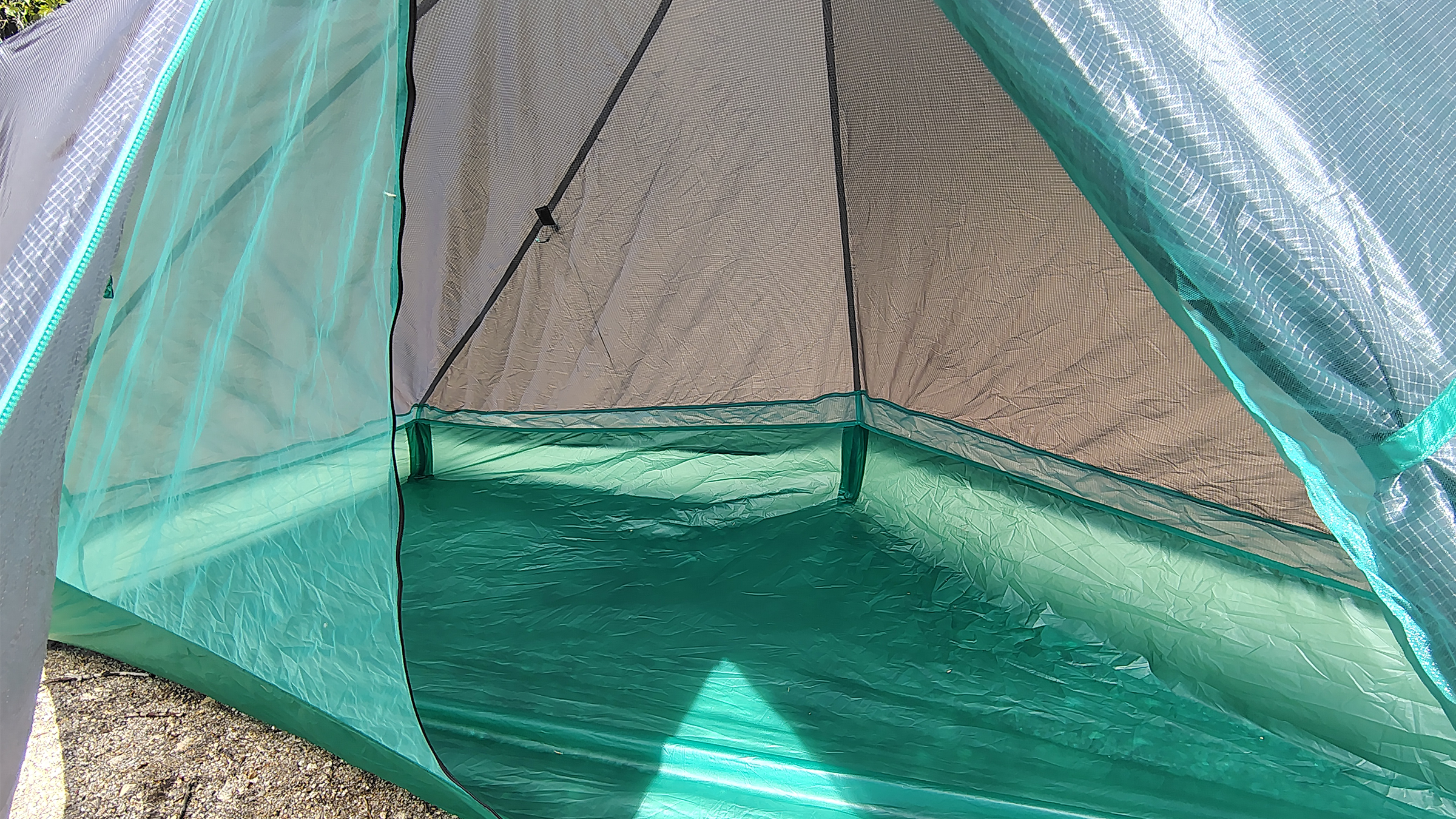
The Pitchpine maxes out at 40 inches of headroom in the center of the tent, and has an 88-inch-long interior. It’s 28 inches wide at either end (easily accommodating a 25-inch-wide pad), and because it has just a single side entry, converts what would be a second vestibule into an extra 16 inches of interior space in the center of the tent instead. It’s enough room for your pack or even a medium-sized dog.
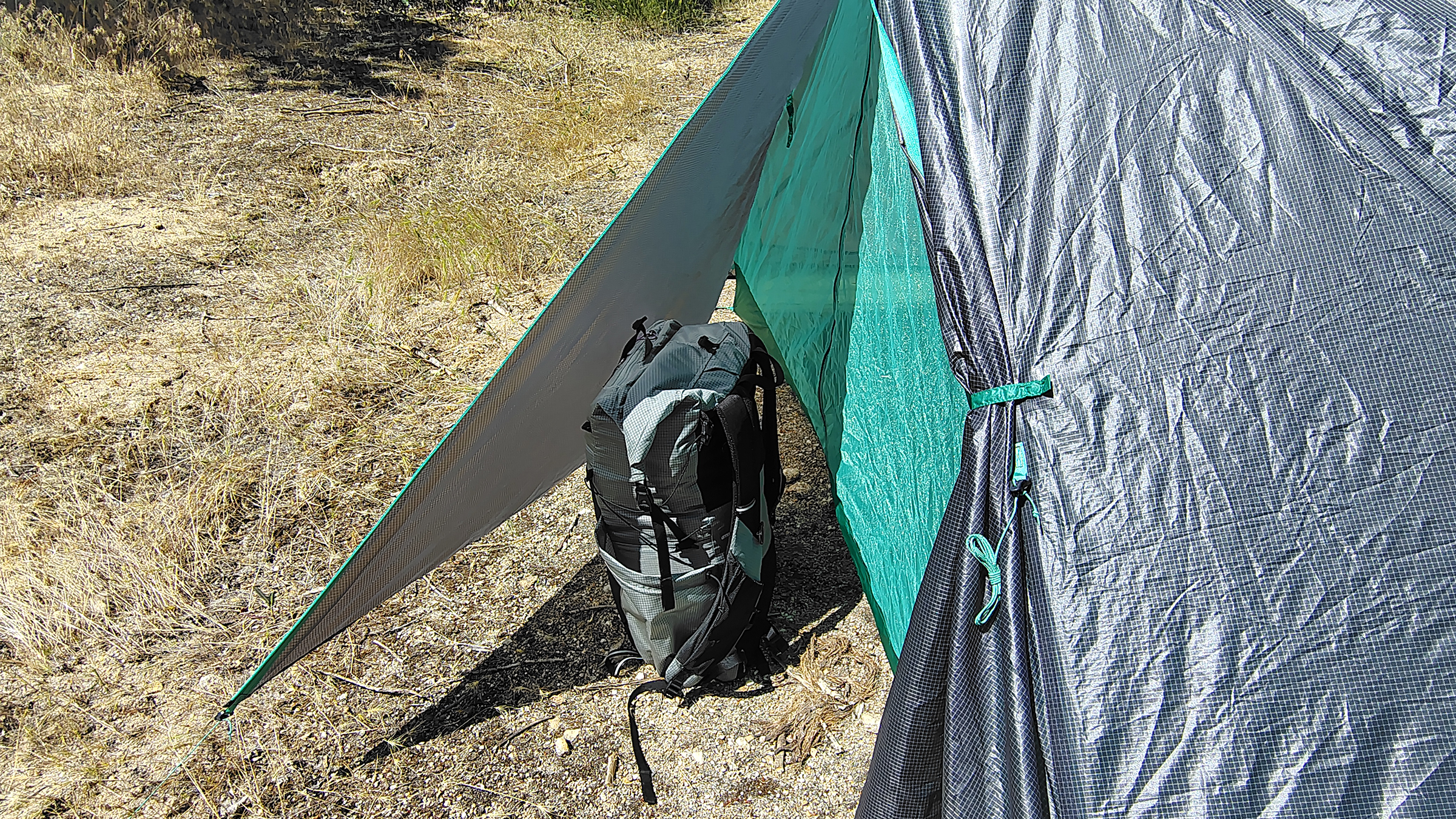
The 16-inch kickout makes it feel downright roomy for a one-person shelter. The single vestibule is also fairly massive, and can easily fit a 65 liter pack, your hiking shoes or boots, and a few other pieces of gear. The 40 inches of headroom is pretty average: many trekking-pole tents are a bit taller, while most lightweight freestanding tents are an inch or two lower.
It’s a smart and fairly uncommon design, though it does have some rivals (the Tarptent Rainbow, for example). In all, it offers a lot of interior room for its 27.2-ounce weight.
Construction
Besides the design, the biggest perk of the Pitchpine is the fabric: Big Agnes made the switch to polyester and added a proprietary new waterproof coating (released in 2025) called Hyperbead. Because Big Agnes is fairly tight-lipped about the specifics (like whether the coating is silicone or polyurethane-based), it’s hard to parse exactly what sets the Hyperbead coating apart from other ultralight fabrics. Hyperbead is PFAS-free, but most modern silicone-impregnated fabrics are too. The most obvious upgrade is the waterproofing. The rainfly gets a 4,000-millimeter hydrostatic head rating, on par with the best silnylon and silpoly fabrics we’ve tested, and a serious upgrade over other Big Agnes fabrics with their 1,500-millimeter rating.
The switch to the 20-denier polyester rainfly is also a welcome change. Polyester is inherently more hydrophobic than nylon, and the Pitchpine is very sag-resistant, even when blasted with water from a garden hose. With a nylon tent, you need to tighten guylines after a few hours to maintain a tight pitch, especially in damp conditions—no need with this tent.
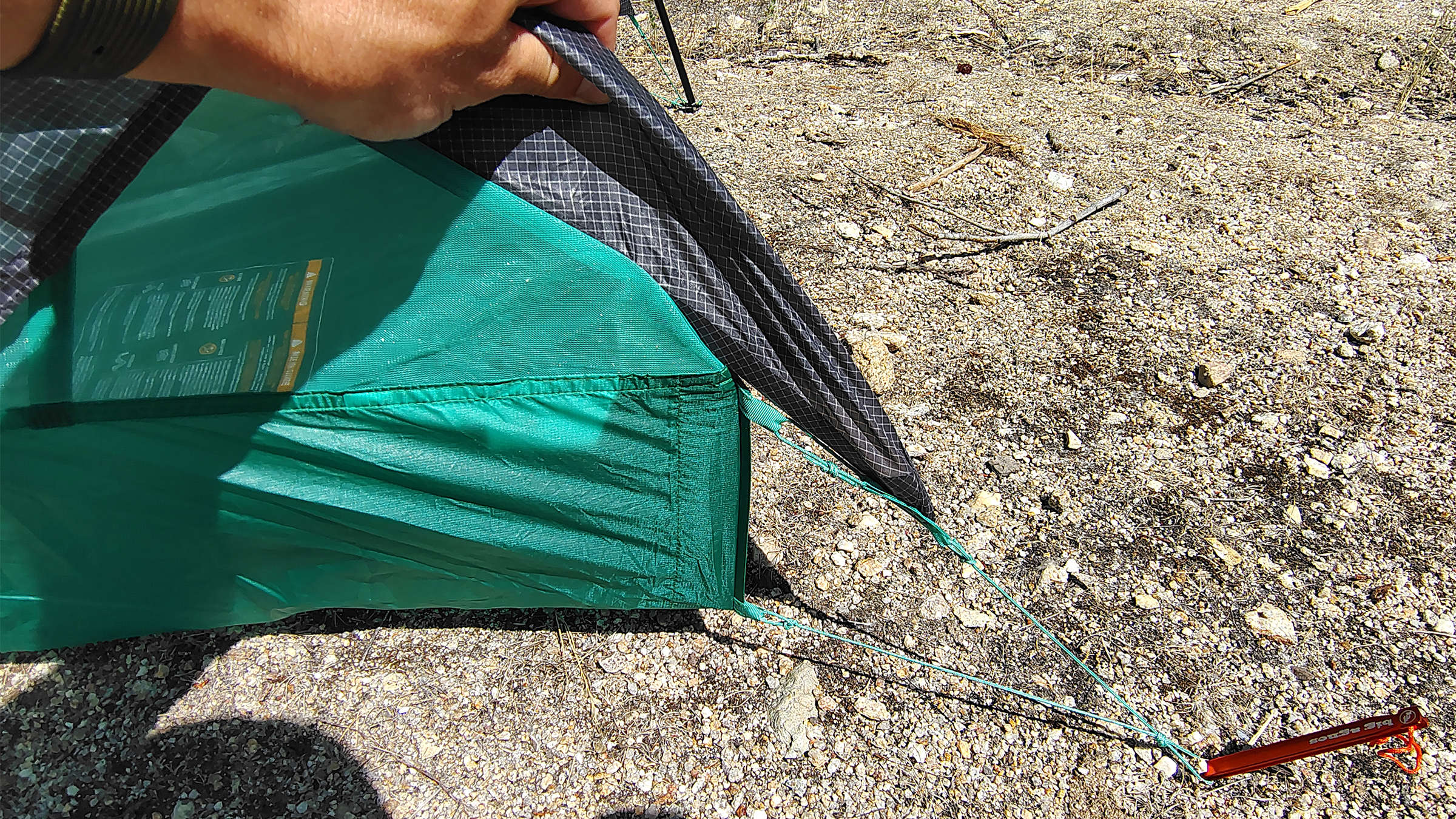
Unfortunately, Big Agnes sticks with a 15-denier nylon for the floor fabric. It’s an odd choice to make the tent floor both thinner and less waterproof (1500 millimeter rating) than the rainfly. Ultralighters often nix a footprint or groundcloth when possible, but you might want to use one with the Pitchpine to keep the floor in good shape.
Other details are nice, if not exactly revolutionary. There’s an aluminum DAC Featherlite NFL poleset and eight aluminum stakes. At the pricepoint, it would be nice to see carbon poles and stakes, though there is something to be said for the durability and simple repairability of aluminum. The magnetic closures that hold the rainfly open work well, as do the plastic inserts found in each corner of the floor, which keep the “bathtub” shape in place even when your pitch isn’t perfect.
Performance in the Field
The first thing we noticed about the Pitchpine in use was the easy setup. It’s possible to erect this tent in under two minutes. Unlike trekking-pole tents, which pitch best when they are set up with loose guylines and then tightened, the Pitchpine is pretty much set and forget. The only thing that slows down setup and tear down are the metal tabs that the ends of the poles slot into. The fit is very snug, and inserting and removing the poles takes a bit of wrangling.
The Pitchpine performs fairly well in winds below 30 miles per hour, especially if you manage to set it up so the wind is blowing along the tent pole, rather than across it. Ultimately, getting good wind performance out of this kind of lightweight tent usually comes down to adding extra guylines, and that’s where the Pitchpine falls short. There are two guyline tieouts, but in windy conditions, having the option to add 4, 6, or even 8 additional lines is appreciated.
Who is the Pitchpine For?
Thanks to the odd feature-set, the Pitchpine sits in a kind of middle ground between ultralight trekking pole tents and lightweight freestanding models.
The biggest barrier is certainly the price. While the Pitchpine is a cool tent, ultralighters could spend the same amount and get something much lighter made of Dyneema. And while the design isn’t common, it’s not unique. At under $300, the Tarptent Rainbow is quite similar: single-wall, arch pole, and non-freestanding. The Pitchpine is more spacious, easier to set up, requires fewer stakes, and is marginally lighter—in other words, it’s a better tent. But the Rainbow works just fine, and is a much better deal. If you do want to drop the cash, Tarptent’s Dyneema models are a worthy upgrade. The Rainbow Li is $624 and 22.5 ounces, or you could opt for the Moment DW Li at $584, which offers a full double-wall design at 26.3 ounces. That said, the Pitchpine is by far the most spacious of the three.
If you are okay with the single-wall design, the Pitchpine does have some perks compared to the lightest double-wall freestanding tents, like the Big Agnes Copper Spur or NEMO Hornet. It’s a few ounces lighter than either of those tents, and also more spacious in just about every measurement. It has a bit more headroom, is wider at the foot end, and has an extra 16-inch internal kickout where the second vestibule would be. It feels much roomier than both, especially compared to the head-entry design of the Copper Spur.
In all, the Pitchpine is best suited to the ultralight-curious. It makes the most sense for people who don’t use trekking poles or trips where they’re not needed, like bikepacking or river trips. It is far easier to set up than your average trekking-pole shelter, and that could be a nice quality-of-life upgrade even for trekking pole users—if you can stomach the price.


