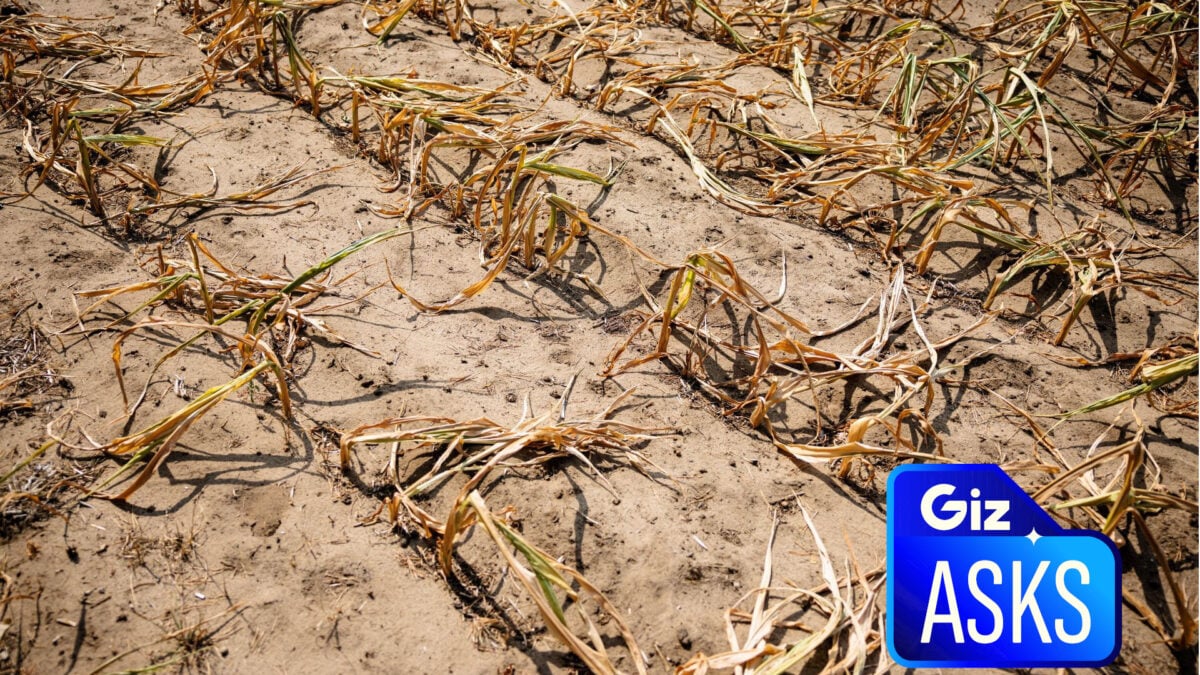
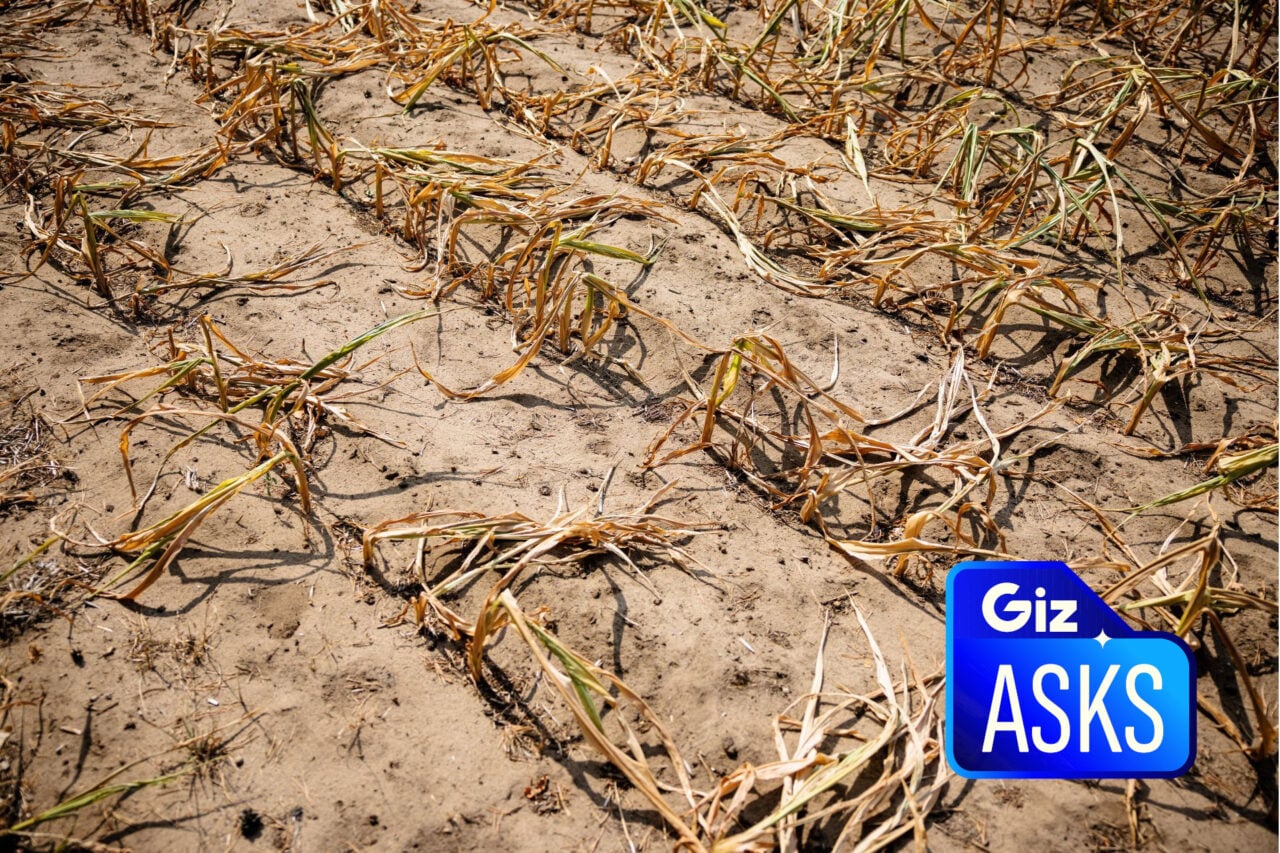
The El Niño of 1877 and 1878 was one of the strongest on record. This event was a key driver of concurrent, multiyear droughts in Asia, Brazil, and Africa that caused widespread crop failures and catalyzed a global famine, killing millions.
Now, El Niño is back again, and it’s rapidly strengthening. It’s still early days, but climate scientists are already comparing this event to the 1877-1878 El Niño. If it becomes as severe as forecast models suggest, we can expect an intense increase in Pacific sea surface temperatures that will push the global average temperature to new heights and shift weather patterns across the globe. But could this cause another global famine?
For this Giz Asks, we posed this question to several experts. While they highlighted certain risks, they emphasized that even exceptionally strong El Niño events cannot trigger a severe food shortage in isolation—social, political, and economic factors must also play a role.
Benjamin Selwyn
Professor of international relations and international development at the University of Sussex. Selwyn teaches about global supply chains, food systems, and development.
El Niño is a cyclical climatic event—periodic warming of the Pacific—that disrupts rainfall patterns across the globe. In the context of climate breakdown, however, its effects are intensified as it interacts with hotter oceans, degraded soils, and already stressed food systems. What might once have been a severe shock now has a greater capacity to propagate food crises through the global economy.
It is misleading, though, to treat any resulting famine as a natural outcome. Famines are produced socially. As Amartya Sen showed in his analysis of the Bengal famine, starvation is rarely the result of an absolute decline in food availability. It stems from failures of entitlement: People lose the means to command food through markets, production or state support.
The late nineteenth-century El Niño events—what Mike Davis called the “Late Victorian Holocausts”—coincided with drought, but it was colonial extraction, export imperatives and the systematic impoverishment of rural populations that converted climatic stress into mass mortality.
The contemporary global food system reproduces comparable vulnerabilities. It operates effectively for profit-making but poorly for human need and ecological stability. Current responses to food and fertilizer shocks, intensified by geopolitical tensions such as the ongoing war on Iran, focus on restoring supply chains. Yet such measures defer crisis while entrenching dependence on fossil-fuel-based fertilisers and volatile global markets.
A severe El Niño could precipitate acute food crises. Whether these become famines will depend less on aggregate supply than on inequality, debt burdens, conflict and state priorities. The material capacity to prevent famine exists. Oxfam’s estimate that a small fraction of G7 military spending could address the present food crisis makes that clear. The absence of such commitments is a political choice.
Avoiding famine requires more than repairing supply chains. It requires treating food as a right and reorganizing production around social need and ecological limits rather than the imperatives of profit.
Jennifer Burney
Professor of global environmental policy and earth system science at Stanford University’s Doerr School of Sustainability. Burney’s research focuses on the coupled relationships between climate and food security.
A famine is a shortage of food that leads to excess mortality, whether directly (starvation) or indirectly (through malnutrition-induced vulnerability to illness and disease). Recent decades have taught us that famines are most likely to occur when a shock to food supplies collides with insufficient institutional capacity to respond—for example, due to bad governance, violence, or lack of resources (or all three). The risk of major famine arising from the emerging ‘super El Niño’ therefore comes from the combination of the magnitude and extent of the anticipated agricultural impacts around the world and the tenuous conditions already on the ground in many of those same regions.
Magnitude and Extent: El Niño events cause droughts in major crop producing regions across the Western Pacific (e.g., eastern Indonesia, the Philippines, SE China), southern Africa, the western Sahel, north-central India, and the northeast part of South America. These conditions in turn lead to significant declines in staple crop production in those areas. A one-in-a-hundred year El Niño is likely to cause deep production shortfalls, driving up demand for traded products to compensate, and raising global food prices.
Institutional Capacity: Unfortunately, the baseline food security situation onto which these conditions might fall is more troubling than at any other point in the past 30 years. Many areas that will be directly impacted by supply shocks are cash-strapped and reeling from inflation, impacted by regional conflicts, or dealing with other regional crises like Ebola and domestic terrorism. When supplies are strained and prices rise, the real trouble begins. The poorest suffer first and hardest, and if producers stop selling food (perhaps to safeguard their own household food consumption), domestic markets can disintegrate entirely. In such cases, regional trade or the international safety net (e.g, the World Food Programme) will be needed; unfortunately, the WFP has been stretched to the limit in recent years, and the global sense of urgency and obligation to respond to famines has dwindled.
So, I’ll be watching crop progress reports, hoping for good harvests in regions where El Niño produces more favorable growing conditions, and encouraging my representatives to support food aid to teleconnected [geographically separate but climatically connected] regions.
Michael Roberts
Professor in the Department of Economics, University of Hawaii Economic Research Organization (UHERO), and Sea Grant at the University of Hawaii at Manoa. Roberts’ research focuses on effects of agricultural policies, impacts of climate change on agriculture, commodity pricing, renewable energy, water, and experimental economics.
Unlikely. A major global famine from El Niño alone is hard to construct, and the more carefully you look, the smaller the risk gets.
Start with where our food actually comes from. Global prices are driven mainly by the big producing regions—the United States and Brazil loom largest—and El Niño doesn’t tend to hit those areas hard. The correlations between El Niño and poor harvests are real in places like Africa and Australia, but the link is modest, and weakest precisely where it would matter most for world markets. A truly global famine would require multiple consecutive years of very poor crops across several major producing regions. That’s a remote scenario.
It also helps that we’re starting from a position of strength. Food commodity prices are low right now, and world inventories are high. Trade and inventory adjustments are exactly the mechanisms that absorb a bad weather year—stocks get drawn down, grain moves to where it’s short, and prices rise modestly rather than catastrophically. Any feasible single-year shock can be handled this way.
So where’s the genuine risk? Not in the weather, but in the policy response. The damage in past food crises came largely from panic: export bans, government-sponsored hoarding, and similar reactions that turn a manageable shortfall into a real emergency for the world’s poorest. These choices, not rainfall, are what convert a price blip into hunger.
Africa is the most vulnerable, and for reasons that have little to do with El Niño’s strength. Many countries there are relatively isolated from world markets, so they can’t easily import their way out of a local shortfall, and aid is often slow or obstructed. The recent gutting of the United States Agency for International Development (USAID) makes that worse, removing a buffer that has historically prevented localized shortages from becoming localized famines.
The bottom line: A “super” El Niño could cause real, concentrated hardship—most plausibly in parts of Africa—but a global famine is unlikely, and even regional crises are avoidable with any reasonable policy response. The threat is political far more so than meteorological.
Jean-Martin Bauer
Director of food security and nutrition analysis at the United Nations’ World Food Programme. Bauer has served with the WFP in the Sahel and central Africa and responded to food emergencies in Afghanistan and Syria.
The prospect of a severe El Niño should keep us up at night. This is because global food security is already at risk in many of the fragile countries where the World Food Programme operates.
For the first time this century, two famines were confirmed in 2025, in Gaza and in Sudan. Over the past 10 years, the number of people experiencing acute food insecurity worldwide has doubled to over 266 million. And now, with the closure of the Hormuz Strait, we are currently going through the third major disruption to global supply chains this decade.
At WFP, we estimated in March that an additional 45 million people could fall into acute food insecurity should there be a prolonged escalation in the Middle East—and this did not account for possible El Niño impacts.
A severe El Niño could ignite a slow burn that would affect very vulnerable countries and territories first and foremost—according to the Integrated Food Security Phase Classification [a standardized, global scale used to assess food security] there is already a risk of famine in parts of Gaza, Sudan, Somalia, and South Sudan. These are geographies affected by violence and conflict, places that are on the edge, where a new shock could have devastating consequences.
The concern is also that there are limited buffers to absorb a new shock. After dealing with covid-19 and the cost-of-living crisis caused by the war in Ukraine, many countries are in debt distress, limiting governments’ capacity to respond. Humanitarian agencies themselves have a much smaller footprint than a few years ago.
In our day and age, famines are preventable, and data and evidence are critical pillars of prevention. One action that can be taken now is to safeguard the data systems that have suffered from large funding cuts since 2025. We need to ensure that decision makers have the evidence needed to trigger early action that saves lives. We know that when it comes to anticipatory action, a dollar spent early averts seven dollars’ worth of impacts.
We know that the next famine will not be a surprise—it will be a choice. And the choice is ours.
Giz Asks is a recurring Gizmodo series in which experts answer big questions in their own words, offering a range of perspectives on the ideas, discoveries, and debates that affect our lives and shape our understanding of the world.


