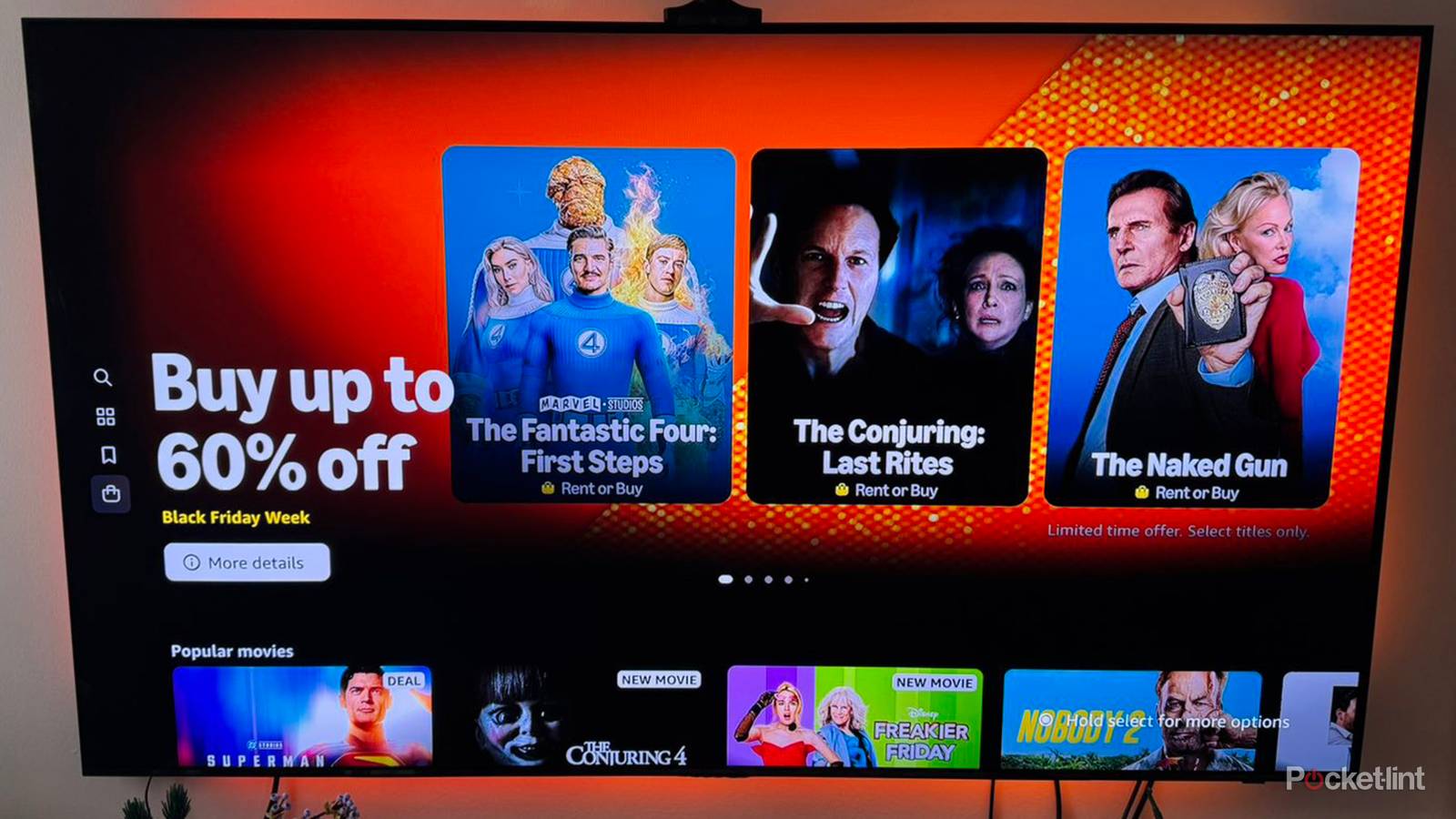
Many eons ago, the idea of early-access movie rentals would’ve sounded like paradise. Also known as “premium” video-on-demand (PVOD), what I’m talking about are movies that start streaming just a few days or weeks after they’ve left the theater. In some situations, you don’t even have to wait that long — as I write this, the biopic Michael is already on PVOD despite still showing in some theater chains. As a ’90s kid, I would’ve killed to be able to see something like Terminator 2 or The Matrix without waiting several months for the DVD or VHS release.
There are a number of services offering PVOD, some of the most prominent US platforms being Prime Video, YouTube, and Fandango. Regardless of which one you prefer, though, I’m here to argue that no PVOD rental is worth it. It’s a cash grab, exploiting either your impatience, or your lack of familiarity with release windows. I’ll explain everything that’s at play.
The PVOD gimmick explained
Secretly steering you back to ownership

There’s obvious appeal to a PVOD title that may still be in theaters — which is sometimes dubbed a PEST release, short for Premium Electronic Sell-Through. Movie tickets can quickly get expensive. If you want to see an evening showing at an Alamo Drafthouse in Austin, for example, you’re looking at $35 for two people, and that’s without food or transportation. For a family of four, you can see how the decision might suddenly fall between seeing the latest Pixar movie in theaters, or saving up for that Switch 2 instead. Even if a PEST movie costs you $25 to $30, that’s still cheaper than a pair of tickets, without any worries about comfort or transportation. The only limit on the number of viewers is your furniture.
What you’re not being told is just how little time you need to wait to pay dramatically less. The days when you’d have to wait a few months for any home release are long gone. The COVID-19 pandemic gave studios all the excuse they needed to accelerate streaming, and now, the regular PVOD window can open up as little as two weeks after PEST, dropping prices by about $10.
If you’re ready to wait another two to four weeks after that, you should be able to rent for as little as $3 to $6, or buy the movie outright for the cost of a PVOD pricetag. That second point may be the most important one — while a lot of movies aren’t worth watching once, if there’s any chance of you wanting repeat viewing, renting in a PVOD window is automatically a waste of your money. Rentals typically expire 48 hours after you start, which is an intentional move to deter more than one watch.
Arguably, the only time early-access makes sense is if you’ve got ample disposable income, and want to watch something while it still has some leftover cultural buzz from its premiere.
It could be that nudging you towards ownership is the point. While the cost of a PVOD rental is liable to scare off many customers, it makes buying a movie seem like a much better deal, whether that means a download or a Blu-ray disc. If it doesn’t increase ownership, it’s still a win for the studios. They reap more than they might otherwise from the rental market without really sacrificing anything. By the time a movie enters the PEST phase, it’s already well past its theatrical peak, i.e. the first two or three weekends.
Knowing all this, there’s a very narrow window in which a PVOD rental has any logic. In fact the only one that makes sense, arguably, is if you’ve got ample disposable income, and want to watch something while it still has some leftover cultural buzz from its premiere. Some people might get a kick out of participating in the zeitgeist without having to actually walk out their door.
The nonsense of PVOD becomes even clearer once you bring subscription services into the picture. Most movies end up there within a few months of their theatrical window. With enough patience, you can watch just about any title at no extra cost, or at most the price of one month’s subscription fee — which will get you access to an entire library.
It’s really those subscription catalogs that damn PVOD. With a Netflix subscription alone, you have access to more material than anyone could’ve dreamed of owning in 1996. If you’re willing to open your mind, there are so many classic movies you can catch up on. There’s no need to see something as soon as possible after its theatrical release, unless it might somehow be a life-changing experience for you. That’s not impossible — you probably know someone who’s adopted something like Star Wars or The Lord of the Rings as their personality. The odds of that are so slim, though, that you’ll probably get as much or more value out of a classic as you will something that just left your local multiplex.
The broader impact of the PVOD strategy
Do you still care about theaters?

Something that’s easy to lose in the shuffle here is the wider impact on the movie industry, particularly as it relates to theaters. The push for rapid streaming — and streaming in general — has helped devalue theaters so much that movies that would’ve been blockbusters in previous decades can now struggle to attract crowds. You might not have much sympathy for big-budget productions, or chains like AMC or Alamo — yet if theater traffic in general is down, that can affect the prospects for movies and theaters at all levels. Low-budget hits like Backrooms or Obsession tend to be flukes. More often, the only releases that get people out of the house are “events” from recognizable pop-culture franchises, such as DC, Marvel, Star Wars, and Minecraft.
The push for rapid streaming has helped devalue theaters so much that movies that would’ve been blockbusters in previous decades can now struggle to attract crowds.
That, in turn, dictates what sort of movies get made. If it’s not from an established franchise, a release is often going to be relegated to indie theaters or go straight to streaming. It’s hard to support any kind of filmmaking on an indie budget. Streaming services, meanwhile, are only willing to pay so much, and may have strict content expectations. You’re probably never going to see an R-rated martial arts movie like The Furious on Apple TV, and Netflix isn’t usually funding the sort of raunchy comedy movies that used to dominate the box office.
Ultimately, it’s the combination of streaming, social media, and gaming that’s more to blame than PVOD specifically. But you can think of PVOD as a symptom of a greater problem, namely the studios’ disregard for theaters. A successful theater run can instantly put any movie on a good footing, and besides, there’s still a unique aura to seeing a movie on the big screen, surrounded by people who aren’t just friends and family.

- Simultaneous streams
-
3
- # of profiles
-
6
- Originals
-
Yes
- Live TV
-
Limited (some add-on channels offer live TV)


