Published June 25, 2026 01:09PM
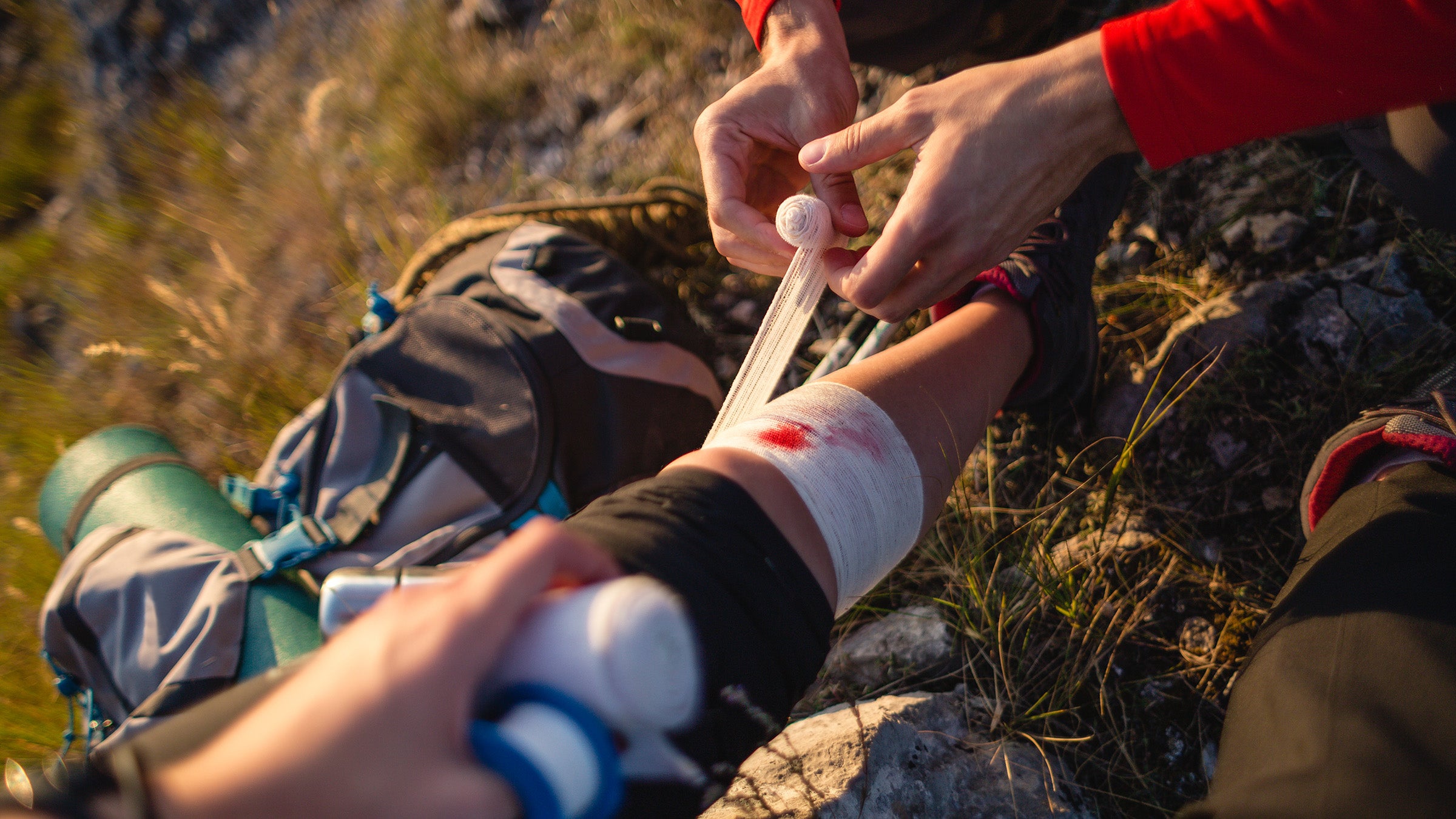
No one expects to get injured while hiking into the backcountry, but it happens often enough that it’s crucial to plan for. However, there’s a debate raging online over which first aid supplies, exactly, you should pack in your bag.
Asked what other hikers put in their first aid kits, Reddit users’s responses spanned the spectrum. Some suggested carrying a comprehensive kit that could weigh several pounds. Others leaned more toward minimalism. The vast majority said they bring bandages, medical tape, and ibuprofen or acetaminophen. One user said they wouldn’t bring a first aid kid at all.
On one extreme are hikers who pack gear that they likely don’t have the knowledge or training to effectively use. On the other are those who argue that even basic first-aid supplies like bandages and splints are useless if you don’t also have a satellite communicator with you to call for help.
That’s not a very self-sufficient line of reasoning. And physicians who specialize in wilderness medicine say that theory is flawed: Relying solely on a satellite communicator to help you in an emergency could put you in greater danger.
Why first aid matters in the backcountry
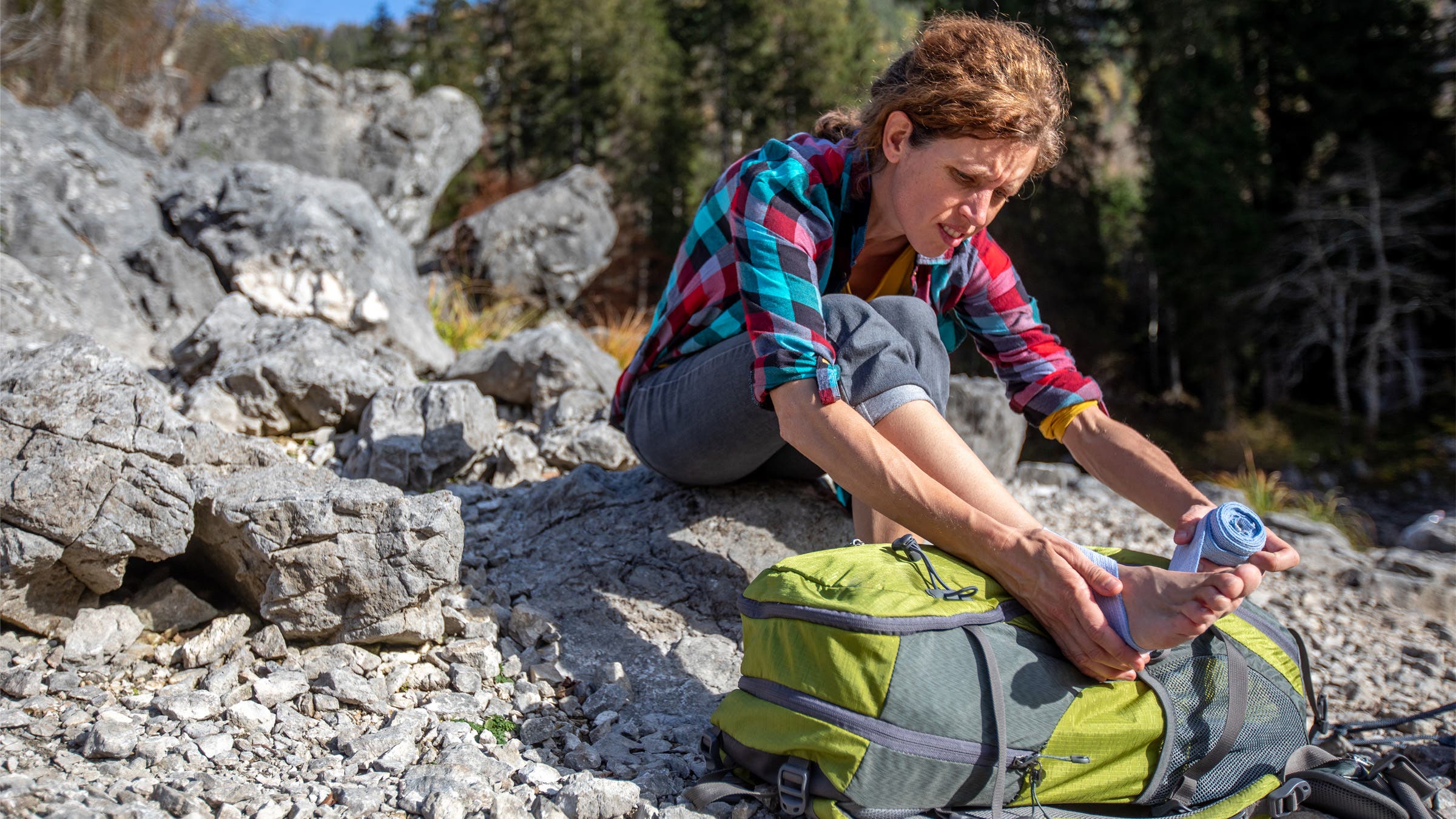
While we have data on the number of deaths that happen in national parks each year, there aren’t solid numbers for how many hikers suffer backcountry injuries in general. Research suggests that the most common injury for hikers is blisters, followed by ankle sprains.
Most hiker injuries are minor by medical standards. But more severe problems do happen: People have allergic reactions. Sustaining cuts and trauma isn’t unheard of. In many such cases, having a kit to administer preliminary first aid makes a big difference
“There’s this movement that says you don’t need to carry things because we have an infrastructure to support [rescues]. That’s not the case in the wilderness,” Dr. Seth Hawkins, an emergency physician specializing in wilderness and disaster medicine, and medical director at National Association for Search and Rescue (NASAR), told Backpacker. “You should not challenge the 10 Essentials that need to be carried.”
The 10 Essentials is a short list of gear, tools, and other items that are meant to help hikers handle minor injuries, sudden weather changes, or unexpected emergencies; while it began as a simple list of ten items published in Mountaineering: The Freedom of the Hills in 1974, most authorities now use a systems-based approach for it, encouraging hikers to think about their objective and choose necessary gear from a series of ten categories.
Ultimately, it’s crucial to be prepared. That means bringing both a satellite communication device and an adequate first aid kit.
“Remote areas are inherently risky,” Dr. David Young, an associate professor of Wilderness and Environmental Medicine at the University of Colorado Anschutz, told Backpacker. “Any injury or illness in the backcountry can be magnified without resources like pharmacies, ambulances, and hospitals. Learning about and preparing for potential mishaps can sometimes be a matter of life and death.”
What should be in your first aid kit?
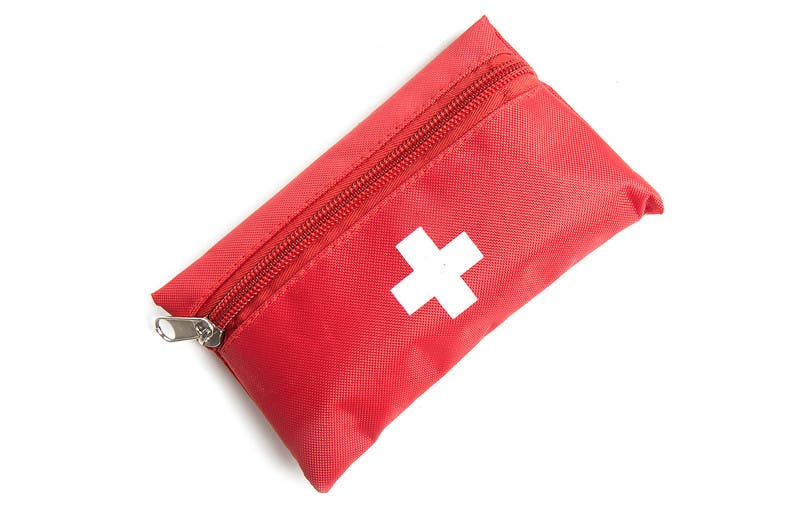
While the consensus online is fuzzy, the doctors we spoke with were clear: In the backcountry, there’s a need to have basic first aid, like bandages and splints, along with the ability to call for help through something like a satellite communicator. Even small items like disposable bandages and antibiotic cream are “useful for minor injuries,” Young said.
Dr. Chris Peluso, emergency and austere-rescue physician and medical director at NASAR agrees. “Nobody wants to come home [with] a mega blister that they could have treated in the field,” he said.
These professionals recommended having the following basic medical supplies on hand in the backcountry for shorter trips:
- Band-Aids
- A simple wound dressing system, like a small roll of gauze and a small roll of medical tape
- Tourniquet
- An epinephrine auto-injector device, like an Epi-Pen, for those who use one
- A malleable splint
- An elastic bandage roll
- Over-the-counter pain relievers like acetaminophen and ibuprofen
If you’re planning on a longer trip, Peluso also suggests adding these to the list:
- Extra wound care, such as rolled gauze and hemostatic wound packing
- Antibiotic ointment
- Antihistamine medication, such as cetirizine or loratadine
- Blister care, such as cushioned, waterproof blister care bandages
- Tweezers
- Small roll of duct tape
- Extra chemical water purification
And when you return from a trip, restock your first aid. Replenish supplies you used. Throw out anything past its expiration date, and make sure you’ve got everything you need.
Know how to use your kit
Having basic first aid is helpful, but only if you know how to use it in the setting you’re in. If you’re kayaking, know how to treat water-related injuries. If you’re rock climbing or mountain biking, know how to splint a limb or treat minor cuts and abrasions.
Consider the outcomes and prepare for them — with both the right supplies and knowledge.
Peluso recommends building your first aid kit in reverse. “Think of the worst thing that could possibly happen to you and back-trace that to build your kit,” he said. “I can save your life with about half a pound of gear. Everybody should be able to do that at the end of the day.”
Hawkins also stressed the importance of that. In a situation where a person is injured, “knowing basic things to do to prevent somebody from deteriorating can be critical,” he said.
Even if you can call, help might be a long way off
The fact that you have a satellite communicator doesn’t mean you have instant access to medical or SAR assistance. When you’re in the backcountry, help is often a long way away, and having the ability to treat minor injuries while you wait for professional help could be a lifesaver, according to Hawkins.
“There are a number of conditions that could be fatal in 10 or 15 minutes, long before any EMS or search and rescue could arrive,” he said.
While emergency medical services will typically arrive in the frontcountry in 15 to 20 minutes, it’s typical for SAR teams to take longer to get to a patient in the backcountry, Hawkins explains. “It will reliably be 30 to 60 minutes before teams are even launching to get to a trailhead where somebody would be in distress,” he said.
Monica Allen, director of public affairs at NOAA Research, agrees. “Emergencies can happen at any time and anywhere. Remote areas add risk when evaluating safety,” she said. “It may be harder for the search and rescue team to reach you.”
Ultimately, what you shouldn’t do is try to ditch first aid in an effort to lighten your backpack, even if you also have a satellite communicator in there. “Being without a medical kit would be like being without water,” Peluso said.
Resources for backcountry first aid
Experts stress the importance of knowing first aid before going into the backcountry. Here are some educational resources you can look into to learn more. Investing in a training course like this is investing in your safety and the safety of those around you. They’re also very interesting and tend to be a lot of fun.
- Stop the Bleed — This is a program from the U.S. Department of Defense that teaches people how to control bleeding in a bystander.
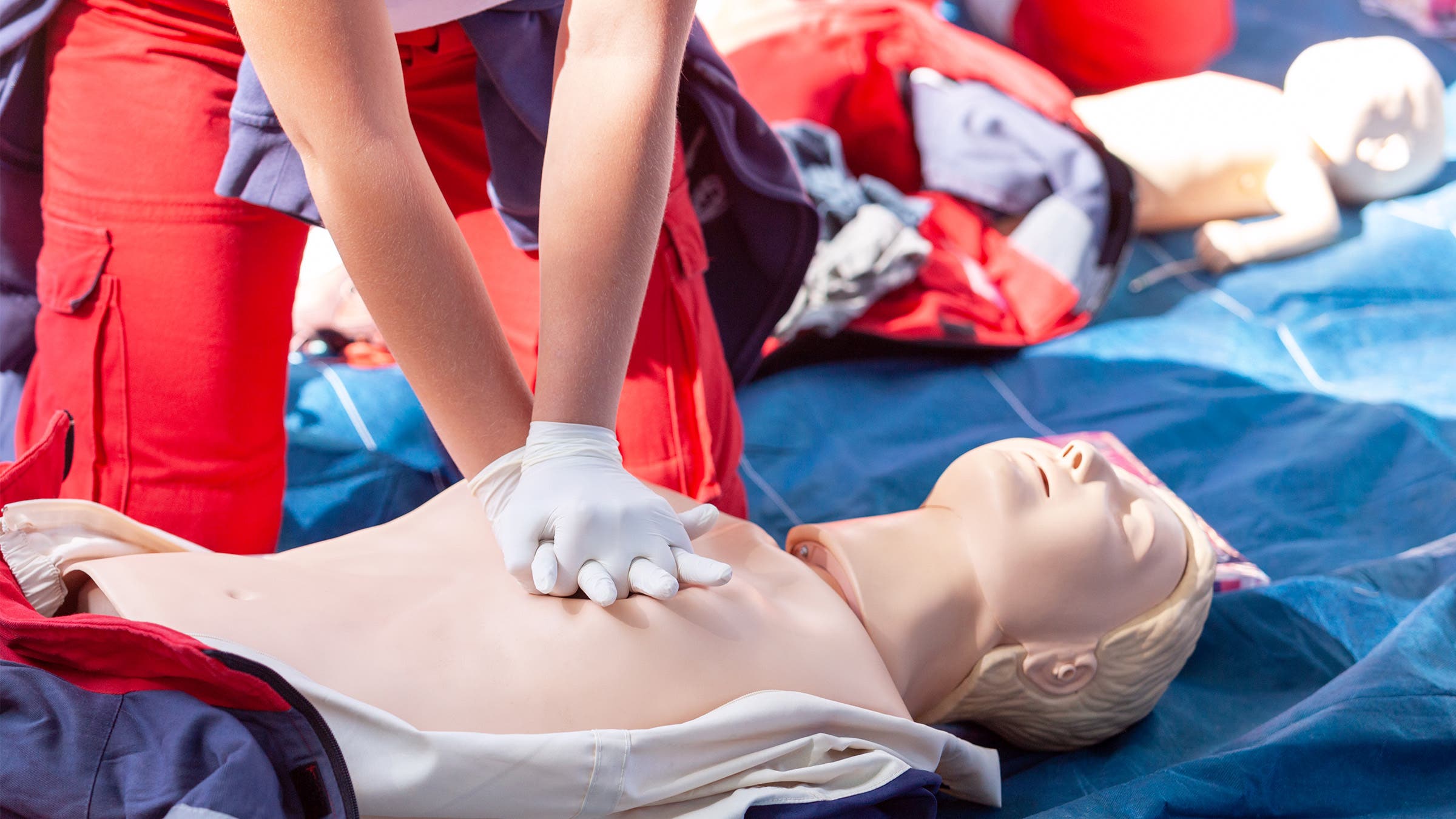
- CPR — The American Red Cross (ARC) offers CPR training classes around the country, along with online resources.
- Wilderness First Aid (WFA) — The ARC offers training courses across the country that are specific to wilderness first aid.
- Wilderness First Responder (WFR) — This certification is for outdoor guides, educators, and search-and-rescue personnel, but it’s also great for any backpacker who wants to build their wilderness medical skills. It requires an in-depth 70-80 hour training course over several days. It is the gold standard for wilderness medical training. NOLs, WMA International, and other organizations offer this training nationwide.


