Press Release
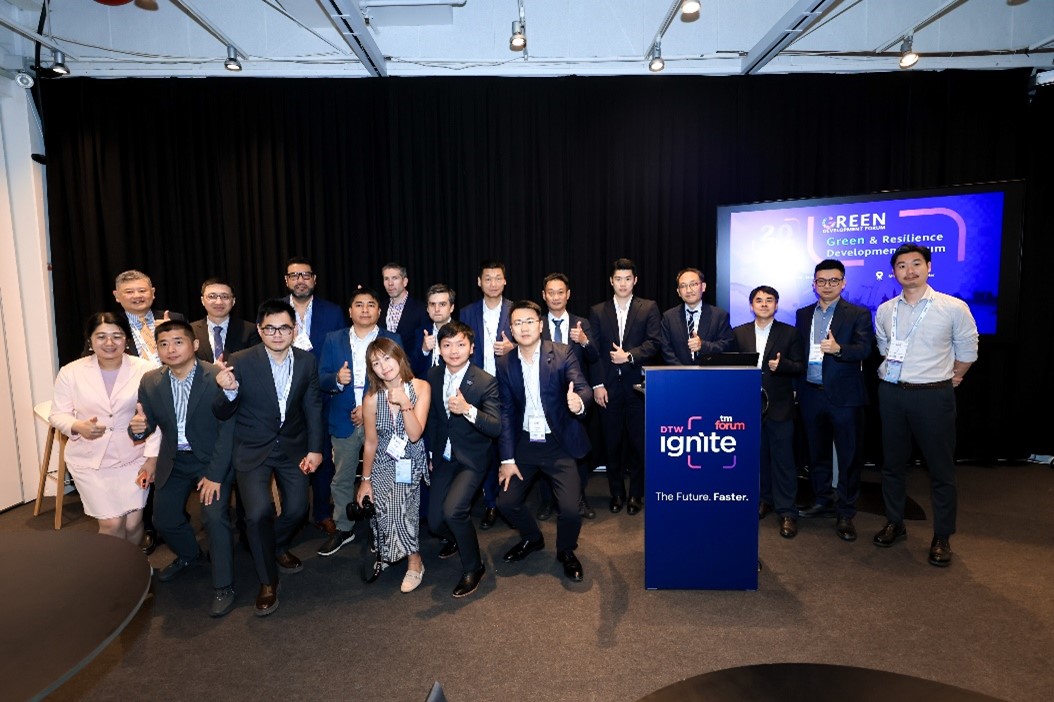
[Copenhagen, Denmark, June 24, 2026] At Digital Transformation World (DTW) 26, Huawei, in collaboration with TM Forum and GSMA Intelligence, hosted the 5th Green & Resilience Development Forum, bringing together industry leaders to explore the sustainable development of communications networks. The forum featured in-depth discussions on the Green Network Index (GNI), AI-powered energy efficiency, and resilient architecture practices, collectively charting the course toward green and resilient networks.
Executive Vision: Green + Resilience as Dual Engines for Future Networks
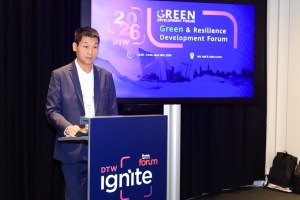
Tim Niu, President of Huawei’s Network Consulting and System Integration Department, delivered the opening remarks, warmly welcoming distinguished guests and partners from around the world. The forum’s theme—”AI-Driven Green & Resilience: New Blueprint for Zero-Carbon and Reliable Network Architecture”—underscored a critical paradigm shift: green networks are no longer optional but essential. Resilience serves as the baseline for sustainable networks, while AI acts as the accelerator toward the 2030 zero-carbon vision.
“Huawei is committed to collaborating with industry partners worldwide, leveraging ‘green + resilience’ as dual engines to advance the GNI standard and the Hedera architecture,” Tim stated. “Together, we will build networks that are low-carbon and measurable, resilient and verifiable, and evolvable and sustainable.”
Industry Consensus: Green Transformation of Communications Networks is Imperative
Peter Jarich, Head of GSMA Intelligence, presented the Green Network Index Round 2 findings. The second round introduced an enhanced measurement methodology and comprehensive indicator system covering entire networks, individual networks, and stations. Over 20 mobile and fixed network operators participated in this initiative. Additionally, the GNI digital platform has been launched, providing operators with case studies for sustainable development planning and benchmarking.
Marc Einstein, Director of Research at Counterpoint Research, explored how AI is reshaping the sustainability trajectory of telecom operators. Drawing on validated operator data, he highlighted that AI-driven optimization has achieved annual energy savings of 4 billion kWh. Over the past decade, Telefónica has seen data traffic surge by 1,200%, while total network energy consumption decreased by 12%, and energy density ratio declined by 92% compared to 2015. Green is no longer merely a compliance requirement—it has become a strategic foundation for the digital economy and computing power networks.
Lloyd Chan, Vice President of Strategic Transformation at HKT, outlined HKT’s approach to infrastructure development, emphasizing green practices, cyber resilience, and AI enablement. Network modernization, intelligent power supply systems, and resilient architecture design not only improve operational efficiency and mitigate operational risks, but also support AI-era service development and emerging application requirements.
Technological Innovation: AI Accelerates Green and Resilient Development
David Yu, General Manager of Huawei’s Green Resilience Target Network Solution, addressed key industry challenges: accelerating climate change, rising OPEX, and the prevalence of low-efficiency legacy equipment and network outages. Huawei has partnered with industry organizations to establish a green network index and Hedera Architecture, leveraging digital twin capabilities and AI for data governance. The solution is promoting the transformation of traditional wireless base stations into green smart sites and legacy equipment rooms into edge data centers capable of meeting future computing demands, supporting collaborative development across mobile, home, and business (CHB) scenarios—achieving results over 30% ahead of industry benchmarks.
“Green and resilient innovation provides the driving force for carriers to develop high-quality services and maintain a competitive edge.” David noted.
Looking Ahead: Infinite Value in Industry’s Green and Resilient Transformation
Facing dual pressures from global shifts and surging traffic, Huawei has invited GSMA Intelligence, Counterpoint, and HKT to explore this topic together, reaching a consensus: green and resilience are no longer a trade-off—they are shared imperatives. Looking ahead, the industry will move from passive energy saving to active energy intelligence, powered by the GNI standard and AI agent technology, building a digital foundation that is both low-carbon and resilient. Green and resilience are strategic imperatives, not competing options. Huawei looks forward to working with global partners to build a green target network that is zero-carbon, resilient, and built to deliver.


