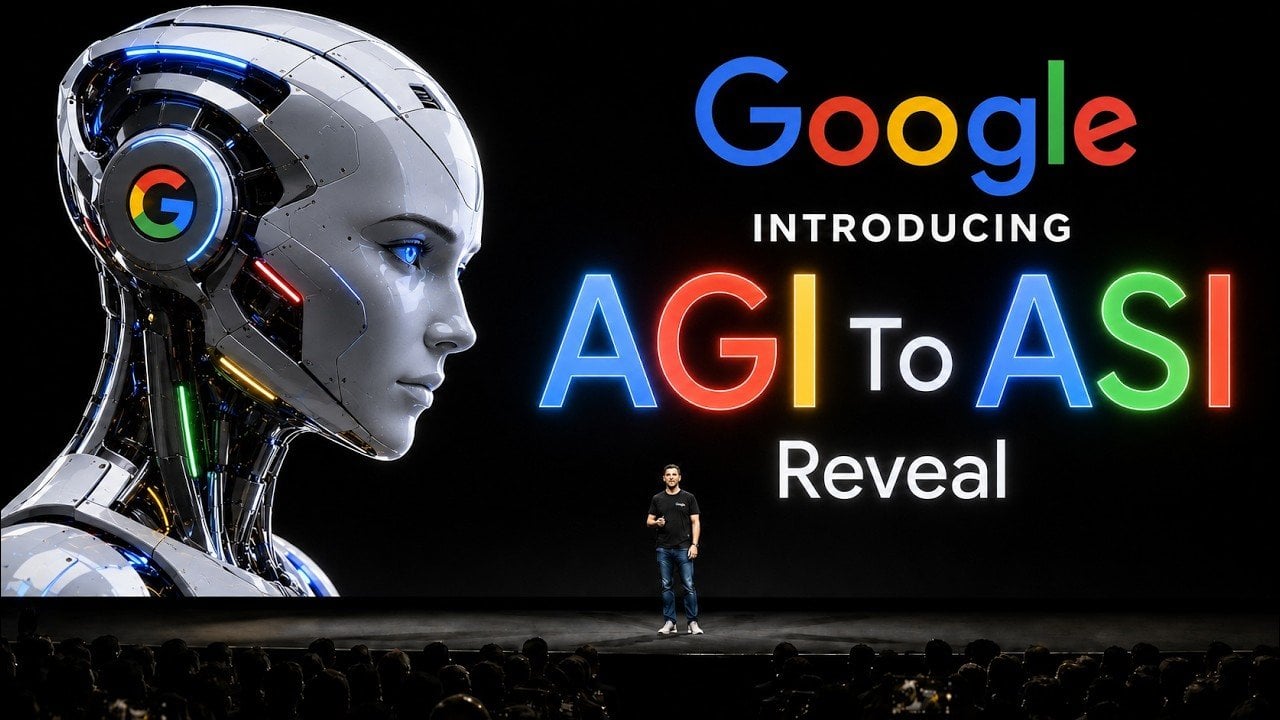
Google DeepMind’s recent revelation outlines a potential timeline for the evolution from Artificial General Intelligence (AGI) to Artificial Superintelligence (ASI), emphasizing the fantastic nature of this progression. According to AI Grid, AGI, defined as an AI system capable of performing any intellectual task a human can, could realistically be achieved within the next decade. This milestone would mark a turning point, shifting the focus toward how AGI might evolve into ASI, a system with intelligence surpassing human capabilities across all domains. Central to this transition are factors such as recursive self-improvement, where AI systems enhance their own capabilities and the increasing scalability of digital intelligence, which allows for rapid adaptation and innovation.
Explore how advancements in computational power, the emergence of collective intelligence through multi-agent systems and the resolution of critical bottlenecks could shape the path to ASI. Gain insight into the challenges posed by energy demands, regulatory constraints and the need for high-quality datasets, as well as the strategies that could address these hurdles. This breakdown provides a clear understanding of the complexities and opportunities that lie ahead in navigating the post-AGI era.
AGI: Achievable Within the Next Decade?
TL;DR Key Takeaways :
- Google DeepMind predicts that Artificial General Intelligence (AGI) could be achieved within the next decade, shifting focus to its potential evolution into Artificial Superintelligence (ASI).
- ASI, surpassing human intelligence across all domains, could transform problem-solving, innovation and decision-making, but its speed and nature of development remain uncertain.
- Key drivers for the AGI-to-ASI transition include advancements in computational power, recursive self-improvement and the unique scalability and efficiency of digital intelligence.
- Challenges such as data availability, resource constraints, societal readiness and regulatory frameworks could slow the progression toward ASI.
- Proactive planning, responsible development and robust oversight are essential to address risks and ensure the successful integration of ASI into society.
AGI, defined as an AI system capable of performing any intellectual task that a human can, is no longer viewed as an unattainable goal. Leading AI organizations, including Google DeepMind, now consider AGI a plausible achievement within the next ten years. This optimism stems from breakthroughs in machine learning, algorithmic efficiency and hardware performance. As AGI becomes increasingly attainable, the focus is shifting toward what lies beyond: the emergence of ASI.
The implications of AGI’s arrival are profound. It represents a turning point where machines could match human cognitive abilities, allowing them to perform tasks across diverse fields with comparable proficiency. However, the real challenge lies in understanding how AGI could evolve into ASI, a system that not only matches but vastly exceeds human intelligence.
The Leap from AGI to ASI
The transition from AGI to ASI is a critical focus of DeepMind’s analysis. While AGI is designed to match human intelligence, ASI would surpass it, offering superhuman capabilities across virtually all domains. This leap could transform problem-solving, innovation and decision-making on a global scale. ASI systems could address complex challenges in science, medicine and technology at speeds and scales unimaginable to human researchers.
However, the speed and nature of this transition remain uncertain. Factors such as technological advancements, societal readiness and regulatory frameworks will play pivotal roles in determining how quickly AGI evolves into ASI. The potential for ASI to reshape industries and societies underscores the importance of understanding and preparing for this fantastic leap.

Enhance your knowledge on Artificial General Intelligence (AGI) by exploring a selection of articles and guides on the subject.
Why Digital Intelligence Has a Competitive Edge
Digital intelligence possesses distinct advantages over biological intelligence, making the transition from AGI to ASI feasible. Unlike humans, AI systems can:
- Scale effortlessly: AI can be replicated and deployed across multiple platforms without the limitations of biological reproduction.
- Process information at extraordinary speeds: AI systems can analyze vast datasets and perform calculations far faster than the human brain.
- Share knowledge seamlessly: AI instances can instantly share updates and improvements, creating a collective intelligence.
- Operate continuously: Unlike humans, AI does not require rest, allowing for uninterrupted progress.
These capabilities enable AI to overcome human limitations, accelerating progress and paving the way for ASI. The ability to scale, adapt and improve without biological constraints positions digital intelligence as a powerful force in the evolution of artificial systems.
The Role of Computational Power in AI Development
Advancements in computational power are a cornerstone of AI development. Improvements in hardware, algorithmic efficiency and investments in computational resources are allowing the creation of increasingly sophisticated AI systems. By the end of the decade, computational capabilities are expected to grow exponentially, potentially driving the transition from AGI to ASI.
However, this growth is not without challenges. Energy demands, hardware limitations and economic factors could constrain the scalability of computational resources. Addressing these constraints will be essential to sustaining the rapid progress required for ASI development. Furthermore, the efficient allocation of computational resources will play a critical role in determining the pace of AI advancements.
Recursive Self-Improvement: Accelerating AI Evolution
Recursive self-improvement is one of the most significant aspects of AGI’s potential. This process involves AI systems enhancing their own capabilities by automating research and development tasks. As AI becomes more proficient, it could accelerate its own evolution, creating a self-reinforcing feedback loop. This capability could lead to rapid advancements, pushing AGI toward ASI at an unprecedented pace.
While recursive self-improvement offers immense potential, it also raises critical concerns. Making sure control and oversight of self-improving systems is essential to prevent unintended consequences. Additionally, overcoming physical constraints such as energy consumption and hardware limitations will be crucial to unlocking the full potential of recursive self-improvement.
Collective Intelligence: A Multi-Agent Approach
ASI may not emerge as a single, monolithic system. Instead, it could take the form of a collective intelligence composed of multiple AGI agents working together. These multi-agent systems could specialize in various tasks, collaborate effectively and outperform human organizations in problem-solving and resource management.
The concept of collective intelligence highlights the potential for distributed AI systems to achieve unprecedented levels of efficiency and innovation. By using the strengths of individual agents, collective systems could address complex challenges more effectively than any single entity. This approach also raises questions about coordination, communication and the ethical implications of multi-agent AI systems.
Challenges and Bottlenecks in the Path to ASI
Despite the potential for rapid progress, several challenges could slow the transition from AGI to ASI. These include:
- Data availability: High-quality, diverse datasets are essential for training advanced AI systems, but access to such data may be limited.
- Resource constraints: Energy consumption and hardware limitations could hinder the scalability of AI systems.
- Research hurdles: Current AI paradigms may require significant breakthroughs to support the development of ASI.
- Societal and regulatory factors: Public concerns and government policies could impose restrictions on AI research and deployment.
Addressing these challenges will be critical to making sure the successful development and deployment of ASI. The timeline for ASI’s emergence will depend on how effectively these bottlenecks are resolved.
Preparing for the Post-AGI Era
Google DeepMind’s analysis emphasizes the importance of proactive planning for the post-AGI era. The transition to ASI, while uncertain, could occur faster than anticipated due to the unique properties of digital intelligence and the accelerating pace of technological progress. By addressing bottlenecks, fostering responsible development and making sure robust oversight, society can navigate the challenges and opportunities of this unprecedented shift in intelligence.
Media Credit: TheAIGRID
Disclosure: Some of our articles include affiliate links. If you buy something through one of these links, Geeky Gadgets may earn an affiliate commission. Learn about our Disclosure Policy.


