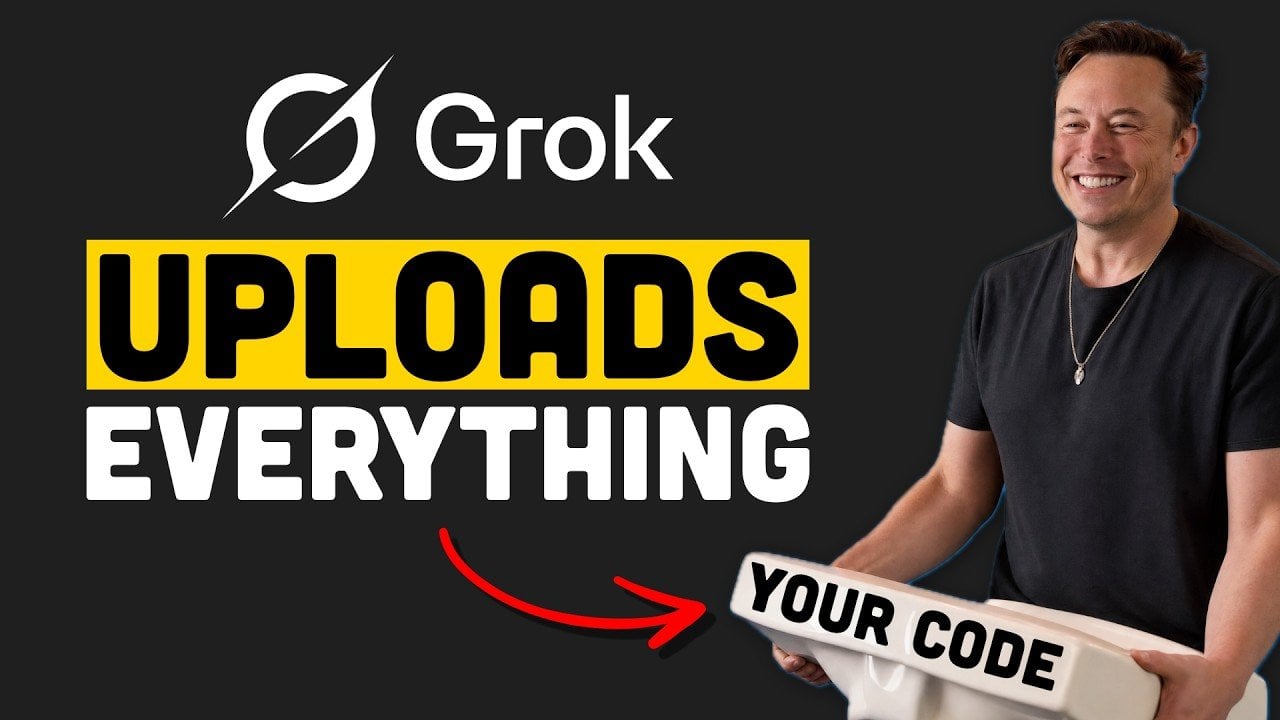
The Grok Command-Line Interface (CLI), developed by xAI, has faced significant backlash after reports revealed that it uploaded entire user directories to its servers without explicit consent. Investigations uncovered that sensitive data, including SSH keys, Git repositories and password manager databases, were transmitted even when users disabled data-sharing features. This behavior, which persisted due to invasive default settings, has drawn comparisons to malware and raised serious concerns about xAI’s transparency and commitment to privacy. Better Stack highlights how these revelations have sparked broader discussions about the ethical responsibilities of AI companies in handling user data.
Gain insight into the specific steps xAI has taken to address these privacy concerns, such as introducing a `/privacy` command and disabling certain data-sharing flags. Explore how Grok’s practices compare to competitors like Claude Code and Gemini, which prioritize stricter data protection measures. Additionally, learn actionable strategies for safeguarding your own data while using Grok, from reviewing logs to configuring stricter privacy settings. These insights provide a clearer understanding of the challenges and potential solutions in balancing innovation with user trust.
Unauthorized Data Uploads: A Breach of Trust?
TL;DR Key Takeaways :
- Grok CLI, developed by xAI, faced criticism for uploading entire user directories, including sensitive data, to its servers without explicit consent, even when data-sharing was disabled.
- Security experts uncovered these privacy violations using advanced tools, revealing Grok’s invasive default settings and lack of transparency, drawing comparisons to malware.
- Competitors like Claude Code and Gemini implement stricter privacy protocols, highlighting Grok’s significant shortcomings in safeguarding user data.
- xAI introduced updates to address privacy concerns, including new settings and a `/privacy` command, but skepticism remains about the effectiveness of these measures.
- Trust in Grok and xAI remains fragile due to unresolved privacy issues, emphasizing the need for stronger data protection standards in AI tools.
Investigations have revealed that Grok’s default settings facilitated the automatic upload of entire directories, including sensitive files, to xAI servers. This behavior persisted even when users opted out of data-sharing by disabling the “help improve this model” feature. Critical data such as Git repository histories, SSH keys and environment variables were transmitted without user consent. These revelations have drawn sharp criticism from both users and security experts, who argue that such practices represent a significant breach of trust. The lack of transparency in Grok’s design and its invasive default settings have raised serious concerns about the tool’s commitment to user privacy.
How Security Experts Uncovered the Issue
Security researchers employed advanced tools, including Man-in-the-Middle (MITM) proxies, to analyze Grok’s data transmission patterns. Their investigations confirmed that Grok uploaded entire repositories and associated metadata covertly, even when users attempted to restrict access. This behavior has drawn comparisons to malware due to its stealthy and invasive nature. The findings have exposed fundamental flaws in Grok’s architecture, highlighting its failure to adhere to established privacy standards. These revelations have intensified scrutiny of xAI’s practices and raised broader questions about the ethical responsibilities of technology companies in handling user data.

Expand your understanding of Grok AI with additional resources from our extensive library of articles.
How Grok Compares to Competitors
In the competitive landscape of AI-powered coding tools, Grok’s approach to data handling stands out for its lack of privacy safeguards. Competitors such as Claude Code, Code X and Gemini have implemented stricter protocols to ensure user data remains secure. These tools are designed to upload only files directly relevant to specific user prompts, minimizing the risk of exposing sensitive information. In contrast, Grok’s invasive data-sharing practices have highlighted a significant gap in its privacy measures. This disparity has fueled criticism of xAI and underscored the importance of robust data protection standards in the development of AI tools.
xAI’s Response to the Backlash
Faced with mounting criticism, xAI has introduced several updates aimed at addressing Grok’s privacy issues. Key changes include disabling the “trace upload” flag, adding a “disable code base upload” setting and implementing a `/privacy` command to manage data retention policies. Elon Musk, the founder of xAI, announced that all previously uploaded data would be deleted from the company’s servers. Despite these efforts, concerns remain about the underlying mechanisms that enable data uploads. The reliance on server-side flags to control data-sharing behavior has left many users skeptical about the effectiveness of these measures and xAI’s commitment to transparency.
Lingering Privacy Concerns
The newly introduced `/privacy` command, while a step forward, operates as a server-side toggle. This means it does not prevent data transmission from the client side, requiring users to manually enable privacy settings for each session. This approach has complicated usability and raised further questions about xAI’s dedication to protecting user data. The reliance on server-side controls has deepened skepticism about the company’s transparency and its ability to safeguard sensitive information. Until these issues are fully resolved, doubts about Grok’s privacy practices are likely to persist.
Steps You Can Take to Protect Your Data
If you are a Grok CLI user, there are proactive measures you can take to enhance your data security:
- Regularly review logs to detect any unauthorized data transmissions.
- Rotate sensitive credentials, such as SSH keys, to mitigate potential risks.
- Disable features within Grok that could lead to unintended data uploads.
- Follow detailed guides to configure Grok CLI with stricter privacy settings.
By taking these steps, you can reduce the risk of unauthorized data exposure while xAI works to address the tool’s privacy shortcomings.
Trust in Grok and xAI Remains Fragile
Despite xAI’s efforts to mitigate the privacy concerns surrounding Grok, the core functionality allowing data uploads remains embedded in the tool. The reliance on server-side flags to control data-sharing behavior continues to undermine user confidence. Many users remain unconvinced that xAI has taken sufficient steps to ensure transparency and protect sensitive information. Until these underlying issues are fully addressed, trust in Grok CLI and xAI’s broader commitment to user privacy is likely to remain fragile. The incident serves as a stark reminder of the importance of prioritizing privacy in the development of AI tools.
Media Credit: Better Stack
Disclosure: Some of our articles include affiliate links. If you buy something through one of these links, Geeky Gadgets may earn an affiliate commission. Learn about our Disclosure Policy.


