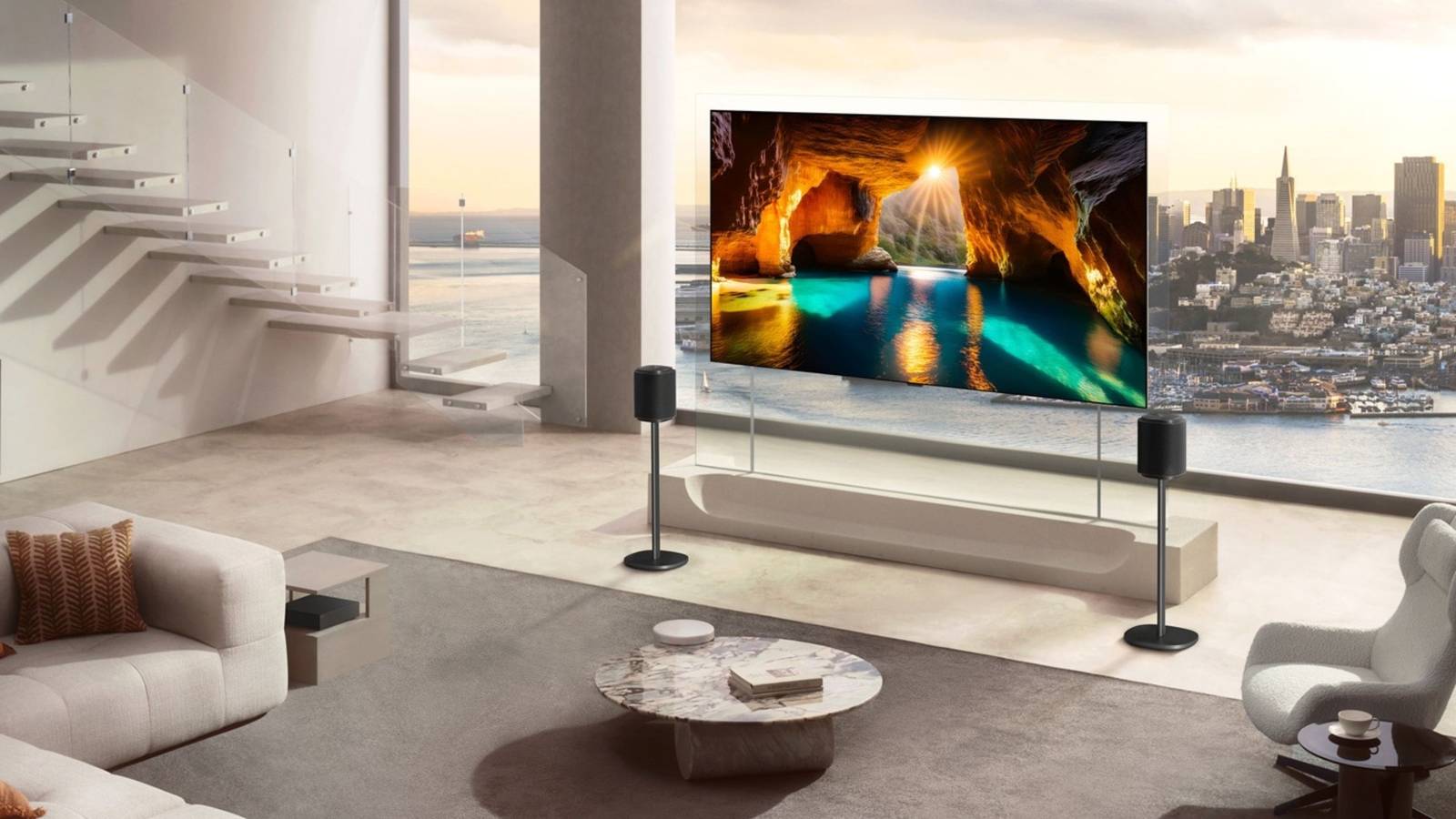
It’s not often that TV makers (or other industry players) make a big deal out of a new picture mode. For the most part, what you get is a collection of generic options like Dynamic and Vivid, mixed in with attempts at cleverness or pointless self-branding. Perhaps the last big announcement was Dolby Vision Filmmaker Mode.
The new kid on the block is an LG offering, dubbed Creator Original Picture Mode. I’m going to cut to the chase and explain to you what it is, how you can access it, and whether it matters in the grand scheme of things. At the moment, it’s hard to believe it’s going to amount to more than a gimmick, but stranger things have happened in the TV world.
What is Creator Original Picture Mode?
Great idea, limited scope

As LG describes it, the mode is “a new dedicated setting engineered to give studios control over key picture quality elements.” If you’ve got a compatible LG TV and you’re watching a supported movie or TV show, it will presumably appear alongside all your regular picture presets.
Superficially, the technology sounds a lot like the regular Filmmaker Mode that’s become standardized on most if not all TVs. The difference is that whereas Filmmaker Mode disables post-processing and sets a neutral white point, Creator Original Picture Mode (COPM for short) “leverages picture parameters set by content creators and studios” to enhance aspects like shadow detail, color balance, noise reduction, and motion smoothing. In theory, it produces the best possible image quality on your hardware without sabotaging what a director intended.
I want to call special attention to noise reduction and motion smoothing. In many picture modes, these features actually make things worse, for instance killing film grain or producing the cheap-looking “soap opera effect.” LG is presumably aiming for a gentler touch, using just enough correction to achieve the intended impact.
This might all sound great, but COPM is extremely limited at the moment. Its July 2026 rollout is limited to Prime Video content, and the debut title is the latest Masters of the Universe — a movie that’s met with mixed reviews. There’s no word yet on what other movies or services are coming down the pipe. Moreover, only a trio of TVs are supported: the 2026 evo W6, C6, and G6 OLEDs. None of those are cheap.
In the short-term, then, COPM doesn’t exactly seem poised to revolutionize the industry. To gain traction, LG is going to have to attract as many studios and streaming platforms as possible, then bring the mode to TVs at all price points. That might not be enough — content creators are typically reluctant to support brand-exclusive features unless they provide a huge advantage.
The looming competition
New HDR standards inbound

COPM would represent an advantage if it weren’t for Dolby Vision 2 and HDR10+ Advanced. Those technologies are not only rolling out to new TVs as we speak, but across multiple brands. The second of them is royalty-free, meaning anyone can adopt it as long as they meet the necessary specs.
You might be wondering how new HDR formats are relevant in this situation. The answer is that both are promising creator control similar to COPM, right down to metadata-based motion smoothing. It’s hard to imagine many studios flocking to LG’s product when Vision 2 and HDR10+ Advanced can achieve something similar (or better) across a wider range of devices, albeit only within HDR content.
Content support is a still a hurdle too. To my knowledge, we have yet to see any movies or shows mastered in Vision 2 or HDR10+ Advanced. That actually gives LG the edge, since one movie is better than zero. But that’s likely to be short-lived, considering how many releases are already mastered for Vision 1 and HDR10+.


