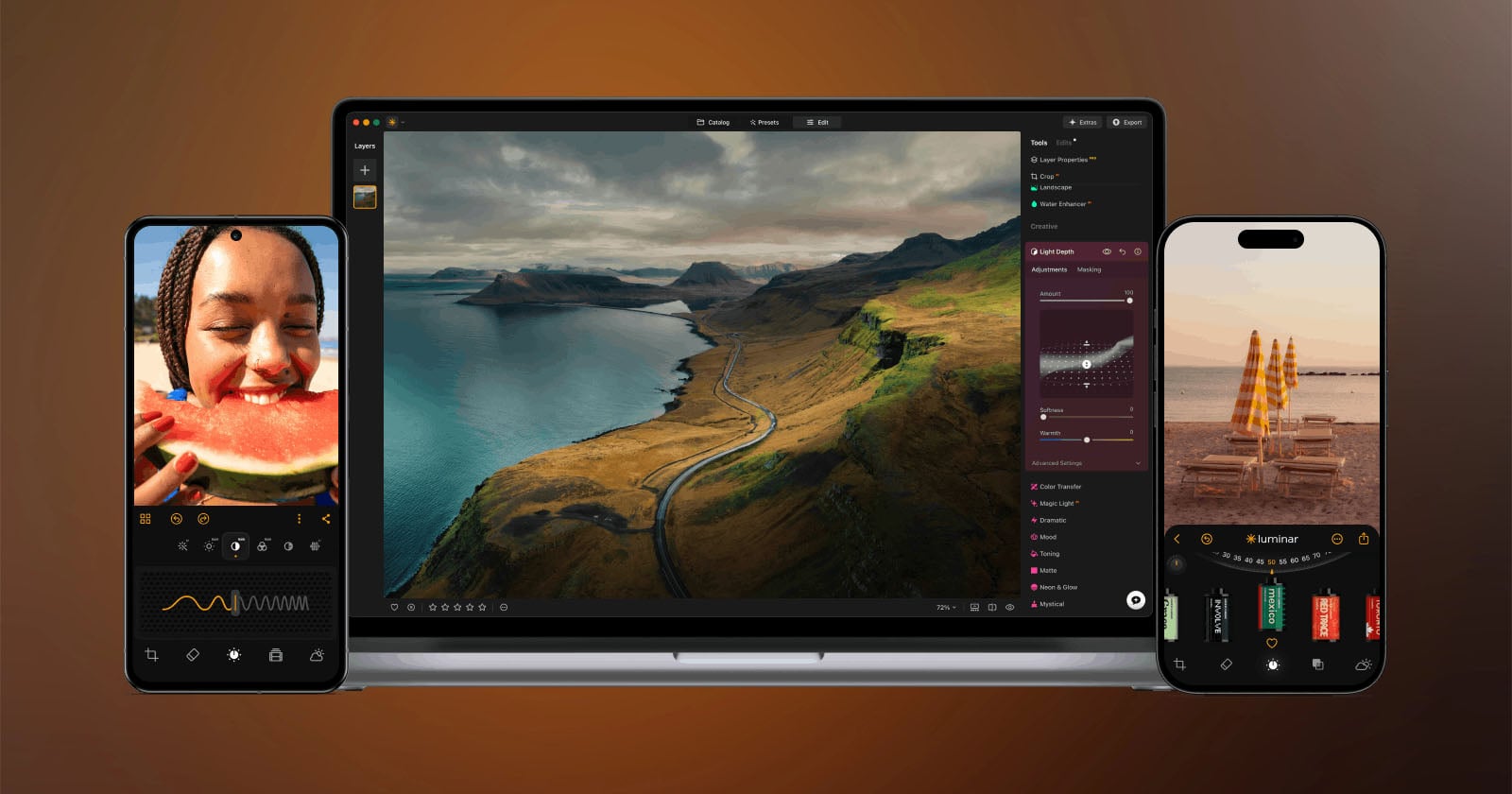

Skylum, best known for its AI-powered photo editing software Luminar, is grappling with today’s increasingly negative attitude toward artificial intelligence by changing its messaging to double-down on human creativity.
Skylum, founded in Ukraine in 2008 as Macphun, has heavily utilized AI in photo editing applications for many years. The company’s AI-powered Sky Replacement technology was a particularly groundbreaking feature, arriving before similar tools in Adobe software.
Throughout Luminar’s many iterations, AI has only become more ingrained in the app, performing tasks like automatic portrait enhancement, scene relighting, AI masking, and much more.



Over that same period, generative AI has exploded in popularity, or at least prevalence, weaseling its way into just about every consumer-facing application. As AI has taken jobs away from real photographers, violated photographers’ rights, and just generally irritated everyone, sentiment toward AI has shifted in a big way.
While many working photographers use AI to some extent in their photography workflow or to help run their business, a lot of photographers are understandably squirrelly about AI and generally concerned about how it will impact their livelihood and rob their beloved artistic medium of its soul.
Skylum is seemingly not immune to the increasingly negative sentiment surrounding AI, since it has very much gone on the defensive as it revealed its latest developments.
“The release comes as the industry struggles with fears that AI might overshadow human talent and put an end to the 200-year-old craft,” says Skylum’s Global PR and Communications Manager, Yuliia Davydova. “With the release, Luminar offers a fresh perspective where tech lets human creativity shine — not overshadow it.”
But despite this shift in how its talking about its technologies, Sklyum doesn’t seem to be actually changing all that much about how its software implements AI.



The first phase of Skylum’s two-part Luminar update arrives today and includes better navigation, improved performance, and upgraded AI tools, including generative AI to create “assets that blend naturally into the original photograph.”
“With growing concerns around tech affecting human talent, Luminar takes a different perspective — one where technology helps photographers realize their creative potential, rather than overshadow it. This upgrade serves that same purpose: high-end technology powering photo editing tools that amplify the creative flow while staying invisible. Creative vision comes first; technology is here only to let it shine,” says Ivan Kutanin, Luminar’s CEO.
Luminar’s second phase of updates this year, arriving this fall, goes heavy on generative AI technology.
The company will introduce suggested “intelligent” cropping tools that analyze the photo and suggest better framing, AI-generated fog, an AI Assistant that “helps photographers edit faster without taking creative control away,” better automatic AI-based photo editing, and, mostly unrelated to AI, a web-based photo editor.
Skylum is really changing its messaging in preparation for more generative AI tools inside Luminar. The company’s approach has historically been focused on the quality of results and general speed, but now it is clear that the emphasis is on the idea that AI technology can “help photographers realize their creative potential.”
Arguably, if a feature is doing something like changing the sky in a scene, adding fog, or generating assets that weren’t there when the photo was taken, the line between helping photographers realize their creative potential and overshadowing it gets quite blurry.
Skylum is far from the only software company grappling with how to use AI in ways its core audience appreciates without alienating that very same user base: photographers. It is a very hard needle to thread.
Image creditsSkylum. Header photo created using an asset licensed via Depositphotos.com.
Affiliate Disclosure PetaPixel articles may include affiliate links; we may earn a commission if you buy through one.


