By Emmet Cole
This new monthly series from IEEE RAS showcases a selection of robotics stories from society, business, research, and culture, as we track the field’s ongoing journey from specialized industrial machines to an increasingly visible social phenomenon.
Technological isolationism or prudence?
On July 28, the United States’ Federal Communications Commission blocked new foreign-made “advanced robotic devices” from receiving the equipment authorization needed for sale in the United States, citing supply-chain vulnerabilities and cybersecurity risks.
The block applies to networked humanoids, quadrupeds, other qualifying mobile robots weighing more than 4.4 lb. In a parallel action, the FCC also restricted foreign-produced connected power inverters.
Existing authorized models are unaffected for now, and exemptions or conditional approvals may be available.
Reaction is predictably mixed. Georg Stieler, a global robotics advisor and managing director for Asia at STM, told The Robot Report:
“In the near term, the measure could slow U.S. physical AI innovation by cutting startups and researchers off from future low-cost Chinese platforms before comparable Western alternatives exist. It also opens opportunities for U.S. suppliers and allied manufacturers able to localize production in the U.S. or obtain conditional approval. Yet excluding foreign products is not the same as building a competitive industrial base.”
Meanwhile, John Moolenaar, a Michigan Republican who chairs the House Select Committee on China, told Reuters that the FCC move “protects our country and strengthens our nation’s robotics industry.”
On July 30, Reuters reported that China’s Commerce Ministry threatened to “resolutely retaliate” if the United States maintains the restrictions and urged the United States to immediately withdraw the ban.
Expect this story to run and run over the coming weeks, with many peaks and valleys for various stakeholders.
Speaking of peaks and valleys, Unitree Robotics’ newly launched Super Athlete AS2-W seems to handle them quite well…
Ghostly smudges, puffins & growing ivy
Researchers at Northwestern University have developed a drone that almost disappears while in plain view. Dubbed ‘Phantom Twist’, the drone spins up to 25 times per second, which is too fast for the human eye to see clearly. Instead, the drone becomes a “ghostly smudge” that blends into its environment.
The device could be used to monitor wildlife, survey the environment and inspect infrastructure with less visual disruption. Covert surveillance applications may be a little while off though, as the propellors announce the drone’s presence with great gusto.
Meanwhile, researchers at MIT and EPFL unveiled an ingenious 250-gram robot that can fly, dive beneath the water, swim and then launch itself back into the air using the same pair of flexible, flapping wings.
Inspired by diving birds including puffins and petrels, the Flapping-wing Aerial Aquatic Vehicle cruises through the air at 6.3 metres per second and swims at almost one metre per second. The team envisages future versions flying to remote or hazardous waters to monitor algal blooms, coral reefs, pollutants, fisheries and coastal erosion.
Have you ever been out cycling in the rain and found yourself wishing for a raincoat that could put itself on automatically while you ride? Kim Nam Gyun at South Korea’s KAIST did. And in July that thought culminated in the unveiling of a robotic technology, inspired by climbing ivy, that enables a person to suit up without using their hands or requiring aid from others.
The vine robot, which turns the clothing inside out as it moves up the body, was developed in collaboration with researchers from Stanford University, and could find applications in chip cleanrooms and among emergency services personnel.
Humanoid, all too humanoid
Returning to the topic of valleys for a moment, it was uncanny valley time on social media in July following a showcase of the Origin F1 at WAIC 2026 in Shanghai.
Boasting “natural eye contact,” “subtle expressions,” and “new skins, new souls” [sic] the robot provoked both awe and revulsion, and often at the same time, as is the custom in that strange region of robot design.
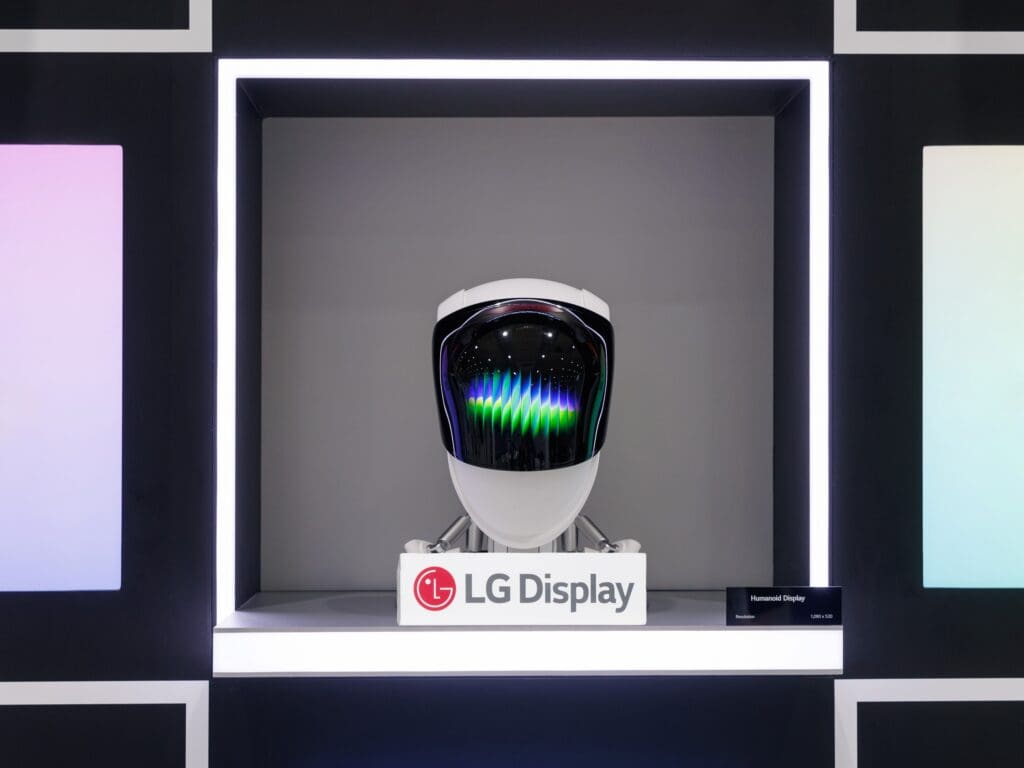
LG Display provided a contrasting design vision at K-Display 2026, presenting a curved OLED “face” for humanoid robots that communicates through deliberately artificial expressions rather than attempting to pass as human.
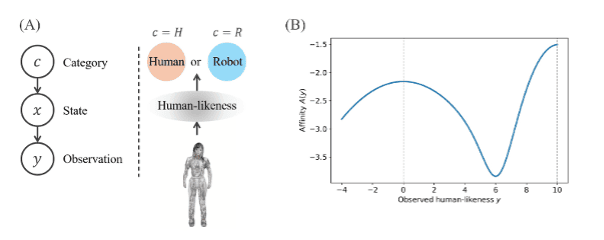
A new Bayesian model of the uncanny valley published in July might provide robot designers with a framework for handling uncanny valley design issues in future.
The team from the University of Tokyo note that existing guidelines, “such as adopting robot-like appearances, avoiding excessive realism, and reducing cross-modal mismatches, remain difficult to use for algorithmic design because they are not expressed as manipulable variables.”
The researchers propose a hierarchical Bayesian generative model that operationalizes these guidelines as mathematical design variables. In effect, the model attempts to turn broad advice such as “avoid excessive realism” into variables that designers can manipulate and test.
Separate from robot design questions and complexities, it is, as a general rule in life and robotics, better to keep your head while all around you are losing theirs. Although that message didn’t seem to get through a humanoid fighting robot at a recent event in China, with Pythonesque results…
Historic RoboCup match
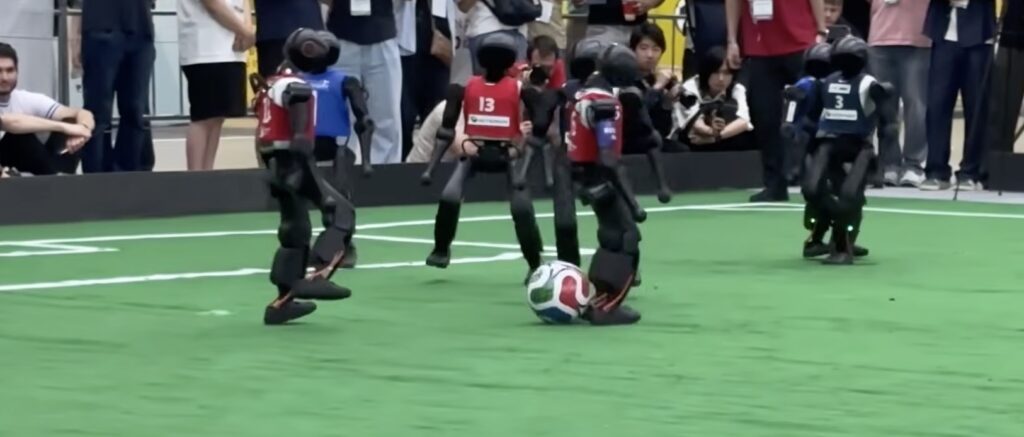
On July 5, at RoboCup 2026, two full teams of full-sized humanoid robots played an 11-vs-11 soccer match for the first time, bringing one of robotics’ most ambitious long-term visions closer to reality. The milestone match featured B-Human from Bremen, Germany vs HTWK Robots from Leipzig, Germany.
RoboCup’s long-term objective is gloriously ambitious:
By the middle of the 21st century, a team of fully autonomous humanoid robot soccer players shall win a soccer game, complying with the official rules of FIFA, against the winner of the most recent World Cup.
Do you think RoboCup’s objective is attainable? Will robots ever prevail over human tiki-taka? Drop us a line at [email protected].

IEEE Robotics and Automation Society (RAS)
strives to advance innovation, education, and fundamental and applied research in robotics and automation


