Future
Should AI Labs Be Treated Like the Owners of Dangerous Animals?Staff | The Economist ($)
“Gabe Weil of the Institute for Law and AI, in Massachusetts, proposes a system of strict liability. As with rules around keeping wild animals, it would assume that any harm is always the fault of the party carrying out the risky activity.”
Tech
Google Overhauls AI Leadership as Longtime Chief Scientist Joins Wave of ExitsMeghan Bobrowsky | The Wall Street Journal ($)
“Demis Hassabis is stepping down as chief executive of Google DeepMind to become chairman and chief scientist, Google CEO Sundar Pichai said in a post on X. Google DeepMind technology chief Koray Kavukcuoglu is taking on responsibility for all AI-model development, and Jeff Dean, Google’s current chief scientist, is leaving with three other company veterans to co-found a new AI startup.”
Biotechnology
Gene-Edited Puppies Will Melt Your Heart—but Won’t Trigger Your AllergiesEmily Mullin | Wired ($)
“Bailey and Alfie are two young beagles that can do tricks like any other dog, but they lack the protein that causes sniffles. They’re the culmination of years of work at Kindred Companion Sciences, a biotech company [Matt] Walker founded in 2020 that emerged from stealth this week with the two pups in tow.”
Biotechnology
Large Genome Models Used to Design New VirusesJohn Timmer | Ars Technica
“This isn’t science fiction—all the viruses the models created are closely related to an existing virus. But they do have some distinct features that would be challenging to evolve. And the researchers who did the work, based at Stanford University, suggest we may want to start thinking now about preparing for the potential that someone could develop a related AI that can design a virus that targets vertebrates.”
Future
Why Is Anthropic Destroying Books?Kathryn James | The Guardian
“We should worry that Anthropic decided it was easier to scan and destroy physical books than to deal with the ‘legal/practice/business slog.’ We should worry that the current understanding of fair use allowed Anthropic to decide that it was easier to buy and destroy ‘all the books in the world’ than to pay the creators of those works.”
Biotechnology
FDA Approves Moderna’s mRNA Flu VaccineChristina Jewett | The New York Times ($)
“In the case of flu, scientists believe that mRNA technology offers an advance from traditional vaccine options that take several months to prepare using decades-old technology, some requiring the virus to develop in fertilized eggs. Moderna has said that the faster new approach will enable a shift away from the current process of focusing on one flu strain for an entire hemisphere each season and allow each nation to pick its best option.”
Computing
AI Hacks Are Bad. AI Worms and Viruses Will Be WorseWill Knight | Wired ($)
“The work is an alarming window into how the next generation of AI agents could do more than just hack into other systems’ computers without permission. It also raises the prospect of future AI agents acting like super-smart, highly aggressive, and rapidly adapting computer viruses.”
Computing
OpenAI’s Expensive Smart Speaker Will Use Moving Parts to Seem ‘More Alive’Scharon Harding | Ars Technica
“Per Bloomberg, the OpenAI speaker’s main appeal is ChatGPT capabilities. Today, ChatGPT has significantly more users than Alexa+, but those users are largely accustomed to accessing the chatbot on devices they already own. With the rumored speaker, OpenAI would be betting on people’s willingness to pay substantial money for dedicated hardware to access chatbot features, the most advanced of which also require a subscription fee.”
Artificial Intelligence
China’s New AI Gold Rush: World ModelsJuro Osawa | The Information ($)
“World models are considered the key to unlocking breakthroughs in humanoids and autonomous vehicles, two areas where China has the world’s broadest and deepest supply chain. The Chinese neolabs think they have a shot, because the race to build world models is still in the early stage, with no front-runners yet, in contrast with the well-beaten path of large language models.”
Space
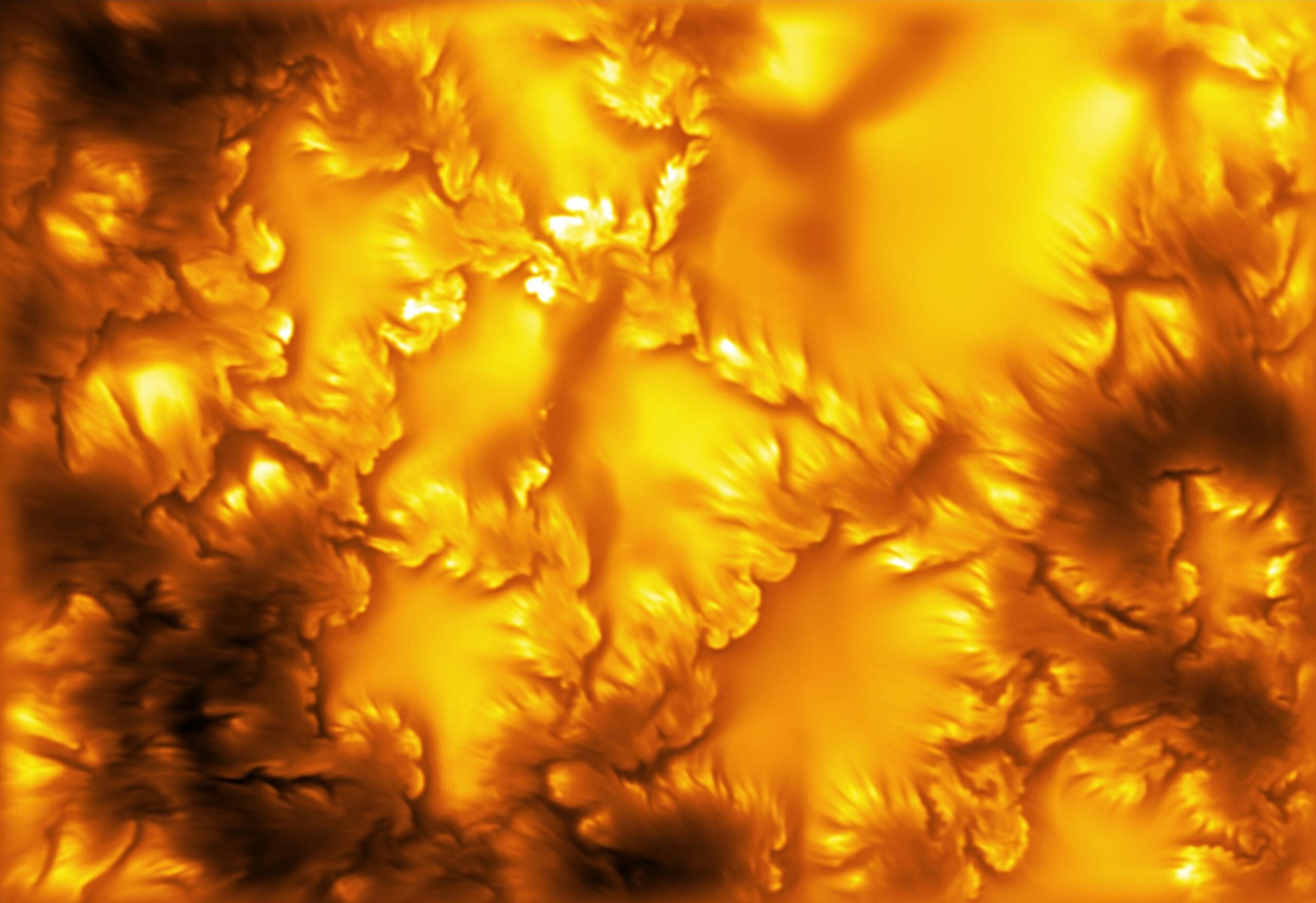
These Are the Sharpest Images Ever Taken of the Sun, and They Might Solve a Decades-Old MysteryEllyn Lapointe | Gizmodo
“The images are more than beautiful—they’re packed with critical information about the fundamental physics of our home star, including the first experimental confirmation of a long-theorized phenomenon that only the high spatial resolution of the Inouye Solar Telescope could reveal.”


