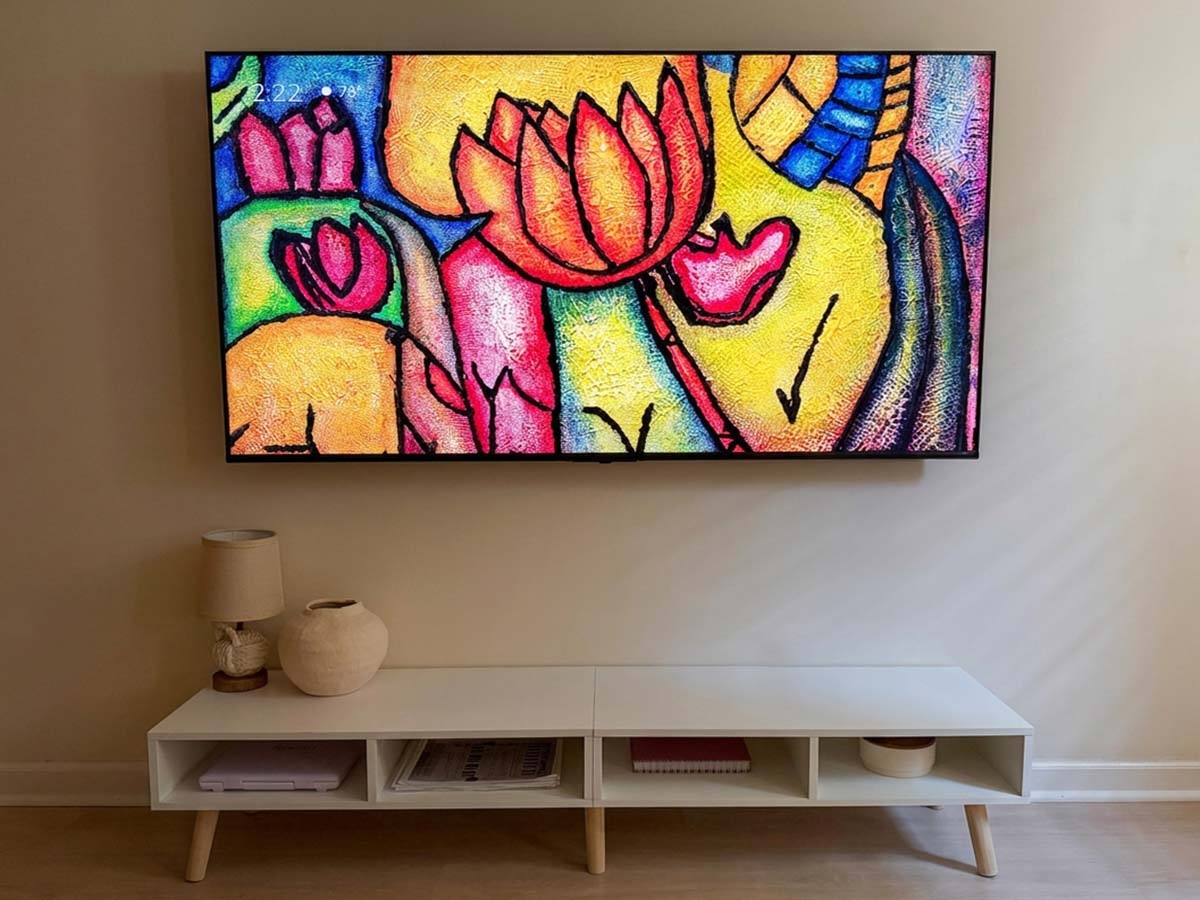
There’s always that one house where everyone ends up. Friends coming over for the game, family piling in for movie night, or a weekend that turns into a full gaming session because someone brought a controller and a copy of Halo: Campaign Evolved and never left. Each one puts a different demand on the screen. A crowd watching sports wants brightness and motion that hold up under stadium lights. A movie night wants black levels and sound that don’t require the lights to be off. Gaming wants speed that doesn’t lag behind your thumb, and a panel that can keep up with what a game like that actually throws at it. Most TVs pick one of these and quietly fail the other two.
I spent time with the 65-inch U7SG over a normal week of use, not in a controlled lab but in a real living room with the same windows, overhead lights, and lamp placement most people work with. The question I kept coming back to wasn’t whether the spec sheet was impressive. It’s easy to make a spec sheet impressive. The question was whether any of it actually changes what watching a match or playing a game feels like on a random Tuesday. Some of it does. Here’s where.
The picture, and the halo problem it’s supposed to fix
The number Hisense leads with is 3,000, the count of local dimming zones on the Hi-QLED MiniLED Pro technology. The pain point this is aimed at is one anyone who has owned a budget MiniLED set already knows: the halo. A bright object on a dark background—a jersey under stadium lights, and a scoreboard graphic on a night match—and the zone around it glows instead of staying black. It’s distracting in a way that’s hard to unsee once you notice it.
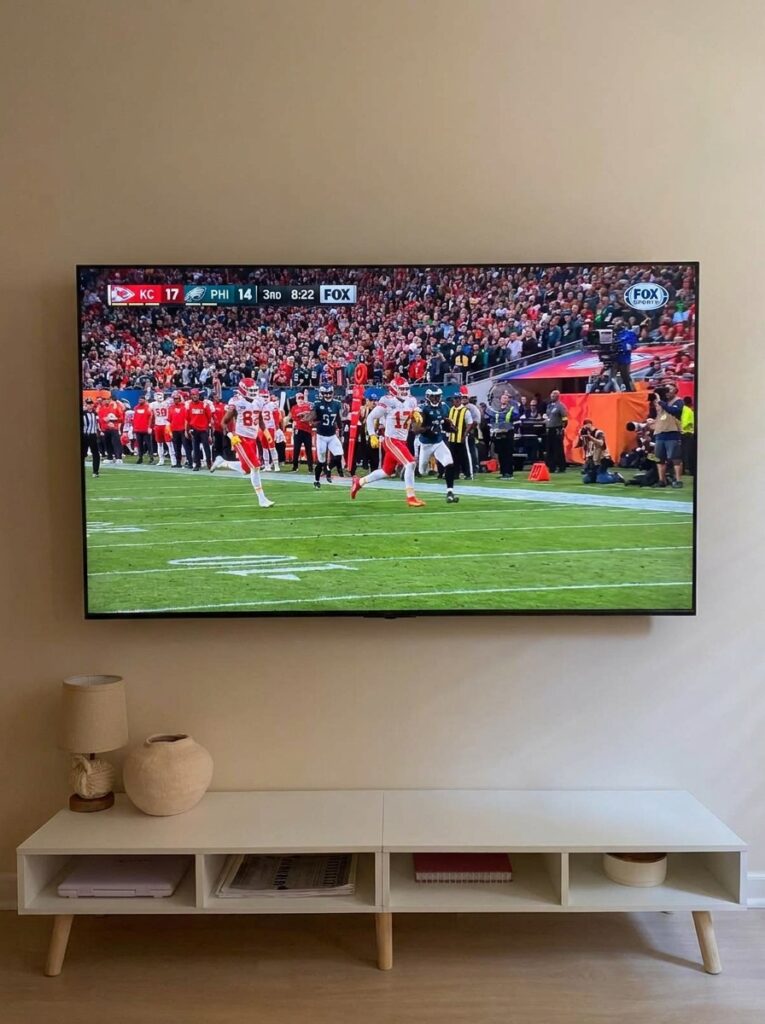
I watched a run of night matches specifically looking for this. Floodlit pitch, dark stands, players moving in and out of the brightest part of the frame. The zone-by-zone control kept the grass dark right up to the edge of the lit area without the usual bloom creeping outward. It’s not flawless in the most extreme corner cases (a single bright point against a fully black background will still show a faint halo on any local dimming panel, this one included). Still, the frequency and size of it dropped noticeably compared to sets I’ve tested with fewer, larger zones. That’s the real difference 3,000 zones buys you: fewer visible seams between light and dark, not zero.
Peak brightness runs up to 3,000 nits, which shows up in exactly the scenes you’d expect: a sunlit corner of the pitch, a flare off a scoreboard, and anything with a hard edge between highlight and shadow. Pantone-validated color held skin tones accurately during close-up replays, with no orange drift and no waxy oversaturation, and the Hi-View AI Engine Pro was doing its scene-by-scene adjusting quietly enough that I only noticed it by comparing a manually tuned picture mode against the AI-managed one side by side. The AI version handled fast lighting changes, a stadium cut from a wide shot to the tunnel interior, a beat faster than I could adjust manually.
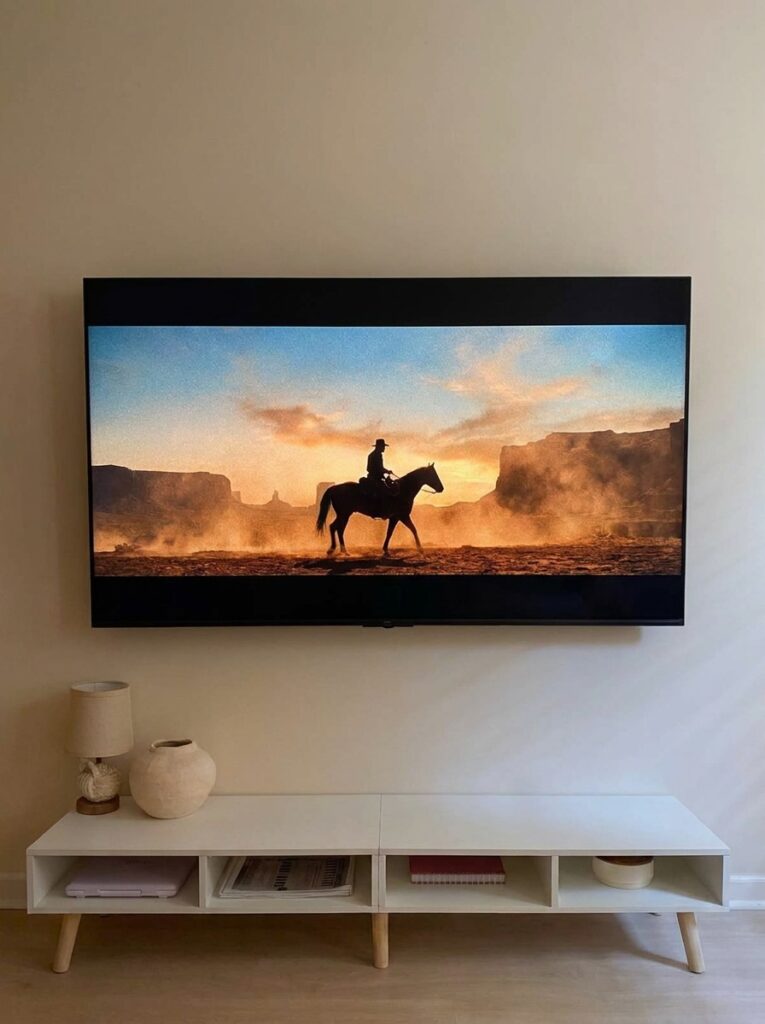
For gaming specifically, the same zone control that kept dark scenes clean did the same for dark game environments—no bloom around a flashlight beam or a UI element sitting on a black background. Movie night benefits from the same thing in a different way. A dim interior scene or a night shot with a single lamp on screen kept its shadow detail instead of crushing into a flat black mass, which is the usual failure point when a film cuts between a bright exterior and a dark room.
Bright room, afternoon sun, and whether the Anti-Reflection & Glare Free technology actually earns its claim
This is the section worth the most scrutiny, because anti-glare claims are the easiest thing on a spec sheet to overstate. So I tested it under the actual lighting conditions a living room cycles through in a day, rather than a single best-case scenario.
Morning, indirect light through a sheer curtain: no visible reflection issue at all; this is the easy case for any panel.
Midday, with direct sun hitting the screen at a low angle, is the worst-case scenario and the one that ruins most TVs for daytime viewing: the panel didn’t turn into a mirror the way a glossy, uncoated screen does. There was still a faint haze visible in the very brightest reflected patch if I moved to catch it dead-on, but it never reached the point of obscuring the picture, and shifting a few degrees off-axis cleared it almost entirely. Shadow detail in the picture itself stayed visible instead of washing into gray, which is the actual failure mode uncoated panels experience under these exact conditions.
Evening, overhead ceiling lights plus a lamp positioned where lamps always end up, right in the reflection path: this was the condition where I expected the coating to lose the fight, and it mostly didn’t. The lamp’s reflection was visible as a soft point rather than a hard glare streak, and it didn’t smear across the frame or wash out contrast the way an uncoated panel does under the same setup.
Full blackout, for baseline comparison: obviously the best picture the panel can produce and useful mainly as a reminder of how much the daytime conditions above are actually giving up.
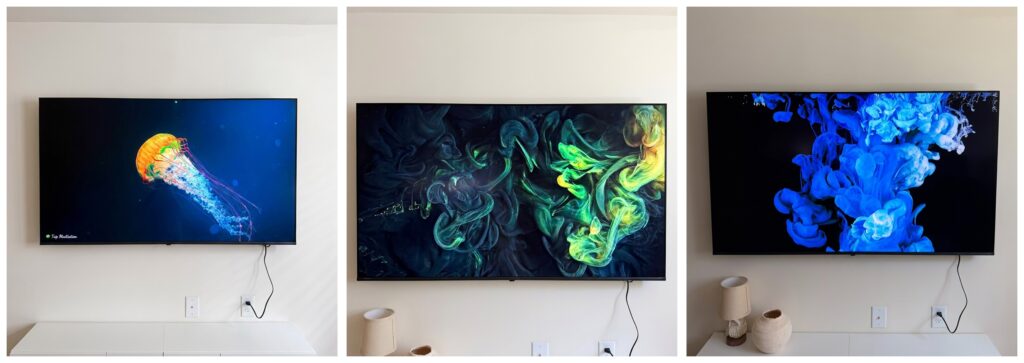
The real-world pain point this solves is the Saturday afternoon movie marathon, the kind where everyone wants to start before it gets dark but nobody wants to sit in a cave to do it. I ran this test with Dune: Part Two queued up, since its desert scenes are basically a stress test for washout, all that bright sand against dark robes and shadow. With the U7SG, I didn’t have to close a single blind. I could leave the room lit the way it normally is on a weekend afternoon and still watch the picture rather than my own reflection. That’s a genuine, checkable improvement, not a marketing line. It’s not glare-proof like a dedicated anti-glare monitor coating, but for a consumer TV in a real room, it clears the bar that actually matters.
That daylight performance matters just as much mid-game as mid-match. A weekend gaming session at 2 pm didn’t mean fighting my own reflection either.
165Hz, VRR, and What a Gaming TV Actually Needs to Deliver
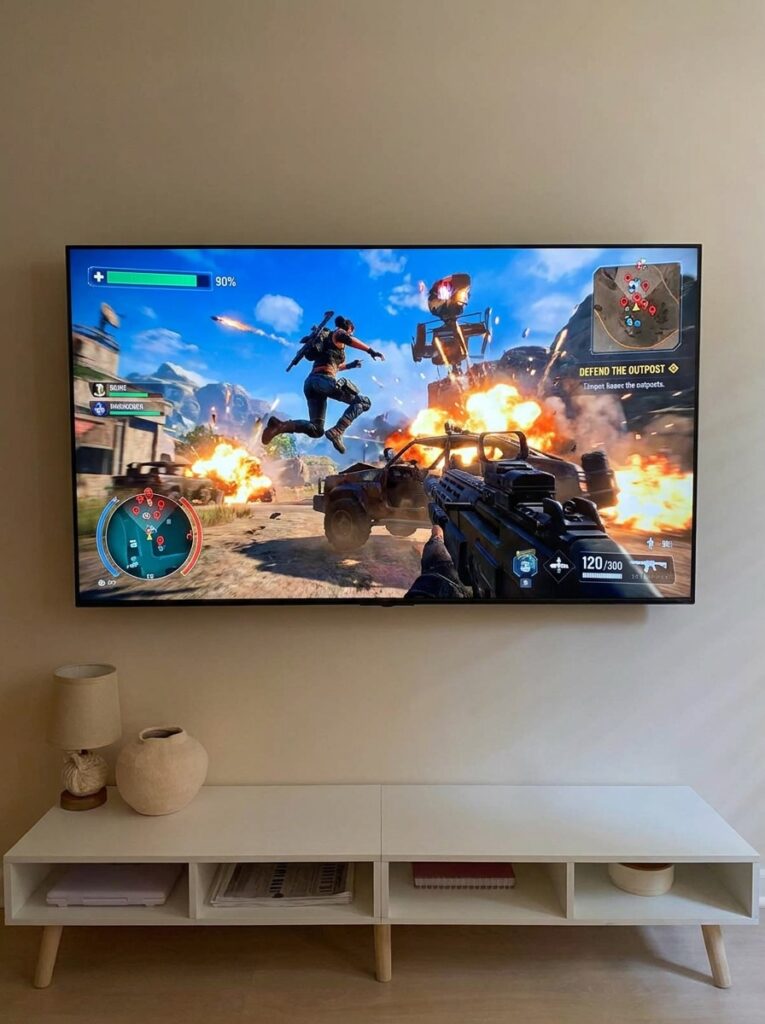
The spec sheet says 165Hz, VRR, auto low-latency mode, FreeSync Premium Pro. None of that means anything until you’re the one reacting to it, so I spent a few sessions across different genres specifically to test Game Mode rather than just glance at it.
First test was a fast-paced shooter via one of the four HDMI 2.1 ports at 4K, with VRR enabled. Aim tracking on quick flicks felt immediate. No half-step lag between input and response, which is what actually ruins a shooter on a bad panel. Second test was a racing title, where tearing usually shows up first. Cornering at speed with quick camera pans stayed clean, no visible tear even with VRR pushing variable frame rates.
Game Bar earned its keep here more than I expected. Pulling it up mid-match to check input lag readout or adjust black levels took a second, not a pause-and-dig-through-settings trip. Game Booster 330 let me switch between a picture profile tuned for shooters and one tuned for open-world titles without backing out of the game. The difference was noticeable: the shooter profile sharpened motion clarity, the open-world one leaned into color depth. That’s a real workflow difference from a TV that just lists “game mode” as a checkbox feature.
The auto low-latency pipeline also did the boring but important thing correctly: it switched into game mode automatically the second a console was detected, no manual toggle, no lag while it figured that out.
Sound, and whether it actually replaces a soundbar or just claims to
Built-in TV speakers almost always share the same pain point: the sound is thin, flat, and directionless—which is precisely why soundbars exist as a category. The U7SG runs a 2.1.2 multi-channel system at up to 50 watts, with Devialet tuning and Dolby Atmos support.
Turning the volume up during a crowd swell, the sound didn’t flatten into a single wall of noise the way most TV speakers do at higher volumes. The height channels gave the crowd noise a sense of coming from above and around rather than straight ahead, and commentary stayed intelligible even when the ambient noise picked up, which is the actual test, since a lot of TV audio setups blur speech the moment the background gets loud. It’s not a replacement for a dedicated home theater setup, but for the person who was never going to buy a soundbar anyway, this closes most of that gap. The 116-inch model steps up to 6.2.2 channels, which tracks, since a screen that size usually lives in a room too big for a 2.1.2 system to fill on its own.
The smart platform, tested by actually trying to avoid the remote
Another common frustration: juggling multiple remotes and switching between ecosystems just to start a viewing session. The U7SG runs 4K Google TV with Gemini, Google Assistant and Cast built in, and it also works with Amazon Alexa and Apple HomeKit rather than forcing a choice.
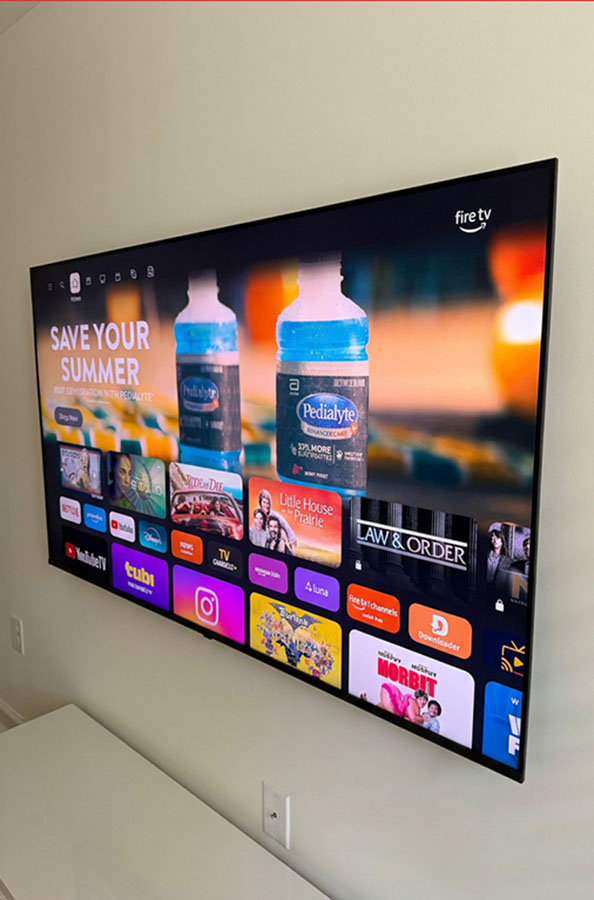
I tested the far-field voice control specifically by trying to start content without picking up the remote at all, mid-task, hands full. It picked up the voice command from across the room reliably enough that reaching for the remote stopped being the default habit by the second day. Casting from a phone worked without the usual lag or dropped connection. For anyone who cares about format accuracy, Filmmaker Mode, Dolby Vision IQ, IMAX Enhanced, and HDR10+ Adaptive are all there, and WiFi 6E kept streaming steady even with the rest of the house’s devices competing for bandwidth. The backlit remote is a small thing until you’re looking for the volume button with the lights off, at which point it stops being small.
Design, and the two-leg base worth planning around
The unibody build and edge-to-edge display look considered, even with the screen off, and the pedestal base has built-in cable management, so the front doesn’t turn into a cord tangle after a few months of plugging things in and out.
One practical note for anyone shopping the largest sizes: the 100-inch and 116-inch models use a two-leg base instead of a center pedestal. That changes the footprint, so it’s worth measuring your surface before committing to those sizes specifically.
Sizes, specs, and the honest bottom line
The U7SG comes in 55, 65, 75, 85, 100, and 116-inch sizes, backed by a two-year warranty. After actually living with the U7SG, gaming sessions included, rather than just reading its spec sheet, the sponsorship claim holds up better than most. The dimming zones reduce halo without eliminating it. The glare coating handles real daylight conditions, not just a marketing demo. The refresh rate and low-latency pipeline solve the problems you’d actually notice mid-match, whether that’s on screen or controller in hand. Game Bar and Game Booster 330 turn “gaming features” from a spec sheet line into something you use every session, not once and forget.
Call it what it actually is: a TV built for a living room that never does just one thing. Sports one night, a movie the next, a controller picked up on a random Tuesday, U7SG is a perfect fit for a wide range of use cases. That’s a higher bar than most TVs in this price range, clear, and the U7SG clears it.
Where to buy
BestBuy (65″ U7SG): https://www.bestbuy.com/product/hisense-65-class-u7-series-miniled-qled-uhd-4k-hdr-smart-google-tv-2026/J3Z9Z42HT2
Amazon (65″ U7SG): https://www.amazon.com/dp/B0GR9BLPJ8
Hisense USA (65″ U7SG): https://www.hisense-usa.com/product-page/televisions-65-class-u7-series-uled-miniled-4k-google-tv-65u7sg


