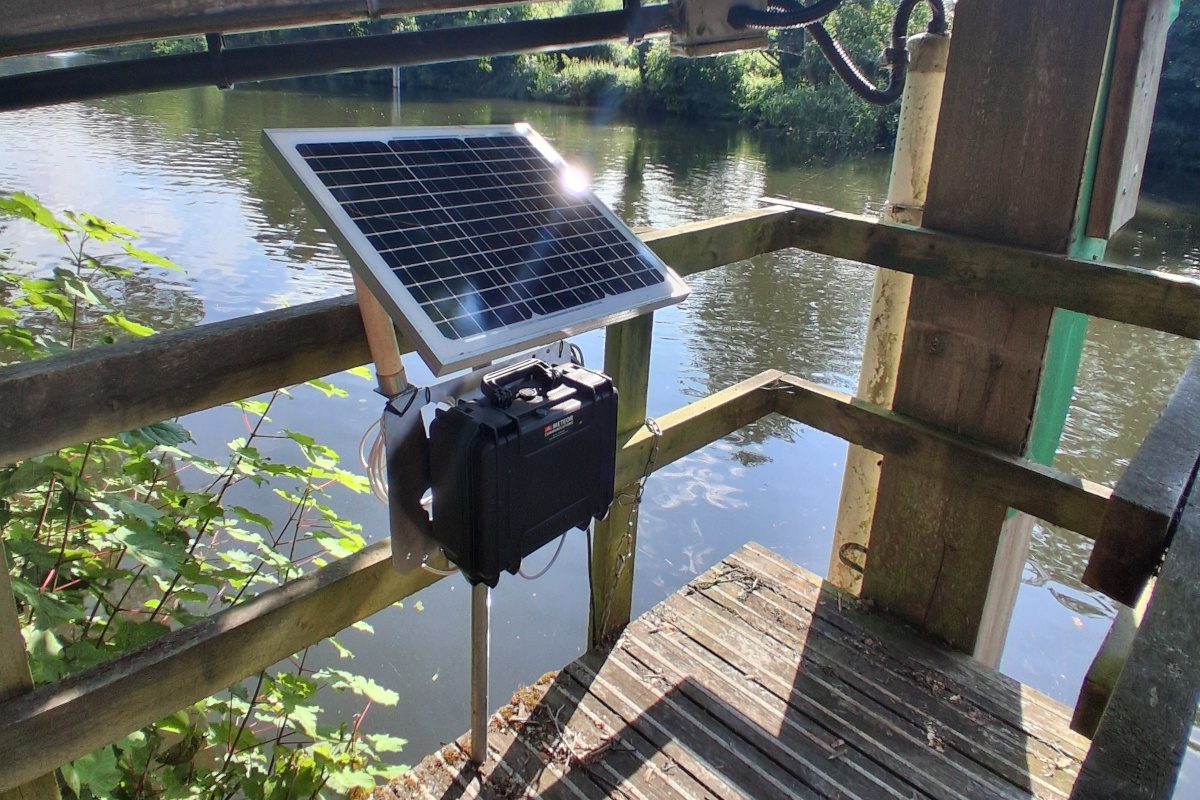
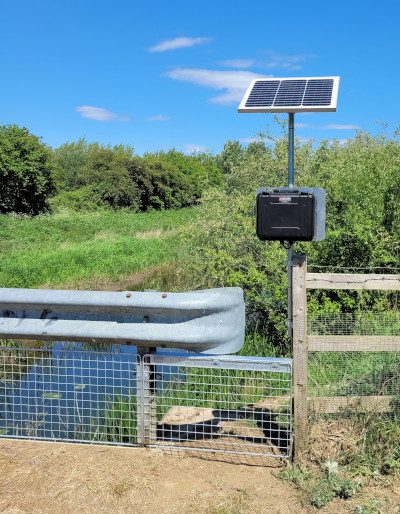
Around 10 years of continuous water quality data has been generated as a result of a stipulation in a water abstraction licence on the River Medway in Kent (UK). Installed and managed by Meteor Communications, a network of water quality monitoring stations is being used by Southern Water to protect the River Medway and manage related water infrastructure, such as the Bewl Water reservoir. (Words: Meteor Communications).
“Our abstraction licence includes strict water quality requirements at specific locations; not just specifying measurement limits, but also detailing precise sets of conditions that initiate upstream flow management,” explains Tim Taylor, Water Resources Policy & Regulation Manager at Southern Water. “Meteor configured the monitoring stations to monitor the required parameters and to automatically create the necessary alerts. The data are therefore used for two purposes – to demonstrate compliance, and to inform the ongoing management of flow rates in the Medway and its tributaries.”
Flow rates on the River Medway are collaboratively managed by the Environment Agency and others using a complex system of barriers, locks, and sluices to balance drinking water supply, flood risk, navigation, and ecological health. This includes the management of releases from Bewl Water reservoir by Southern Water.
Southern Water and its legacy authorities hold multiple historical and continuously renewed abstraction licences for the River Medway system. The primary authorisations for the major River Medway and Bewl Water pump-storage scheme were originally established following the Medway Water Act 1968 and the construction of Bewl Water reservoir, which was completed in 1975.
Bewl Water contributes to the management of River Medway flow rates through a seasonal abstraction and release cycle. During wet winter months, surplus water is pumped out of the river into storage, and in summer months, water is released back into the river network to support drinking water supplies. There is an all year-round release from the reservoir to maintain baseline flows. The distance between Bewl Water and the Medway abstraction point represents river water travel time of approximately one day.
Abstraction licence conditions
In 2013 the Environment Agency published the Medway Abstraction Licensing Strategy using information gathered by a Catchment Abstraction Management Strategy (CAMS) process. The strategy was designed to protect the ecology of water resources through all seasons, and during all conditions from low flow to high flow. This strategy led to the implementation of a complex set of conditions surrounding Southern Water’s River Medway abstraction licence.
Around 10 years ago Southern Water approached Meteor Communications and asked them to adapt their remote water quality monitoring solution to meet the specific requirements of the abstraction licence.
Fundamentally, the licence conditions were designed to ensure that dissolved oxygen (DO) levels in the River Medway did not drop below acceptable levels as a result of the abstraction that is necessary for the ongoing provision of treated drinking water. However, in addition to DO, the licence also required the continuous monitoring of pH, temperature, conductivity, ammonium, turbidity and chlorophyll.
While these parameters are useful indicators of water quality, DO measurements were deemed to be of greatest value because of the relationship between DO and river flow, and because lowered DO levels can have particularly harmful ecological effects.
A network of at least four of Meteor’s ESNET (environmental sensor network) systems monitor water quality at strategic locations downstream with (almost) real-time data continuously fed to the MeteorCloud® platform, which provides secure data access with visualisation, analysis and alerts that have been configured to meet the abstraction licence requirements.
Extracting value from water quality data
Southern Water’s engineers are able to access live water quality data at any time, and from anywhere, either by logging into MeteorCloud or accessing the data via an API. “The security of the Meteor platform is critically important,” Tim Taylor explains. “This means that the Environment Agency is able to view the same data as us, and as a secure platform they are able to use the data in a court of law if necessary.”
By programming the algorithmic requirements of the abstraction licence into the MeteorCloud platform, Meteor ensured that timely notifications are automatically issued to initiate action to prevent deterioration of dissolved oxygen levels for example.
Collecting remote water quality data
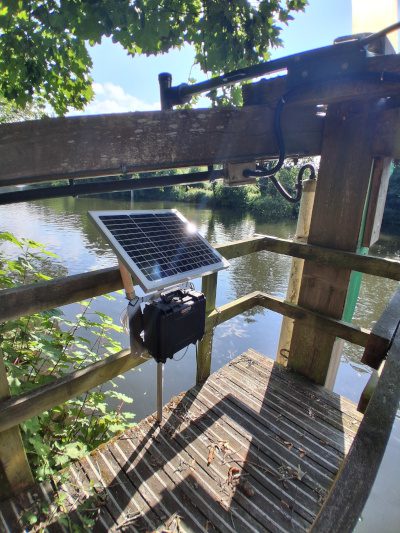
ESNET systems are available in either a kiosk-based format for permanent bankside deployment, or as a portable system. Both systems employ a multiparameter sonde loaded with the required sensors, and can run on solar power. A telemetry connection allows users to view real-time data remotely. Water quality monitoring sondes can be deployed directly in the river or, in locations where it is necessary to protect the sonde, it can be located in a flow-through chamber through which sample water is pumped.
In the last 10 years, Southern Water has employed up to 12 ESNET systems in the Medway catchment, three of these are estuarine and six are freshwater, with an additional borehole water level logger. However, only 4 of the ESNETs contribute to the abstraction licence calculations. Portable ESNET systems are utilised because the sondes can be safely deployed directly in the water, and because portability brings flexibility in the choice of monitoring location.
Meteor’s customers can either purchase ESNET systems and rent access to MeteorCloud, or rent the entire service – known as Water Quality as a Service (WQaaS). Southern Water’s Medway catchment systems are run on a WQaaS contract under which Meteor staff install, operate, maintain and calibrate the remote equipment.
Explaining the importance of the calibration and service programme, Jack Hambridge says: “Sondes typically require service and calibration every 4-6 weeks, so we have invested heavily in a bespoke calibration laboratory and a team of field engineers. This means that we are able to service large numbers of sondes, ensuring that data are accurate and that the ESNET systems are maintained in optimal condition.”
The Medway catchment ESNETs have recently been upgraded to ESNET3, the next-generation version, specifically engineered with enhanced power management, updated hardware, and a more compact footprint to meet stricter environmental regulations.
Ten years of continuous water quality data
Summarising the performance of the Medway monitoring network, Tim Taylor says: “We have been delighted with the service delivered by Meteor Communications. Data access is simple and secure, and the algorithms that Meteor created to meet the abstraction licence have worked very well. As a result, we have been able to stay compliant with the conditions in our Abstraction Licence, and the river’s ecology has been protected.”
With climate change prompting more intense rainfall and greater risks of drought and floods, river levels can change very quickly. The need for continuous monitoring and alert systems is therefore growing, and with ten years of data, the network in the Medway catchment has clearly shown how such systems can protect water ecology.
Summarising Tim Taylor says: “The abstraction licence stipulates eight water quality parameters, but the alert system and associated water management initiatives are all associated with dissolved oxygen levels. While these parameters are useful indicators of water quality, DO measurements were deemed to be of greatest value because they are a key condition in the Abstraction Licence that impacts the volume of water released from Bewl Reservoir and subsequently abstracted for public water supply.”




