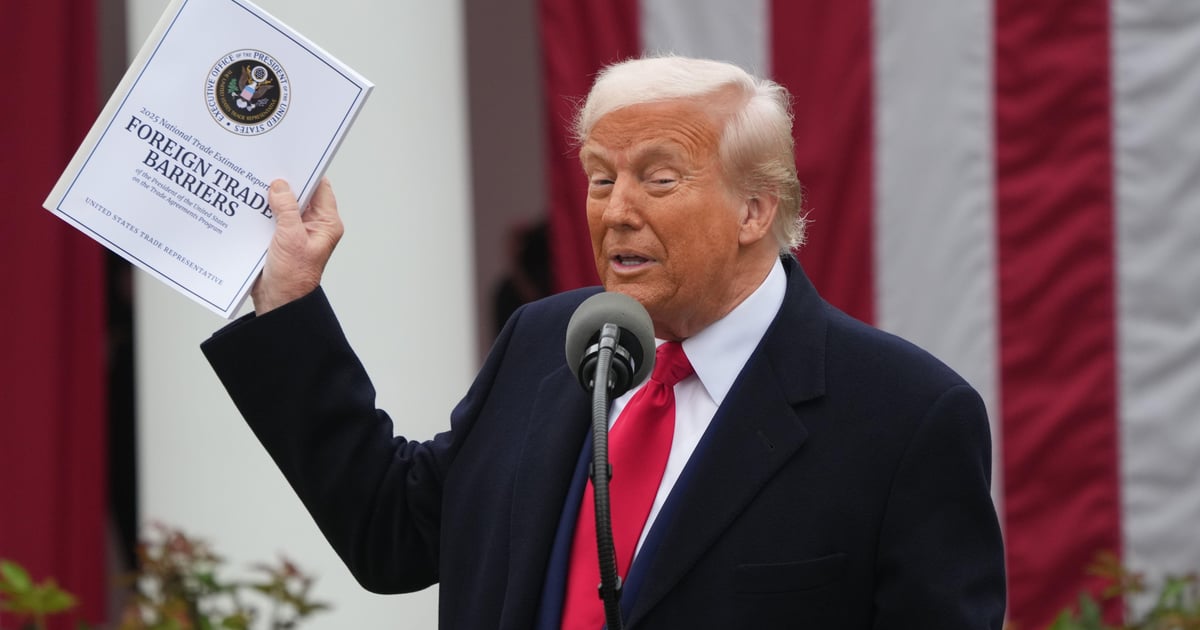
A 72-year-old Donald Trump seemed to be generationally confused about mobile technology on the social media platform from which he was subsequently banned. “I want 5G, and even 6G, technology in the United States as soon as possible,” he thumbed on Twitter in February 2019, when commercial 5G had yet to be launched and nobody else outside a few research labs was talking about 6G.
Restored to X, as Twitter is now called, after Elon Musk’s takeover, Trump has – somewhat disappointingly – resisted any presidential pontifications about 7G four years ahead of 6G’s expected arrival. But his seven-year-old tweet might no longer provoke mirth. The need for American leadership in 6G is suddenly considered an issue.
Now 80, Trump appears less preoccupied with telecom than he once was. When he is not starting interminable Middle Eastern conflicts and threatening traditional US allies, he has predictably shown more interest in the far more consequential AI, the technology that will either kill us, according to Musk’s previous take, or turn us into the mindless doughy blobs of WALL-E, fed and entertained by machines, judging by the trillionaire’s more recent views (one telecom industry executive thinks the Disney movie, released in 2008, looks like a prescient documentary about evolution).
The meh response to 5G has undoubtedly dulled interest in 6G. The standard now in widespread use was supposed to be included in everything from insulin drips to military jets. That criticality meant China shouldn’t be allowed anywhere near it in countries friendly with the US, said Trump’s lieutenants during his first stint as president, as they imagined nefarious Chinese 5G network coders downing US fighter planes and administering remote lethal injections from thousands of miles away.
5G is ubiquitous, but only in smartphones, where it does exactly what 4G did. This boringly diminishes the Chinese threat to the level of eavesdropping on government phone calls or denying a software upgrade for a basestation. But the same grandstanding rhetoric and alarmism is back as a telecom industry pregnant with 6G gets ready to give birth in the next few years.
“6G networks are likely to underpin diverse innovations – from artificial intelligence to advanced manufacturing to defense applications – thereby strengthening our collective economic competitiveness, security, public safety, strategic capability, and global leadership,” said the National Telecommunications and Information Administration (NTIA), the US government agency that advises the White House on telecom policy issues, in a late July statement.
The China syndrome
That 6G will be used in any of these areas cannot be taken for granted after 5G’s miserable failure to have an impact outside the handset world. Regardless, the NTIA has issued a “call to action for 6G leadership and security,” signing up 24 other countries to its latest 6G initiative. There is no overt mention of China or “high-risk vendors,” a label used by the EU to describe Huawei and ZTE. But the anti-China subtext is obvious in the statement about a coalition made up largely of Western-style democracies.
If there were such a thing as a 5G race – which some analysts dispute – it was easily won by China, with its millions of basestations, more advanced networks, use of 5G outside smartphones and dominant suppliers. Thanks largely to China’s size, Huawei remains the world’s biggest 5G vendor years after it came under American attack during Trump 1.0.
In a radio access network (RAN) market that generated $17 billion in sales for the first six months of 2026, Huawei was also the second-biggest vendor outside China, ranked ahead of Nokia, according to the latest data from Omdia, a Light Reading sister company. Last year, Huawei reported the second-highest sales figure in its history, earning 881 billion Chinese yuan (US$130.6 billion) in revenues and RMB68 billion ($10.1 billion) in net profit. Notwithstanding the significant differences between Huawei and its European competitors, the $39 billion it pulled in outside China was substantially more than Nokia made worldwide.
Can the US, having had limited success at thwarting Huawei’s international ambitions in 5G, do better in 6G? Perhaps surprisingly, the NTIA coalition seems a less belligerent approach than Trump took at the start of 5G, when European countries reportedly came under intense pressure to ban Huawei. Despite more recently bullying the Danes over Greenland and the Canadians over being Canadian, the US has managed to add the names of both Denmark and Canada to its 6G roster.
But there are some notable absentees, and some of the other signatories remain committed users of Huawei. Spain, whose telcos have invested heavily in Huawei’s 5G products, is not on the list after refusing to support Trump’s bombardment of Iran. Huge India is also not involved. While it today has some of the most advanced, Huawei-free 5G networks on the planet, the massive Asian democracy seems to have different ideas about 6G.
Indeed, during an interview with Light Reading, the head of the Cellular Operators Association of India, a mouthpiece for local telcos, said Indian companies would not repeat their 5G mistakes by investing in 6G before “use cases” had emerged. “The industry is acutely aware of this and we will invest if there are use cases, if there is a pot of gold at the end of the rainbow,” said Lt. Gen. Dr. S.P. Kochhar. “Otherwise why should we invest?”
The Huawei addiction
More problematic are the Huawei users on the list. Significantly, they include the big nations of Italy and Germany, the world’s third-largest economy by some measures, after the US and China. About 58% of Germany’s current 5G basestations, meaning the equipment for about 48,000 mobile sites, came from Huawei, according to Strand Consult, a Danish analyst firm.
There is little prospect of this gear disappearing soon. The EU is drawing up legislation that would mandate Huawei’s removal and penalize countries for non-compliance, but it could run into challenges and is unlikely to be ready before late 2027 or even 2028. Huawei’s continued presence in Germany in later-stage 5G would probably look even more troubling to the NTIA. “Important work remains to be done to realize the full potential of 5G systems, which lay key foundations for 6G,” the agency said.
Meanwhile, Germany’s senior telco executives are actively resisting EU efforts to rid the entire region of Huawei’s 5G products. They have found an ally in the GSMA, a telco lobby group that collects some of its revenues from Huawei. In a newish report that relies on data provided by telcos that use Huawei, it put the cost of replacing the vendor across EU mobile networks at roughly €19 billion ($21.9 billion). That is much higher than the EU’s own estimate, about which the GSMA has been dismissive.
Germany’s government previously believed it could neuter the risks by requiring operators to replace part of Huawei’s management system while leaving other RAN products in place. But industry experts have described it as a fudge, pointing out that basestation software, which does not have to be changed under the rules, could feasibly include malicious code.
Most awkwardly of all, many operators – especially in Europe – want 6G to be a software upgrade on top of the hardware used with 5G. “Hopefully, quite soon, we can say which of the hardware that’s in the field before 6G will be 6G-ready, so then you could have a software-upgradable introduction on certain hardware,” said Marie Hogan, the head of Ericsson’s 6G portfolio strategy, in June. The Swedish vendor has a significant presence in the networks of both Deutsche Telekom and Vodafone Germany. But that still leaves Huawei as Germany’s biggest supplier of 5G hardware.
It’s possible that Germany’s participation in the NTIA alliance, coupled with an EU mandate, will persuade the country to change policy and ban Huawei. The clear risk is that China could retaliate, opting to buy fewer German vehicles and machine tools. A precedent for this behavior was set in 2021 when Ericsson’s sales to China nearly halved after Sweden banned Huawei and ZTE from selling 5G products to Swedish telcos.
Whatever the US says about the importance of 6G leadership, Huawei’s international status is an uncomfortable reminder of American irrelevance in the RAN. Lucent and Motorola, former US powers in 2G and 3G, vanished from the scene years ago. In the 5G era, players such as Altiostar and Mavenir have either been acquired by foreigners or retreated from the market to focus on other activities. Within the US, Ericsson now dominates.
Might that change? A young Nvidia tie-up with Nokia could situate the giant American chipmaker in the cockpit of 6G. Whether it happens depends on the appetite of operators such as T-Mobile US for AI-RAN, Nvidia’s term for the use of its graphics processing units (GPUs) in 6G networks. Next year, when Nokia’s first AI-RAN products become available, will be critical.
Huawei, of course, has no presence in the main US networks, and it will be gone entirely once rural carriers complete their drawn-out “rip-and-replace” work under government orders. But outside North America, Huawei is still very much the RAN vendor to beat.


