By Umar Farooq
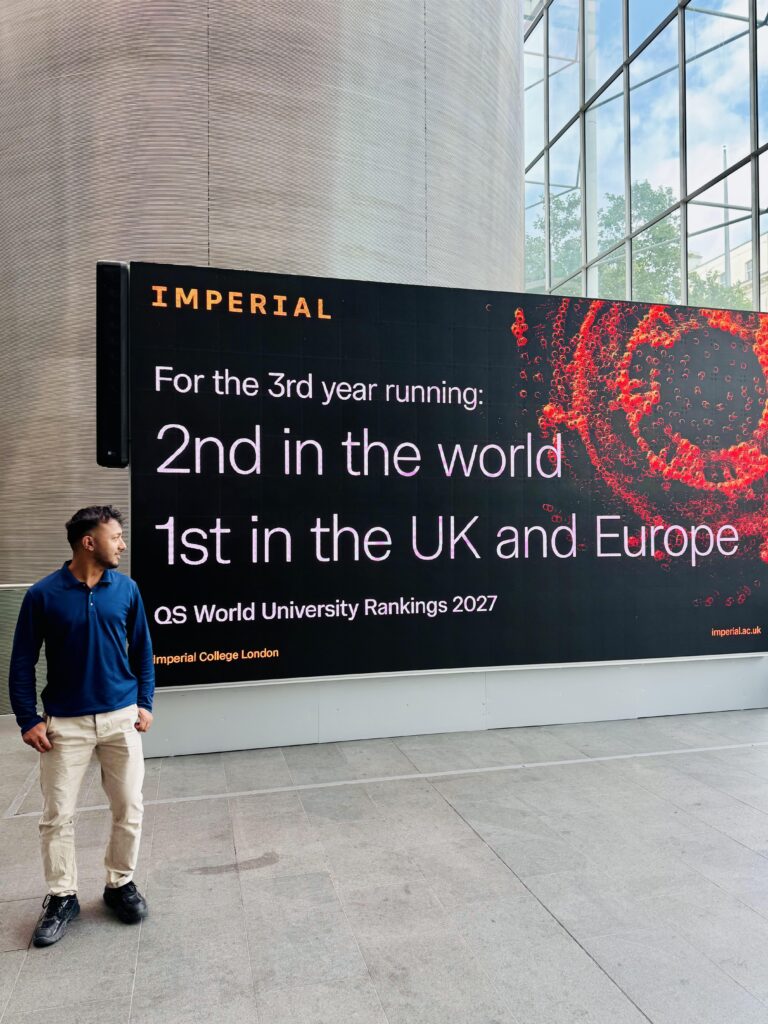
That was one of the questions at the heart of my last week (20th-24th July) at the Imperial Robotics Summer School, hosted at Imperial College, London; a week that sharpened my thinking and pushed me to look at robotics problems from angles I don’t usually get to in my day-to-day work.
The summer school brought together emerging researchers, academics, and industry professionals from across the robotics community for an intensive, hands-on programme. I came away having learned a huge amount, from expert-led lectures on robot kinematics, dynamics, sensing and control, and robot learning, through to specialised sessions on aerial robotics, robot intelligence, surgical robot vision, bio-inspired sensing and control, and personal assistive robotics.
One of the standout parts of the week was getting into Imperial’s robotics labs themselves, seeing research up close across adaptive and intelligent robotics, aerial robotics, robotic surgery, manipulation and touch, and assistive robotics. Alongside researchers from across the UK and beyond, we dug into real-world robotics challenges spanning quadruped locomotion, vision-based robot learning, tactile sensing, and healthcare applications.
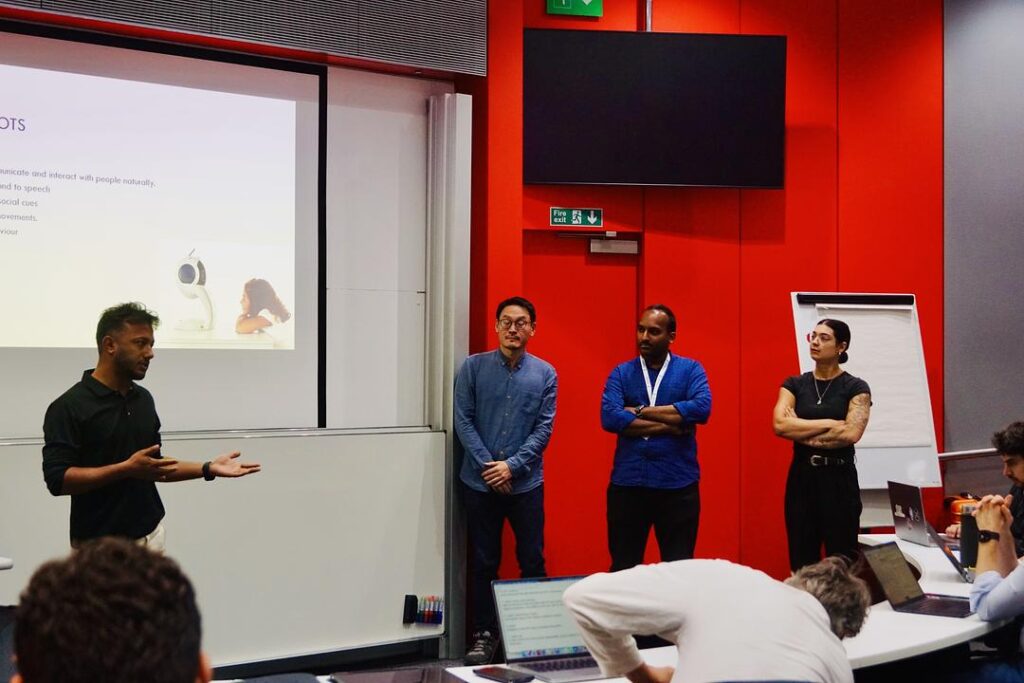
Our group project focused on enabling a robot to interact with several people at once, rather than the typical one-to-one interaction most social robots are designed around. We worked on detecting the active speaker in real time, tracking each person’s identity through the interaction, and generating natural gaze and head-turn behaviour so the robot felt genuinely attentive to the whole group rather than just one person. Along the way, I got a much clearer picture of the full pipeline from language to motion, how an LLM translates natural intent into structured commands, how those get mapped to high-level robot functions, how inverse kinematics turns that into joint trajectories, and how it all finally reaches the actuators through the robot’s control stack. It was a great, hands-on introduction to just how hard multi-party human-robot interaction really is. and I came away with a much deeper appreciation for the interdisciplinary side of robotics research.
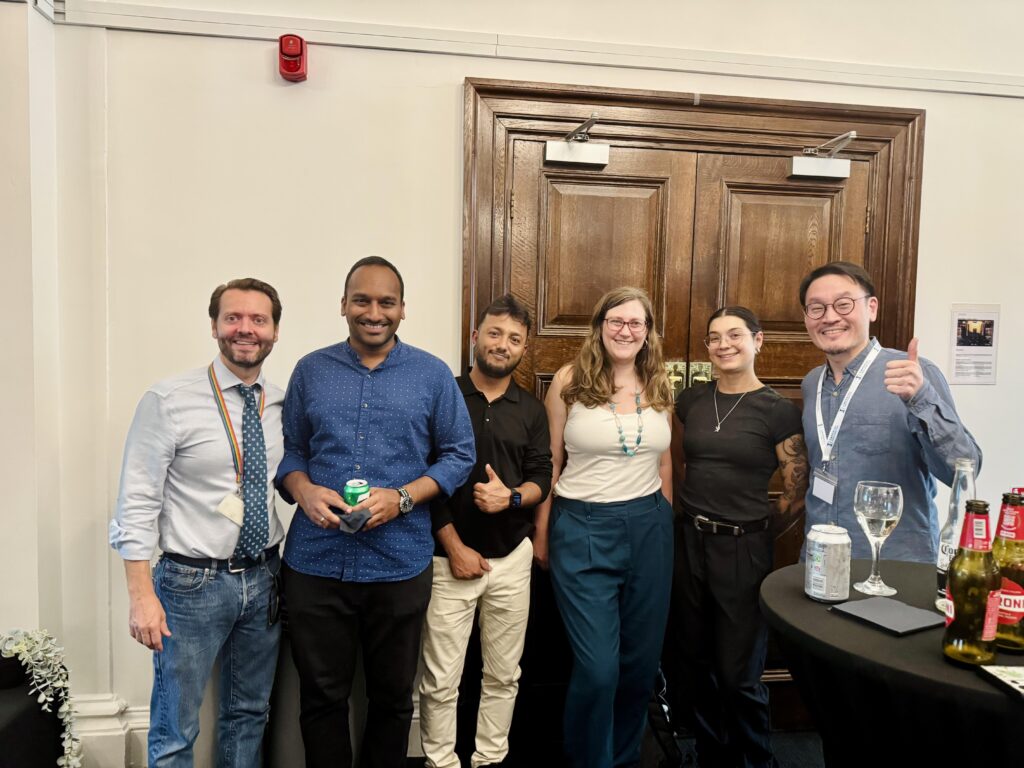
None of this would have been possible without UK RAS STEPS, who funded my place as one of five RTPs selected to attend. Beyond this summer school, UK RAS STEPS has been really helpful for my development, with different workshops along the way that I’ve learned a lot from. A special thank you also to Marie Daniels for her support and guidance throughout the application process.
Thanks as well to the wider Imperial College, London team, the lecturers, researchers, and fellow participants, for a week full of great conversations and a real learning environment.

Umar Farooq
is a Control Engineer at the University of Cambridge
Umar Farooq
is a Control Engineer at the University of Cambridge
UK RAS STEPS


