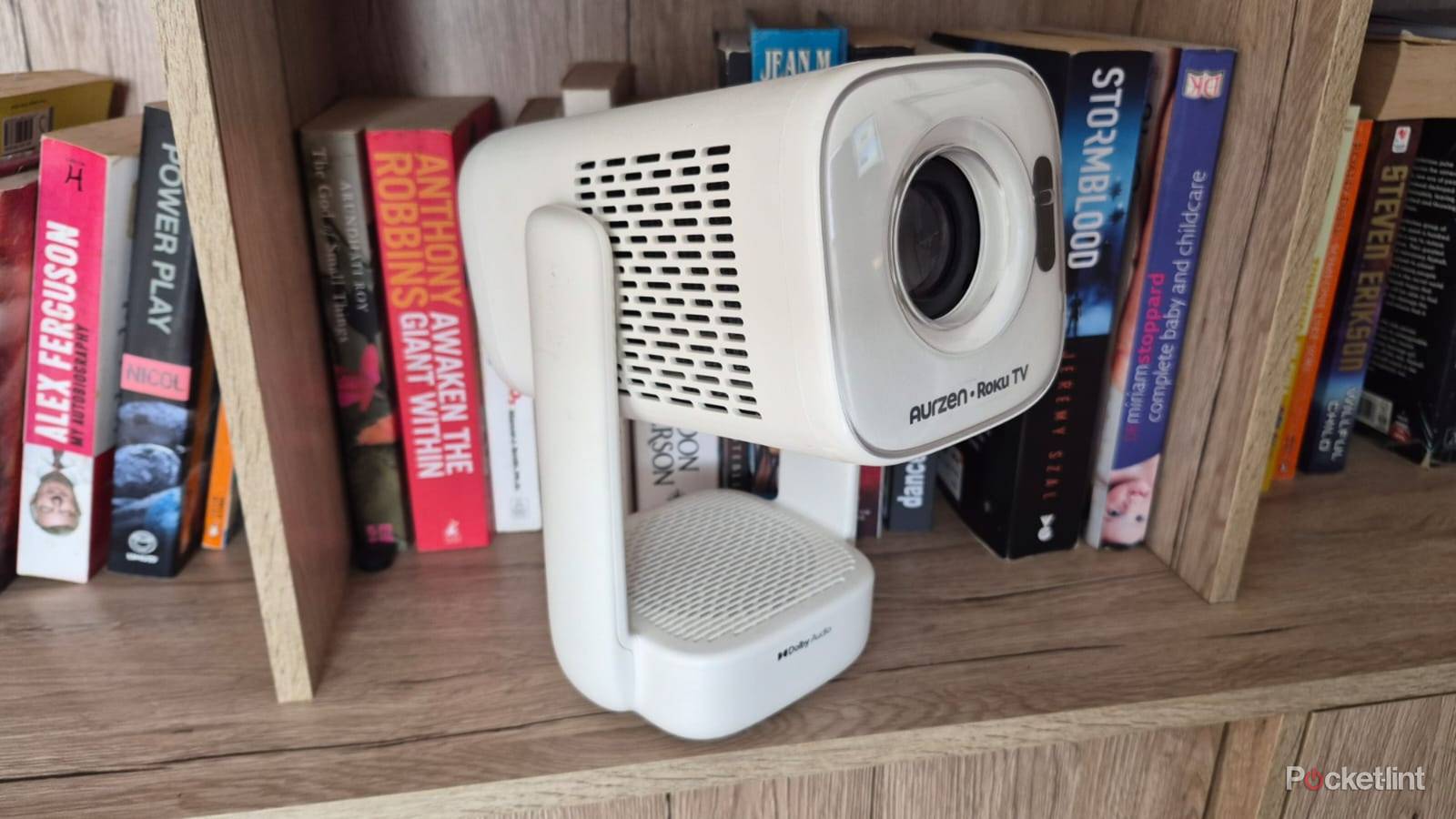
Projectors have improved at a staggering rate over the last few years and some models are viable alternatives to TVs. The portable models are available for camping trips and impromptu movie nights, while home theater models deliver a cinematic experience in your living room.
Unfortunately, many people are unaware of the latest projector features and still believe in outdated myths that might have been true years ago, but no longer apply. Here are five projector myths you should stop believing.
 Quiz
Quiz
Home projectors
Trivia challenge
From lumens to throw ratios — how much do you really know about home
projector technology?
TechnologyDisplayHistorySetupBrands
What does the term ‘lumens’ measure in the context of a home projector?
Correct! Lumens measure the total brightness of light output from a
projector. The higher the lumen count, the brighter the image — which is especially important in rooms
that aren’t fully dark.
Not quite. Lumens measure brightness, not resolution or contrast. A
projector with 3,000 lumens is noticeably brighter than one with 1,500 lumens, making it better suited
for rooms with ambient light.
What is a ‘short throw’ projector designed to do?
Correct! Short throw projectors are designed to project a large image
from just a foot or two away from the screen or wall. They’re ideal for smaller rooms where a standard
projector couldn’t be placed far enough back.
Not quite. Short throw refers to the projector’s ability to produce a
large image from a very short distance. This makes them perfect for apartments or rooms with limited
depth, as you don’t need metres of space behind the projector.
Which projection technology, common in early home projectors, used a spinning colour
wheel to produce colour images?
Correct! DLP projectors use a spinning colour wheel combined with a
Digital Micromirror Device (DMD) chip to produce colour images. This technology was invented by Texas
Instruments and became widely used in home cinema projectors.
Not quite. It’s DLP technology that uses a spinning colour wheel. LCD
projectors use liquid crystal panels instead, while LCoS combines elements of both. DLP’s colour wheel
approach can sometimes cause a ‘rainbow effect’ that some sensitive viewers notice.
What does ‘keystone correction’ do on a home projector?
Correct! Keystone correction fixes the trapezoidal distortion that
occurs when a projector is angled up or down relative to the screen. Without it, a projected rectangle
would appear wider at the top or bottom than the other end.
Not quite. Keystone correction addresses image shape distortion. When a
projector isn’t perfectly level with the screen, the image can look like a trapezoid. Keystone
correction — either manual or automatic — digitally adjusts the image geometry to make it look
rectangular again.
What does ‘contrast ratio’ refer to in projector specifications?
Correct! Contrast ratio describes the difference between the deepest
black and the brightest white a projector can display. A higher contrast ratio generally means richer,
more cinematic images with better detail in dark scenes.
Not quite. Contrast ratio is about the range between black and white
levels. A projector with a 100,000:1 contrast ratio can produce far deeper blacks than one rated at
10,000:1, which is why it’s such an important spec for home cinema use.
Which company developed the DLP (Digital Light Processing) technology used in many
home projectors?
Correct! Texas Instruments invented DLP technology in 1987, with the key
innovation credited to engineer Larry Hornbeck. The technology uses millions of microscopic mirrors on a
chip to reflect light and create images.
Not quite. DLP was developed by Texas Instruments. While Sony and Epson
are major projector manufacturers, Sony typically favours SXRD (its version of LCoS) and Epson uses 3LCD
technology for their respective projector lines.
What aspect ratio is considered standard for most modern home cinema projectors?
Correct! 16:9 is the widescreen aspect ratio that has become the
standard for home cinema projectors, matching the format of HD and 4K content, Blu-ray discs, and most
streaming services.
Not quite. The 16:9 widescreen ratio is the standard for modern home
projectors. The older 4:3 ratio was common in business and early home projectors, while 21:9 is an
ultra-wide cinematic format found in specialist projectors and monitors.
What is the primary advantage of an ‘ultra short throw’ (UST) projector compared to
a standard short throw model?
Correct! Ultra short throw projectors can sit just inches — sometimes
less than 30cm — from the wall and still project an image of 100 inches or more. This makes them ideal
for living rooms where a traditional projector setup simply isn’t practical.
Not quite. The defining feature of an ultra short throw projector is its
ability to project a huge image from an incredibly small distance. Many UST projectors sit on a TV unit
directly below the screen, making them a stylish alternative to a large flat-panel TV.
Your Score
/ 8
Thanks for playing!
Projectors have a short lifespan
Not anymore

This myth is based on older lamp-based projectors and doesn’t apply to the latest LED and laser models. Older lamp projectors ran a current through a filament-based bulb to generate the image. This bulb would usually last between 2,000 and 5,000 hours in normal mode and the brightness and image quality would usually start degrading before then.
Modern projectors use LEDs or lasers, which offer superior image quality and longevity compared to the older types. LED projectors usually have a lifespan of around 20,000 to 30,000 hours and don’t require maintenance. Laser projectors are pricier than LED models and have a similar 20,000 to 30,000 lifespan. I usually buy cheap LED portable projectors for outdoor use and stick to laser projectors for my living room.
Projectors are difficult to set up
New models solve this issue

This is another myth based on older projectors. In the past, you’d need to get a projector mount that would need to fit into the wall or ceiling. It would require effort to get it fitted and be difficult to move. Sometimes you’ll also need to manually set up the focus, keystone, and other settings when using your projector.
Thankfully, those days are gone, and many fantastic projectors are now available with built-in adjustable stands, so you don’t need a separate mounting system. The stand offers height and swivel adjustment and finding the perfect positioning takes a few seconds. These projectors also include features, like auto focus, auto keystone correction, and obstacle avoidance and work without manual input.
Many fantastic projectors are now available with built-in adjustable stands, so you don’t need a separate mounting system.
Older projectors required medium to large rooms to project a focused image. That’s no longer the case, and you can find many good short-throw projectors which don’t require much space and work in the smallest rooms. I only buy projectors with built-in stands because I can move them from room to room and set them up in no time.
Projectors only work in the darkest rooms
It depends on the projector

This is somewhat true. It comes down to brightness and depends on the projector make and model. Projector technology is always advancing, but most low-to-mid-range models still have under 1,500 lumens of brightness, and will perform well in dark rooms and for nighttime viewing.
However, you can now find many mid-range to premium models offering above 1,500 lumens of brightness, making them viable for lighter viewing conditions. Projectors between 1,500 and 2,500 lumens of brightness will work in a room with moderate ambient lighting. The best projectors now offer above 3,000 lumens of brightness and can work for daytime viewing.
Projectors can’t match a TV’s picture quality
It’s complicated

This is another one that comes down to the projector and lighting conditions. The latest TVs will beat most projectors for daytime viewing, with superior brightness, richer colors, and better contrast. Projectors somewhat make up for their visual shortfalls with giant display sizes that TVs can’t match.
High-end laser projectors can go toe-to-toe with TVs when it comes to image quality.
Things change as you climb higher up the ladder and high-end laser projectors can go toe-to-toe with TVs when it comes to image quality. These projectors are extremely bright and offer 4K resolution and fast refresh rates. I feel they deliver a better all-around experience in low-light conditions, while TVs are more consistent during the day or night.
Projectors need a screen to work
More of an optional accessory than a necessity

A dedicated projector screen is recommended, but it isn’t necessary to enjoy your projector. It’s worth getting one if you don’t have adequate space on your wall for projecting the image or if it’s covered with wallpaper or posters.
I run different projectors in my house and don’t stress about getting a screen because I have flat white and cream walls with enough space for the image. I still enjoy excellent picture quality and don’t feel like I’m missing out when watching movies or playing games.

- Brand
-
Dangbei
- Native Resolution
-
4K
- Projection Technology
-
LED and laser hybrid
- Audio
-
2 x 12W speakers
- Mounting Type
-
Integrated stand
- Ports
-
2 x HDMI, 1 x USB-A, 1 x 3.5mm
The Dangbei MP1 Max is a 4K triple laser projector that’s bight enough to work on most lighting conditions and includes a built-in stand.


