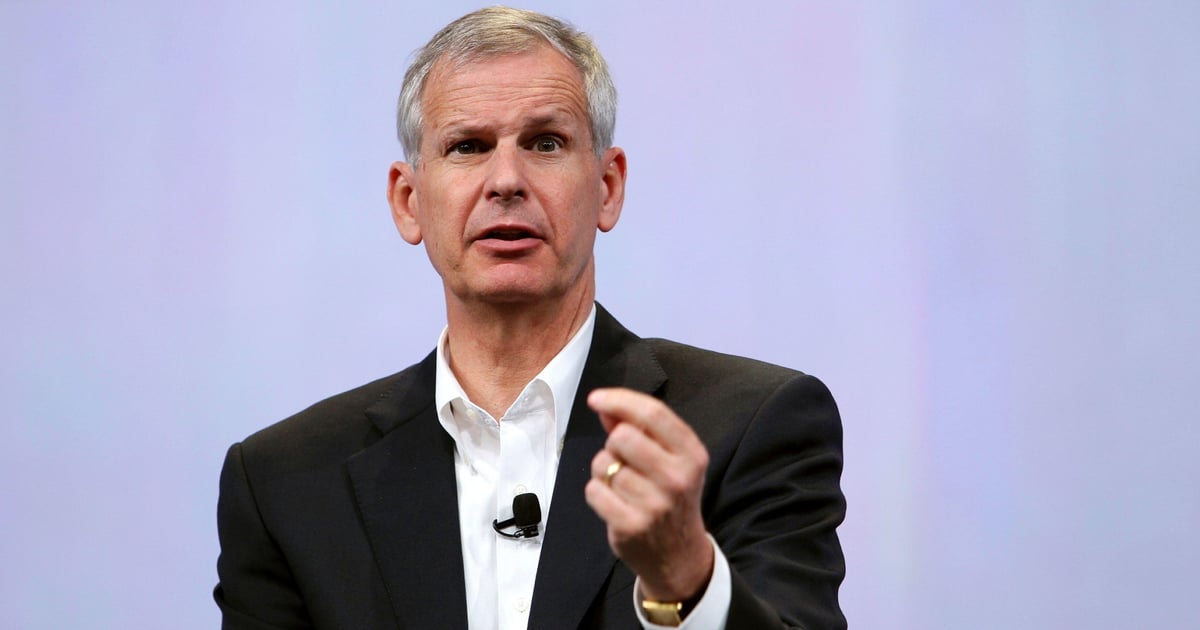
CONX, Charlie Ergen’s special-purpose acquisition company (SPAC), has cut a deal to acquire a controlling stake in MobileX, an MVNO founded by mobile industry vet Peter Adderton, a person familiar with the transaction confirmed.
As first reported by the Wall Street Journal, the transaction, which will require regulatory approval, values MobileX at about $200 million. Adderton, a long-time critic of how Ergen has run Boost, will continue to lead MobileX. Verizon, which currently serves as MobileX’s MVNO partner, is in line to acquire a minority stake in MobileX, Light Reading confirmed. Rumors surfaced last year that EchoStar was exploring an acquisition of MobileX.
MobileX declined comment. EchoStar declined comment because it has no direct dealings with CONX.
Ergen set to control both Boost and MobileX
If the deal is consummated, Ergen will effectively gain control of two MVNOs that, together, run services on all three major US mobile networks, along with some adjacencies to Starlink’s direct-to-device (D2D) network – with the potential for Ergen to do even more with SpaceX.
Ergen’s EchoStar currently owns and runs Boost Mobile, which was acquired in 2023 as a stipulation linked to the T-Mobile/Sprint merger. Boost Mobile has MVNO agreements with both T-Mobile and AT&T. Tied to EchoStar’s sale of spectrum to AT&T, Boost recently transitioned to a hybrid MVNO that runs primarily on the AT&T network while running on Boost’s own core network. Boost also will have access to SpaceX’s coming next-gen direct-to-device (D2D) service, an arrangement tied to EchoStar’s sale of spectrum to SpaceX.
Founded in 2019, MobileX runs mobile services on the Verizon network. Adderton also founded Boost Mobile in 2000, selling it to Nextel (which later merged with Sprint) in 2003. Adderton sold his Australia-based Boost Mobile prepaid business to Telstra in late 2024.
What now?
The proposed deal signals that Ergen plans to continue to lean into mobile despite the bankruptcy of Dish Wireless, which is decommissioning its national 5G network. But, as the WSJ reported, it’s not immediately clear if Ergen intends to “coordinate or combine” the operations of MobileX and Boost Mobile.
Both MobileX and Boost Mobile are squarely in the prepaid mobile market. EchoStar/Dish made an unsuccessful go at the postpaid market with Boost Infinite.
Boost and MobileX won’t be competing in the same segment of the market, a source familiar with the deal said. That could mean that Ergen will use the MobileX brand and service to take another run at the postpaid market dominated by AT&T, T-Mobile and Verizon, while keeping Boost laser-focused on the prepaid segment.
Heading into this deal, Boost is much larger than MobileX. Boost ended Q2 with 7.38 million wireless subscribers. MobileX hasn’t revealed customer numbers. Adderton told Light Reading in January 2025 that the company’s subscriber base was in the tens of thousands. But MobileX offers help in several other areas, including a solid platform that taps into AI to help customers find the right plan.
The SpaceX connection
And it’s unclear what opportunities Ergen might pursue via his evolving relationship with SpaceX. From a branding standpoint, there’s more alignment between MobileX and SpaceX than there is between Boost and SpaceX.
Meanwhile, SpaceX and Starlink have plans to build a terrestrial network to go with their general global service ambitions. And it seems that MobileX has had some global-facing ambitions of its own. MobileX obtained the GlobalX trademark in January 2026. Adderton promoted that fact soon after.
“Proud moment for the team: GlobalX is now an officially registered trademark we own with the United States Patent and Trademark Office,” Adderton said in this January 31 X post. “We’re already using it, but the long-term vision is for this brand to become the banner of our NTN strategy global connectivity across fixed, wireless, and satellite, all powered by the @mobileXus platform. The future won’t be defined just by the networks it will be shaped by the super-app and the brand that truly empowers consumers.”
In a Sunday post on X, Adderton didn’t reference the purported deal, but stressed the importance of connecting people “to the best available network.”
“The next-generation wireless company shouldn’t be trying to become the fourth carrier. It should become the connectivity layer that makes every network invisible seamlessly connecting consumers to the best available network, wherever they are, without them ever needing to know or care who owns it,” he wrote.
Kindred spirits?
Ergen recently admitted that his mobile efforts have fallen short. “As management, we haven’t cracked the code on how to be successful to the level we’d like to in the wireless business. In general, we’ve treaded water for 4 years now,” Ergen said on EchoStar’s Q2 2026 earnings call.
Roger Entner, analyst and founder of Recon Analytics, believes that having Adderton stay on to run MobileX (and potentially do much more) will provide Ergen with some much-needed expertise in mobile, and a kindred spirit of sorts.
“Peter knows wireless and he’s an energetic leader who knows how to beat the odds,” Entner said. “Both [Adderton and Ergen] are mavericks. Both of them are self-made. Both of them and have been beating the odds. You can’t count either one out.”
And he points out that Adderton will gain access to resources he didn’t have before.
“This [transaction] gives Peter, provided Charlie gives it to him, deeper pockets on which he can execute things. It takes money to make money. Charlie right now has money. I would assume that Peter has assurances that he is not going there and eat stale bread and drink water.”
CONX also targeting emerging 5G Broadcast tech
MobileX is just the latest target of CONX, the Ergen-owned SPAC founded in 2020. In June, CONX inked a financing deal that paved the way for it to acquire a controlling interest in HC2 Broadcasting.
HC2 is the nation’s largest owner and operator of US low-power television (LPTV) stations and is a champion of 5G Broadcast, a standard that enables video and other services and apps to be delivered to 5G-capable devices. Last spring, HC2 asked the FCC to adopt a rule that embraces the 5G Broadcast standard, arguing that it would enable low-power stations to deploy the technology on a voluntary basis.


