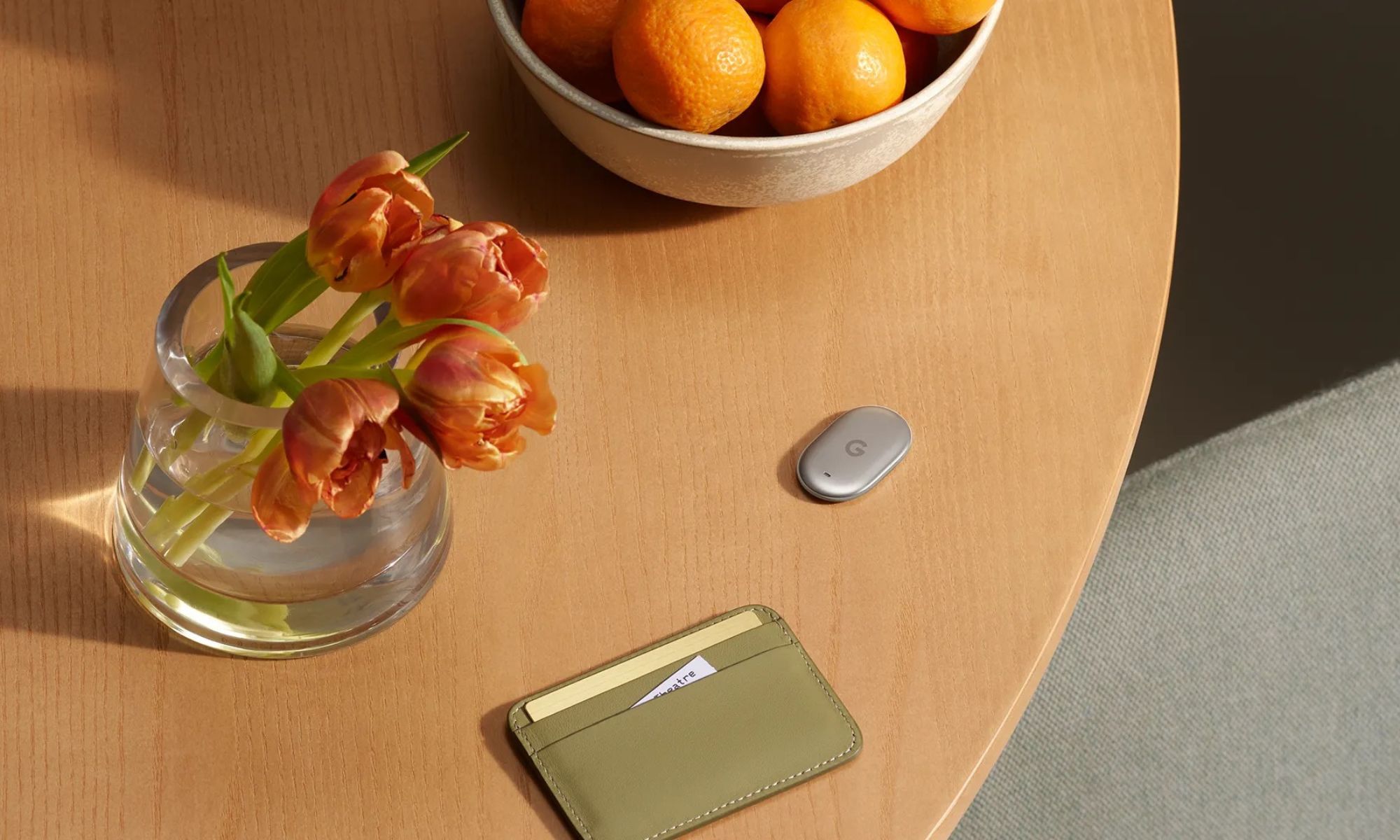

My everyday driver is an iPhone, which makes the Google Pixel Tag one of the rare products I write about with no way to put one in my pocket. Every tag Google sells needs an Android phone nearby to be worth anything, and mine has the wrong logo on the back. That limitation turned into the useful lens for me, because a tracker’s value depends far more on the phones around it than on the tag itself.
Google is the last major name to build a Bluetooth tracker, which means the benefit of copying everyone else’s homework. Instead, my favorite search engine shipped a pill-shaped tag into a category where the round puck won years ago. Arriving late and ignoring the settled answer strikes me as an odd combination. The rest of Google’s decisions hold up better, and I get to everything below.
A compact design with one accessory drawback
I keep hearing stories about Bluetooth trackers saving people from a lot of back-and-forth with airlines. A bag doesn’t show up on the carousel, the airline says it’s still at another airport, and the tracker shows it’s… somewhere in the terminal. Alright, that’s an outlier example of how useful a Bluetooth tracker can be, but if a tracker is too bulky to carry around or attach to whatever you want to keep tabs on, it loses its value.
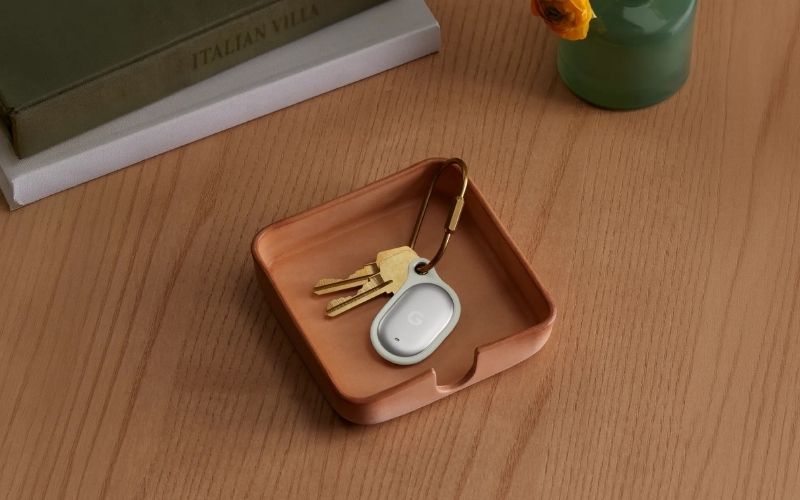
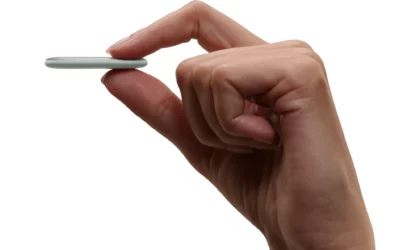
The Pixel Tag features an oblong, pill-shaped design measuring 46.1 mm high, 28 mm wide (1.8 × 1.1 inches), and 5.4 mm thick, with a weight of 11.8 grams. By comparison, Apple’s AirTag is a small, round disc measuring 1.26 inches (31.9 mm) in diameter, 0.31 inches (8 mm) thick, and 0.39 ounces (11 grams). So, neither tracker will remind you it’s there on your next trip unless you need it. But there’s one detail about Google’s design that might disappoint you.
If you fancy a tracker that works with the wealth of AirTag accessories on the market, the Moto Tag 2 is the better pick. You can reuse thousands of AirTag accessories, while the Pixel Tag’s pill-shaped design means you’ll need to hunt around for compatible options.
Google’s Android network could be the Pixel Tag’s secret weapon
Google Pixel Tag (1-pack)
You may already know that Bluetooth trackers are only as useful as the network behind them. When you lose an item, nearby phones can detect the tracker and help report its location without revealing who found it. A larger network means more phones looking for your missing belongings.
The Pixel Tag has a major advantage here. It doesn’t depend on Google’s 3% share of the US smartphone market. Instead, it can use more than one billion Android devices running Android 9 or later to help locate your belongings.
For context, Google, Samsung, and Motorola together account for 39% of US smartphone users, according to Counterpoint Research. That’s impressive, but still well behind Apple’s 58% share.
Precision finding
Trackers rely on two ways to help you recover lost belongings. An app shows where they are, while a speaker helps you locate them nearby.
Open Find Hub to see your tagged items on a map. If you lose something within Bluetooth range, you can trigger the tag’s speaker from the app. Ultra-Wideband and Bluetooth Channel Sounding take finding a step further by showing distance and directional cues. That gives Pixel Tag an advantage over AirTag’s standard Bluetooth Low Energy (BLE) approach.
As for speakers, the first-generation AirTag’s beeping and chirping could be hard to hear when an item was buried deep inside a bag, muffled under couch cushions, or used in a noisy outdoor environment. Apple addressed that with the second-generation AirTag, which is 50% louder and can be heard from up to twice the distance.
The Pixel Tag does have a speaker, as you’d expect. However, I need third-party testing to say with confidence whether Google’s tracker is loud enough to help you find your wallet in a noisy subway station.
I also like that the Pixel Tag supports two-way finding. You can press a dedicated button to ring your phone and locate it, just as you can with the moto tag 2. The AirTag doesn’t offer that feature.
Battery life
One of my biggest frustrations with Bluetooth trackers is finding out too late that the battery died months ago. The AirTag gives you a low-battery warning, but one notification is always easy to miss.
The Pixel Tag takes a more persistent approach. Instead of leaving you with a single warning, it keeps reminding you when the battery is running low. Some might call that overkill, but a tracker is only helpful when it can track something. There’s little point attaching one to your lost keys, bag, or wallet if the battery died because you missed one notification.
Google claims the Pixel Tag can last up to a year on a battery. How close it gets to that figure in everyday use remains to be seen. When the battery does run down, though, you can replace it yourself without much hassle, just like the AirTag 2.
My take for now
I’m optimistic about the Google Pixel Tag and irritated by one decision. Two-way finding, for instance, puts it ahead of the AirTag on paper, but the accessory shortage comes down to the shape rather than the technology (an easy-to-avoid miss). Speaker volume and a battery figure measured outside Google’s lab will settle the rest.
Grigor Baklajyan is a copywriter covering technology at Gadget Flow. His contributions include product reviews, buying guides, how-to articles, and more.


