If you’ve been invited to take photos of a yoga teacher for their socials, you’ve just received a great opportunity to snap some inspiring shots for your portfolio. Yoga exemplifies human grace and flexibility, and offers the chance to show off your people photography skills.
“Poses,” in this context, has two meanings: the yoga pose itself, which is the shape the yogi or student makes with their body, and how you pose your subjects: the setting, their outfits, and even their facial expressions.
In my latest guide, I look at ways to pose yoga teachers or influencers promoting yoga, helping them to stand out and catch the attention of potential followers.
Why Great Yoga Photography Matters for Social Media
Yoga is a popular wellness topic, and yoga teachers can gain a lot of followers on Facebook, Instagram, and TikTok with the right content. But one problem stems from how popular it is; it’s challenging to stand out in such a crowded market.
Basically, everyone with even a slight interest in yoga has seen shots of teachers doing the Downward-Facing Dog pose on a yoga mat in a plain white room.
Which is why it’s your job to find something more enticing and eye-catching to make scrollers pause and pay attention.
If, as a photographer, you have an interest in yoga, that will help. You’ll know which yoga poses are easy, which are challenging, and which are most likely to attract the type of audience your client is hoping to engage with.
Even if you know nothing about yoga, you can still take some stunning photos by considering lighting, color, background, venue, and the overall feel of a shot.
Complement the yoga poses (also called asanas) with some candid shots for TikTok and Instagram Reels, taking advantage of the tips in my guide to posing for vertical photos(opens in new tab).
1. Meditation, Up Close
Meditation and breathwork are important elements of yoga, and many students incorporate them alongside physical asanas.
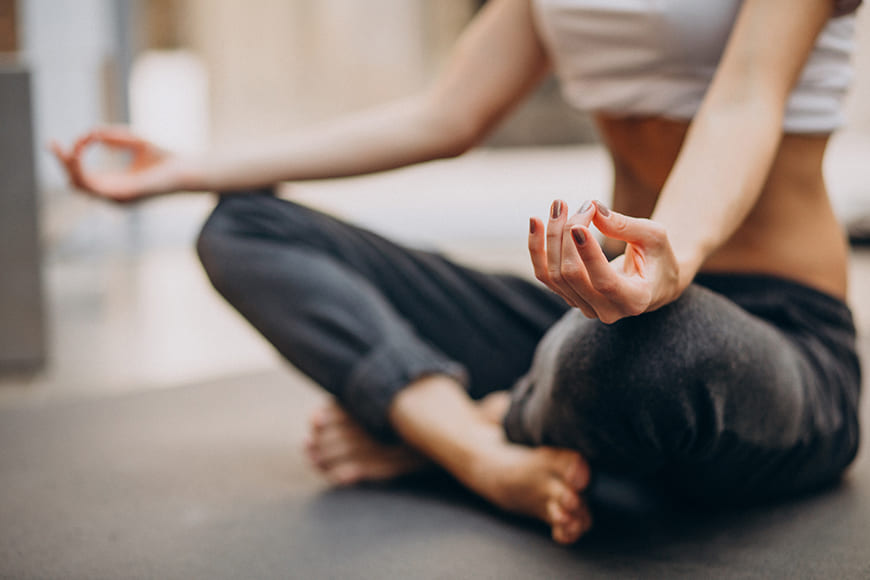
Get your subject to sit cross-legged, with their hands on their knees, ideally with the fingertips together. This is a common pose for quiet contemplation and centering oneself.
Frame the subject so that their face isn’t visible, ensuring that the focus is on what the person is doing, rather than who they are. You may find that angling your yogi so that they’re not quite facing the camera is an effective angle, allowing you to focus on the hand in the foreground and leave the other hand and arm in soft focus.
Neutral tones work well for this pose, for the person’s outfit as well as the background. Strong contrasts and bold shades will distract from the calm moment this image is trying to portray.
The result is perfect as a thumbnail for a meditation YouTube video, for a blog’s featured image, or as a marketing image for classes.
It’s also a great way for yoga teachers to highlight the work they’re doing with students, while protecting their protégés’ anonymity.
2. Demonstrating the Lotus
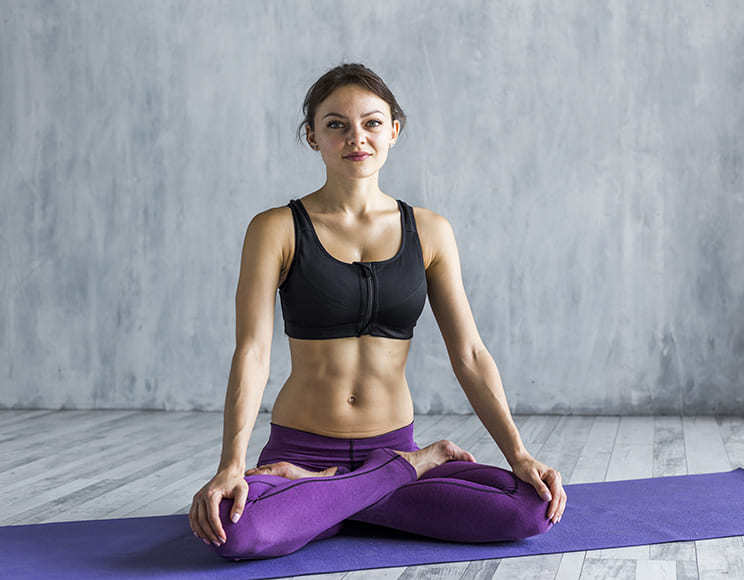
The next step up from standard cross-legged sitting and meditation is the Lotus pose, also known as Padmasana. When moving into the Lotus pose, the subject has one foot placed on the opposite thigh, and vice versa, so the feet are off the floor.
While this sounds complicated if you’re not into yoga, trust me, your yoga-focused client will know exactly what to do. It’s a great pose for photographing your client facing the camera, as it encourages an upright posture and creates a composed, attentive look.
You don’t need any fancy props for this pose. Your client may want to sit on a yoga mat or simple rug, depending on the aesthetic of their studio or exercise area.
Get them to dress how they would normally dress for yoga class. That way, if they’re using the image to prospect for students or clients, people know what to expect when they turn up for a session.
Keep the expression neutral or with a slight smile, conveying the teacher’s focus and professionalism.
Take shots like this in a bright room. If the overhead lights aren’t sufficient, consider using a separate light to ensure your subject’s face is clear and in focus, without shadows.
3. Take Yoga Outdoors
Because yoga isn’t a high-impact sport and doesn’t require much equipment (apart from a mat), you can do it pretty much anywhere.
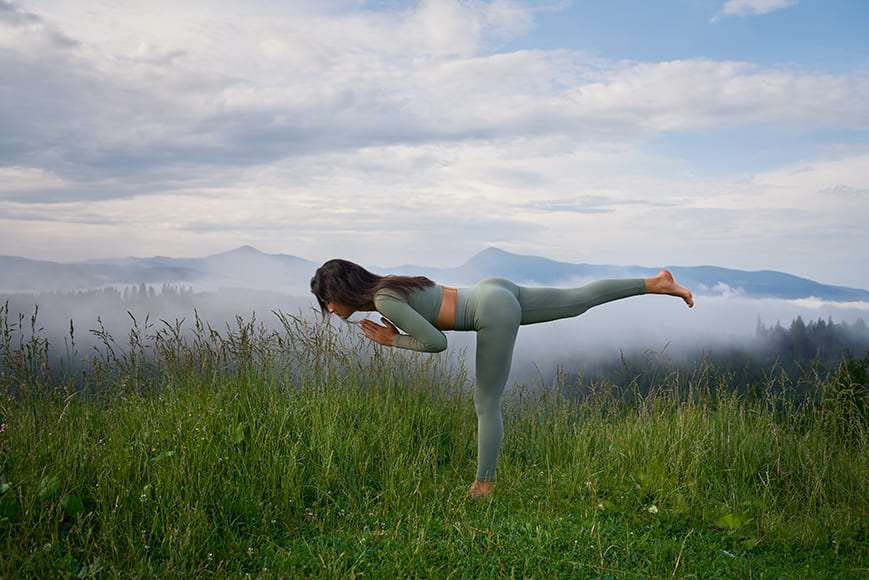
Ask your client if they’re happy to do some poses outside, and try to find a beautiful nature spot like a meadow, near the mountains, or a beach. The contrast between the wild outdoors and the posed, peaceful nature of the yoga asana can make for a potent image.
See if you can get your subject to pose in a way that makes their body align with the landscape. In this photo, the outstretched leg follows the line of the clouds and mountains, making the subject seem as if they’re almost part of the dramatic backdrop.
Another example would be to ask your client to move into an archer pose, such as Akarna Dhanurasana, while standing next to a tree with a branch growing in the same direction as their arm.
This is where knowing a few asanas can come in handy, or you can just ask your client for yoga pose ideas. Remember to check the weather, and if it’s likely to be gray or dull, bring along some additional lighting options.
4. The Sunlit Studio
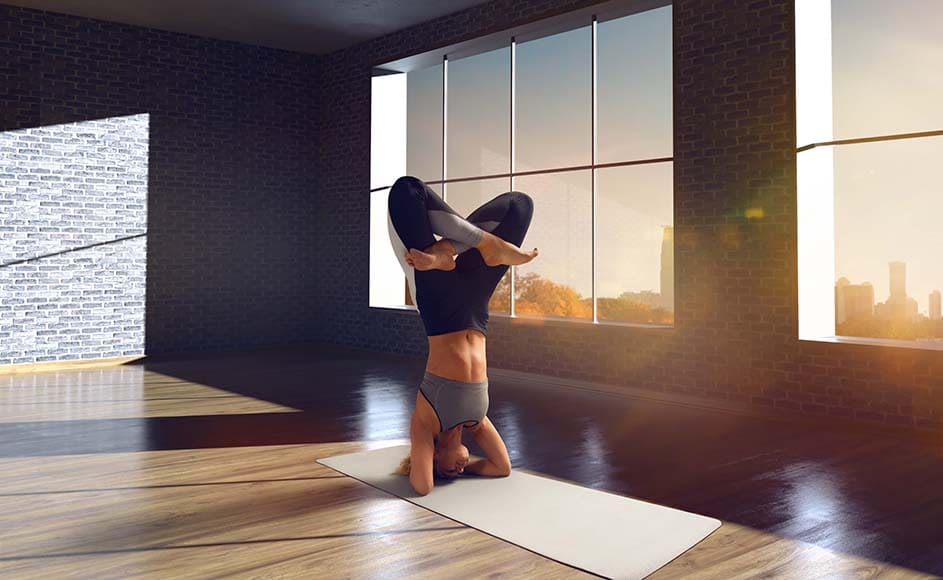
Yoga represents peace and mindfulness, and there’s not much more peaceful than a beautiful sunrise or sunset.
To make this shot work properly, you’ll need to arrange to meet your client early in the morning or late in the afternoon. Use a weather app or similar to check the local sunrise and sunset times.
It’s also worth checking the weather for your chosen day, as heavy cloud cover may make the effect less pronounced. What you’re looking for is sunbeams or a natural glow through a window, illuminating the room but particularly your subject.
You want them to be sunlit and glowing, ideally in a challenging yoga pose, as long as they can make it look effortless. Don’t ask your client to perform a pose that’s outside their comfort zone, even if you think it will look really good.
They will look strained and uncomfortable, and could even hurt themselves. Keep everything safe while exploring what poses look best in the golden light of the rising or setting sun.
If you can see the face of the subject, get them to close their eyes and keep their expression relaxed to complement the calm nature of the moment.
5. A Full Class
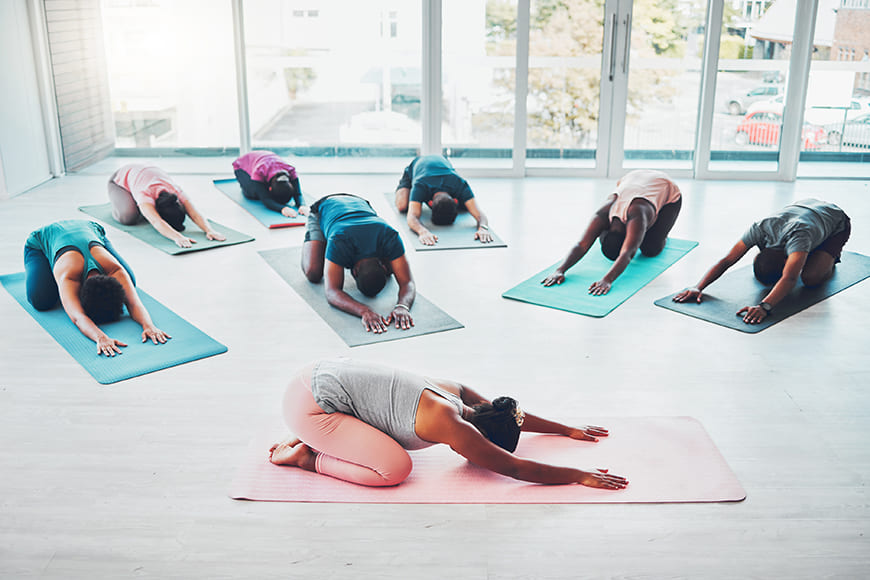
One of the best ways to drive interest in yoga classes is to share an image of the class in action. Some students might not want their faces used in marketing material, but may be happy for you to snap them from behind or when their face is obscured.
The ideal pose for this is Child’s Pose, or Balasana. The students (and teacher) sit on their heels, on their mats, and lean over with arms outstretched and face to the ground.
Once the class is in position, you can begin to take photos, safe in the knowledge that no one’s individual face will be recognizable in the final images.
Aim for symmetry with these shots. If the mats are in a row, stand near the central row and back away until everyone is in shot.
If the mats are fanned out, keep the teacher central, if possible, and take the shot from a slightly elevated angle. You can include background details like the city through the window or the name of the studio, if present.
6. The One-to-One Session
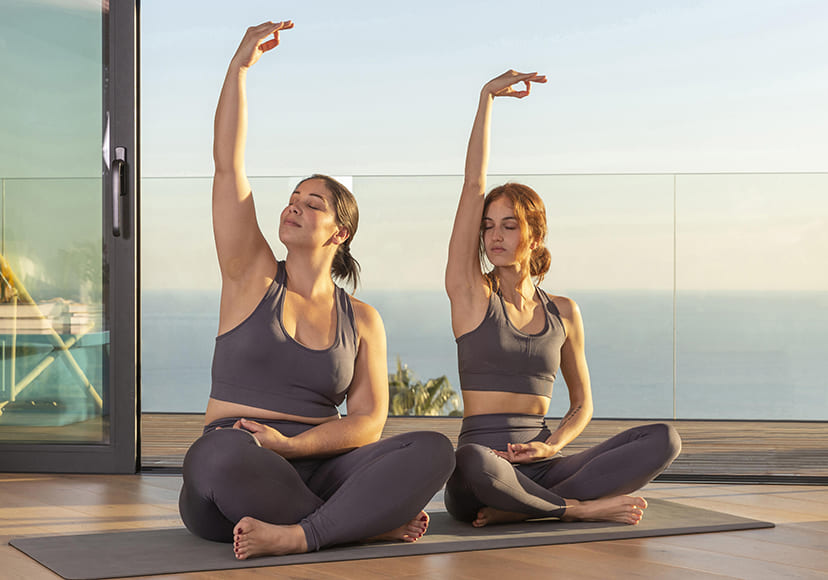
This type of shot is particularly useful for clients looking to find clients for yoga coaching or who want to pass on yoga teaching skills to other budding professionals.
You’ll need a client who has a friend or protégé who is also happy to be photographed. Ask them to decide what asana they can do together confidently.
Pose the two subjects on a yoga mat in a well-lit room. The yoga studio is ideal, as long as the lighting is bright and doesn’t create deep shadows.
For shots in smaller studios, portable lighting might be required to keep faces evenly lit.
Get your subjects to try a few poses to see which they’re most comfortable with. Take a few shots, and look for the poses that look like the two are perfectly in tandem.
The result is an image that showcases the teacher supporting a student or trainee teacher to do their best, and clearly succeeding in doing so.
7. A Striking Stretch
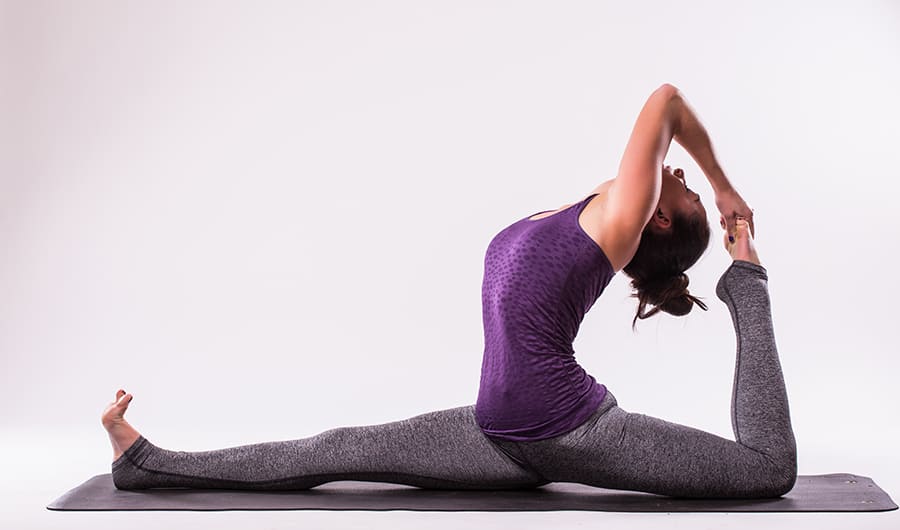
One of the reasons people love yoga is that it promotes stretching and flexibility. If your client is looking to engage an audience interested in more general wellness and fitness, consider getting them to pose in a way that highlights just how beneficial yoga can be for overall well-being.
You don’t necessarily need to opt for traditional yoga poses for these types of shots. You just need to find a position that showcases the talents of your subject and sparks conversation on the benefits of stretching, moving, and yoga in general.
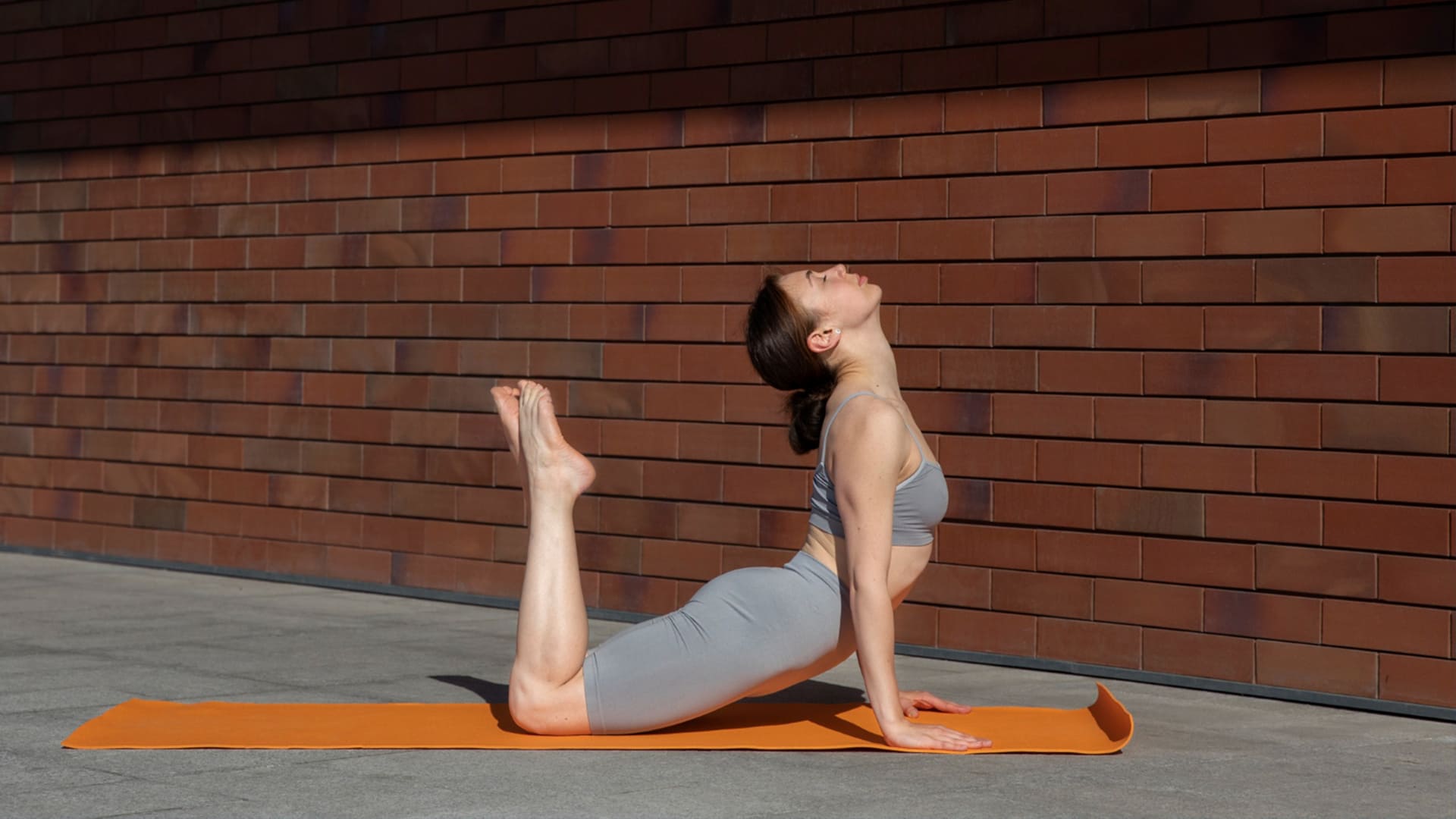
Reaching behind to pull a leg up with the head stretched back is dramatic and eye-catching. So is an asana like the Mill Churning Pose (Chakki Chalanasana), which is performed seated with the legs extended and spread apart.
Change the angle depending on the type of pose. Where the stretch runs front to back – such as the raised-leg stretch – take the shot from the side, but framed close enough that there’s minimal focus on the background.
Top Tips for Photographing Yoga Teachers and Classes
Whether you’ve been hired to photograph a yoga teacher or influencer, or you’re just helping out a friend who’s passionate about the practice, consider learning a little about yoga before the day of the shoot.
You don’t need to know the ins and outs of the history or memorize every asana, but learning some basic poses and why people love it so much can help you understand your client’s goals.
For example, it’s worth knowing that the yoga mat is used for almost every pose, and that most yoga students go barefoot. This means that the mat can get smudged and covered in footprints, particularly if it has a shiny surface.
Take wipes or appropriate cleaning supplies with you to keep the mat looking smooth and clean, reducing the need for meticulous post-shoot editing tasks.
Don’t assume that every yoga pose looks best from the front. Asanas that highlight full-body stretches, such as Downward-Facing Dog, often look more dramatic from the side.
Experiment with different angles, and shift the distance between the yoga practitioner and the camera to see which shots work best up close and which benefit from the addition of background objects.
Discover more ways to capture dynamic movement with my useful guide to flow pose photography(opens in new tab).
Final Thoughts
Yoga practitioners are all different. Some will have practically bare studios that lean fully into minimalism, containing a mat and not much else.
Others will have tapestries, rugs, incense, and a range of spiritually inspired decor. Don’t think of this as clutter you have to avoid; think of it as another way to let your client’s personality shine in their social media images.
Get permission to photograph your client in their actual yoga studio or space, and see if you can get some close-ups of their favorite items to make them more relatable to followers.
I always suggest that they accompany photos of asanas and classes with these more personal images to build relationships with followers and enhance their online engagement.
As well as helping your clients out, it gives you a wider range of photo types for your portfolio.


