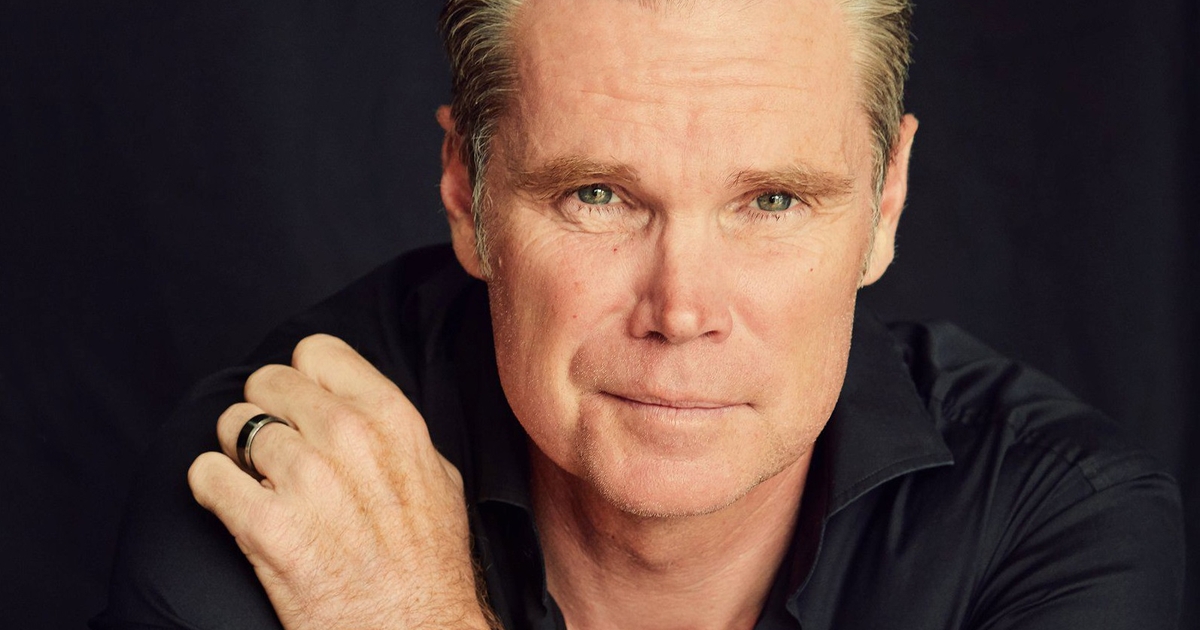
As Peter Adderton puts things, it was time to go big or go home.
MobileX, the MVNO he founded in 2019, had managed to cross 100,000 subscribers, but it still lacked the firepower to compete in the same arena with the Big Three of AT&T, T-Mobile and Verizon.
While some MVNOs might be satisfied with establishing a subscriber base of 500,000 or 1 million, that’s not a goal that Adderton said he’s interested in pursuing.
“Quite honestly, if it was just us chugging away, I was going to quit,” Adderton told Light Reading the day after he formally announced that CONX, Charlie Ergen’s special-purpose acquisition company, was acquiring a majority stake in MobileX. Readers might recall that Adderton made a similar threat to bug out of the business if US regulators didn’t step in to help independent MVNOs compete against MVNOs that are owned by the Big Three.
The CONX-MobileX transaction, which requires FCC approval, will keep Adderton and his leadership team in charge, and allow MobileX to continue to run independently. Per the terms, CONX Wireless Holdings will acquire a 60.93% stake of the equity and voting interests in MobileX, with Adderton retaining 19.42%. Verizon, MobileX’s MVNO partner, is in line for a 12.5% equity stake.
Adderton, who founded MobileX in 2019 and sold Boost (the MVNO now owned by EchoStar) in 2003, believes the transaction will give him the fuel he needs to take a run at the Big Three as well as cable operators that have managed to put a sizable dent in the mobile market.
“I want to make real change in the industry and I want to take on Verizon, T-Mobile and AT&T and some of the other brands that are also in the market, like Spectrum,” Adderton said. “In order to do that, you have to think big and that’s where the partnership with us and CONX came in, because they can provide the capital and the firepower for us to go big … You’re just not going to make it [as an independent MVNO] unless you do something that we’re able to do by getting real capital. And then you can really double down.”
On tap: More marketing, more bundling, more connectivity
Adderton isn’t sharing a lot of specifics about how he expects MobileX to make a bigger mark in mobile. But he pointed to some areas he’ll be pursuing, including more marketing and promotion of the brand, a shift toward “unlimited connectivity” supported by multiple types of access networks, the creation of new service bundles, and deeper investment into MobileX’s AI-optimized platform, which today helps subs customize their plans and keep costs down based in part on their data usage.
“As for the platform, we’ve only scratched the surface on what it can do,” Adderton said. It’s possible that MobileX will lean on that platform to support new bundles that put multiple types of services on one bill and to streamline how customers can add or remove devices from their accounts.
Once the deal is done, expect Adderton to focus on putting MobileX on the map. “To differentiate, you need to let people know that you exist. The first priority for us is to put real investment behind the brand,” he said, noting that he expects the transaction to close by mid-October. “I think you’ll see a shape-shift of the brand, where we’re sold, how we’re sold over the next three to six months.”
From a broader perspective, Adderton wants MobileX to provide “unlimited connectivity” in the sense that customers will be able to get service from multiple types of networks, including terrestrial wireless and satellite and possible hooks into wireline broadband networks. “That’s why I’ve said: ‘Don’t promote the network; promote the connectivity.’ Just make it work,” he said. “The fourth network,” Adderton holds, “is the layer that stitches all of this together, globally for the consumer – whether it’s satellite, or whether it’s broadband, whether it’s cable, fiber or mobile.”
He acknowledges that MobileX will need to form an array of partnerships with multiple network providers to make that strategy work, let alone pay off. But he’s confident the silos will open up.
“If you go out three or four years from now with real satellite solutions coming, when you put all of that together, I think we’ll see a seismic shift in the networks accepting that platforms like ours can make experiences better,” he said.
Adderton is adamant that satellite connectivity will play a part in MobileX’s network strategy. No deals are signed, but a future agreement with SpaceX seems like an obvious path forward, given Ergen’s ownership position in SpaceX and Boost’s coming use of SpaceX’s next-gen direct-to-device (D2D) platform.
“We’ll have it [satellite connectivity] along with everybody else, effectively,” Adderton said. “The question is how do we serve it up? I think that’s the exciting part.”
But where does MobileX expect to fit in from a category standpoint? Historically, MobileX, like Boost, has been forced to focus on the prepaid market. Moving forward, Adderton wants MobileX to go beyond competing for customers on price against the likes of Cricket, Metro and Total Wireless, but he also believes the lines between prepaid and postpaid are blurring.
“To me the concept of prepaid and postpaid is kind of gone,” he said. “When someone picks postpaid, it’s probably more device-driven. I think there’s some unique things we can do in the device area. But I think it’s all coming down to educating the customer … What scares them [the Big Three] is an educated customer.”
Adderton’s ambitions extend beyond the US. MobileX obtained the GlobalX trademark in January 2026.
“This transaction was about building a global brand. It wasn’t about trying to get a better MVNO that can fight Total and can fight Boost,” he said. “If we end up fighting Boost, we’ve made a huge error. If we end up fighting Metro and those guys, we’ve made a mistake.”
The Ergen connection
Adderton says his relationship with Ergen goes back more than ten years. While he admits he’s been a “harsh critic” of Boost in recent years, he also believes the execs have always seen eye-to-eye on their broader aims in mobile, even as Adderton pursued it with a platform layer and Ergen initially took a different path by trying to build a national 5G network.
The situation changed, of course, after EchoStar sold spectrum to AT&T and SpaceX, and Dish Wireless moved to shut down its 5G network as Boost converted to a hybrid MVNO that largely runs on the AT&T network.
“We’ve always had a like-mindedness to disrupt and change the wireless industry,” Adderton said of his relationship with Ergen. “We were on different roads and then suddenly the roads kind of aligned. We got on the same freeway and said ‘why don’t we work together on this rather than beat each other up?'”


