The 2026 Lucid Air Grand Touring is a phenomenal luxury EV that combines crazy fast acceleration, exceptional range, and a dynamic ride. It’s also one of the few electric sedans that feels genuinely engaging behind the wheel. We loved almost everything about it, though some of Lucid’s attempts to rethink controls make the Air more complicated than necessary.
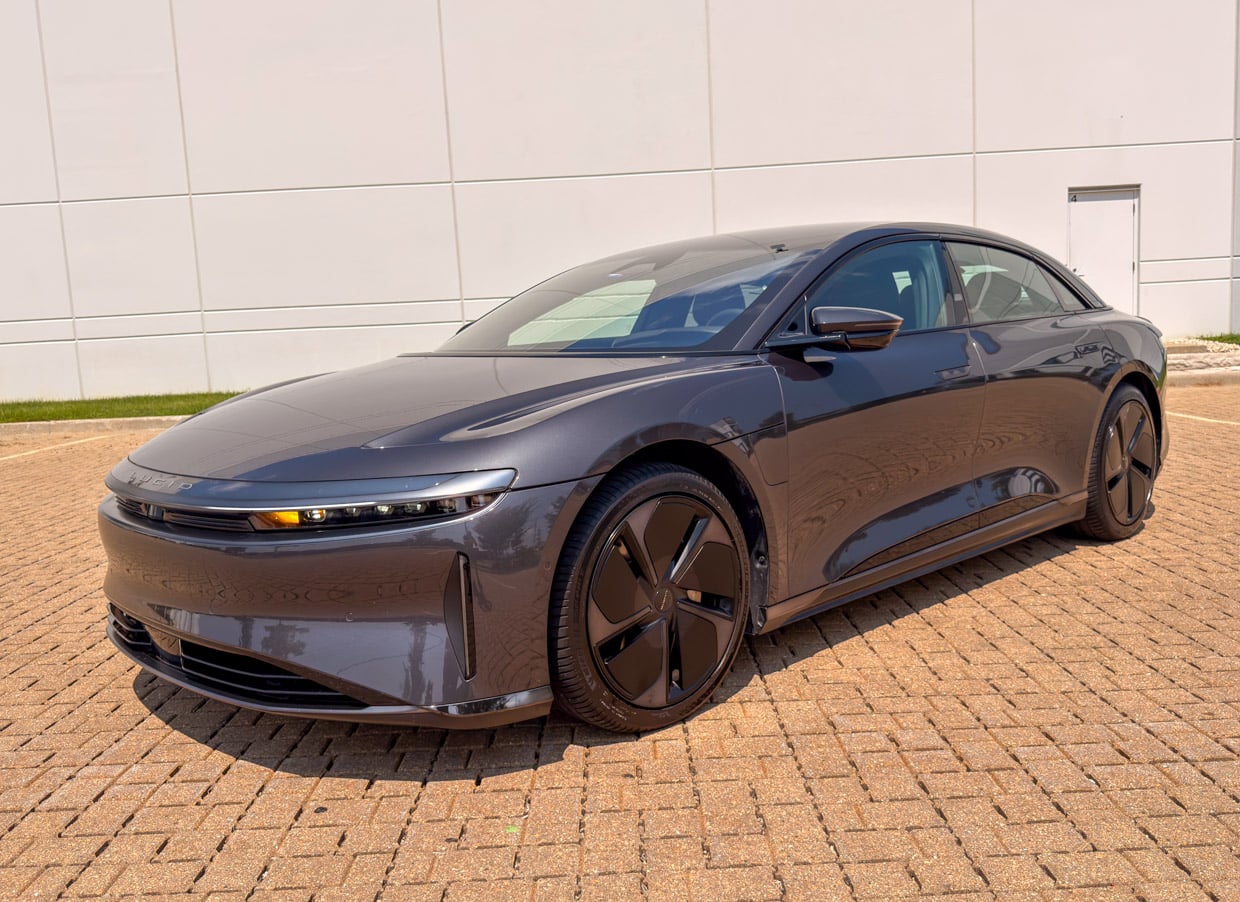
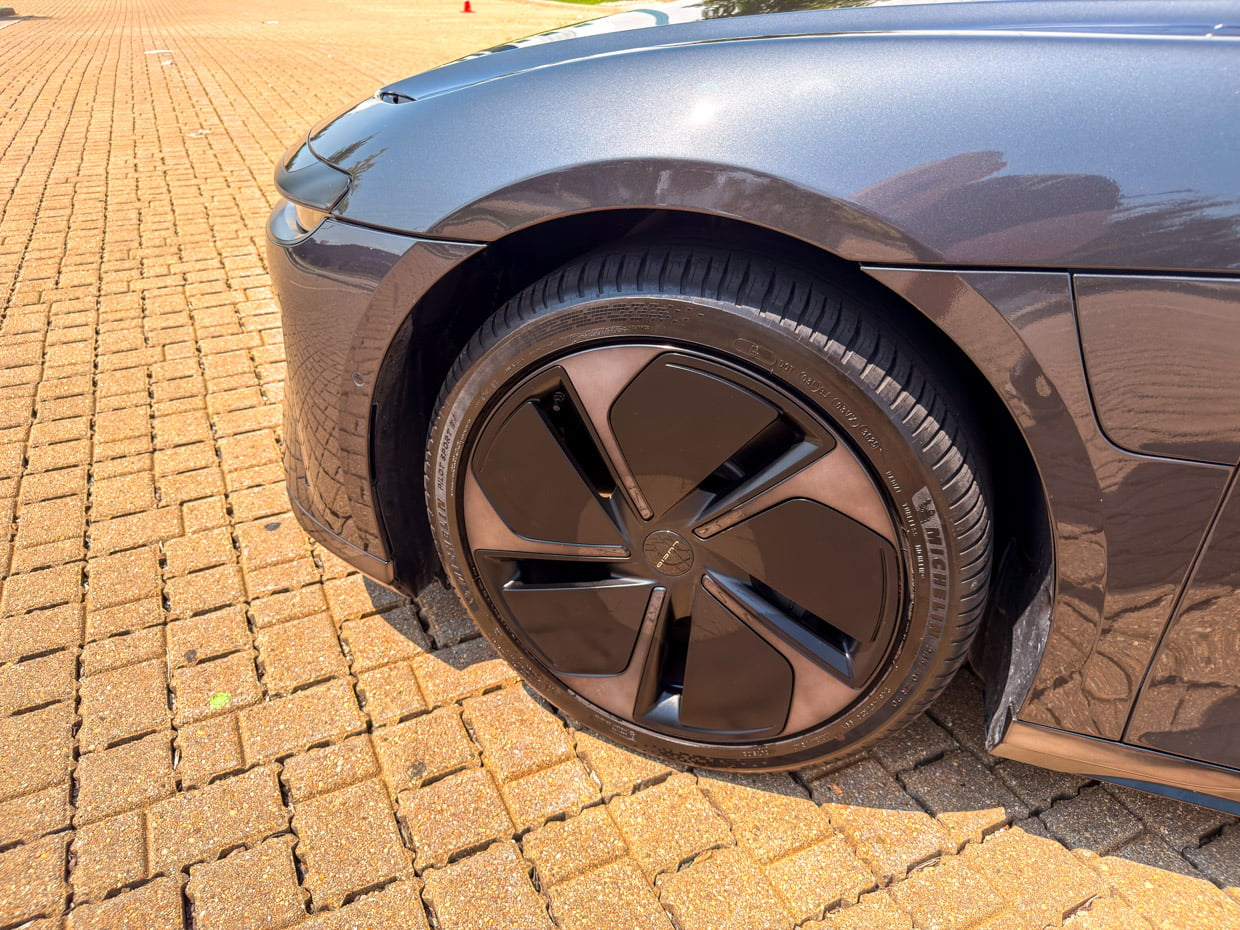
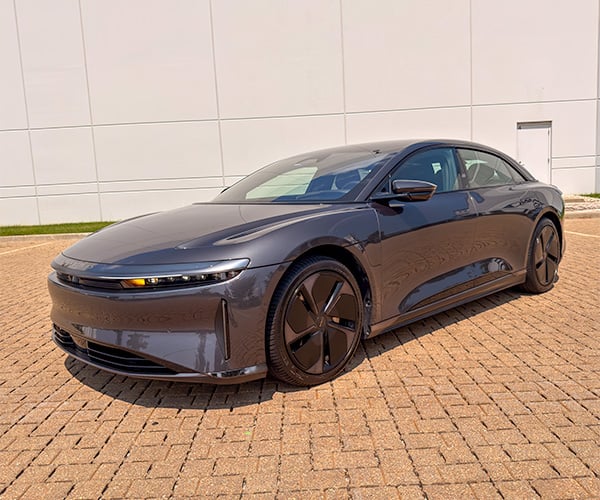
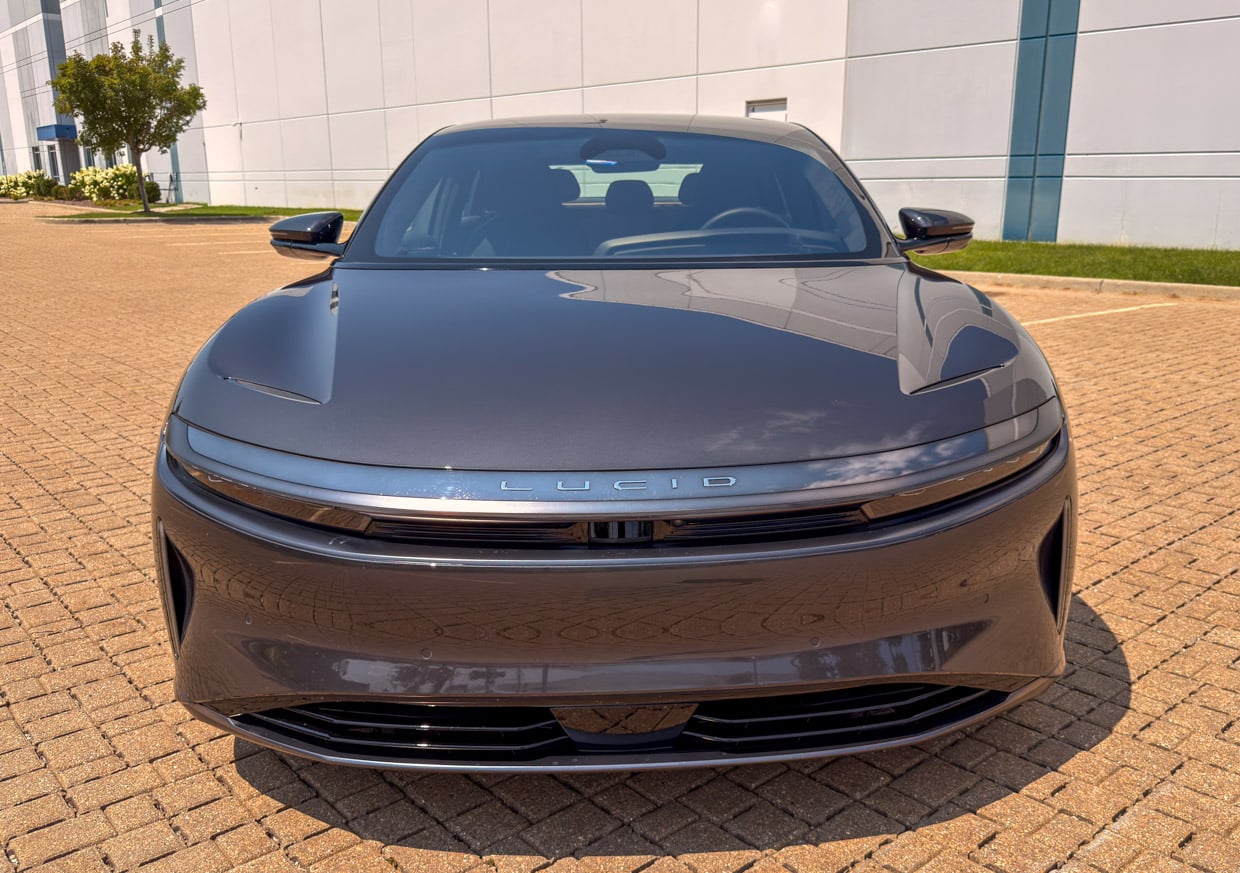
The Air has a smooth, streamlined design that still looks futuristic several years after its introduction. Our test car’s Quantum Grey Metallic paint was paired with the Stealth Appearance package and 20-inch Aero Lite Stealth wheels, giving it an especially sinister look. We prefer the darkened trim to the standard brightwork, and the clean bodywork doesn’t need fake vents or excessive creases to make a statement. One downside to the dramatic stance is that the Air sits extremely low to the ground, so we found ourselves approaching steep driveways and parking curbs with extra caution.
Lucid offers four versions of the Air. The Pure is the only rear-wheel-drive model, and its single motor produces 430 horsepower. The dual-motor Touring bumps output to 620 horsepower, while the Grand Touring tested here cranks out an impressive 819 horsepower and 885 lb-ft. of torque. That’s the most horsepower in any vehicle we’ve ever driven here on The Awesomer. Then there’s the truly bonkers Sapphire, with three motors and 1,234 horsepower. But unless you routinely visit drag strips, the Grand Touring provides more acceleration than you could ever reasonably need. It blasts from 0 to 60 mph in 3.0 seconds and keeps going to 168 mph. Step hard on the accelerator, and there’s no hesitation or buildup, just an immediate and tremendous rush of speed. What impressed us most wasn’t simply how fast it is, but how smooth the acceleration feels. There’s no drama from gear changes, engine noise, or a traction-starved rear end. It just rockets forward.
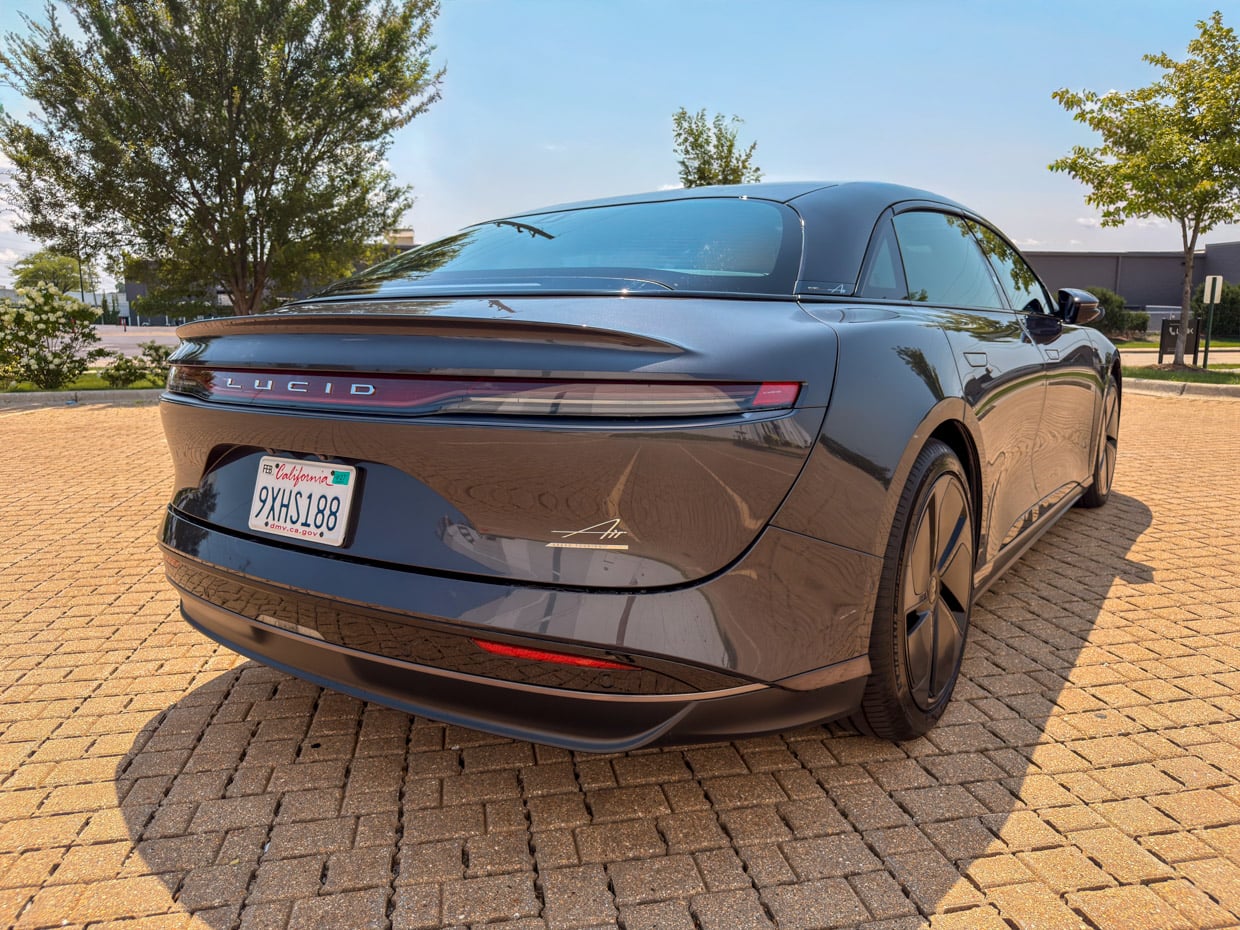
The Air is equally impressive when the road starts to curve. Despite weighing more than 5,000 pounds, it feels remarkably responsive. Its low center of gravity helps keep it planted, but Lucid’s suspension engineers deserve plenty of credit here. The steering is precise, body motions are well controlled, and the car responds confidently to direction changes. Its adaptive suspension strikes one of the best balances we’ve experienced between comfort and handling. There are Smooth, Swift, and Sprint drive modes, with Smooth providing the most relaxed steering, suspension, and accelerator response. Swift tightens things up for more spirited driving, while Sprint unleashes the most aggressive settings. We spent much of our time in Smooth because even its mildest setting still provides absurd amounts of power. Though on the highway, switching into Swift and putting the pedal to the metal is a hoot. No matter the drive mode, the Air remains exceptionally quiet and refined.
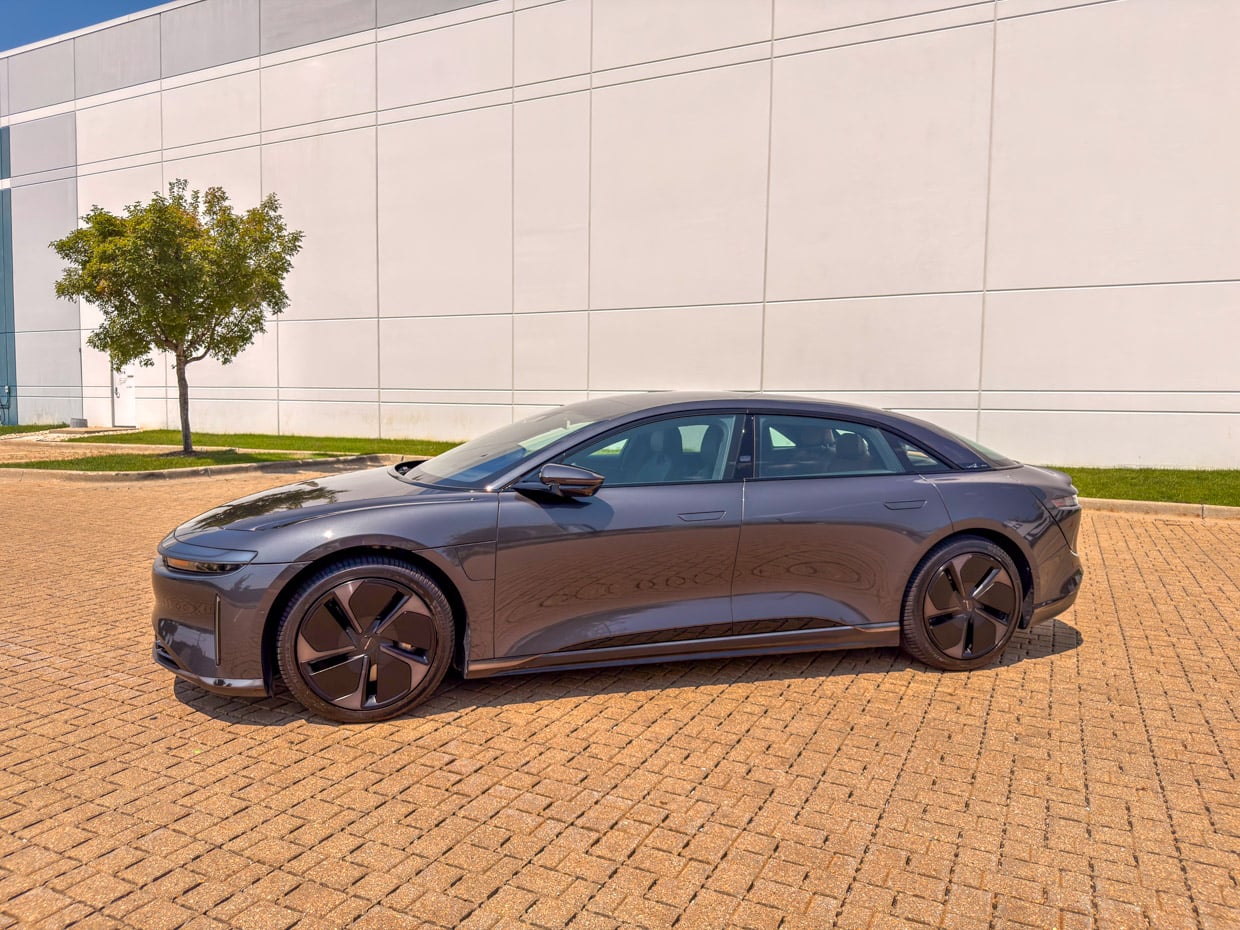
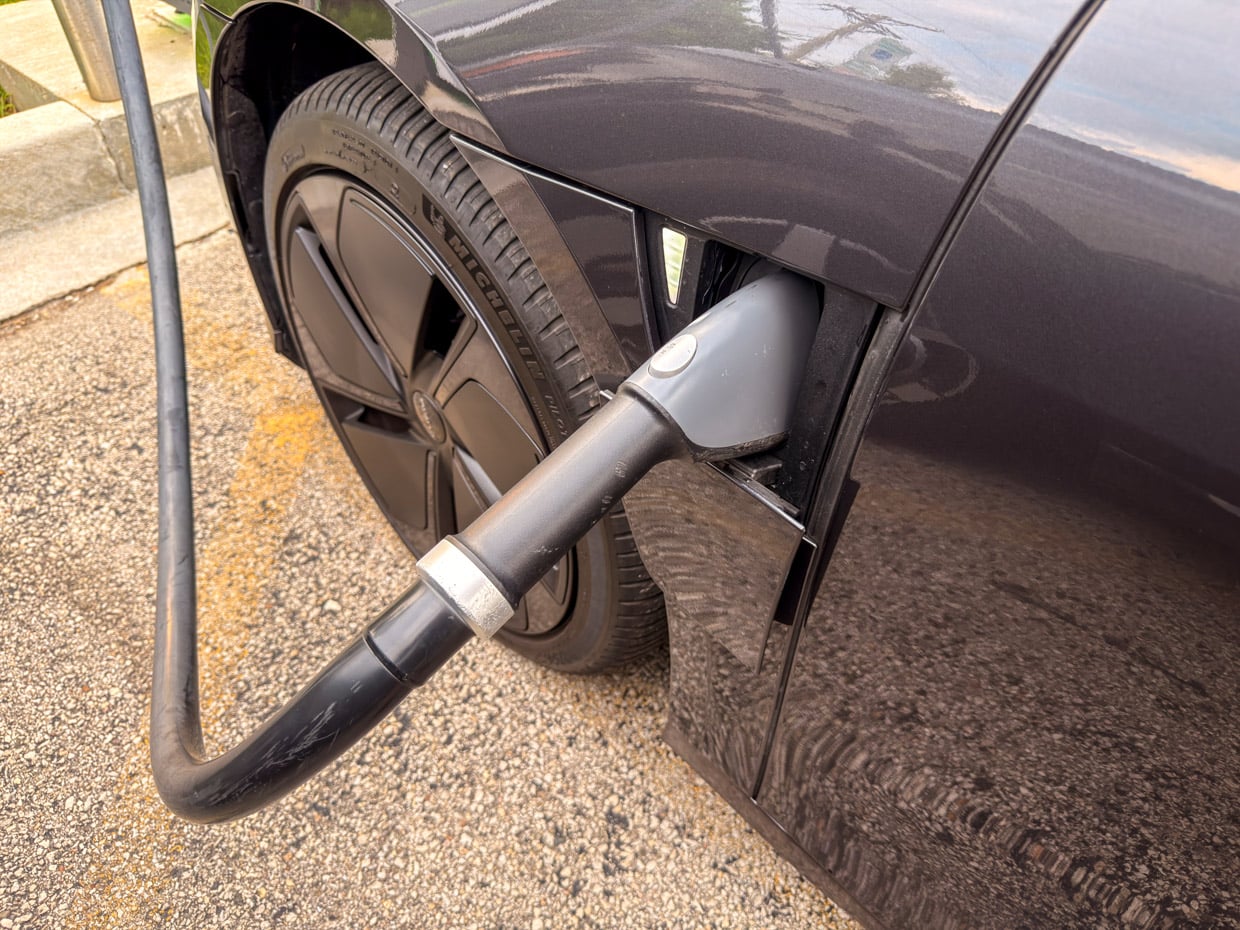
Lucid provides multiple regenerative braking levels, and even the standard setting felt quite aggressive to me. Combined with brake hold, it offers essentially one-pedal driving, and we could go long stretches without touching the brake pedal. At times we wanted to leave regen off between drives, but we couldn’t find a way to make the car remember that choice. There’s also a Roll setting and a Creep function that mimics the way a gas-powered car inches forward when you release the brake. Driving range is one of the Grand Touring’s biggest selling points. Lucid rates it at up to 512 EPA-estimated miles with 19-inch wheels. Our test car’s 20-inch wheels brought the EPA figure down to a still-exceptional 480 miles, as confirmed by its window sticker. That said, on 90+ degree days with a decent amount of highway driving, real-world numbers put us closer to 400 miles between charges. The large battery and 900V+ electrical architecture also support DC fast charging at up to 300 kW. We managed to pull a not-too-shabby 244 kW from a 350 kW Electrify America charger, which made a meaningful difference in waiting times while juicing up.
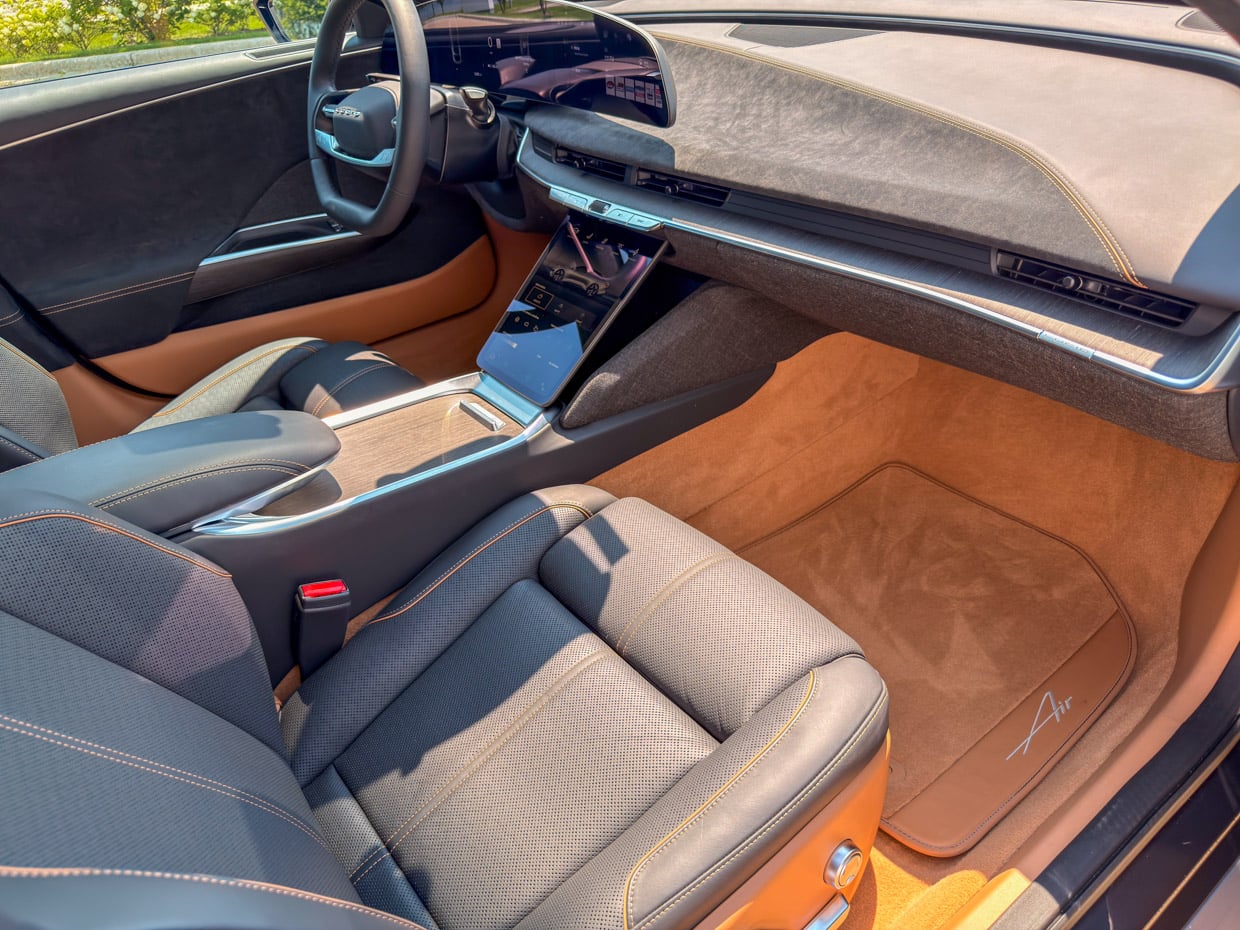
The interior is every bit as modern as the exterior, with beautiful materials and an airy, minimalist design. Our car had the optional Tahoe Extended Leather package, combining leather, Alcantara, knit fabrics, and wood trim. One unusual choice is the color split between the front and rear seats. The front seats are charcoal grey, while the backs are caramel brown. The 20-way front seats are excellent, with heat, ventilation, and an extensive massage system. We especially liked the rolling and deep massage programs. Some of the vibration-based modes felt a little too buzzy for our tastes, but there are enough choices that finding a comfortable setting isn’t difficult.
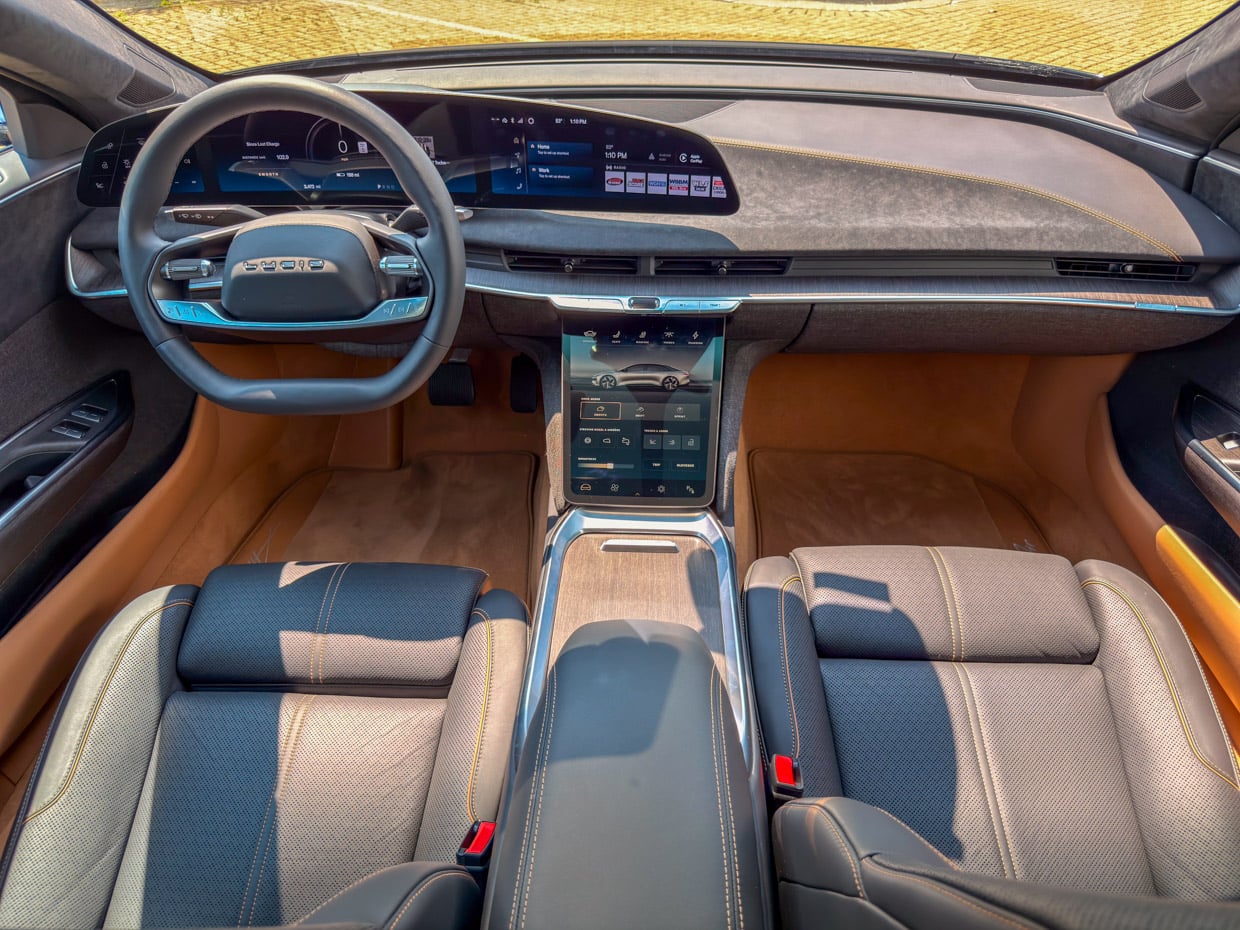
A curved 34-inch OLED display spans much of the dashboard and looks fantastic. A second, vertically oriented touchscreen sits center and below and handles many of the vehicle settings. One neat trick lets you swipe upward along the bottom of that screen to electrically retract it into the dashboard, revealing a storage cubby underneath.
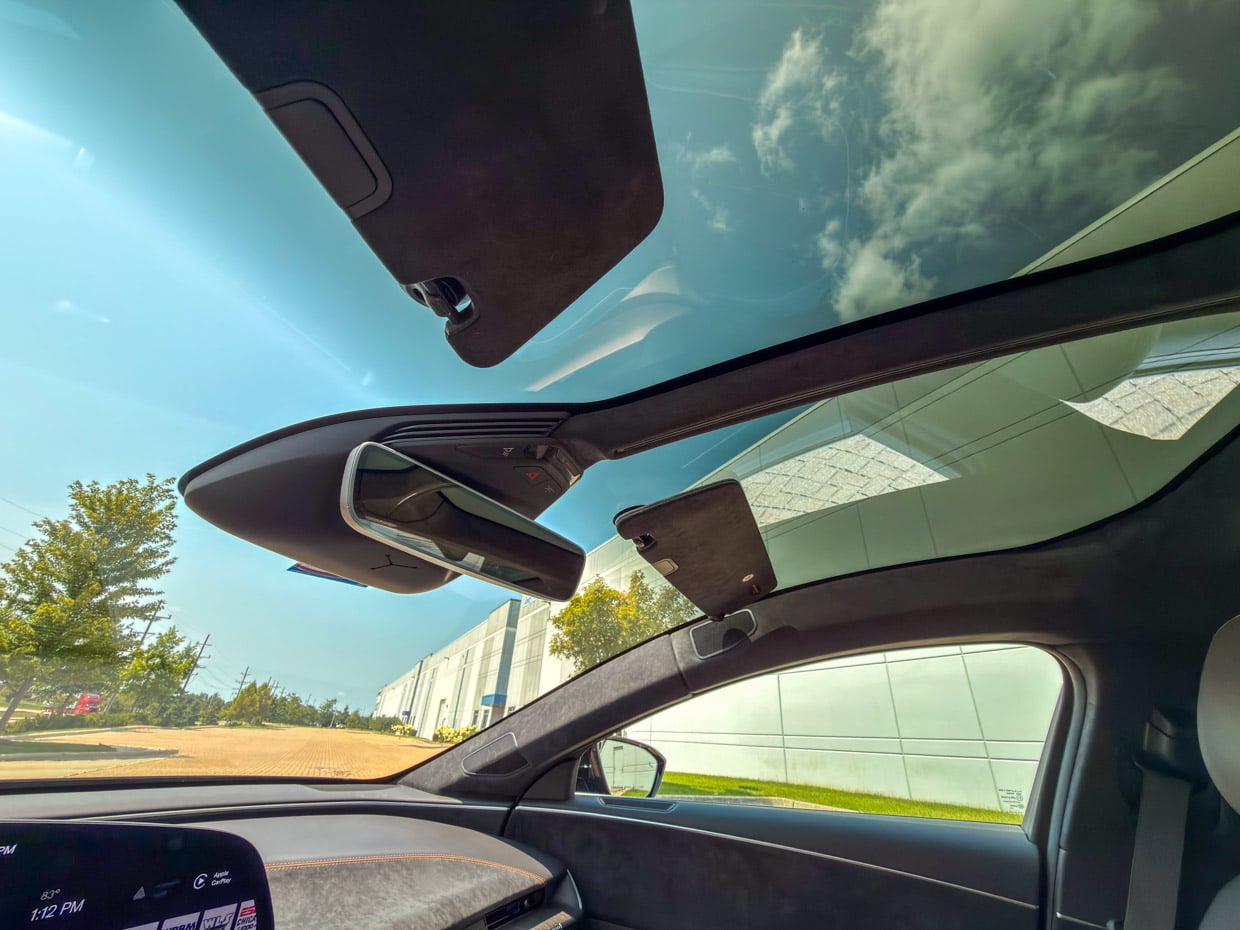
The optional Glass Canopy roof extends from the windshield over the front passengers, with a separate glass section above the rear seats. It looks dramatic, but we’d skip it. Not only does it add $4,000 to the price tag, but the cabin also gets noticeably warmer after sitting in the sun, and the heavy tint and reflections make the view through the roof less impressive than we expected. That said, we were impressed with how it blends in from the exterior, and you wouldn’t know there was a glass roof when looking from outside.
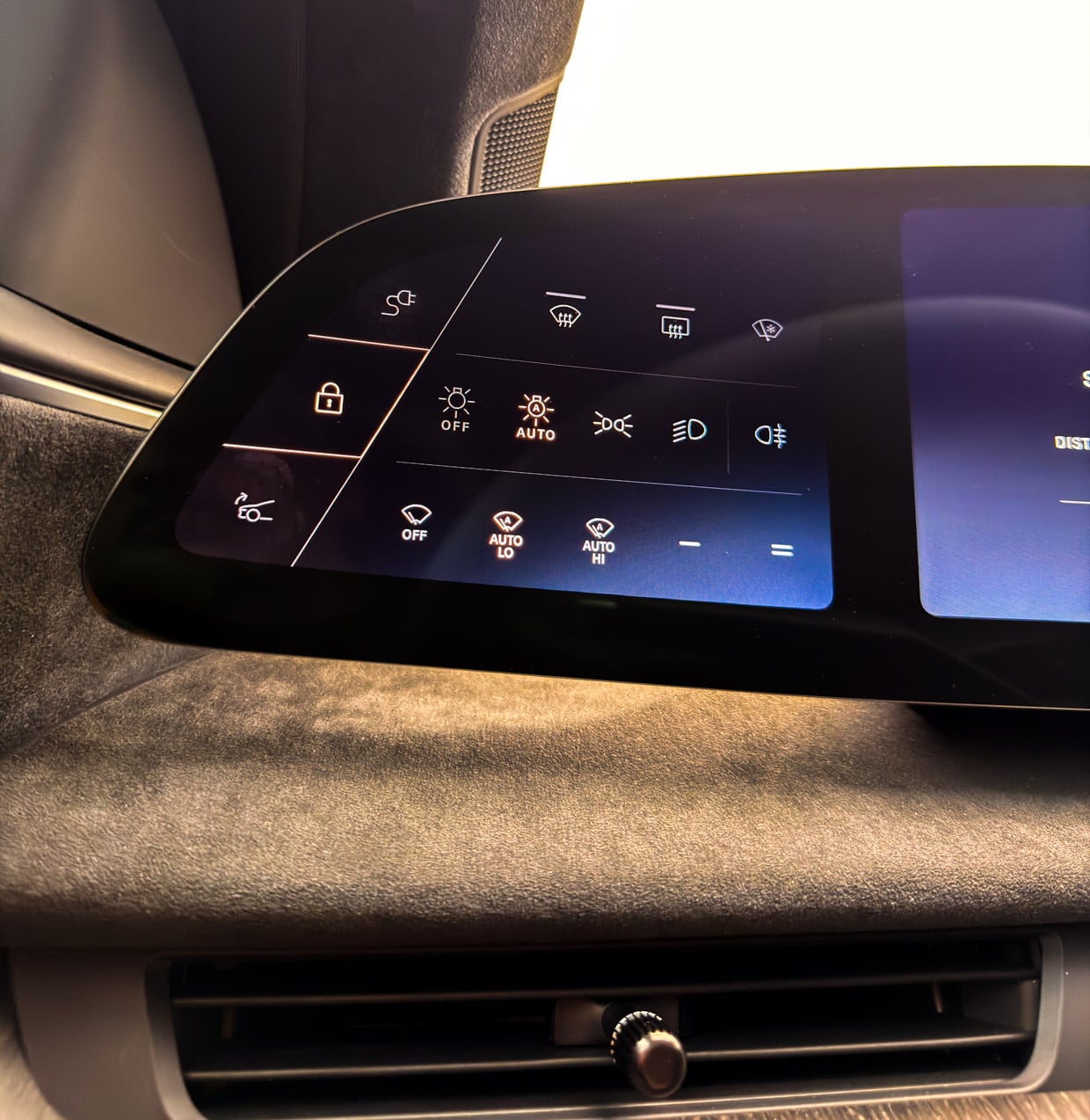
Wireless Apple CarPlay is supported, though it only occupies a relatively small area on the right side of the upper display. The large screens are bright, crisp, and attractive, but like most gloss-finished touchscreens, they quickly become fingerprint magnets. The center console also has well-designed storage, including grippy trays for two phones, another compartment behind them, and USB-A and USB-C ports with thoughtful cable wraps. The wireless charger was less cooperative and wouldn’t reliably charge an iPhone 17 Pro Max unless we flipped it upside down. Lucid thankfully retained tactile controls for temperature and audio volume, including slick horizontal scroll wheels that feel substantial and precise. We wish the company had stopped there. Adjusting the mirrors and steering wheel requires using the touchscreen, as does opening the glove box. Wiper mode and sensitivity aren’t controlled from the stalk either. Instead, those settings live on a small touchscreen to the left of the instrument cluster. It took some getting used to, and we never found these unconventional arrangements better than conventional controls.
The 21-speaker Surreal Sound Pro audio system is outstanding. Its speakers are placed at different heights throughout the cabin, including high near the windshield, creating an immersive soundstage with excellent clarity. Lucid also offers six cabin themes named Escape, Space, Solitude, Serene, Wonder, and Inspire. They subtly alter the ambient lighting and screen colors and are a classy addition without becoming gimmicky. DreamDrive Pro was another option on our tester. This adds Lucid’s more advanced driver-assistance hardware and capabilities, including cameras, radar, ultrasonic sensors, and LiDAR. The system enables adaptive cruise control, lane assistance, blind-spot monitoring, hands-free driving on compatible highways, and hands-free lane changes.
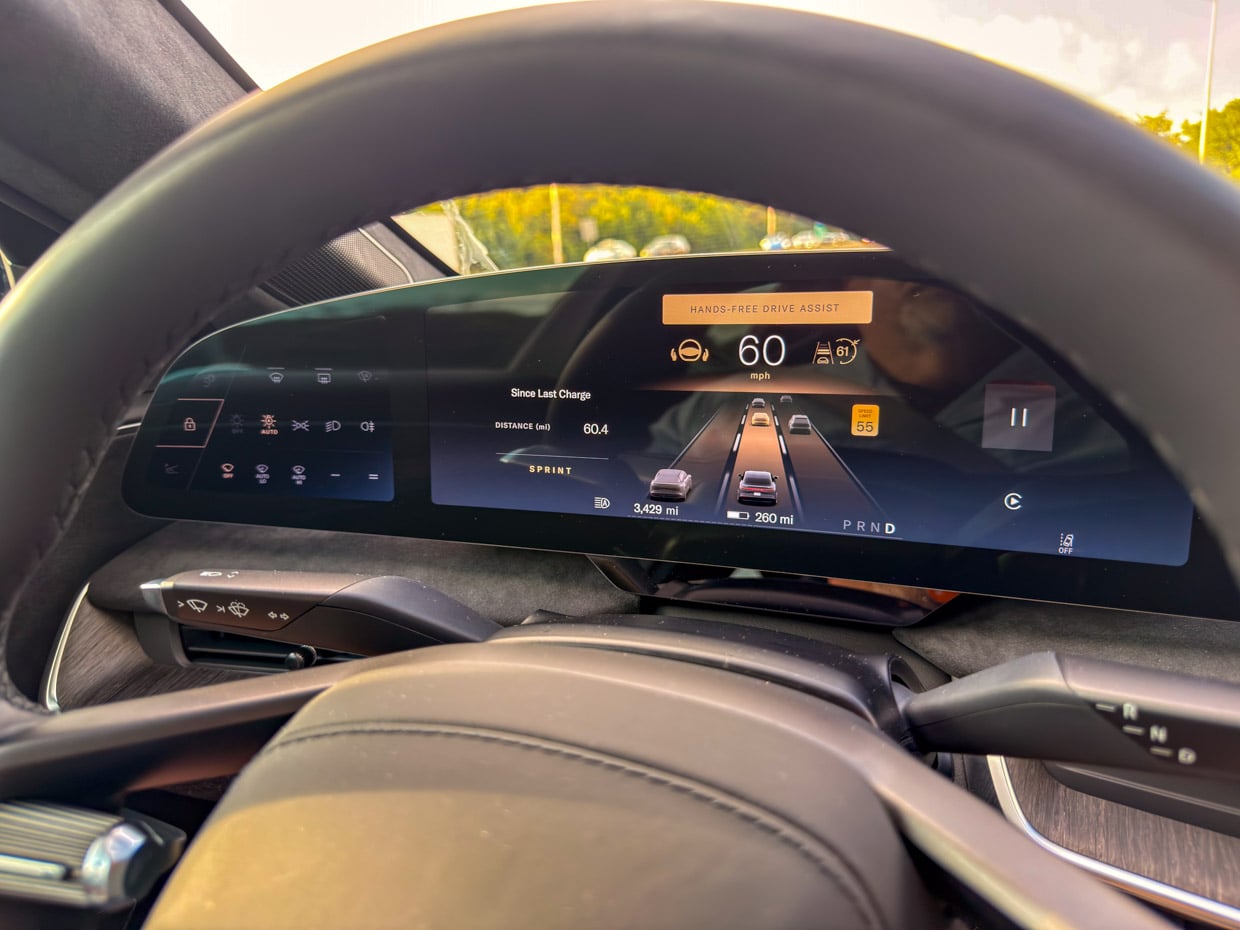
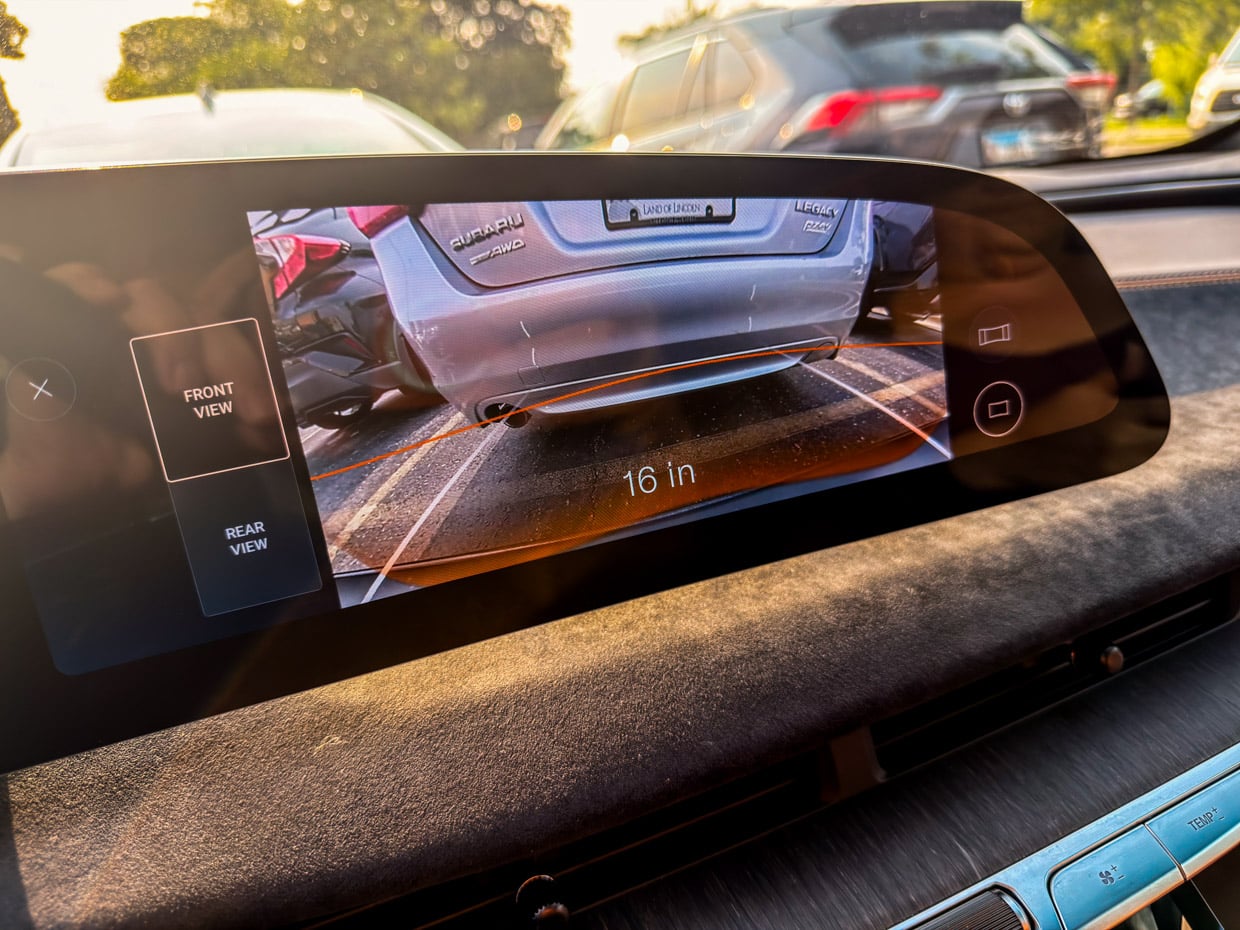
Some of the Lucid’s less buzzworthy tech features impressed me most. Vehicles entering your blind spot are highlighted in red on the instrument display, and the surround-view cameras provide excellent visibility when maneuvering. We especially liked that the parking display gives your distance from nearby objects in inches. The curb views and Curb Rash Alert feature enabled by Dream Drive Pro is handy, too, since replacing or refinishing those expensive wheels isn’t something anyone wants to do.
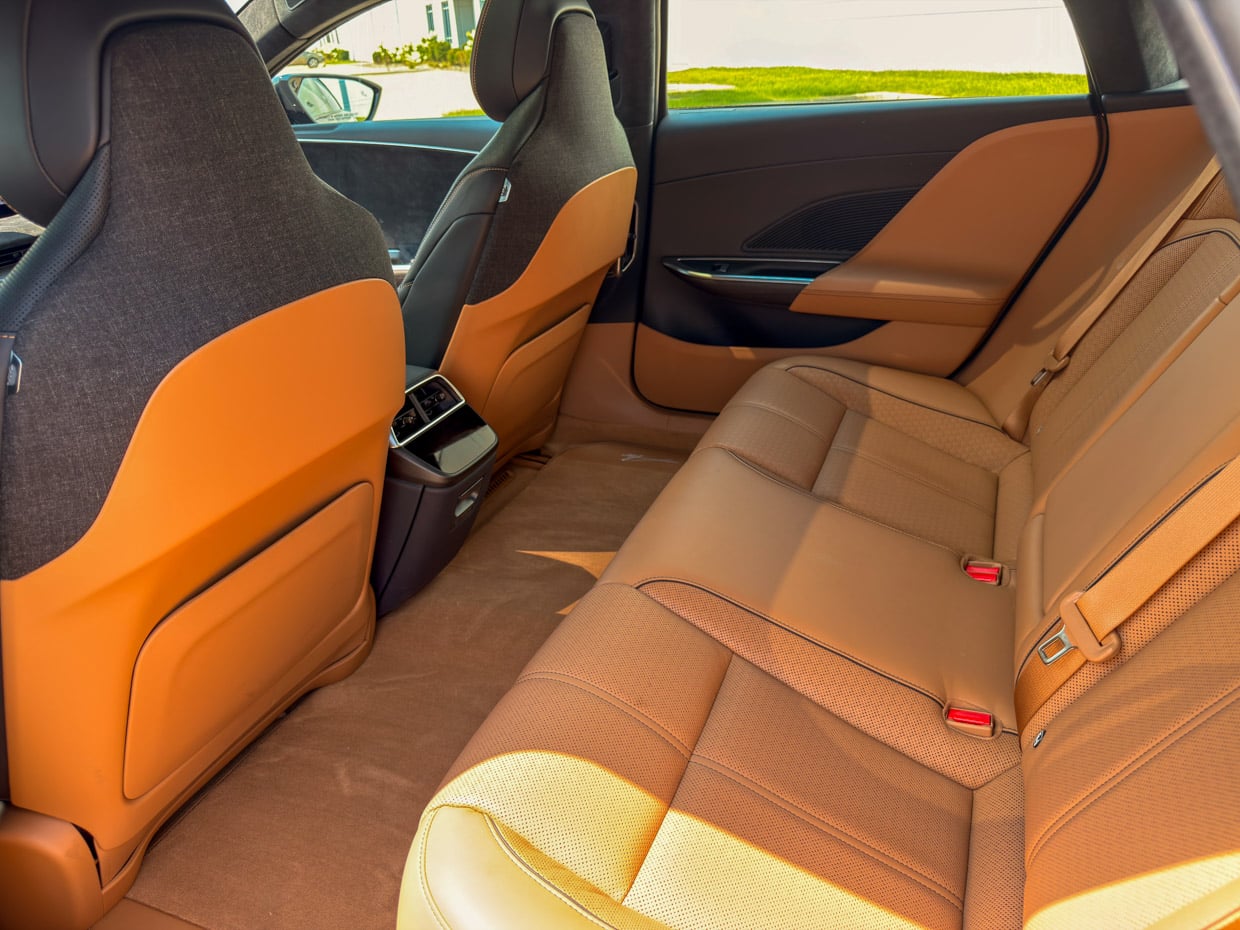
Rear-seat accommodations are exceptional for a sedan, with enough room for tall adults to stretch out comfortably. There’s tons of legroom, and rear passengers get heated seats, individual climate controls, and power side and rear sunshades. The low roofline doesn’t make the space feel cramped either, and the wide cabin gives the back row an appropriately upscale, limousine-like feel.
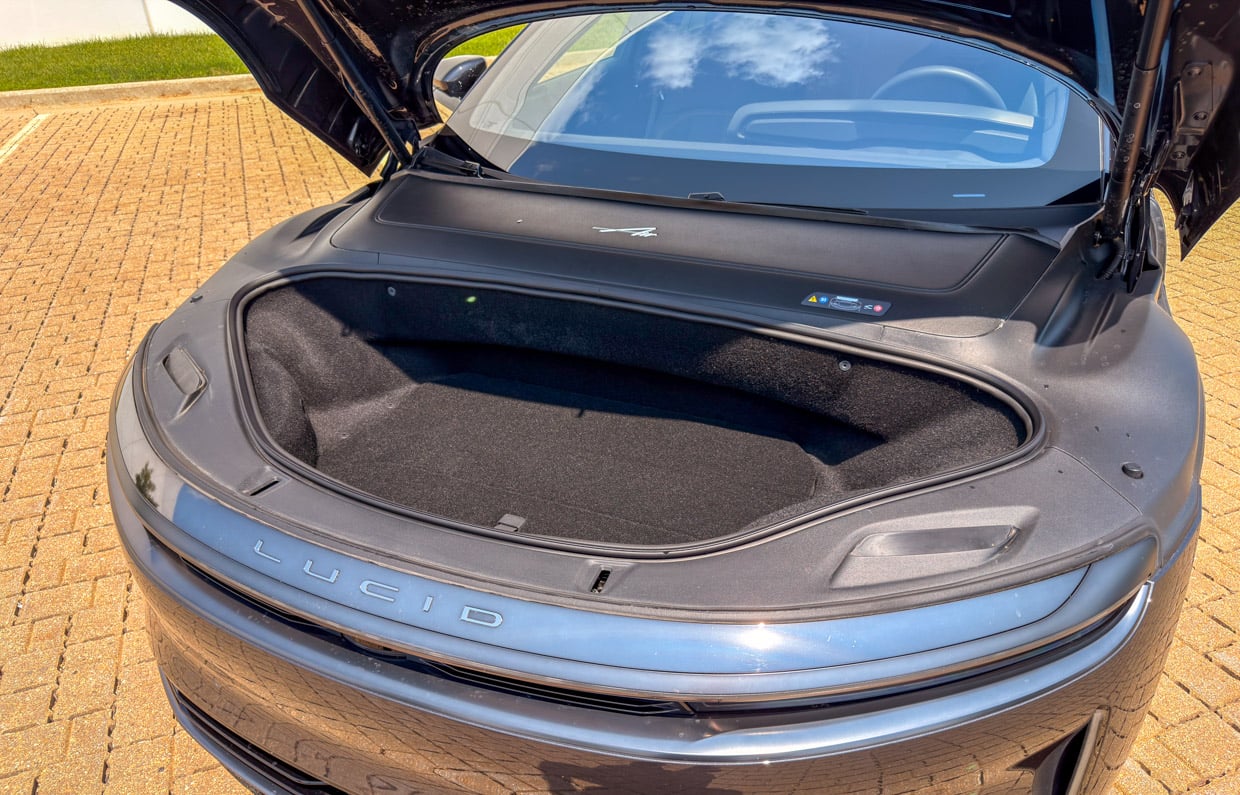
Cargo capacity is surprisingly good for such a low-slung sedan. There’s 22.1 cubic feet of space in the power-operated rear trunk, plus another 10 cubic feet in the generously sized frunk, for 32.1 cubic feet of total cargo volume. That makes it easy to split up luggage, groceries, charging gear, and other cargo, with the frunk especially handy for keeping smaller items separate from the main load area.
There’s very little about the Air Grand Touring’s actual driving experience that I’d change. It’s incredibly quick, quiet, comfortable, and offers ride dynamics that belie its substantial weight. Plus, at least on paper, it offers EV range that few competitors can touch. Most of our nitpicks involve Lucid reinventing basic controls that worked just fine before touchscreens came along. The 2026 Grand Touring starts at $114,900, while our Quantum Grey tester stickered for $136,950 with the Glass Canopy, Stealth Appearance package, Tahoe Extended Leather, DreamDrive Pro, and destination charges. That’s expensive, but there’s no question that the Lucid Air Grand Touring feels like a genuinely special car.