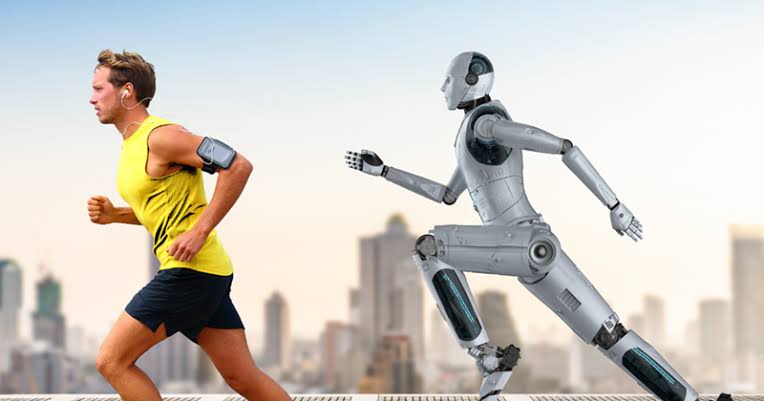
The world of robots has been advancing immensely in 2026 trying to replace humans. My reaction is totally negative on this except for a couple of small cases, and in this piece I tried to open up and show what the main issues are, where it simply does not click, and what we can possibly expect. All these thoughts and diving deep into the topic started from a simple daily story.
About a week ago, I saw a man walking a robot in the park.
It wasn’t a dog, it was a robot, having four legs, a body shaped like a toolbox, no face, and moving with a slow, mechanical patience which, upon close observation, seemed almost like confidence. The man was walking it on a leash. That fact remained with me. The leash. Since the machine couldn’t run off, had no desires, and would never chase a squirrel or ignore a call, he still attached a leash to it, because that’s what you do when you walk a dog. In his own mind, he was walking a dog.
People halted. They took out their phones and filmed it, laughed at it, admired it, and made space on the path for it.
All the actual dogs in that park were going mad.
They barked. Not the happy kind, but the other one. It appeared to each dog within a second that the situation was wrong, that it shouldn’t be there, and that it should be got away from it. They didn’t need to understand robotics; they just saw something that was shaped and moving in a way similar to themselves, even though it had no smell, and that was enough for them to know.
A theory was needed by the people, and at that time they were still working it out, keeping the record button pressed with their thumbs.
I was there with two emotions which I have been attempting to separate ever since. On the one hand, I was angry and on the other, I felt embarrassed, even though it is unusual to feel embarrassed about a stranger and yet I did. The real question, the one that remains once all the specifications, the funding, and the demo reels have been considered, is this: what is it for? A dog is like a member of the family and a companion. It has a soul, moodswings, and even opinions regarding your friends. It will be genuinely, even foolishly, happy to see you after only eleven minutes have passed. It will grow older and will break your heart, and that is part of the agreement, that is the entire agreement.
But what then is a robot? It means nothing and is never able to give you any of the things that a dog can give you.
The robot in the park was merely a four-legged toy, just a preliminary example; the next generation stands upright, has hands and a face, and is being produced in tens of thousands each year for the jobs that people currently do. Let us examine them honestly since they are real and impressive and pretending they aren’t doesn’t help; then let’s discuss what we are actually doing.
What a humanoid actually is, and why the shape is not an accident
If you disregard the marketing, a humanoid robot is a machine which is bipedal and the size of a human being, incorporating three key technologies: electric actuators strong enough to maintain its balance, sensors that are able to create a three-dimensional map of a disordered room, and AI which converts a command such as “pick up that box” into thousands of movements of its joints each second.
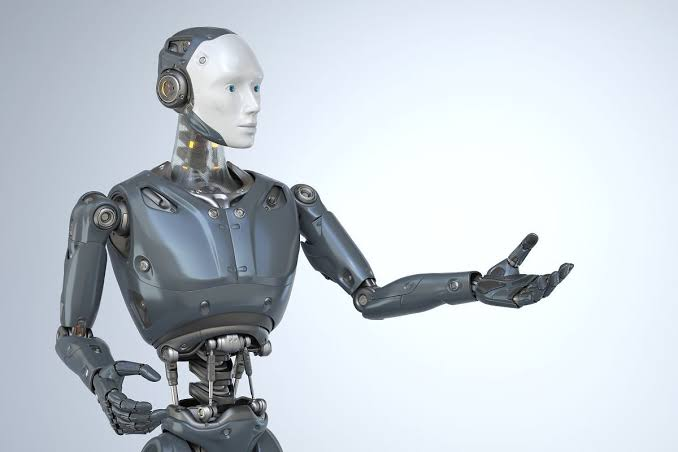
Image Credits: Bota Systems
The typical specifications for 2026 models are 1.3 to 1.9 metres in height, weighing between 35 and 90 kilograms, and having between 20 and 60-plus degrees of freedom (a degree of freedom is one joint that can be independently controlled; your hand alone has well over twenty). They are generally powered by brushless electric motors using harmonic drives. The battery life ranges from two to five hours. The payload varies from about 1.5 kilograms per arm on the smaller service models to 50 kilograms on the more powerful ones. Inside them you will normally find ROS2, the open-source robotics framework, together with a proprietary real-time balance controller and, increasingly, a large language model attached so that you can talk to it.
The reason given by the industry for designing machines in a human shape is that the world has already been constructed with humans in mind. For example, doorknobs, stairs, tool handles, the height of workbenches, and the space between shelves. If you build a machine to match our own proportions, you can avoid the cost of reconstructing the factory to suit it.
Although that argument is true it doesn’t cover the entire situation. People don’t attach a face to a machine in order to help it get to a doorknob. They don’t give it a name, a voice, or a head which tilts when you speak to it. Bomb disposal robots are merely boxes on treads since they don’t need a face in order to carry out their function. The moment a company gives a robot a face, the aim changes from simply carrying out the task to earning the credit that a person would have earned.
Keep that idea in mind. This is the stuff that is actually being shipped.
The class of 2026
Atlas, made by Boston Dynamics. It’s still the standard one and is the very robot that your uncle sends you in the videos. It stands 190 cm tall, weighs 90 kg, has 56 degrees of freedom, is hydraulically actuated, features 360-degree vision, has a battery life of about four hours which drops to two hours when in use under real conditions, and can lift a maximum of about 50 kilograms.
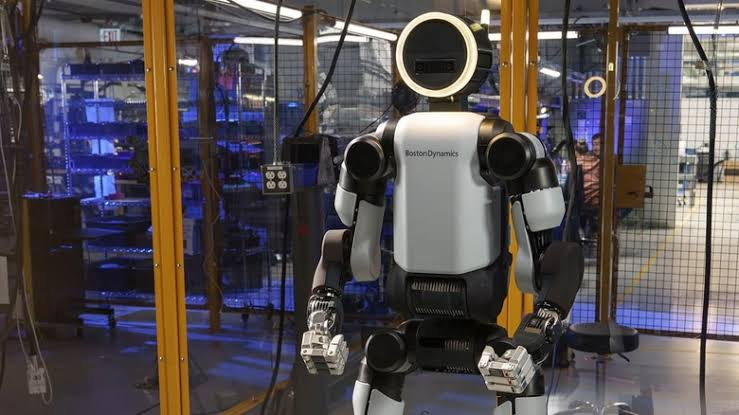
Image Credits: Engadget
Boston Dynamics is now owned by Hyundai, and as a result the demonstrations have changed: there’s less parkour and more focus on picking up objects in a factory. Atlas is still the most physically capable humanoid robot ever created and, notably, the one that shows the least interest in acting like your friend. It is a wonderful machine. It doesn’t have a face. Credit where it is due.
From Tesla comes the Optimus robot: it stands 173 cm tall and weighs 57 kg, with each hand having 22 degrees of freedom; the torso battery has a capacity of 2.3 kWh and is said to provide eight to twelve hours of operation, with a top speed of about 8.3 km/h and a payload capacity of roughly 20 kg.
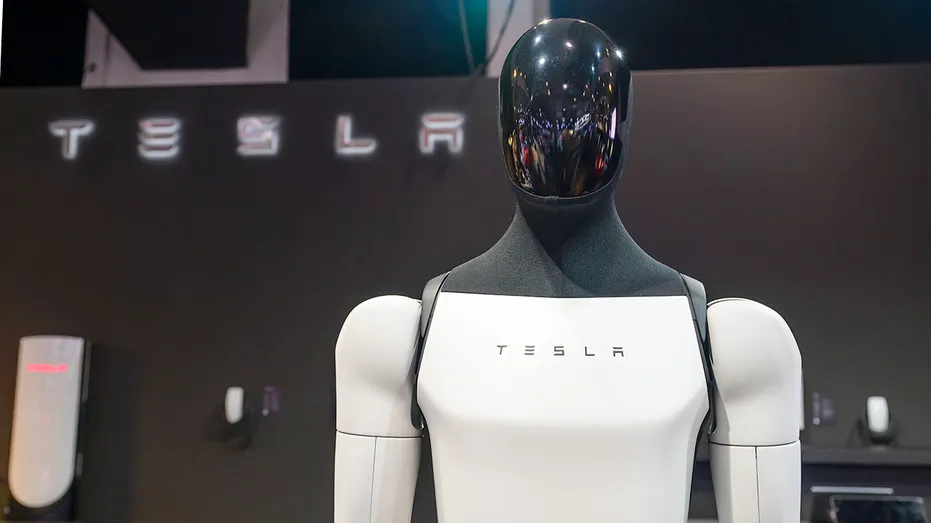
Image Credits: Fox Business
It uses Tesla’s own self-driving vision chips, relies solely on cameras for its vision (not using LiDAR, by principle), and accepts natural-language commands via Grok. The company is making use of its existing production capacity with a target of one million units per year and a long-term price below $30,000, although Musk has suggested “probably less than $20k” when produced in volume. It’s worth noting that when the product was first introduced in 2021, a man in a bodysuit was dancing on a stage. The journey from that moment, five years later, to a goal of one million units a year is not a tale of engineering discipline. It is a tale about what a promise is worth when you are the one making it.
Digit, developed by Agility Robotics, stands at 175 cm tall, weighs 65 kg, has 20 degrees of freedom, is equipped with RGB-D and LiDAR sensors, offers a runtime of about three hours, can carry a payload of 16 kg, and operates in fleets via a cloud platform based on ROS2.
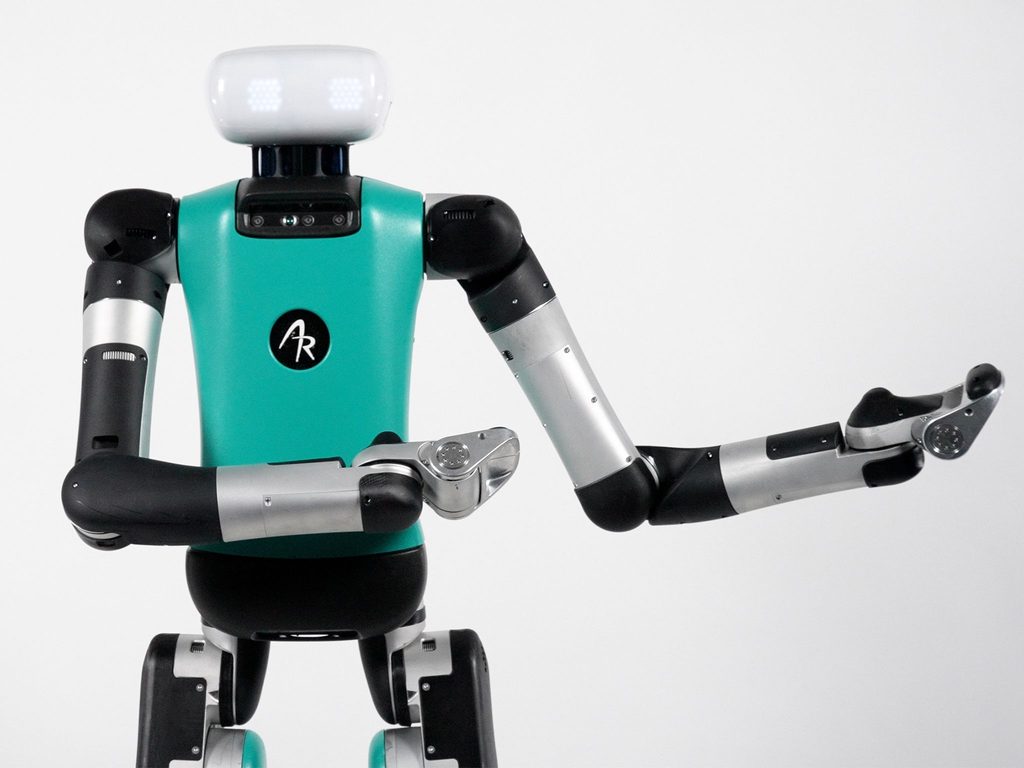
Image Credits: Robots Guide
Digit is the most commercially viable humanoid on this list since it is currently being used in live pilot programs at Amazon, at Toyota’s Spartanburg plant, at GXO, and at Schaeffler. Although Agility does not sell the robot, it is leased on either a monthly or performance basis, which shifts the cost from being a capital expenditure to an operating expenditure and causes it to appear in the budget alongside the wages that it replaces. That is not just a technical point; it is the whole business model stating the quiet part.
The H2 and the G1, from Unitree, are known as the Chinese price-breakers. The H2 measures 182 cm, has a weight of 70 kg, features 31 degrees of freedom, is equipped with an NVIDIA Orin processor, has a battery pack under 1 kWh which provides about three hours of use, a maximum payload capacity of 15 kg, and costs approximately $29,900.
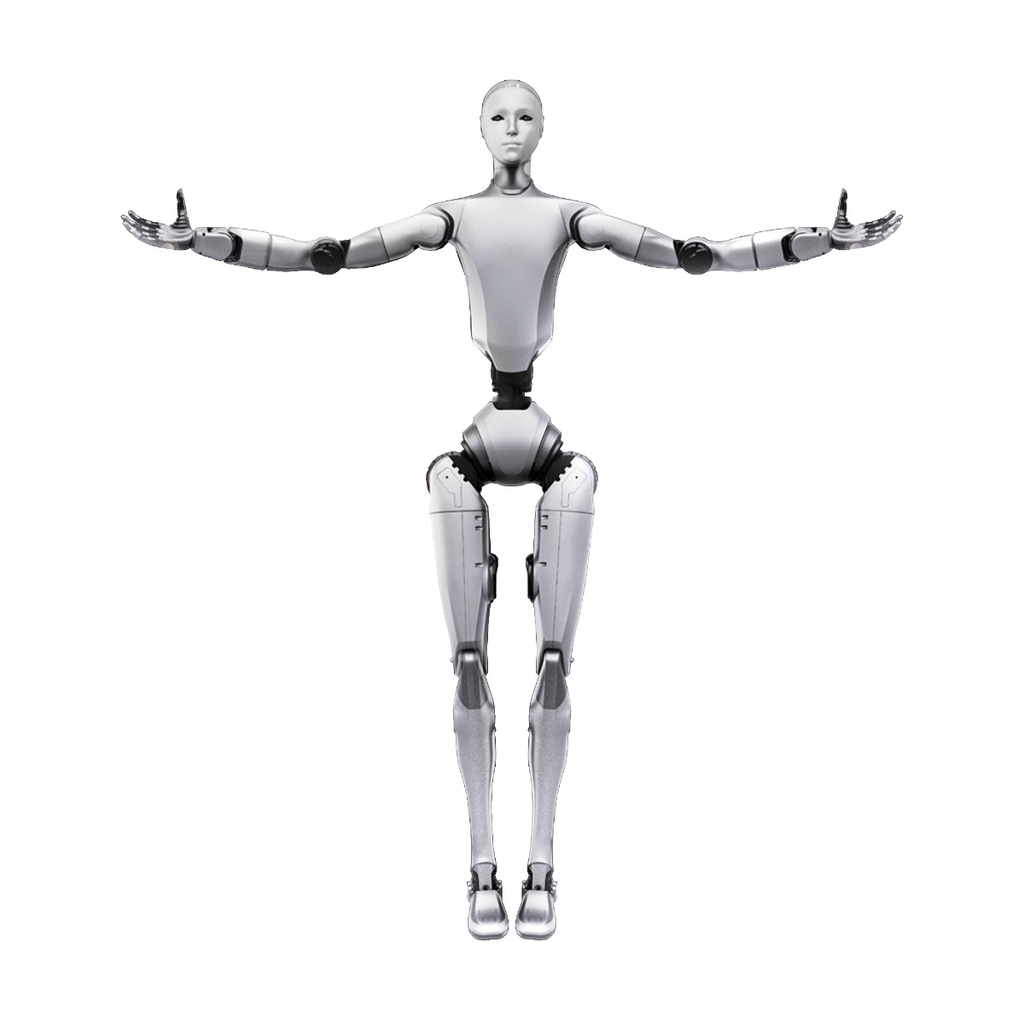
Image Credits: Robots International
The G1 is the smaller model: 132 cm in height, 35 kg in weight, with 23 degrees of freedom as standard, offers around two hours of operation, and is priced at roughly $13,500.
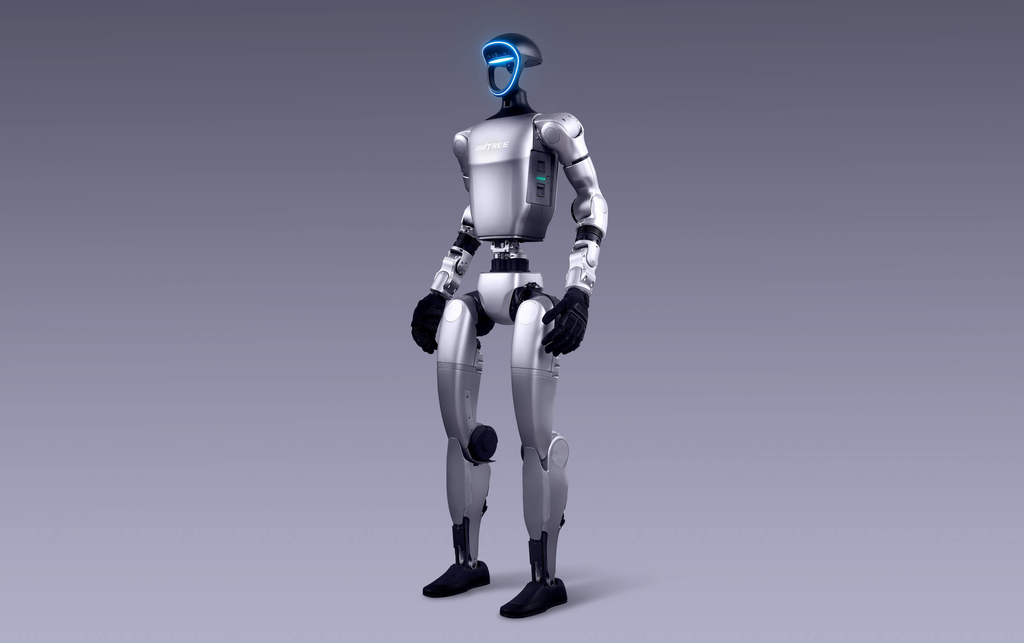
Image Credits: RoboZaps
Unitree had its initial public offering in mid-2026 at a valuation close to $5.9 billion. Also important, and something I will explain later, is the fact that Unitree is the company which brought robot quadrupeds into the consumer market. There is a family tree for this device, and here it is.
Walker, made by UBTech, is 130 cm tall, weighs 63 kg, has 41 degrees of freedom, is equipped with, stereo and time-of-flight vision can move at, a top speed of 3 km/h, has a battery life of two hours, and can lift about 1.5 kg with each arm. Note those last two figures.
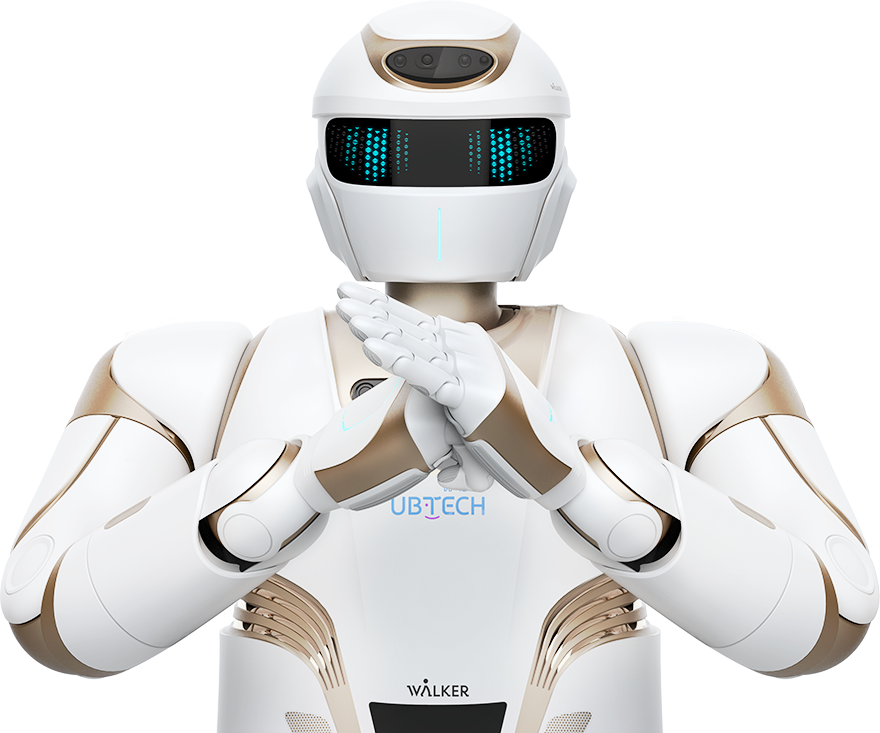
Image Credits: UBTech Robotics
It cannot carry any load and cannot work a shift because it was never intended to. It was designed for use in hospitality settings such as: hotel lobbies shopping, malls, schools and, reception desk; its purpose is that of a greeter. The fact that its payload is low is not significant since the point isn’t about the payload but rather about standing in the place where a person usually stands and saying hello.
From Fourier Intelligence comes the GR-3; it stands 165 cm tall, weighs 71 kg, has 55 degrees of freedom, and features hot-swappable batteries that are cycled every three hours at a price of about $27,500; it was launched in 2025 with both visual and tactile sensing capabilities.
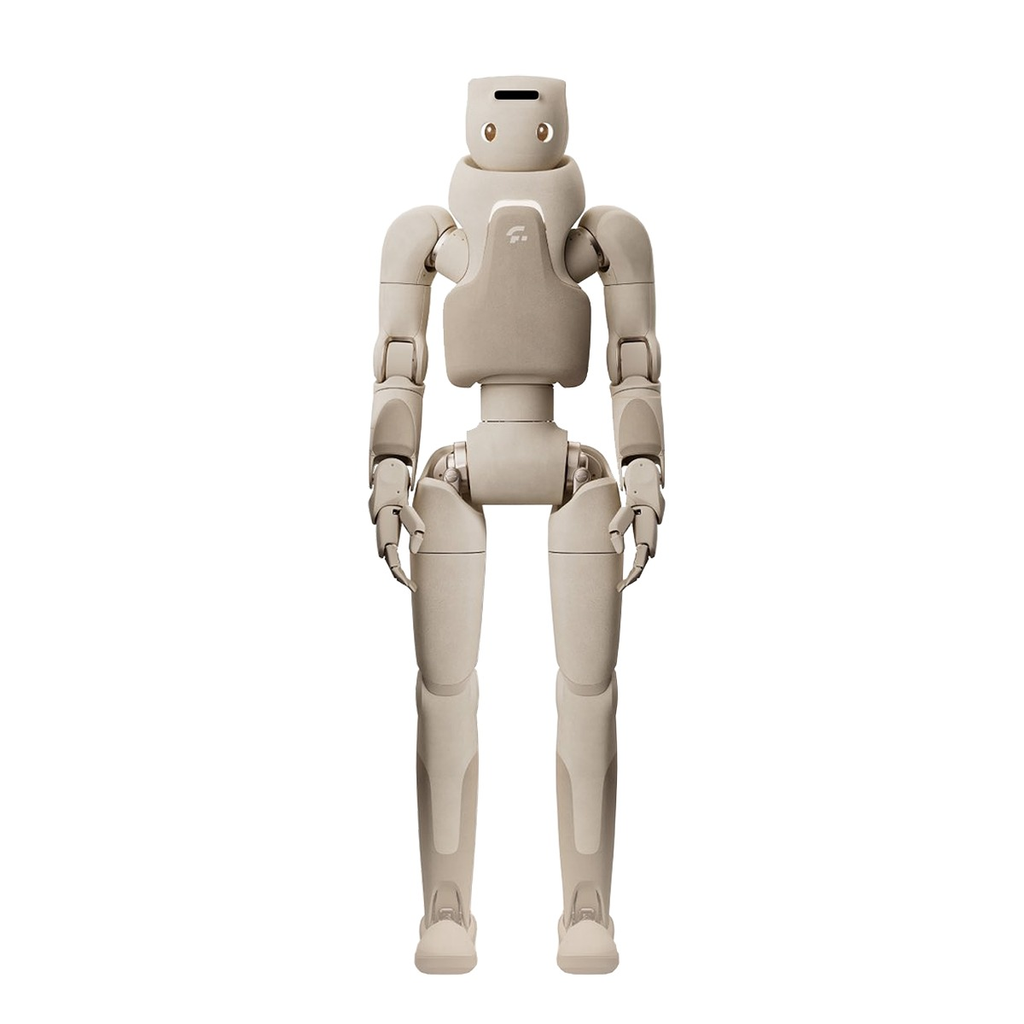
Image Credits: Robots International
The intended market sector is eldercare and the rehabilitation of patients after a stroke, specifically nursing homes, recovery wards, and guided therapy. Keep this model as well, since we’ll be returning to it, for the GR-3 is where this entire argument becomes difficult and it’s also where I believe the decision will be made.
Figure 03, developed by Figure AI, was announced in October 2025. It has a height of 168 cm, weighs 60 kg, features 35 or more degrees of freedom in the upper body, has a runtime of about five hours, walks at a speed of 1.2 m/s and can lift 20 kg.
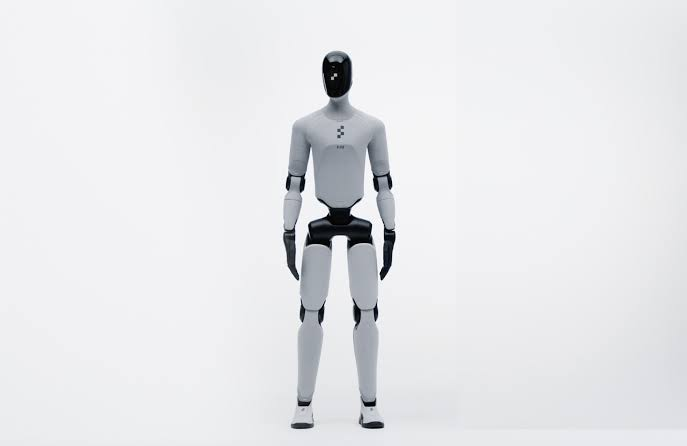
Image Credits: The Robots Report
The device runs Helix, which is Figure’s own vision-language-action model and is a transformer with roughly 7 billion parameters, split into a fast reflex layer and a slow planning layer, an approach that can be seen as a reasonable imitation of how a nervous system is structured. Figure is constructing a dedicated factory called BotQ with a target production volume of between 12,000 and 100,000 units per year. BMW has already tested it on an assembly line. Of all the machines mentioned here, Figure 03 is the one most clearly intended for carrying out general human-type labour rather than just performing a specific task.
From Engineered Arts, Ameca stands at 187 cm tall, weighs 62 kg, has 61 degrees of freedom, and here’s the point: it has no legs and therefore cannot walk; its wheeled base is also disabled. All of those 61 joints are used on the face and arms, including the eyebrows, eyelids and the small muscles surrounding the mouth, all of which are controlled by GPT-4o.
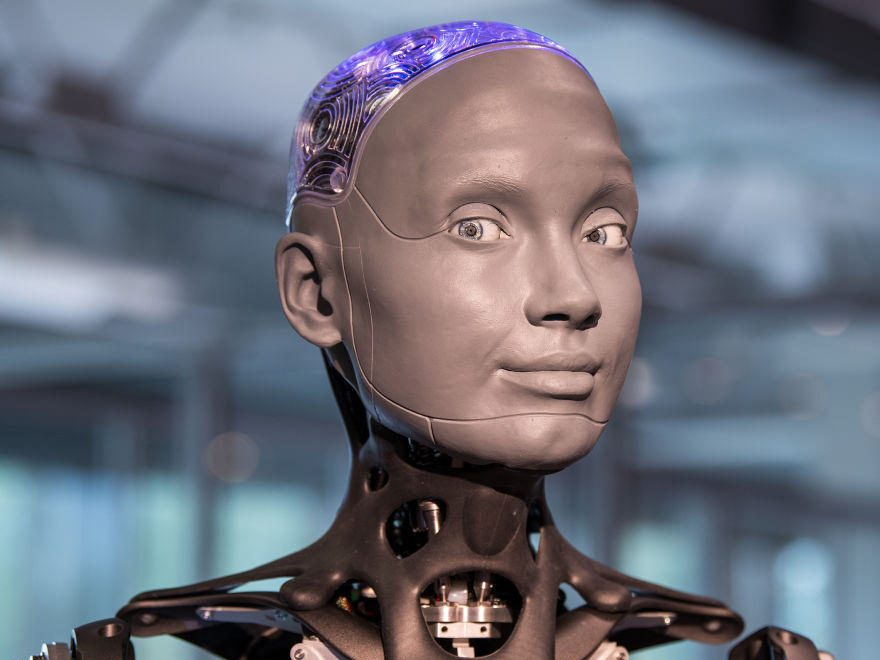
Image Credits: Engineered Arts
The cost of Ameca is between $150,000 and $250,000 and it is sold for use at exhibitions and events. It is the most honest product in this whole industry since it does not feign being useful; it merely performs humanity, at a price of two hundred thousand dollars per unit, and people line up to talk to it.
Also circling are SoftBank’s Pepper (which has now largely given up on the ambitions it originally pursued), NASA’s research platforms, and a number of Chinese companies such as Agibot, EngineAI, Leju and Neura. In 2024 the China MIIT released a roadmap aiming at establishing a complete domestic humanoid supply chain, and alone that year 35 new Chinese models emerged. In March 2026 Agibot’s A2 became the first humanoid to be certified for the Chinese, EU and US markets.
That’s the situation. It is truly an outstanding feat of engineering, and I prefer to state that plainly rather than feign that these machines are of a poor quality. They aren’t of poor quality; they’re extraordinary. Which is precisely the reason it’s so important where we decide to put them.
Follow the money, because the money is not following the robots
This is the figure that ought to be placed at the top of each of these articles but never is.
The total number of global humanoid robots shipped by 2025 was less than ten thousand. Worldwide.
The other figures show that venture funding directed at humanoid startups rose from about $60 million in 2020 to $8.6 billion by the middle of 2026, representing a 140-fold increase over six years. In 2025 alone, Neura secured $1.4 billion and Apptronik raised $520 million, the total robotics venture funding for that year being approximately $15 billion. Market analysts estimated that humanoid revenues would reach $5.41 billion in 2026, increasing at an annual rate of about 28% to reach roughly $50 billion by 2035, with the Asia-Pacific region accounting for more than half of that amount by 2030.
Take that into consideration. There are fewer than ten thousand of them currently, yet nearly nine billion dollars was invested the previous year. Tesla aims to produce a million units each year, which is one hundred times the present global total, year after year, all from a single company.
Investors are not reacting to genuine demand; instead, they are inventing it, employing the same strategy as all other consumer technologies, which is to make something appear normal before people have a chance to decide whether it should be. Place a robot in a park, allow people to film it, and let the videos do the selling.
Nobody supported this initiative. Nobody has researched the effects of bringing up a generation of children with robot animals before giving their approval. There is no research, there’s merely another instance of funding, even though it only appears to be similar on the surface.
What to expect: less than you have been told, sooner than you are ready for
If you disregard the hype, the near-term prospects are quite and very particular.
The battery life is the main restriction since these robots only work for two to four hours, whereas a human shift lasts eight to twelve. McKinsey identifies sustained uptime as the greatest obstacle to scaling, and AI cannot overcome this because it is a chemistry issue. The present solutions are batteries that can be hot-swapped and fast charging; for example, Figure’s plant is able to charge to 50% in 45 minutes. Solid-state and lithium-air batteries are still only in the research phase and not yet products.
Hands form the other wall. The dexterity of every humanoid currently available is considerably less than that of a human. Most of the units have very limited tactile sensing. The fingers are often coupled or under-actuated, so that they move as linked groups rather than separately. While the industry is able to construct a machine that can walk, it is not capable of building one that can reliably manipulate a soft, slippery and unfamiliar object, since the majority of the objects in a house fall into that category.
Very little of what is available is capable of working on its own. This point is usually overlooked. In the year 2026, virtually all actual deployments of humanoid robots are carried out by a pilot, and those pilots operate under supervision—either by being teleoperated or by following a predetermined sequence while a person observes. The videos showing the robot performing a task were very frequently made by a person carrying out the task using the robot. This is not fraud; it is simply typical of early-stage robotics, but it does mean that the public’s perception of what these machines are able to do is several years ahead of their actual capabilities.
The machines come after the rules. Humanoids are currently covered by the general industrial robot safety standards (ISO 10218-1:2025, ANSI/RIA R15.06-2025) and, in the case of mobile service units, by standards such as UL3300. The EU AI Act regards autonomous humanoids as high-risk and imposes obligations that will come into effect around 2028. The revised EU Machinery Regulation will incorporate AI requirements into machine safety in 2027. A specific dynamic-robot safety standard, ISO 25785-1, is still in draft form. There is no single robot law in the United States at all. At the same time, the constantly operating cameras are already in use: in 2023 a service robot in Seoul was grounded because of privacy complaints, and that was just one machine in one city.
Thus, there will be three more years of pilot operations, with gradual increases in usage and operating time, prices moving down towards the $20,000 to $50,000 range in which the cost of the unit is less than the salary it replaces, and a regulatory framework that won’t appear before 2028 at the earliest. The machines will set what is considered normal for two years before any authoritative body comes along to form an opinion on the matter.
The test that actually matters
I need to be clear regarding the objection since “robots are bad” isn’t an argument and I am not advancing that view.
I do not have any objection to machines carrying out tasks which would injure or kill a person. Take the case of bomb disposal: that is a clear example, since the whole point of the robot is to be the one that is blown up rather than a human, and there is nothing lost when the object which explodes lacks any inner life. The same applies to nuclear decommissioning, and also to deep mine rescue. It is the same with a welding arm on a car door. Tools are excellent things to be, and have always been so for two million years.
The line has nothing to do with danger, nor is it concerned with skill or difficulty; it is this:
Maybe a person who was indifferent could carry out this job?
If the answer is yes, then automate it and good luck; but if the answer is no, a machine cannot carry out that task and can only generate the output by skipping over the thing that the output had been evidence of.
A bartender mixes drinks. That isn’t what the job consists of. The real part of the job is being recognised when you arrive, being noticed at the end of a tough day, and someone deciding without being asked that you have had enough. A guide indicates the ancient stones. That isn’t the job. The job is to share a sense of wonder with someone else who is also experiencing it and whose enthusiasm isn’t merely acting out a prepared script. A doctor states your illness. That too isn’t the job. The job is having a terrible thing told to you by another person who will also, one day, die and who knows this as they are telling you.
If you remove the human element, you won’t obtain the same service at a lower cost; instead, you end up with a convincing display of something that has already quietly ceased to exist.
If you now refer to the product list with the test results in mind, the Walker X has a lifting capacity of 1.5 kilograms, lasts for two hours on battery and is placed in hotel lobbies. It doesn’t carry your luggage. It isn’t meant to carry your luggage. Its purpose is to take the place of a greeter. The Ameca has sixty-one degrees of freedom, none of which are in the legs but all of which are in the face, costs $250,000 and is sold solely with the aim of appearing interested in you.
They are not devices designed to save labour; rather, they are objects which shape the nature of relationships. And the industry continues to claim that the issue is job displacement, since job displacement can be dealt with by means of a retraining programme. The real objection, however, cannot be met with a retraining programme, which is exactly the reason why it is never included in the presentation.
Sport, which is the argument in miniature
Beijing has held humanoid robot athletics, including a half-marathon and then a full set of games. There is footage of it. The robots frequently fall over, the crowds enjoy it, and everyone regards it as harmless fun, mostly because it is at present.
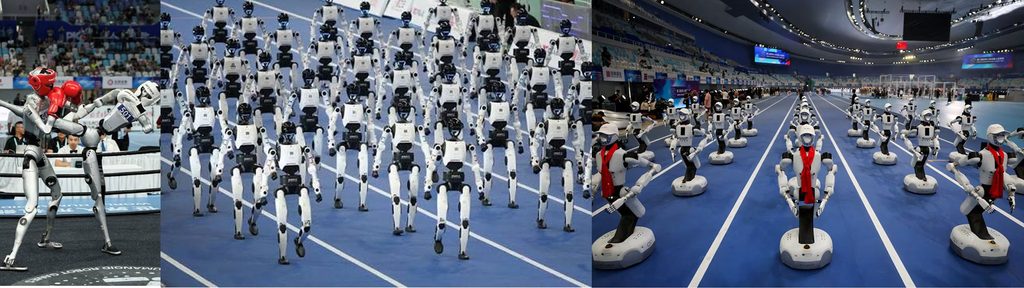
Image Credits: Reuters, Instagram, Xinhua
But carry out the test on it. What makes people watch sports? Not to discover which arrangement of matter can move the fastest. If that had been the question, we would have settled it with the cheetah and then with the motorcycle, and no one would have built a stadium. Sports exist because someone, having a limited body and a finite life, decided to find out what their body was capable of and then actually did it in front of us, at a cost to themselves. The record is important because of the price it cost. The final hundred metres count because they were painful.
The fact that a machine crosses the finish line first is something that applies to a supply chain; it provides information on actuator torque density and battery discharge curves; it involves no cost since nothing is at stake for an entity that cannot fear the race, cannot want to win it, and cannot feel proud afterwards.
If you place a robot alongside a human in the same lane, you haven’t raised the standard of competition; you’ve got rid of the reason for there being any competition at all.
Balance, and why the dog is the sharpest case, not the softest
I almost didn’t start by mentioning the park since a robot dog sounds rather like a petty gadget, a silly toy for those with money.
Just the reverse; it is the most clear-cut example.
The order that matters to me is people, animals, and the relationships between them. This is no mere sentiment; it reflects the real structure in which we live and one that has taken a very long time to develop. The relationship between humans and dogs dates back about fifteen thousand years and is a true two-way association, mutually influenced and one in which both species have altered each other’s bodies and behaviour in order to make it function. Your dog is able to read your face; that ability has evolved in it for your sake. There is nothing similar to it on this planet.
A robot with four legs can be classified as a third type which takes without being alive and capable of receiving. It holds the place of a living animal in a relationship that is intended for a living animal and it provides a performance; on the other side there is no one who is pleased that you have come home.
Unlike the factory robot, the damage isn’t to the wage but to the person who is being loved. Affection which receives no response doesn’t remain unchanged. A child who grows up alongside a machine that is always there, never tired, never ill, never dies, never inconvenient, never has a mind of its own, learns a particular understanding of what a companion should be; namely, that it is a service, that it can be switched on, and that it belongs to you. The knowledge you acquire from a dog cannot be erased when you come across a person.
You needn’t consider any issue regarding machine consciousness in order to understand this point. It is irrelevant what is or is not going on inside the robot. What is important is our own reaction when we accept the performance and cease to notice the difference.
The dogs in the park were aware of the difference; in fact, that’s all I have to add. Fifteen thousand years of shared evolution have led to an animal which, when it saw that object, instantly knew that it was wrong, whereas the humans it had evolved with just stood there filming it and considering whether or not to get one.
The one good counter-argument, and why it fails
The only objection I regard as valid deserves a direct answer rather than an evasion.
It states the village without a doctor, the ward having three nurses to look after forty beds, the old man in an apartment who hasn’t spoken to any living person since Tuesday: are you really telling him that a machine which talks to him and detects when he falls is more undesirable than the nothing he presently has?
It is here that Fourier’s GR-3 is available. For use in eldercare, rehabilitation and nursing homes, at a price of $27,500. It is no gimmick. Rather it is a genuine product designed to meet a real and increasing shortage in societies where the population is ageing more rapidly than they are training caregivers. Anyone who dismisses this is not arguing in good faith.
The answer is this. That does not constitute an argument in favour of robots; it is an argument to the effect that we permitted the absence to occur and are now being given that absence back as a kind of innovation.
The loneliness isn’t a natural disaster; it is the outcome of a number of specific decisions regarding the funding of care, the value assigned to a carer’s hour, and the amount of life we expect a family to be able to provide. The shortage was created, and as soon as a machine is deemed adequate to deal with it, the shortage ceases to be a scandal and turns into a market. That is the real mechanism at work, and it operates in only one direction: nobody is ever sent back again. The gap remains unfilled and the issue is simply closed.
The presence of a robot in that flat does not overcome the old man’s feeling of isolation; instead, it only makes it possible for him to survive, and that is exactly what takes away the last incentive for anyone to put an end to it. As a result, he becomes someone who can be looked after, and a society which has learned how to look after its elderly in this way will not later realise why it used to send people.
If the case for humanoids rests on filling holes we tore in our own social fabric, then the honest response is to go and fix the holes. That is harder, slower, and much less investable. It is also the only version where the old man gets what he actually needs, which is not a device that notices him falling. It is somebody who would miss him.
The shape is the confession
Everything I have argued comes down to one observation about design, and I will leave it here.
Capability has never needed a face. The bomb robot is a box on treads. The welding arm is an arm and nothing else. The warehouse mover is a wheeled platform, and it moves more freight per pound than any biped ever will, because legs are a catastrophically inefficient way to move cargo across a flat concrete floor. There is no logistics argument for the human form. If your goal were throughput, you would not build a person. You would never build a person.
So when a company spends its engineering budget on a head that tilts, on eyebrows, on a name, on a voice that pauses before answering, that spend is a disclosure. It tells you exactly which jobs they are aiming at. Not the lifting. The being-there. The greeting, the guiding, the caring, the company. The parts of work that were never really about the work.
Sixty-one degrees of freedom and not one of them in the legs. That is not a robot designed to do something. That is a robot designed to be received as someone.
Human connection, touch, values, morals: these are the most important things we have, and they are the only ones that cannot be manufactured at scale, priced at $27,500, and shipped from a plant rated at a hundred thousand units a year. They should never be harmed by a thing with no brain, no feelings, no soul, and no life.
Every real dog in that park understood this instantly and reacted correctly. The humans got out their phones.
We came here to live. Not to fight with metal.


