
Google has published a new Creative guidance on YouTube help document, giving advertisers specific recommendations for designing ads that fit the platform — and sharing new data on the creative elements associated with higher conversions.
The guidance covers everything from using human voices and showing brands early in videos to removing fake buttons from images and making creative look more native to YouTube.
Why it matters. Google is putting numbers behind the importance of creative quality. The new document cites Nielsen research finding that creative accounts for 49% of campaign ROI, while Ekimetrics research found that improving creative can more than double ROI on YouTube.
That makes creative optimization potentially as important as many of the targeting and bidding decisions advertisers spend their time adjusting.
What the data says. Google shared three findings specifically for Demand Gen in-stream skippable ads, based on U.S. data from July 2026.
Including a human voice was associated with 12% higher conversions on average, adding supers or a text overlay with 3% higher conversions, and visualizing the brand within the first five seconds with 4% higher conversions.
Human voices stand out. Of those findings, voice had the largest reported conversion lift.
Google’s guidance suggests advertisers shouldn’t treat audio as an afterthought when producing YouTube creative. A human voice can be an important part of designing the ad for the environment in which it will actually be consumed.
Don’t fake the interface. For image creative, Google recommends removing embedded buttons, arrows and other elements that appear clickable but aren’t.
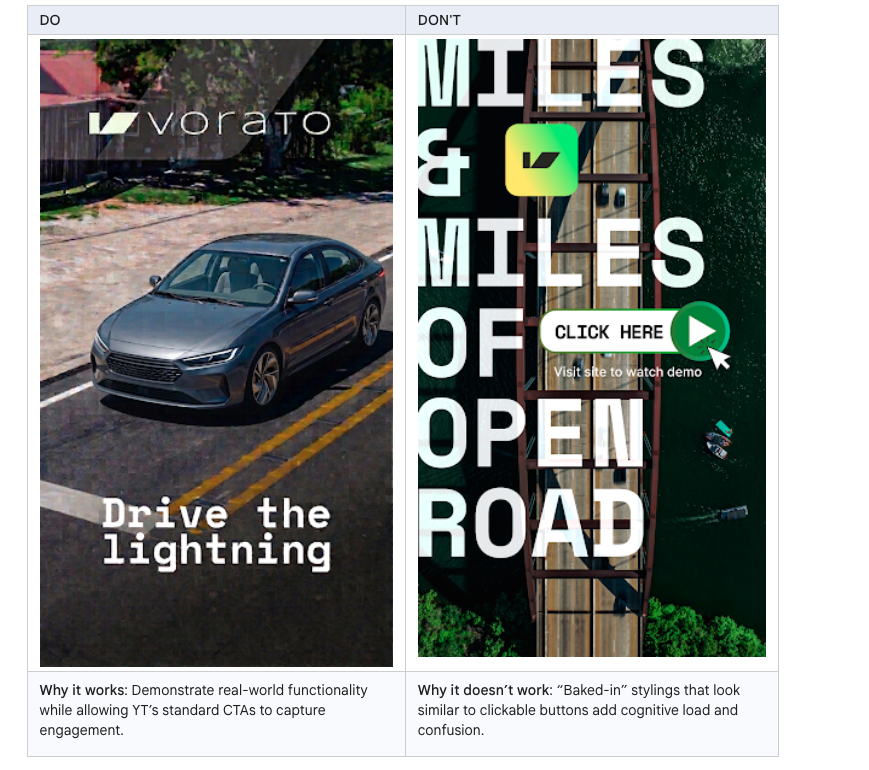
Google says these “baked-in” interface elements can compete with YouTube’s actual calls to action, adding cognitive load and potentially confusing users rather than directing them toward the advertiser’s site.
Make ads look like they belong. Google is also encouraging advertisers to design images that blend naturally into YouTube feeds.

That means using full-bleed, high-resolution photography or lifestyle imagery while avoiding oversized logos, empty solid areas and black bars that can make an ad look fragmented or unnatural within the platform.
Put people in the creative. Google says images showing a visible human presence consistently outperform other assets and recommends featuring faces or people interacting with products when appropriate for the campaign.
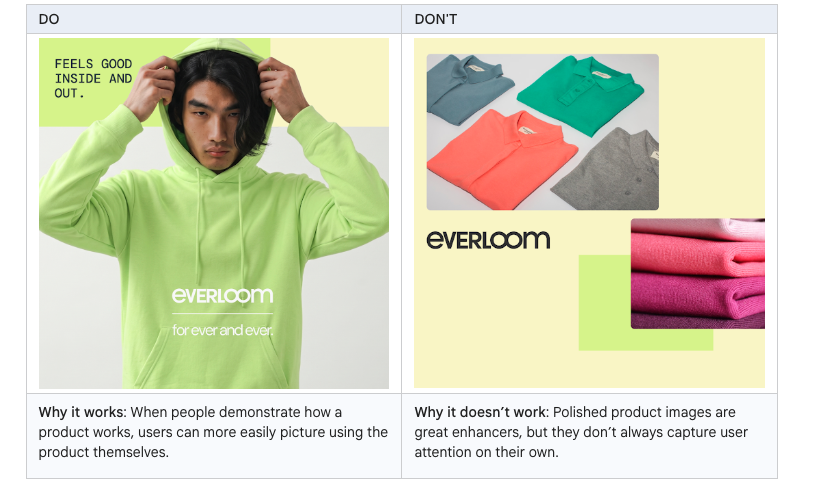
The broader message is that YouTube creative should lean into the human and visual nature of the platform rather than simply repurposing assets designed for other advertising environments.
Why we care. As Google increasingly automates bidding, targeting and campaign management, creative remains one of the biggest areas advertisers can directly influence. Google’s new guidance also provides some useful benchmarks for testing — particularly the 12% conversion difference associated with human voice — rather than simply telling advertisers to “make better creative.”
The bigger picture. Google’s recommendations reinforce that simply having enough assets isn’t the same as having assets designed for YouTube. Advertisers running Demand Gen and other YouTube campaigns may want to test not only different messages, but how those messages are presented — including voice, branding, text overlays, imagery and how naturally the ad fits into the YouTube experience.
Bottom line. Google’s new help document gives advertisers a clearer creative playbook for YouTube: use human voices, establish the brand early, consider text overlays, avoid fake UI elements and create imagery that feels native to the platform.


