Published August 29, 2026 08:05AM
A sleeping quilt made of wool and silk, a tarp of silk taffeta coated in linseed oil, and trekking poles made from Calcutta bamboo with aluminum tips: No, this is not a museum collection, it’s a lightweight backpacking kit handmade by product designer Tom Bonamici.
Out of his studio at the University of Oregon campus in Portland, Bonamici spent the last year crafting a backpacking kit from entirely natural materials, testing just how much he’d sacrifice if he ditched petrochemicals like polyester, nylon, and polyurethane, which are ubiquitous in outdoor gear.
“As we all know, backpacking is just rife with synthetic materials, and they’re really awesome,” Bonamici says. “They’re super lightweight and waterproof and strong and badass.”
He continues, “I was just curious to explore, academically, what it would mean to use a full backpacking kit without any petrochemicals at all—not to say that everyone should, but just to explore what compromises we’d make if we did that.”
Going in, he expected the natural fiber pieces he made to be heavier, weaker, and not perform as well. The tradeoff is that they’re completely compostable once he’s finished using them.
From sewing his own merino wool long johns to commissioning to splurging on a pair of handcrafted shoes to commissioning a student to knit him socks—most commercial wool socks feature polyester in the yarn blend—not one stitch in his kit is synthetic. Even the smaller details—straps, ties, fasteners, stuff sacks, food tins—had to pass the plastic-free test.
His only concessions were his water filtration and first-aid kit.
“I don’t want to get giardia for this project,” he says.
Bonamici developed the idea as part of his work as a tenure-track assistant professor at the university’s School of Art and Design, where he teaches undergraduate and graduate product design students. The university funded it as research. This October, he’ll debut the collection at Dutch Design Week in the Netherlands, alongside other experimental designers.
Bonamici grew up in Eugene hiking, climbing, and backpacking from a young age, as many Oregonians do. During his undergrad years at Dartmouth, he joined the outing club, which further solidified his love of the outdoors. He went on to study product design at Pratt Institute.
The plastic-free collection wasn’t Bonamici’s first foray into gear design; he’s also a woodworker. Around 2009, he taught himself to sew and, with his friend Lesli Larson, co-founded the heritage apparel brand Archival Clothing. Until 2016, the pair made mostly bags and backpacks from sturdy cotton canvas, deadstock U.S. military webbing, and vintage hardware.
In August, Bonamici headed to Mt. Hood outside his home in Portland to see how his pieces would fare in the backcountry. Here are the key pieces of the collection—with a total base weight of 10 pounds—and how they’ve held up so far.
An ultralight backpack
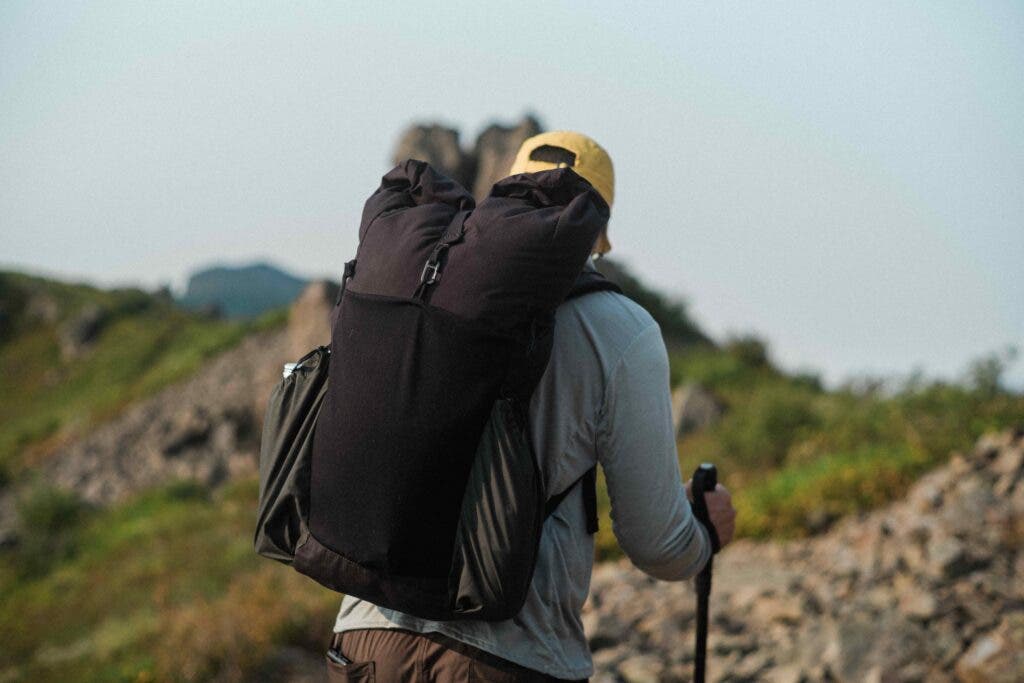
Bonamici adapted a lightweight, frameless pack design to work entirely without synthetics. The pack has no suspension or waist belt; instead, a sleeping pad doubles as the backpanel. He made the body and larger side pockets from Ventile, a densely woven cotton ripstop, and the stretchy back pocket from a merino jersey. Cotton cord, aluminum toggles, and metal hardware replace the usual plastic components, while the thick shoulder straps combine cotton webbing, merino jersey, and merino felt for padding.
Bonamici’s testing notes: “The merino felt shoulder straps were quite a bit stiffer than the usual closed cell foam, but over time I think it’ll form to my body. I did notice the coarse weave of the cotton webbing being clunky as it passed through the metal hardware. No functional issues there, just a tactile one, and something that could be addressed through both webbing weave and metal hardware design tweaks. The only other funny thing were those side pockets—they’re normal on a thru-hiking pack style, but using the cotton cord with a metal cord lock as opposed to a synthetic shock cord meant that I had to loosen the cord manually every time I pulled stuff in or out.”
A trekking-pole tarp
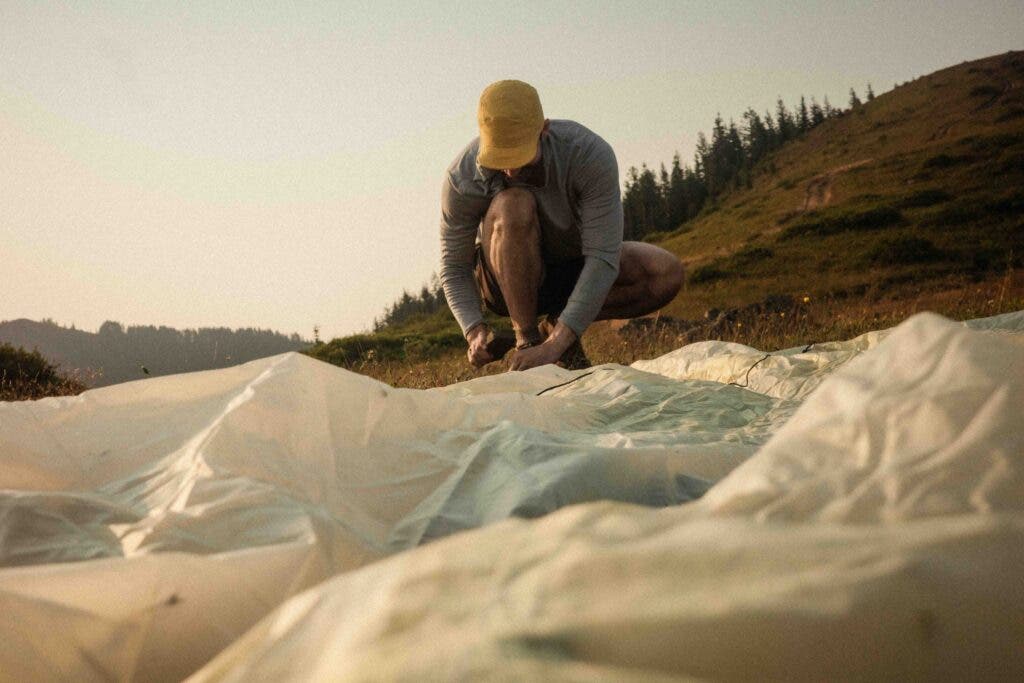
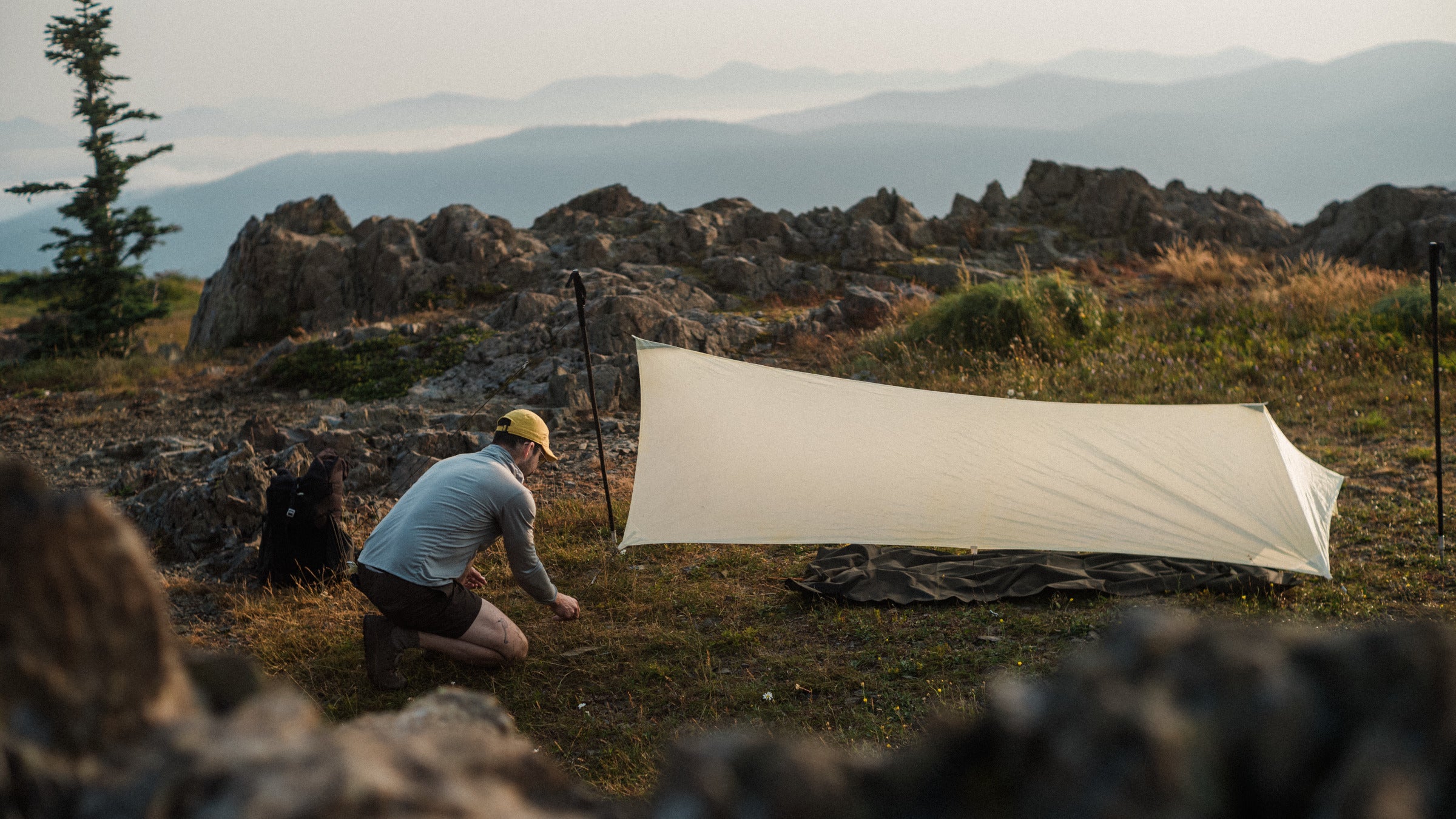
For his shelter, Bonamici adapted a lightweight, 9-foot tarp design with catenary-cut curves that distribute tension evenly across the seams, sides, and guylines.
It is made from an oiled silk taffeta, an old-school sailing material dating back more than a century. Bonamici dipped the fabric, which is similar to that of a ballgown, in a blend of linseed oil and natural turpentine, which helps the oil move through the weave. The result is lighter than many modern shelters—just 25 ounces—and remarkably water-resistant. During one test, water didn’t seep through after 24 hours, and even a blast from a garden hose beaded off the surface.
He reinforced high-stress points with double stitching, cotton tape, and patches of Ventile and the silk itself, using closely spaced but not overly tight stitches to avoid perforating the fabric.
Bonamici’s testing notes: “I liked the oiled silk tarp just fine! It set up easily and was nice and cozy. It didn’t stretch much when set up, and nothing tore, so that’s a good sign. I really need to subject it to more testing over more time, and do some lab testing of the fabric and seam assemblies. I do think the catenary curves helped distribute the tension well over the weaker material. Still, I’d want to be careful about campsite selection and pick nice sheltered spots (which I do anyway when using silnylon tarps!).”
A compostable quilt
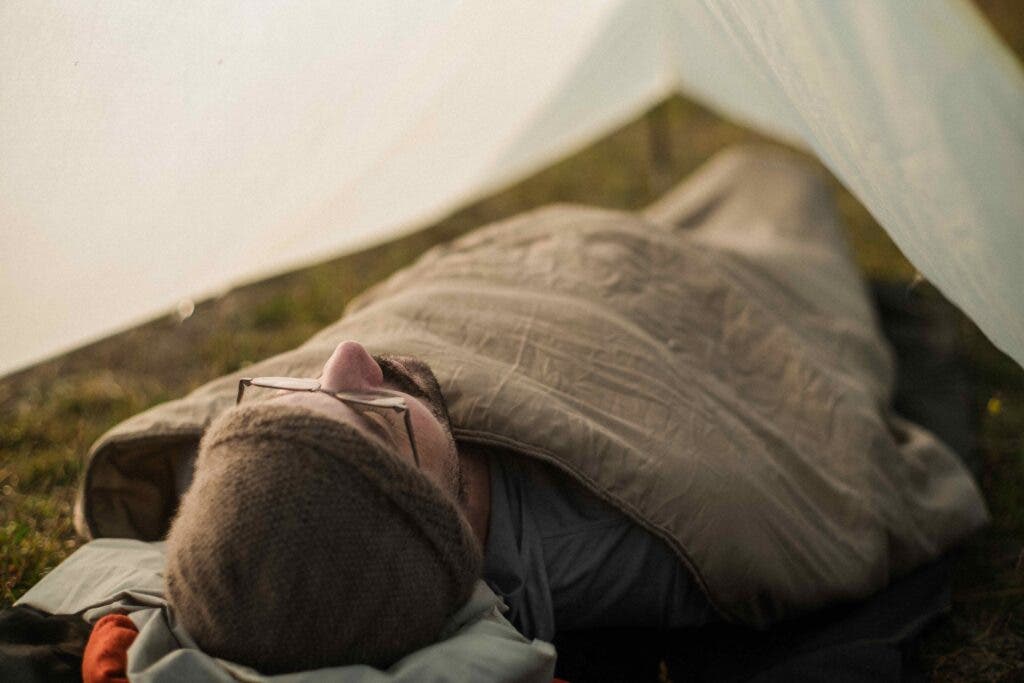
Bonamici’s sleeping bag is a tapered rectangle that cinches at the bottom to form a footbox. Instead of a zipper, he used cotton ties. He made the shell from a silk-cotton blend typically used as lining in formal suits, and inside, fluffy Lavalan wool batting provides the insulation, layered with a lightweight merino quilt batting.
The wool is more resilient than synthetic insulation, Bonamici says, but it comes with a weight penalty: The finished bag weighs a little more than two pounds.
Bonamici’s testing notes: “I LOVED the sleeping quilt! Touching that silk/cotton blend rather than the usual sleeping bag nylon felt so luxurious and friendly, and the Lavalan batting was toasty. It definitely compresses a lot less and weighs a lot more than my synthetic bags.”
A minimalist sleeping pad
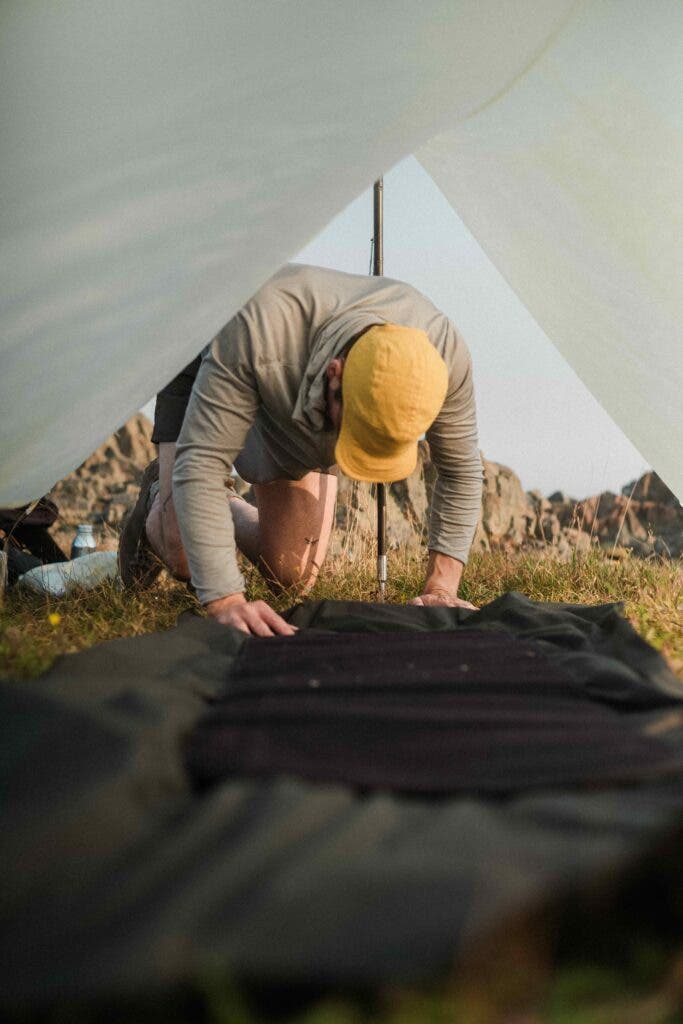
The sleeping pad is where the compromises became most apparent. Bonamici made it full-length for his 6-foot-2 frame but intentionally narrow, with essentially no cushioning—it serves mainly as a thermal barrier and can double as his backpack’s backpanel.
Its construction sandwiches a very thin layer of cork, which he anticipates will crumble with long-term use, between Ventile and dense, almost felted Melton wool. At slightly less than 2 pounds, it’s also far heavier than a conventional ultralight pad—nearly double the weight of a Therm-a-Rest Z Lite.
Bonamici’s testing notes: “It was truly awful for comfort, but the thermal break worked very effectively.”
All-natural trekking poles
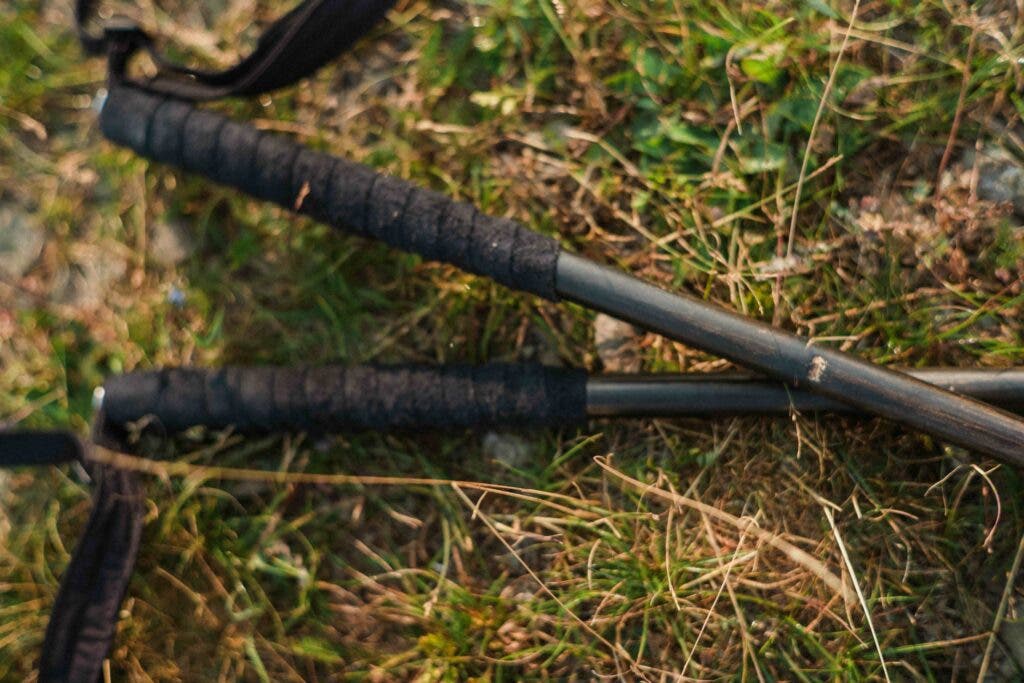
Bonamici considered aluminum but ultimately turned to Calcutta bamboo, an exceptionally strong species still used for ski poles and fishing gaffs. He sourced the thick-walled bamboo from a fishing gaff supplier, then used aluminum and carbide for the tips.
Another tradeoff: The poles aren’t adjustable. Bonamici says he believes an extendable version could be machined, but doing so would add another layer of complexity to the design.
Bonamici’s testing notes: “The trekking poles were nice. I liked the sturdy feeling of the bamboo and didn’t find them heavy at all. However, I want to make the grips thicker for comfort, and after hearing a few disconcerting sounds from the hand straps, I think I need to make them stronger.”
Custom clothing
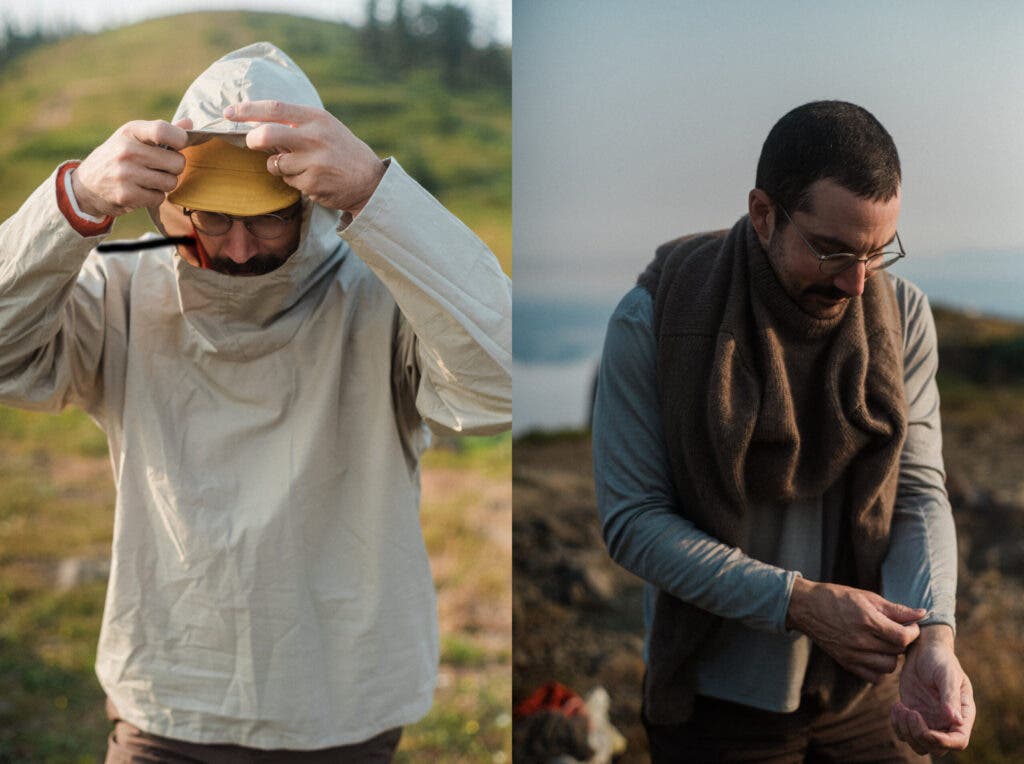
Most garments are sewn together with polyester thread, which is incredibly durable. But given the confines of the project, Bonamici used cotton thread, which you can break by hand. For his apparel, he started by sewing a soft-brim hat. His hiking shorts are a dense but lightweight cotton lawn with a merino wool gusset in the crotch. For tops, he made a lightweight merino wool baselayer, a merino/silk sun hoodie, and a lightweight merino knit hoodie. For a rain layer, he sewed Ventile fabric into a simple anorak silhouette without closures, pockets, and seam tape.
A student knit him two pairs of wool socks: one cozy pair for camp, one pair reinforced with mohair in the toe and heel. For insulation, he bought a sweater made from muskox wool, or qiviut, an exceptionally soft and warm fiber collected by Indigenous communities in the far north of Canada and Alaska in spring, when muskoxen shed their winter coats.
Bonamici’s testing notes: “The clothing was all awesome, and super comfortable. It really didn’t feel like a compromise whatsoever. That qiviut sweater and beanie were incredibly warm, and the silk/merino hoodie was super comfortable while hiking in the 75-degree sunshine. Loved the cotton shorts, but we jumped in the river on the way home and I realized they’d take sooo long to dry … so I had to change out of them. I might look into a different material for the shorts long-term, maybe silk, as apparently silk dries faster than wool!”
Plastic-free shoes
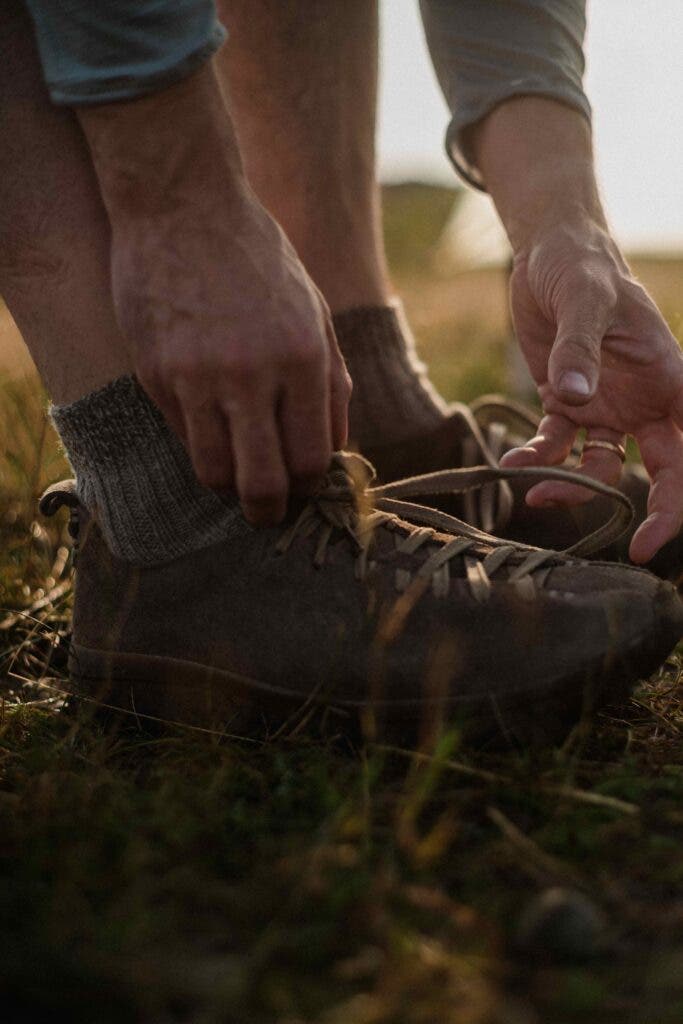
In addition to commissioning socks and buying a qiviut sweater, Bonamici decided to use some of his university budget on hiking shoes from the brand FEIT. This handmade footwear is built entirely from natural components, like vegetable-tanned leather uppers, cork footbeds, beeswax thread, and soles made from natural latex rubber.
Bonamici’s testing notes: “The Feit shoes were pretty tough to walk in. Just so bulky and chonky, and the full leather lining was slippery inside! I didn’t get blisters, but felt some hot spots, and think that they’d need much more breaking in before being reasonable for a longer hike. The hand-knit socks were super nice though, no notes there!”
Bonamici’s takeaways
After one night of testing the full kit—and a few more nights with certain pieces—Bonamici is pleased by how comfortable everything was (except the sleeping pad) and a bit surprised that nothing has broken. Great summer weather in the Pacific Northwest helped.
“I feel confident that this suite of gear works really well for fair weather backpacking, so now I’m looking forward to more extensive material testing,” he says.
Bonamici plans to bring the oiled-silk tarp back to his lab to test different combinations of fabric, oil, and seam construction for strength and hydrostatic-head water resistance. He’ll also reinforce the trekking-pole wrist straps and continue using them outside the project.
He’s most excited, however, to return to his synthetic-based trail runners and beloved inflatable sleeping pad. As for the apparel, Bonamici will keep wearing every piece he made.
“It was just so comfortable and friendly and perfectly well-performing,” he says.


