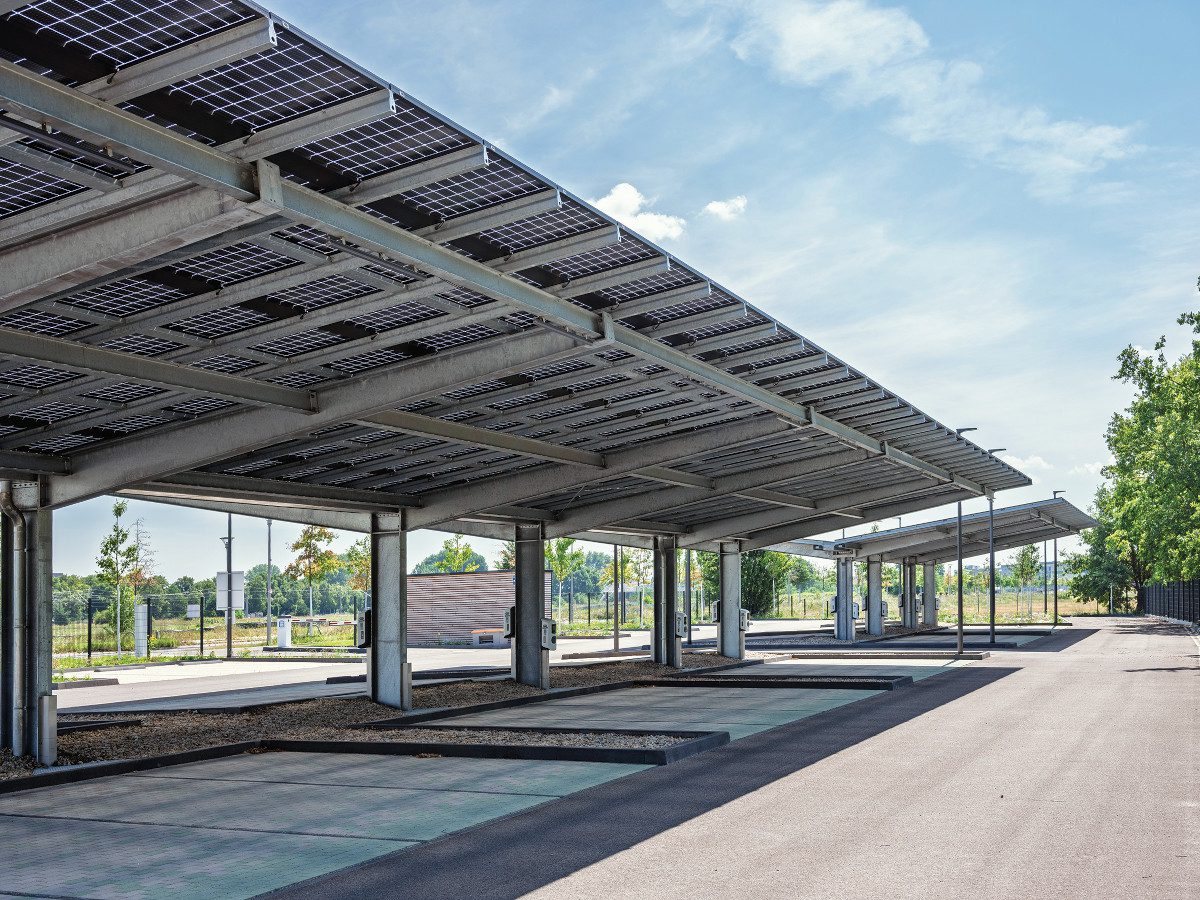


Infrastructure being developed to cut emissions should be designed from the outset to withstand future flooding, heat and water stress, according to new research commissioned by the Climate Change Committee (CCC).
Local authorities should plan climate adaptation and emissions reduction together rather than treating them as separate activities, says the report, which was prepared for the CCC by CAG Consultants.1
The study argues that doing so can protect investment, avoid the need to repair or retrofit infrastructure following extreme weather, and help councils achieve multiple outcomes from the same expenditure.
It examines the interaction between adaptation and mitigation across buildings, transport, electricity, agriculture and land use, waste and industry. The authors conclude that local plans, joined-up governance, shared data, coordinated investment and “outcomes-focused” procurement could help councils obtain better value from climate spending.
The report comes as the UK faces hotter, drier summers and warmer, wetter winters, with some extreme weather events expected to become more frequent or severe. Flooding, extreme heat and drought are expected increasingly to affect transport, energy and water systems, while climate impacts will vary according to local conditions and the vulnerability of infrastructure and communities.
At the same time, substantial new infrastructure will be needed to decarbonise the economy. The CCC’s pathway to the Seventh Carbon Budget envisages electrification and low-carbon electricity providing 60% of the required emissions reductions by 2040, accompanied by a major expansion of renewable generation and transmission and distribution infrastructure.
CAG says councils should therefore use their planning and investment roles to encourage new net-zero infrastructure to be “climate ready”, with renewable generation, electricity infrastructure, heat networks and active travel schemes designed to continue functioning under future climatic conditions.
This could involve avoiding high flood-risk locations for energy infrastructure. Solar farms, substations and battery storage equipment can all be damaged by flooding, the report notes, while local and regional energy planning could combine information on energy networks with data on flooding, wildfire, water scarcity and overheating.
There are also opportunities for low-carbon technologies to provide resilience. Solar PV and battery storage on council buildings could maintain essential services during weather-related power cuts if systems are equipped with an appropriate backup interface. The report suggests councils consider specifying this capability when systems are installed rather than adding it subsequently.
Heat poses waste challenge
Similar considerations apply to waste infrastructure and services. The CCC’s Balanced Pathway envisages household recycling increasing from 45% to 57% by 2035 and non-household recycling from 49% to 74%, while landfill is nearly eliminated and food waste per person falls by 45% by 2040.
Modernisation of household waste and recycling centres to improve sorting and reuse provides an opportunity to increase their resilience at the same time, CAG says. Improved drainage could help sites continue operating during flooding, while shaded working areas could protect staff during heatwaves.
Higher recycling rates and the collection of a wider range of materials could also mean more manual handling for waste crews. With more frequent heatwaves, councils may need to alter working hours and routes, provide additional breaks and consider air-conditioned or ventilated vehicles and cooling clothing to reduce the risk of heat exhaustion.
Separate food waste collections pose another potential adaptation issue. Hotter weather accelerates decomposition, increasing the potential for flies, pests and odours. The report suggests regular collections and clear advice to householders, while waste storage incorporated into new developments should be ventilated and kept out of direct sunlight.
Climate resilience may also become relevant to the decarbonisation of energy-from-waste. Carbon capture and storage can have substantial water requirements for cooling and other processes, and the report says future water availability should be considered when CCS is proposed for EfW facilities.
Designing for two objectives
Buildings provide another example of potential synergies. Rather than installing energy-efficiency measures in isolation, councils could take a “whole-house” approach combining insulation and low-carbon heating with measures such as shading, cooling and property-level flood protection where required.
But the report also identifies potential conflicts. Insulation intended to reduce energy consumption must be accompanied by adequate ventilation in properties at risk of overheating. Heat networks can be vulnerable to flooding and ground movement associated with drought and rainfall, while underground heat-network pipes can also conflict with street-tree planting.
Electric vehicle infrastructure presents similar choices. Charging hubs should be kept away from areas at high risk of flooding or use equipment capable of withstanding temporary submersion, while councils may need to balance demand for pavement and kerbside charging space against space required for trees, sustainable drainage and rain gardens.
Adaptation itself can meanwhile have a carbon cost. Hard-engineered flood and coastal defences can require large quantities of concrete and steel, prompting the authors to recommend consideration of lower-carbon construction and nature-based or combined “green-grey” approaches where appropriate. Natural flood management, sustainable drainage, urban greening and habitat restoration can simultaneously reduce climate risks and support carbon storage.
The report is the fourth in a series commissioned by the CCC on the role of UK local authorities in tackling climate change. It is intended to complement rather than replace separate guidance identifying priority mitigation and adaptation measures.
Its overall message, CAG says, is that councils have a central role in ensuring local climate action is both “low-carbon and climate-ready”.
The report reflects the views of CAG Consultants and does not constitute formal advice from the Climate Change Committee.
Notes
[1] CAG Consultants, Synergies between local climate mitigation and adaptation, August 2026, pp. 4–5. The report says mitigation programmes designed to be climate-ready can protect investment and avoid subsequent repair, replacement or retrofit.



