Published September 7, 2026 06:56AM
For five years, Nathan Pipenberg has covered ultralight gear for Backpacker, writing about everything from new fabrics to radical new concepts in backpack design. Alas, all good things must come to an end, and this month, Nate is leaving his post as chronicler of the lightest and brightest. For his final column, he took a look back at some of his favorite gear he’s covered, as well as a few things that missed the mark. Here, Nate wraps up half a decade of research by rounding up what lightweight gear he thinks is worth spending money on now, and what he thinks backpackers should skip. —Adam Roy, Editor-in-Chief
Transcript
I’m out on a quick evening hike tonight, and it’s a little bit of a bittersweet moment because tomorrow I’m writing my final installment of my ultralight column for Backpacker Magazine. I’m Nate Pipenberg, and I have been Backpacker Magazine‘s ultralight columnist for the past five years or so, and I’ve had a great time doing it.
So with my final story coming up, you know, rather than attempting to wax poetic, which I don’t think anyone wants to hear, I figured I would return to every ultralighter’s favorite topic, which is, of course, gear.
As a gear writer, I’ve had access to dozens, if not hundreds of products: you know, sleeping bags, pads, tents, backpacks, you name it, I’ve been able to test it. You know, I thought it would be fun to talk about some of my favorites, some of the stuff that, you know, if I was not a gear writer, the stuff that I would actually buy, the stuff that I love, that I use all the time, as well as the stuff that I would never spend my own money on.
So when I get off trail and go back home, I’m going to sit down and walk you through some of my favorite pieces of gear.
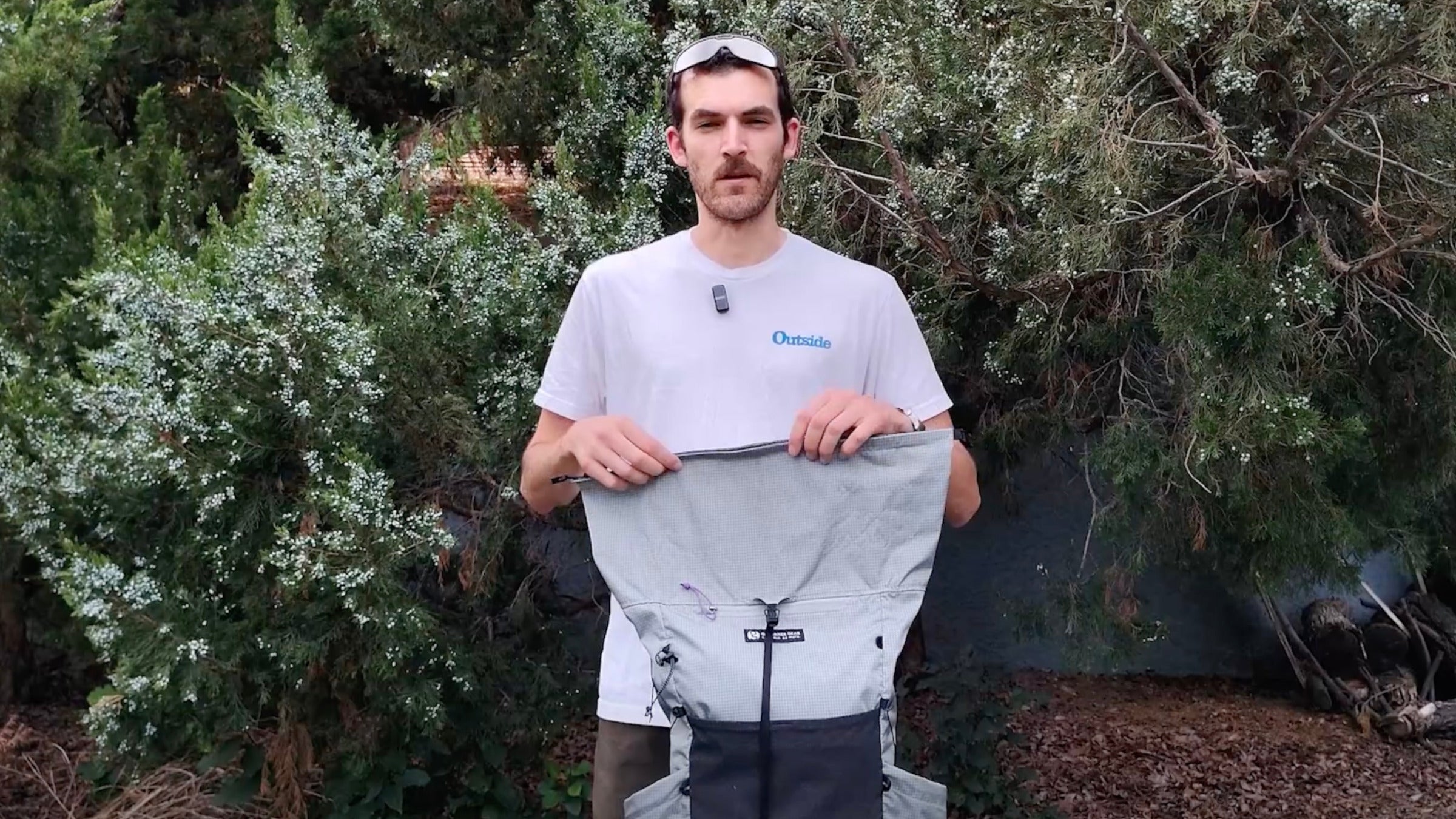
The first thing is a frameless backpack. Frameless packs have had their own innovations, and one is vest-style straps. This pack here doesn’t even have fully vest-style straps, they’re kind of more of a hybrid. But the important thing, at least for me, is that the bottom of the strap is a little bit wider than a traditional strap. With a pack like this, the load of your backpack really is spread across your back, your shoulders, and your chest, instead of just creating pressure points on your shoulders, and it’s just a far more comfortable way to carry a load without a hip belt. I love the kind of freedom of movement, you don’t feel constrained by having the hip belt around you, and if the load is light enough, I really think they are very comfortable to use.
And while we’re on the subject of backpacks, one thing I definitely would not spend my money on is an Ultra backpack, a Dyneema backpack, or a Graphite backpack. The same actually goes for a Dyneema tent or any sort of stuff sack or accessory made with any of these kind of high-tech composite fabrics. These fabrics are billed as being super strong, but in my experience, most of them come with some sort of drawback or downside of their own. Some of them have a tendency to delaminate, and some of them, especially Dyneema tents, are so thin and lightweight that the super strong and durable characteristics of the fabric are kind of undercut by just how light and fragile the fabric is.
In the case of a backpack, I’m a big fan of a simple ripstop or Robic nylon, which is the fabric used here on this Gossamer Gear Skala 38.
In general, I’m not a big fan of expensive rain gear. I’m someone who, for years, used the $25 Frogg Toggs ultralight jacket, including on long thru-hikes, but recently, I found this jacket. It’s the Showers Pass Cloudburst, and even though it is $260 and 10 ounces, I’m actually a pretty big fan of it. You know, just saying those stats out loud, $260, 10 ounces, it’s not very cheap, it’s not even all that lightweight, but I still like it. And the main reason for that is that this is a stretchy rain jacket, which is not something that I’ve seen very often. Compared to your average ultralight rain shell, this thing is basically dead quiet, it’s super comfortable, and so far I’ve found it very breathable as well, which is always an important consideration for a rain jacket, especially if you’re using it in hot weather. I find myself pulling this out even if it’s dry out, just as another warm layer, and paired with, you know, something like an active insulation layer, which I’m going to get into next, this basically forms my ideal softshell jacket.
Another thing I wouldn’t usually spend my money on is hiking-specific clothing. That might sound a little bit crazy, but in general, I think anything that’s made of nylon or polyester or wool is probably going to work out okay if you’re going on a hike. You know, gym shorts, running tops, wool sweaters, they all work great. If there was one specific item for hiking that I would buy, that would probably be either an Alpha Direct or TecnoWool hoodie or shirt. This is the TecnoWool crewneck from FarPointe Outdoor Gear, which is really just my absolute favorite active insulation layer. It’s almost like, you know, it’s really almost like magic, just how warm and breathable this thing is. Pairing something like this as your insulation layer with, you know, a wind shell, or in my case I bring this rain shell to cut wind, combined, those two work great to tackle all sorts of, you know, wet, rainy, windy conditions for a very, very low amount of weight.
Another thing I would buy is a winter sleeping pad. This is the Therm-a-Rest NeoAir XTherm NXT. This is the one I would buy, and it’s pretty simple. There’s three good reasons why. The first is durability. Of all of the kind of mainstream popular inflatable pads, the XTherm has the most durable floor with a 70-denier nylon on there. That’s in comparison to a lot of 20, 30, and 40-denier options. The second is its warmth. This is with an R-value of 7.3, a very warm, four-season, winter-ready pad. And most importantly, the third reason I would buy a winter pad is because there’s really no good reason not to. You know, this XTherm might be two or three ounces heavier than the NeoAir XLite, or the Rab Ultrasphere 5.5, or the Exped Ultra 6.5R, but you know, it’s only a couple ounces heavier, and it has more durability to boot. Using a winter pad in the summer isn’t going to be too hot. The extra reflective insulation doesn’t really work that way in the summer, in my experience. Just buy one pad, buy a winter pad, you’ll save yourself, you know, the $200-$250 versus buying dedicated air pads for winter and summer use.
And finally, the last thing that I think every ultralight backpacker should splurge on, if they have the means to do so, is a true summer-weight sleeping quilt. A summer quilt is incredibly light, they pack down so small, and once you’re used to the weight and the pack size and everything of a summer sleeping quilt, it is pretty hard to go back. The one I’ve got here is a fairly new quilt from Cumulus. This is called the Neo Quilt 150. This is basically the lightest one they offer. It really is amazing, you know, how much smaller and lighter your pack can be when you’re not lugging around a 15 or 20-degree sleeping bag. And it’s also really nice waking up and you’re not sweating in the middle of the night because you have way too much insulation on top of you.
So yeah, those are a few of the pieces of gear that I’ve come to love after testing, you know, dozens, if not hundreds, of gear items over the past five years here at Backpacker, as well as a couple of my hot takes about what I don’t actually like all that much. Thanks for watching.


