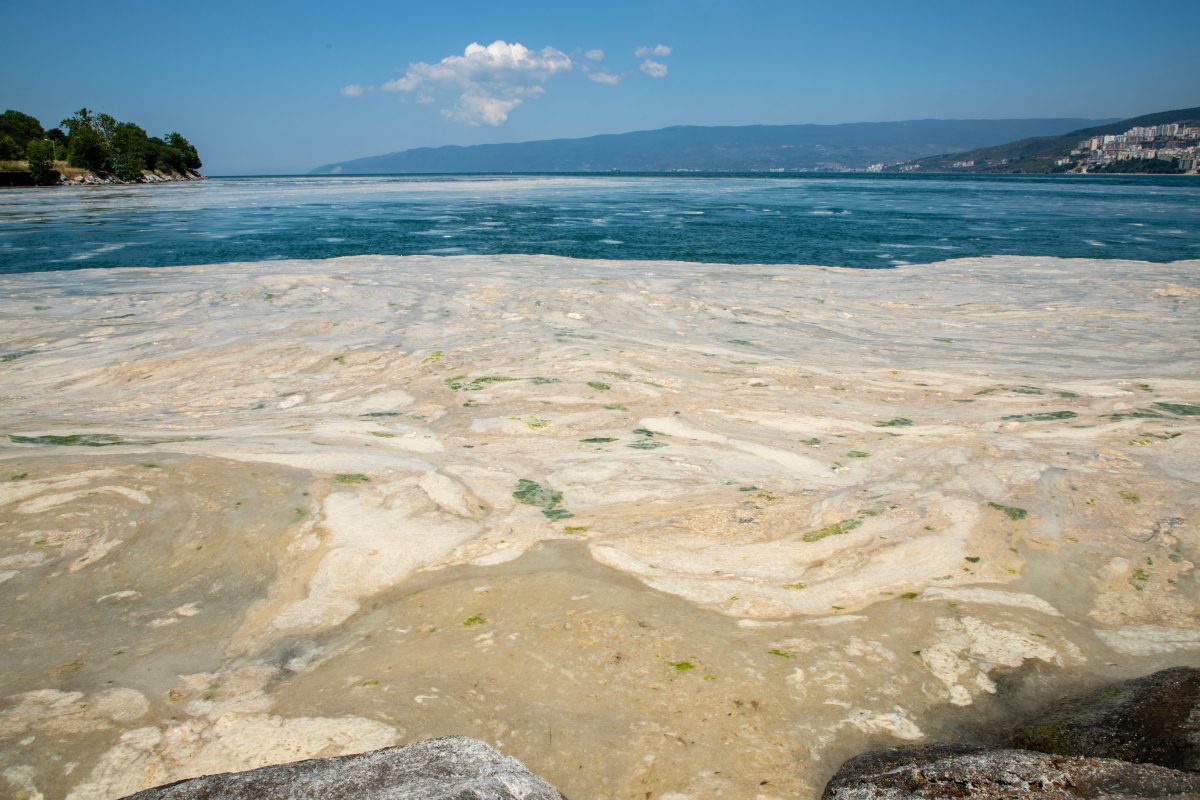


Türkiye and the Asian Infrastructure Investment Bank (AIIB) have agreed an approximately €400 million investment programme centred on advanced biological wastewater treatment, as the country attempts to reduce pollution and prevent further outbreaks of marine mucilage in the Sea of Marmara.
The package forms the first phase of a wider cooperation agreement covering environmental investment, urban infrastructure and climate action.
Environment, Urbanisation and Climate Change Minister Murat Kurum said the initial funding would be used principally to increase wastewater-treatment capacity and expand advanced biological treatment around the Marmara region.1
The agreement was signed with AIIB Vice President Ajay Bhushan Pandey during the Climate Finance Summit in Istanbul, held ahead of the COP31 climate conference in November.
Neither the individual treatment plants nor a construction timetable have yet been disclosed. The eventual value and scope of subsequent phases of the cooperation agreement also remain unspecified.
Nutrient pollution
The investment is intended to support efforts to restore the Sea of Marmara, an inland sea connecting the Black Sea with the Aegean through the Bosphorus and Dardanelles. Its surrounding catchment contains Istanbul and some of Türkiye’s most densely populated and industrialised areas.
The sea experienced an extensive outbreak of marine mucilage (widely accorded the attractive designation “sea snot”) during 2020 and 2021. The thick organic material accumulated both at the surface and within the water column, affecting fishing, tourism and marine organisms.
Mucilage is produced naturally by phytoplankton and other microorganisms, but excessive formation can be encouraged by elevated nutrient concentrations, warmer water and relatively stagnant conditions. Its decomposition also consumes dissolved oxygen, compounding the pressure on an already oxygen-stressed marine ecosystem.
Research published in 2025 concluded that reducing nitrogen and phosphorus entering the sea from urban wastewater would be central to controlling eutrophication and limiting the risk of further outbreaks in the region.2
Advanced biological wastewater treatment is designed to remove substantially more nitrogen and phosphorus than conventional treatment before effluent is discharged. The proposed programme therefore addresses one of the underlying drivers of mucilage rather than concentrating on removing material after it has formed.
The continuing risk has not been eliminated. Monitoring undertaken through Türkiye’s Integrated Marine Pollution Monitoring Programme has continued to examine temperature, oxygen, acidity, nutrients and other pollutants in the Marmara, alongside the interaction between pollution and climate change.3
Earlier action plan
Türkiye adopted a 22-point Marmara Sea Action Plan following the severe 2021 outbreak. Among its commitments were the conversion of existing wastewater works to advanced biological treatment, tighter discharge standards, greater reuse of treated wastewater and improvements at treatment facilities serving organised industrial zones.
The plan also proposed continuous online monitoring of wastewater discharges and an expansion of marine monitoring locations from 91 to 150. Other measures addressed agricultural runoff, industrial wastewater, phosphorus-containing cleaning products and pollution from shipping.4
The latest financing agreement could provide a mechanism for progressing the treatment infrastructure envisaged in that plan. However, its environmental effect will depend on which facilities are upgraded, the nutrient reductions achieved and whether the programme encompasses industrial as well as municipal discharges.
The €400 million package follows a separate $500 million AIIB loan agreed with Türkiye in April to improve irrigation efficiency, water management and flood resilience. That results-based programme is intended to modernise irrigation schemes and strengthen flood-risk management in climate-vulnerable regions.5
AIIB describes Türkiye as one of its largest investment destinations. Kurum said the new partnership would support wider efforts to strengthen environmental infrastructure as well as combat pollution in the Sea of Marmara.
Notes
[1] Reuters, “Turkey, AIIB sign cooperation deal, first focus on marine cleaning, minister says”, 4 September 2026.
[2] G. Insel et al., “Proposal of nutrient removal technologies for urban wastewater treatment in the Marmara Sea basin: A strategy for mucilage prevention”, 2025.
[3] TÜBİTAK Marmara Research Center, “2023–2025 Marine Integrated Pollution Monitoring Program starts”.
[4] Union of Municipalities of Marmara, “Marmara Sea Action Plan Announced”, 25 February 2022.
[5] Asian Infrastructure Investment Bank, “AIIB to lend USD 500 million to support water efficiency and climate resilience in Türkiye”, 24 April 2026.



