Huawei is positioning wearable technology as more than a consumer electronics category, increasingly using its wearable devices as platforms for health monitoring, data collection and medical research.
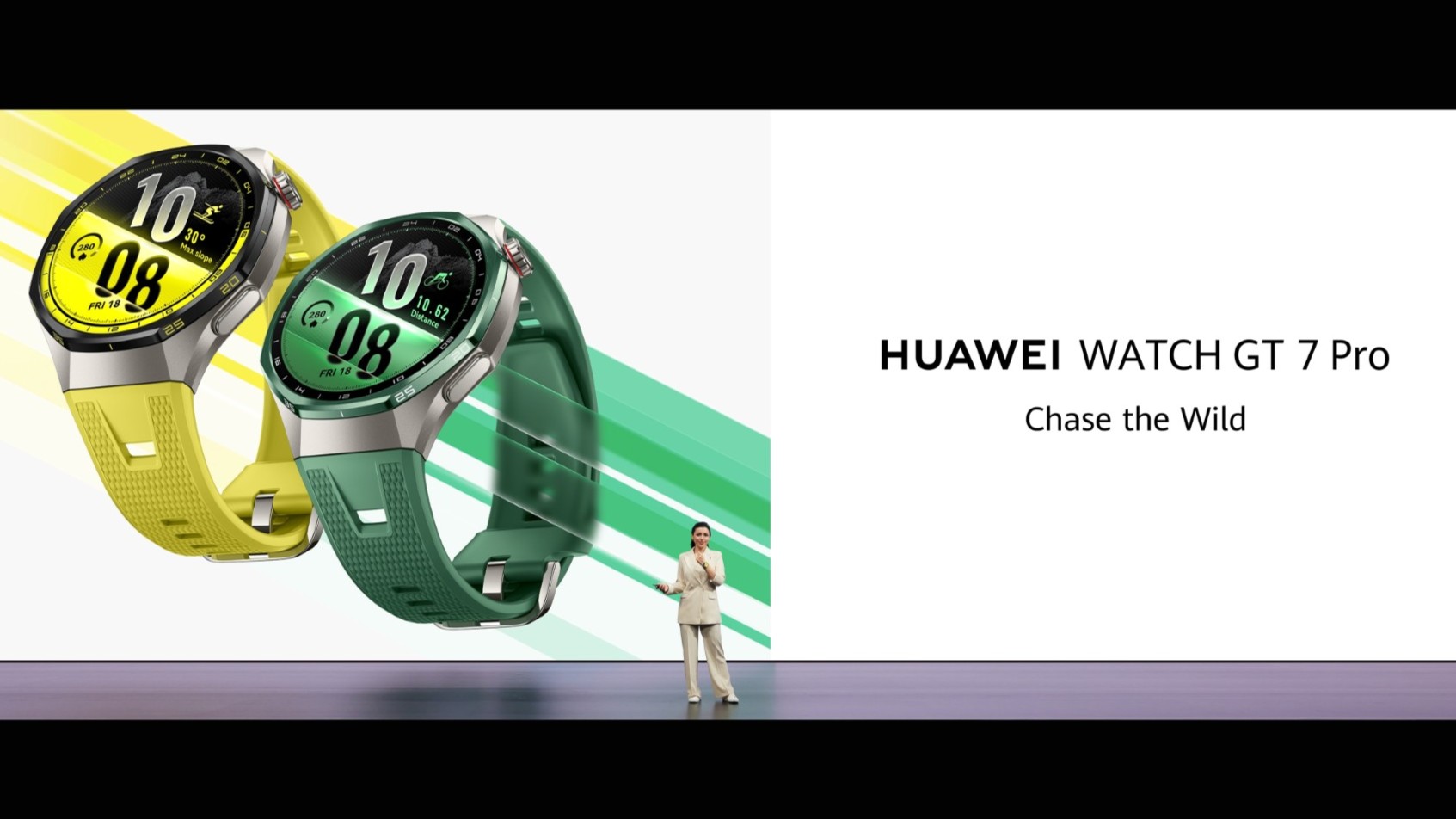
The strategy was on display at SHOWPALAST in Munich, Germany, where Huawei showcased the Watch D3 and its European Terve Research platform alongside its broader smartwatch portfolio. Huawei’s products captured the event’s ‘Chase the Wild’ theme as the products are designed to help users track their activities and use the data to better manage their health and lifestyle.
Watch D3 combines advances in blood pressure monitoring, while Terve is a European research platform designed to connect wearable-generated data with academic and medical research. The Watch D3 launched globally on September 2, while Terve Research is being introduced as an infrastructure layer for European medical and academic institutions.
The move comes as health tracking becomes an increasingly crucial element for smartwatch and wearable manufacturers. Market research firm Counterpoint Research now tracks features such as sleep apnea detection, ECG and blood pressure monitoring alongside shipments, revenue and average selling prices in its global smartwatch market analysis.
“From metabolic monitoring and active health management to brain activity sensing, wearables are no longer just about your wrist. We are moving toward a complete picture of your health, a full-body system that monitors, understands, and responds,” said Rico Zhang, President of Huawei’s Smart Wearable and Health Product Line.
While the technology is advancing rapidly, there have been questions raised around validation, calibration and performance of wearable health monitoring tools. In this context, Huawei’s approach is particularly notable because Watch D3 combines conventional oscillometric measurement using a miniature pump and airbag with Photoplethysmography (PPG)-based continuous trend monitoring, rather than relying exclusively on cuffless estimation.
From smartwatch to health platform
Significantly, Huawei has been building toward this position for several years. The first-generation Watch D introduced wrist-based blood pressure measurement in 2021, while the Watch D2 added 24-hour Ambulatory Blood Pressure Monitoring (ABPM) in 2024. The D3 takes the concept further by attempting to reduce one of the principal drawbacks of ABPM: the disruption caused by repeated cuff inflation.
The watch uses four high-precision micro-pump measurements during the day and three at night, while PPG continuously tracks blood-pressure trends between those measurements. Huawei describes this as a “precision measurement plus trend tracking” approach, intended to retain reliable measurements while reducing the frequency of disruptive inflations.
The device has received CE Medical Device certification for resting blood pressure measurement, ABPM and pre- and post-exercise blood pressure monitoring. Huawei claims it is the world’s first wrist-worn device to pass ISO standards for accurate blood-pressure measurement before and after any physical activity, to help users in building sustainable fitness habits.
Huawei’s focus on measurement methodology gives Watch D3 a differentiated position in an increasingly crowded health-wearable market. Watch D3 is 17.7% thinner and 9% lighter than its previous version, making it easier for the user to wear and benefit from the device.
Building an ecosystem around the wrist
The larger opportunity for Huawei, however, may extend beyond the device itself. Terve Research is designed as an online platform through which European academic and medical institutions can conduct wearable-based studies as well as recruit participants. Funded by Huawei but independently managed and operated by medical technology provider Thryve, the platform allows researchers to conduct closed studies with selected participants or open studies involving eligible Huawei wearable users who voluntarily opt in.
The platform is launching with two studies: one examining the health impact of social jetlag and disrupted circadian rhythms, and another investigating the relationship between exercise patterns and cardiovascular risk. Both are being led by European medical researchers and use data collected from Huawei wearable devices.
This creates a potentially valuable feedback loop: wearables generate real-world data, researchers use that data to investigate health patterns, and those findings can help in the development of future products and health services.
It is also a direction that reflects the broader evolution of the wearable market. The industry is gradually moving away from counting steps and monitoring basic fitness metrics toward continuous health monitoring, preventive care and research applications.
From consumer electronics to digital health
Huawei also announced the launch of is also expanding its smartwatch portfolio with the HUAWEI WATCH GT 7 Series, which brings upgrades across sports tracking, health management, design and battery life. The GT 7 Pro features a nano-tech ceramic bezel and titanium alloy frame, while the series adds new capabilities such as wrist-based turn and G-Force detection, ski mapping across more than 3,000 resorts, advanced cycling features and AI-powered insights. The company is also bringing the HUAWEI WATCH 6 Series back to Europe, with AI-driven workout analysis, independent calling, navigation and payment capabilities, alongside enhanced health and wellness features.
The company says its digital-health ecosystem now includes partnerships with more than 160 healthcare institutions globally and more than 10 research centres, including three sports and health science laboratories.
Zhou Hong, President of Huawei Research Institute, Europe, said the broader value of wearables lies in their ability to gather health information outside traditional settings. “Wearable devices enable fast, convenient and reliable multimodal measurements anytime and anywhere, providing actionable insights to personalize interventions and support more effective behaviour management. That is why the health sector is so promising: the potential for discovery is enormous, and the need has never been greater.”
Huawei is not just adding another health feature to a smartwatch. It is attempting to build an ecosystem spanning sensors, devices, software, research platforms and healthcare partnerships.
Significantly, Huawei also announced the launch of HUAWEI Mate XT 2 in Guangzhou, China. First smartphone to feature the LogicFolding Tau chip, Huawei Mate XT 2 comes with the new Kirin 9050 Pro chip and several upgrades in durability, AI, privacy and photography. More importantly, the device also brings health features including ECG analysis.
As basic fitness tracking becomes increasingly commoditised, differentiation is likely to come from the quality of health measurements, validation, longitudinal data and the ability to turn that information into useful insights. Huawei is taking a lead in this by developing a range of devices that are designed not just to give reliable measurements but also to contribute to the wider health ecosystem.


