Published September 9, 2026 08:00AM
September 2026: The Helly Hansen Verglas Infinity Shell Jacket 2.0 is our best overall men’s rain jacket for its outstanding waterproofing, breathability, and durability. Our top budget pick is the REI Co-op Rainier, at just $100. This year, we added the 7mesh Guardian Air ($500) (Best Ultralight), Montane Alta XT ($720) (Best Heavy-Duty Shell), and Outdoor Research SkyChaser ($340) (Best for Backpacking.)
If we reserved hikes, backpacking trips, and other outings for T-shirt weather, we’d rarely leave the house. The best rain jackets enable us to explore despite the elements—which is exactly what our team of testers did all year long. Below, you’ll find our favorite rain jackets for men, from featherweight pullovers to heavy-duty hardshells ready to weather any storm. Read up, layer up, and head out.
At a Glance: The Best Men’s Rain Jackets
Best Overall
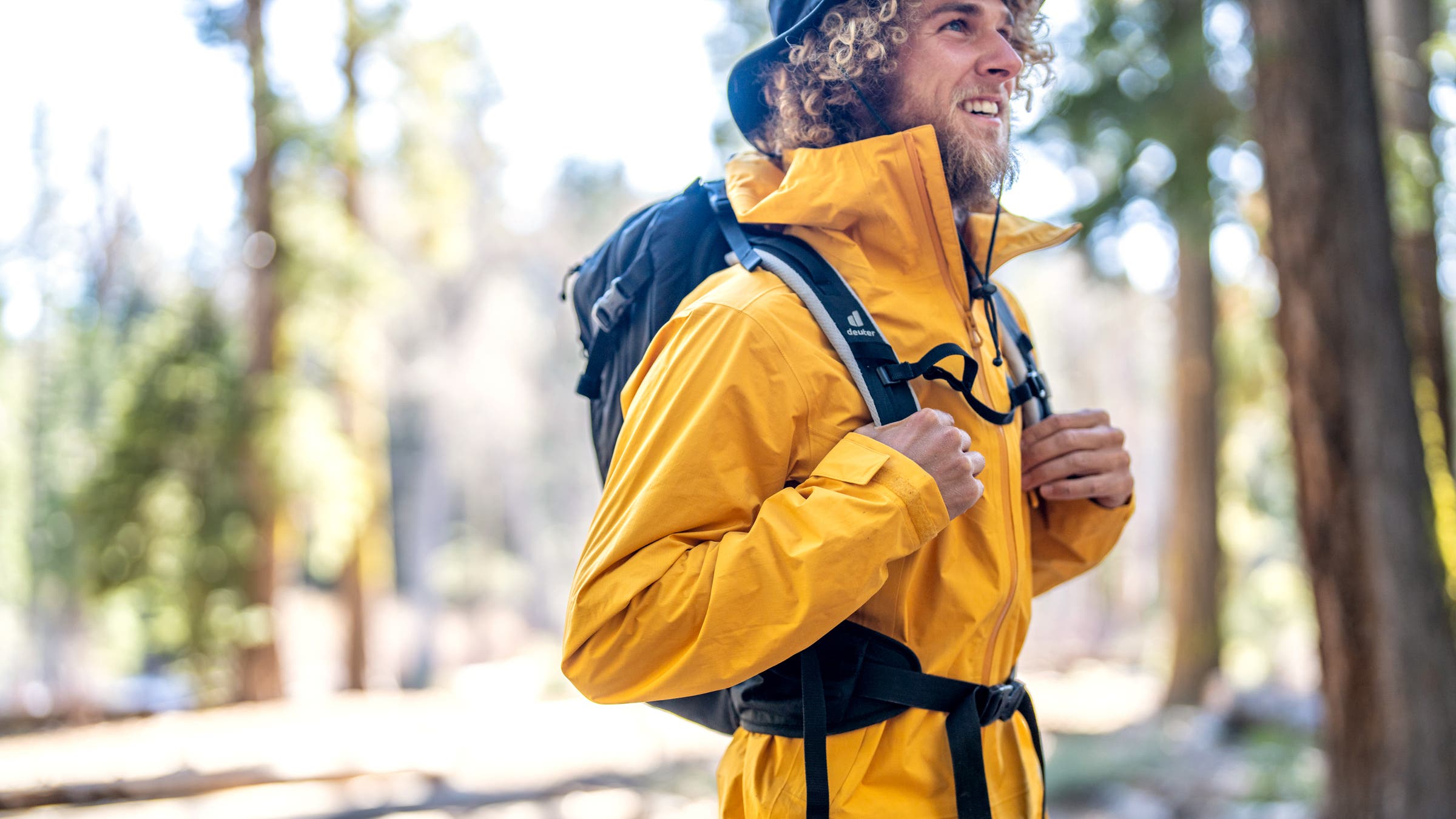
Helly Hansen Verglas Infinity Shell Jacket 2.0
Weight: 15.7 oz (L)
Sizes: S-XXL
Pros and Cons
+ Versatile
+ Durable
+ Waterproof
+ Ski-friendly features
– Warm above 50 degrees
– Middling breathability
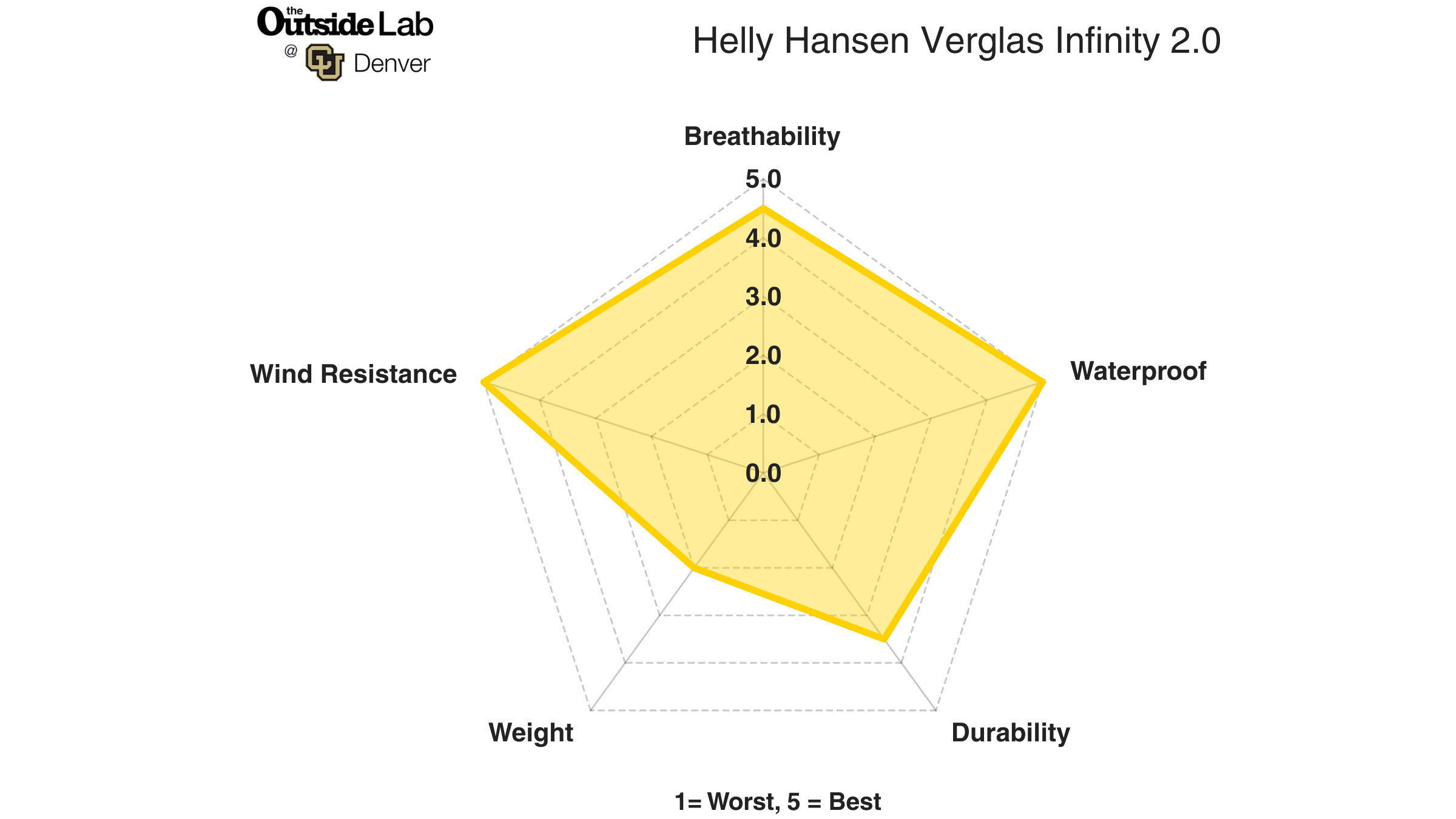
What the multitool is to a toolbox, Helly Hansen’s Verglas Infinity 2.0 is to your adventure wardrobe: If you don’t want several specialized shells hanging in your closet, this rain jacket is a solid one-shell-fits-all solution. Thanks to a tester-approved, midweight, impressively waterproof three-layer fabric and pit zips, the shell handles most activities and conditions, from ski-touring in a snowstorm to cooler summer backpacking trips.
The three-layer shell uses the brand’s proprietary Lifa Infinity waterproof-breathable membrane, which gives hikers and mountaineers “bombproof protection,” according to Jason Boyle, a New Mexico-based backpacker, gear tester, and retired member of the U.S. Coast Guard. Boyle got caught in an intense thunderstorm while descending Black Mountain in the Sangre de Cristos, and after 20 minutes of heavy rain and a 15-degree temperature drop, he was still completely dry and comfortable.
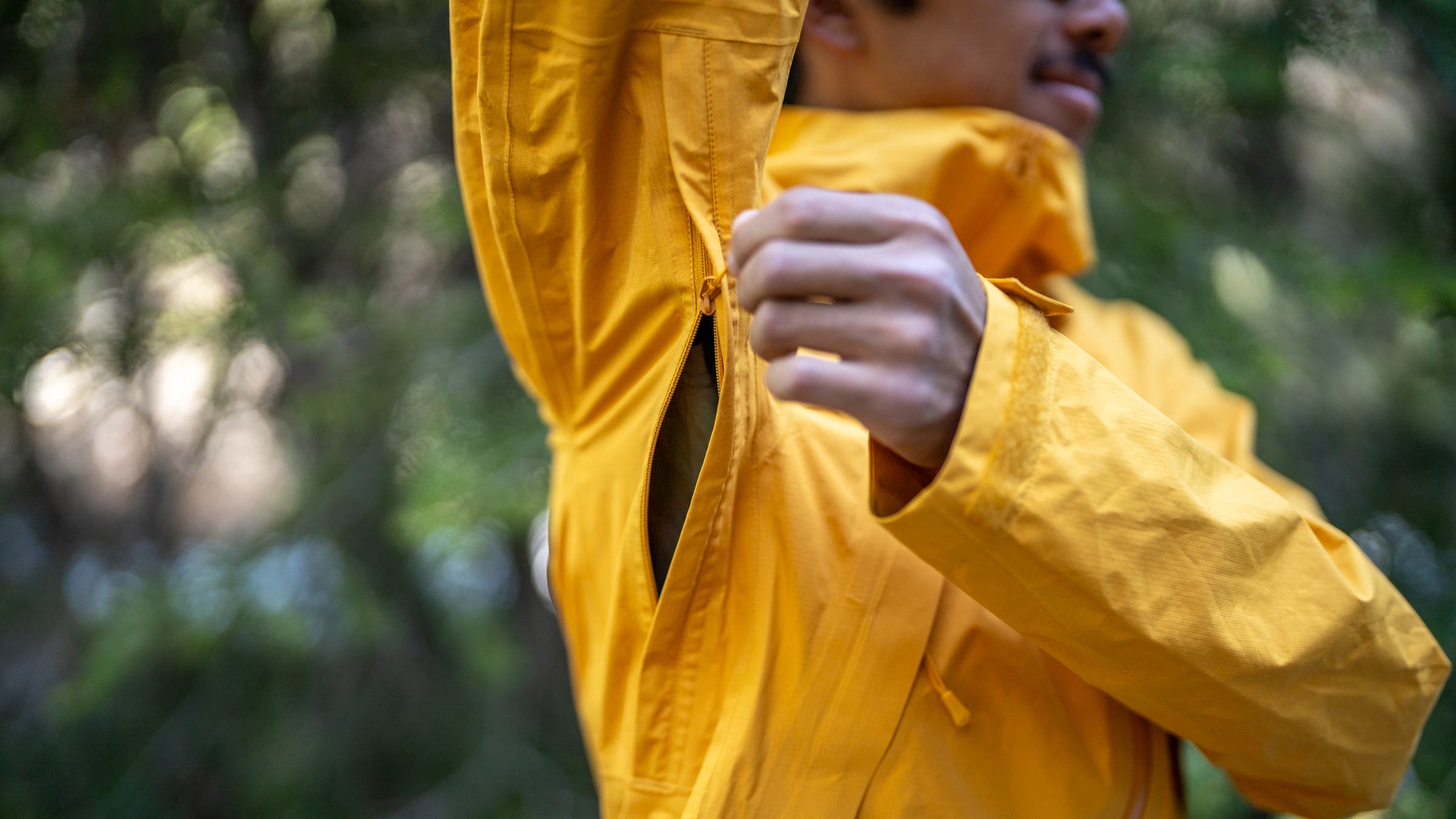
A self-proclaimed “hot hiker,” Boyle appreciated the airflow provided by the Verglas 2.0’s pit zips, but deemed the breathability middle-of-the-pack after overheating while hiking in 50-degree weather. This concession was well worth it, he felt, given the impressive weatherproofing and overall ruggedness of the jacket. “The durability seems stellar,” he reported after a six-day backpacking trip with a 40-pound starting pack weight in the Sangre De Cristos. “No issues with rubbing from shoulder straps, all the seams are taped with no peeling, and the zippers and pulls continue to operate smoothly.”
The jacket underwent a redesign in the fall of 2024 with lighter, protective pocket flaps instead of beefy, waterproof zippers, upgraded 100-percent recycled polyester face fabric, a 2.7-ounce weight drop, and a significant $100 price drop.
Helly Hansen may have slashed weight, but it didn’t skimp on features. Boyle loved the high collar, velcro cuff closures, and easily adjustable elastic hem, noting “I could cinch everything down tight to keep out precip.” The only concession? The brimmed hood was a bit tight with a ski helmet but more than generous for a climbing lid.
Most Value
Patagonia Torrentshell
Weight: 14.1 oz (M)
Sizes: XS-XXXL
Pros and Cons
+ Affordable
+ Durable
+ Excellent weatherproofing
+ Middling breathability
– Bulky fit
– Hood is tight for a helmet
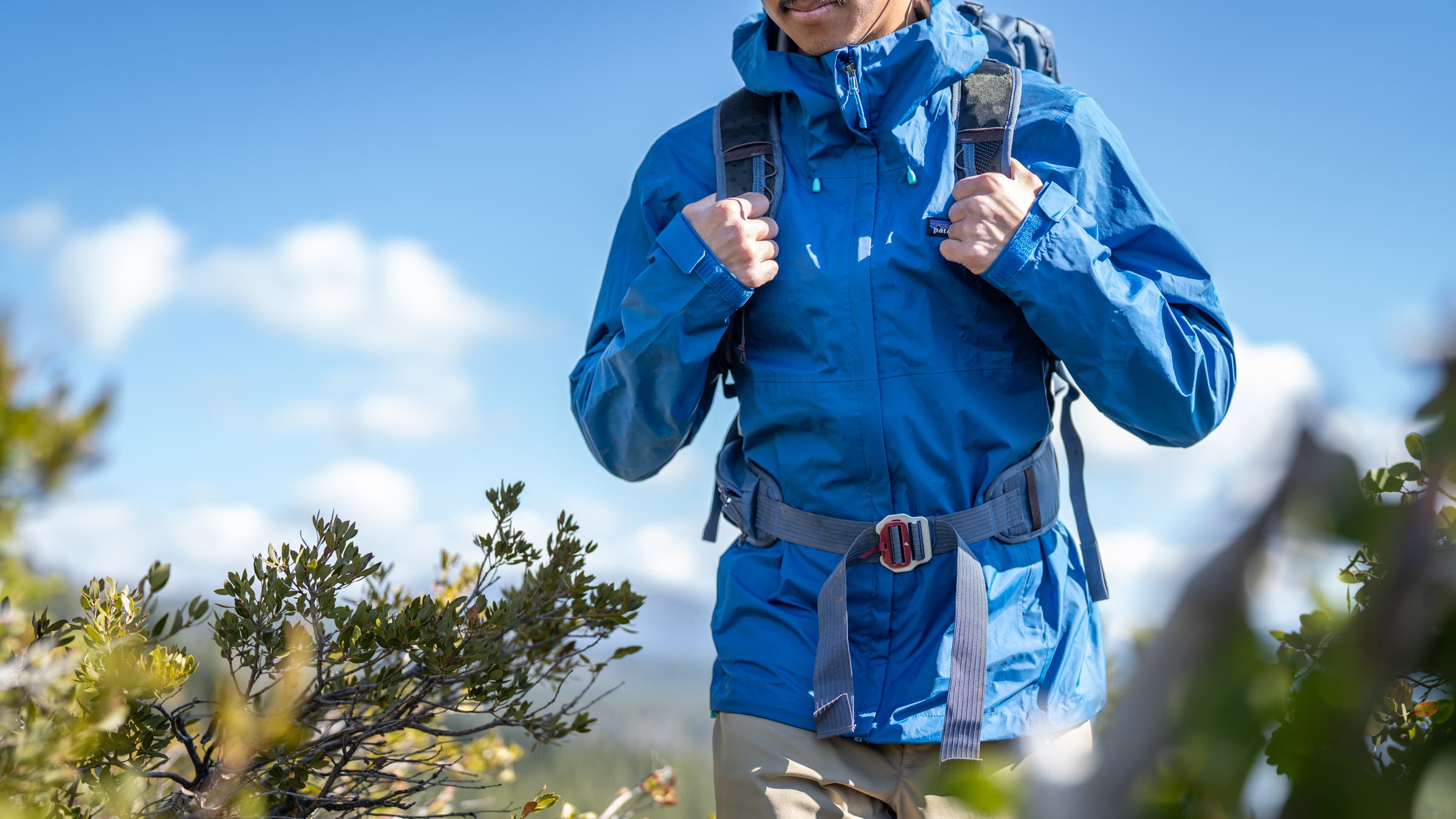
Patagonia’s tried-and-true Torrentshell continues to be a top pick for value-driven outdoor enthusiasts, thanks to reliable weatherproofing at an affordable price.
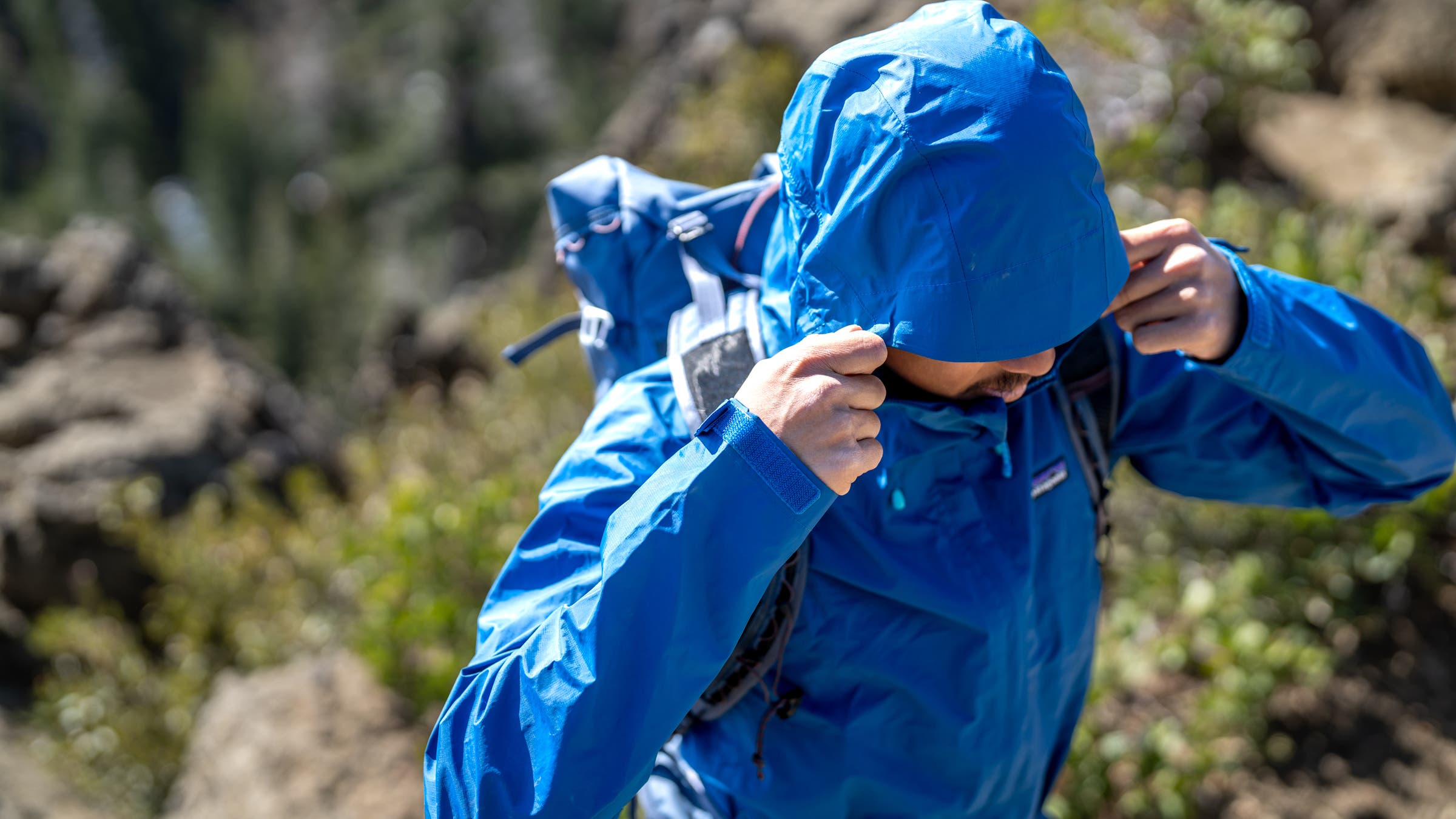
This rain jacket is a true three-layer shell—impressive at a sub-$200 price point— with a 50-denier, 100-percent recycled nylon ripstop face fabric and Patagonia’s proprietary PFC-free PU membrane. Tester Cody Memmel, a tough-to-please Colorado-based fly fisherman, climber, and hiker, was particularly impressed with its hydrophobic chops: “This shell was one of the more storm-worthy jackets I have ever worn,” he said, appreciative of the ability to cinch down the hood, hem, and wrists, as well as the double-guttered front zipper. He gave Patagonia props on the fabric after a sunny day of fishing the Gunnison River turned into a torrential downpour: “The H2No membrane was stellar and it had no issues shedding water or pea-sized hail.” He gave the shell similar accolades for durability, calling it “a tank.”
Gerben Scherpier, a sea kayak guide in Maine, former Yellowstone backcountry ranger, and longtime gear tester, co-signed these findings, giving the Torrentshell a rare 10 out of 10 in the durability department. “It’s one of the more hardy jackets I have tested,” he said—high praise after 13 years of shell testing. “I sat on rough rocks, wore it through dense brush during an orienteering race, and the shoulders endured miles of abrasive rubbing from my pack straps—and you can’t tell at all.” He did acknowledge that the fabric is stiff right out of the gate, but softens with time and wear.
Memmel appreciated the dual hand pockets, which he judged “standard but functional.” He was also grateful for the pit zips when hightailing it in the high country, as the weatherproofing and durability do come at the cost of breathability. “The shell never felt clammy, but it definitely let you know when you needed to dump a layer or open the pit zips,” he said. Scherpier concurred, claiming the long zippered vents “saved me from overheating” during a blustery, drizzly hike up Yellowstone’s Bunsen Peak.
The only point of contention for our test team was fit. More athletically-built testers like Scherpier happily judged the fit “unremarkable,” and he was able to toss a puffy under the shell while waiting for friends to catch up on the summit of New Hampshire’s Mt. Lafayette. Memmel, a more slender tester, found the fit “bulky” and “baggy” and the hood a bit too tight over his climbing helmet while leading the last pitch of a climb in Unaweep Canyon.
Best Budget
REI Co-op Rainier
Weight: 11.3 oz (M)
Sizes: S-XXXL
Pros and Cons
+ Cheap
+ Solid waterproofing
+ Above-average durability
+ Fully-featured
– Below-average breathability
– Not super packable
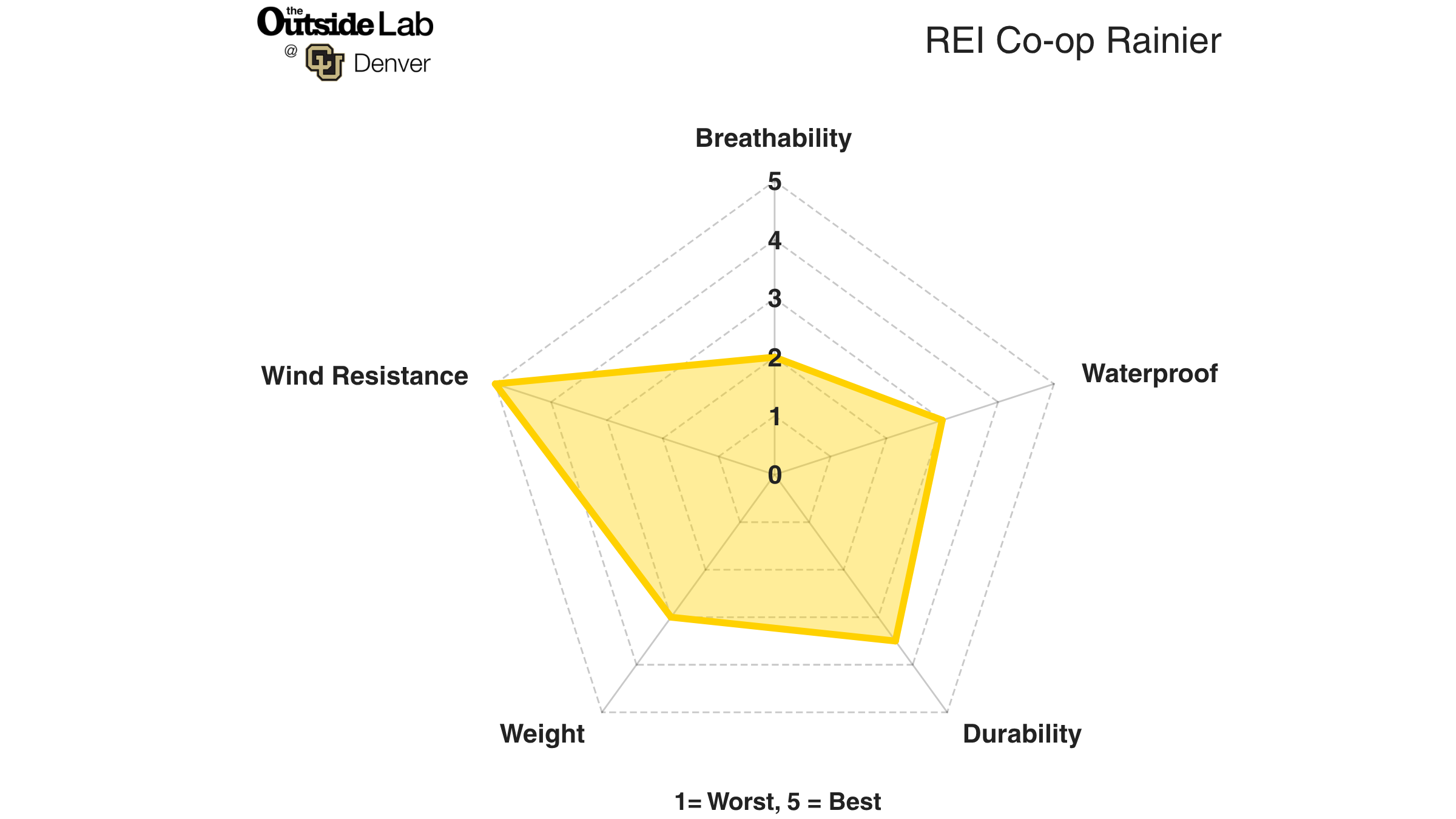
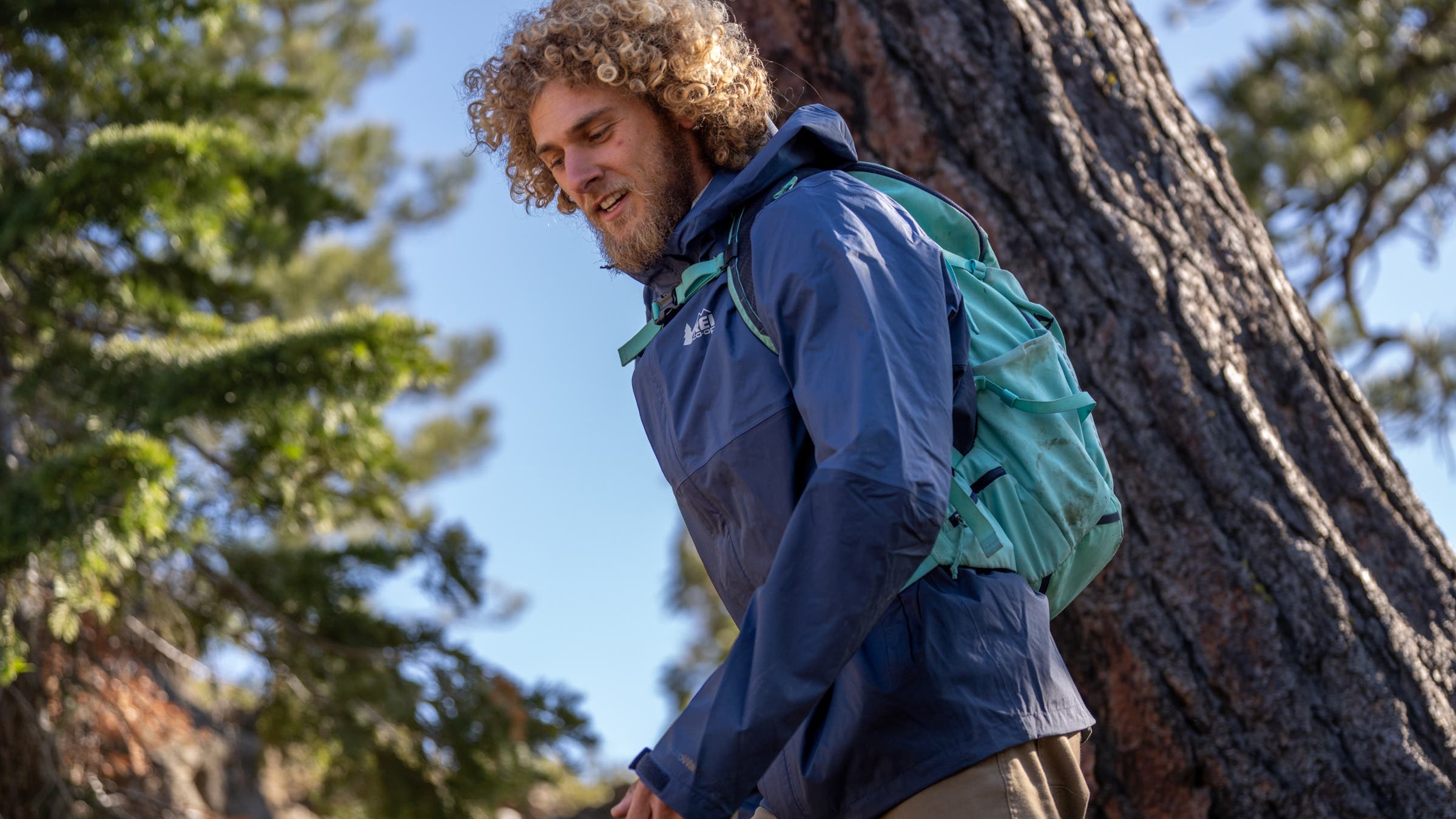
The Rainier, a 2.5-layer, 100-percent recycled nylon ripstop rain shell from REI Co-op’s in-house label, outperformed every shell we tested in one category: price. And according to Wyoming-based tester Chris Odom, the shell punches above its price tier with regard to waterproofing and durability. After taking the Rainier for daily morning walks during a chilly, stormy stretch in the Tetons, Odom reported that the looser fit (but slightly less boxy than last year’s version) accommodated insulating layers, the fabric had enough elasticity for natural range of motion, and, above all else, the shell “stepped up and did what it was supposed to do: keep me warm and dry.” Odom’s ultimate durability test? Stacking a half-cord of wood during a downpour. “I was impressed—I didn’t get wet and there were no rips caused by wood scratching the face fabric,” he said. (Breathability did suffer a bit, however, using REI’s material choice and construction.)
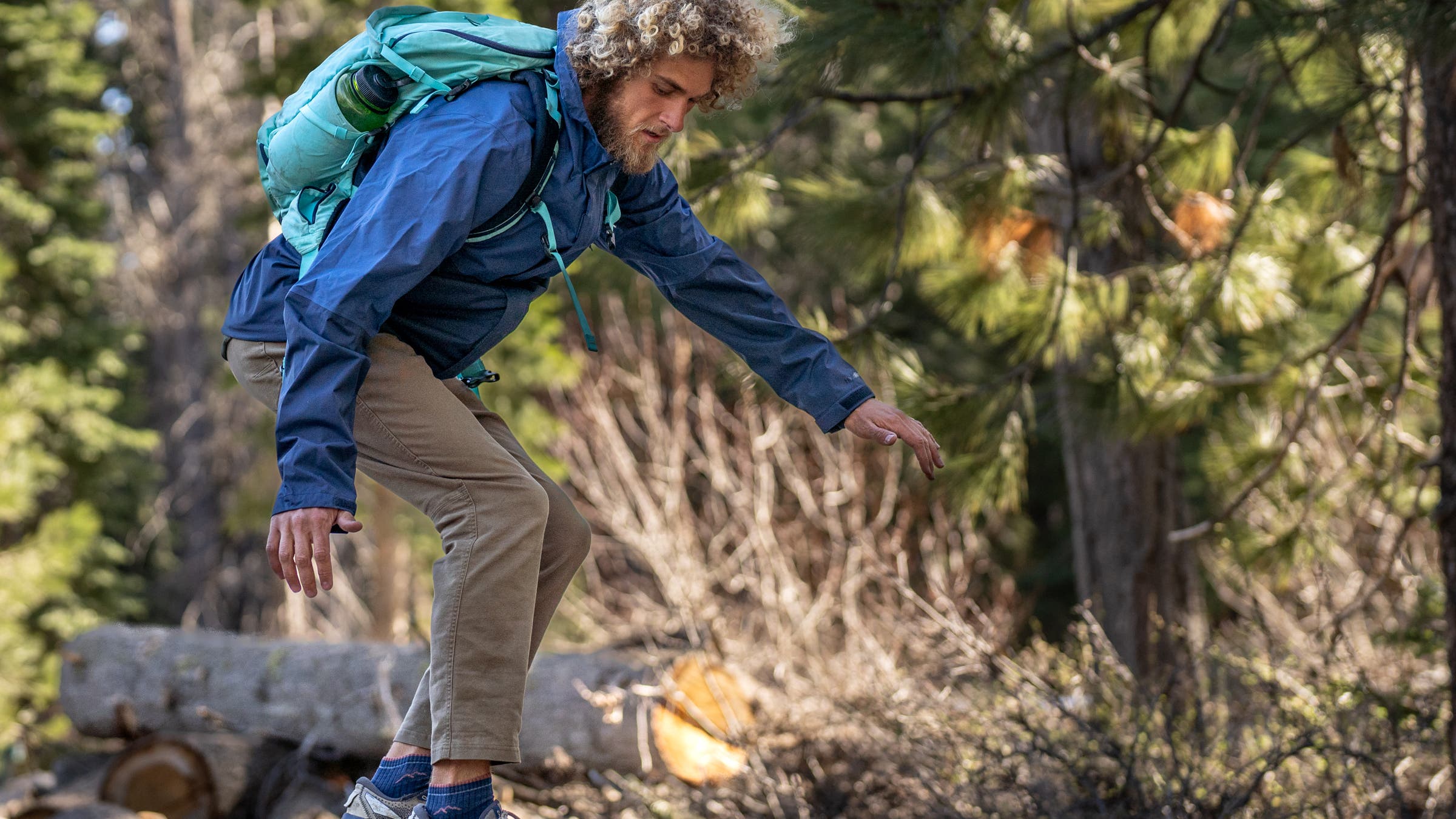
Given the price, we were happily surprised with the Rainier’s feature set. REI Co-op outfitted the jacket with pit zips, cinching cuffs, internal dump pockets, and a Velcro storm flap over the main zipper (some Outside testers like this belt-and-suspenders approach, others judge it overkill). During a Teton rainstorm, zippered hand pockets kept Odom’s paws dry. REI Co-op also revamped the hood, switching from an internal collar to a slimmer, more standard hanging hood. Odom reported that between a semi-rigid visor, elastic pull cord, and the chin coverage of the front zip, he was able to adjust the angles of the hood to block rain and wind while retaining visibility during heavy downpours. For a C-note, the Rainier is an indisputable steal.
Best for Backpacking
Outdoor Research SkyChaser
Weight: 11.6 oz (M)
Sizes: S-XXL
Pros and Cons
+ Great waterproofing and durability
+ Very stretchy
+ Well-designed features
– 2.5-layer construction can be sticky in muggy weather
– Not particularly light
– Not as breathable as some competitors
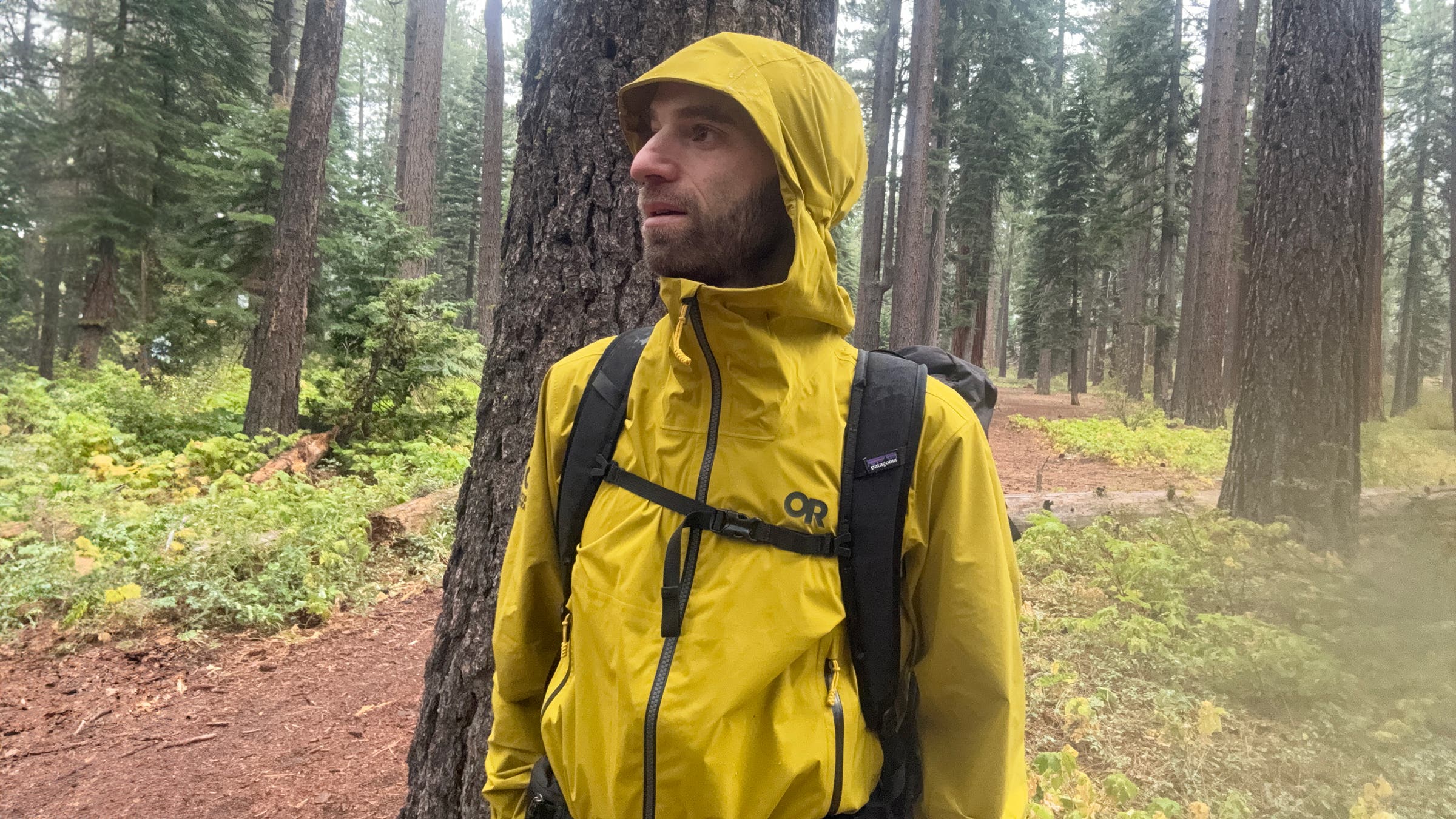
As the name suggests, Outdoor Research’s SkyChaser is designed for ridge-scrambling alpinists. It has robust, mountaineering-friendly features considering its weight class, like a low-cut rear hem, velcro cuffs that accommodate gloves and skinny wrists alike, two raised, harness- and hip belt-compatible hand pockets, and an over-the-helmet hood. Testers also appreciated the wire-brimmed hood’s ability to cinch over beanies, ball caps, and bald heads.
But we consider the SkyChaser more than an alpine specialist due to the fabric: The jacket uses a stretchy, durable 40-denier nylon ripstop face fabric that protects an impressively waterproof, moderately breathable Pertex Shield Pro layer. A coated membrane—rather than a true backer—helps shave weight down to 11.6 ounces in a men’s medium.
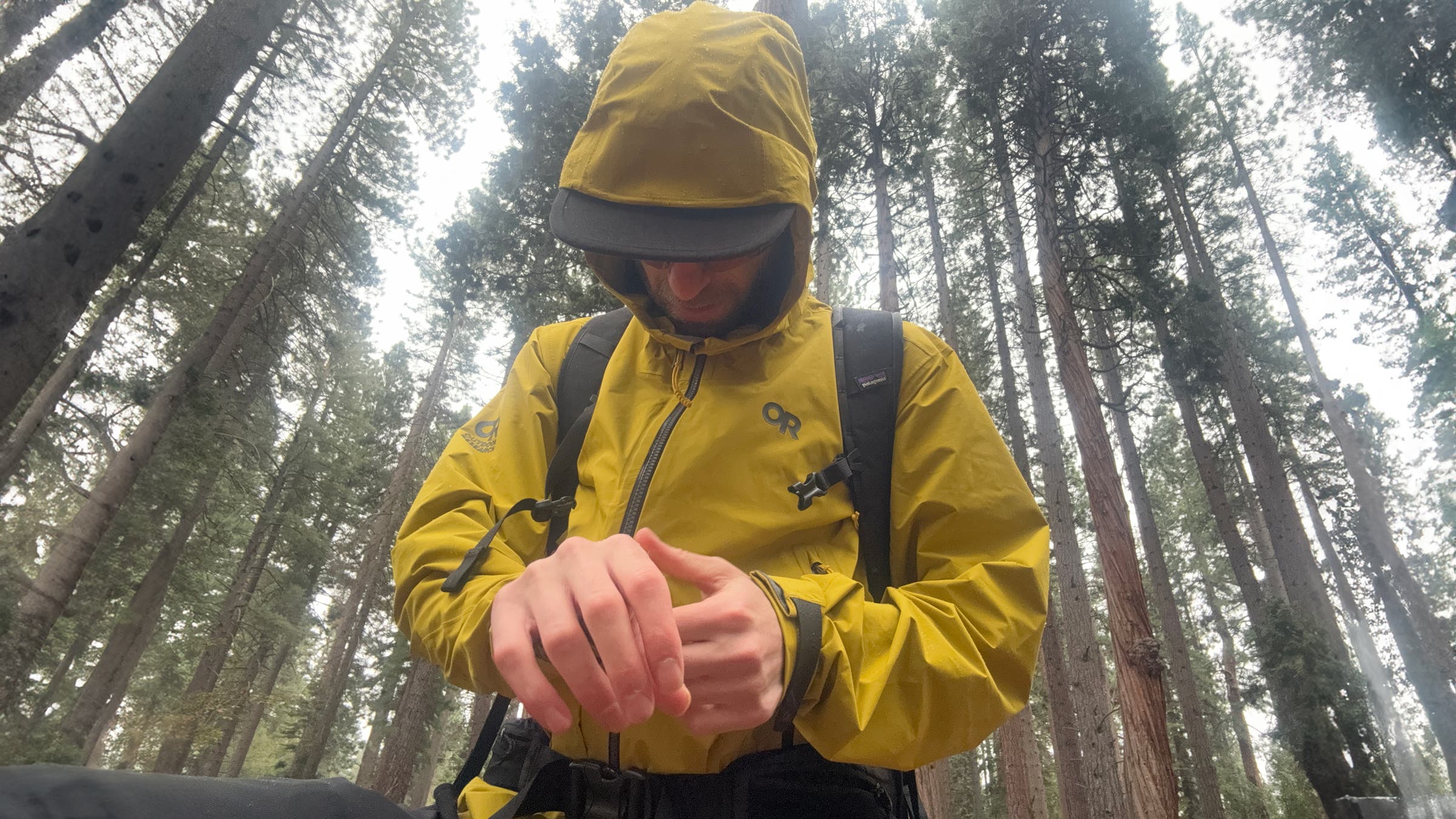
A mountain guide tester who usually doesn’t trust lightweight shells took the SkyChaser on hikes and backpacking trips in his home range of the Ozarks. He loved the waterproofing of the Pertex Shield Pro membrane, which kept him dry during Midwestern hailstorms and deluges. After logging a couple thousand feet of vert in heavy rain, he reported that he stayed warm, dry, and comfortable thanks to the SkyChaser’s moisture-mitigating underarm vents. Stretchiness was a “major selling point,” he reported, as the elasticity allowed for awkward reaches and unimpeded overhead moves while scrambling.
Unsurprisingly, the SkyChaser’s coated membrane isn’t as comfortable against the skin as three-layer options, especially if you’re perspiring heavily or rocking a t-shirt underneath. But that was a small ding for our test team, and the 2.5-layer design keeps both weight and price reasonable. “Every shell is a compromise, and OR nailed that compromise here,” said our Tahoe-based tester.
Best Ultralight
7mesh Guardian Air
Weight: 7 oz (M)
Sizes: XS-XXL
Pros and Cons
+ Ultralight
+ Solid feature set
+ Very waterproof
– No pit zips
– Expensive
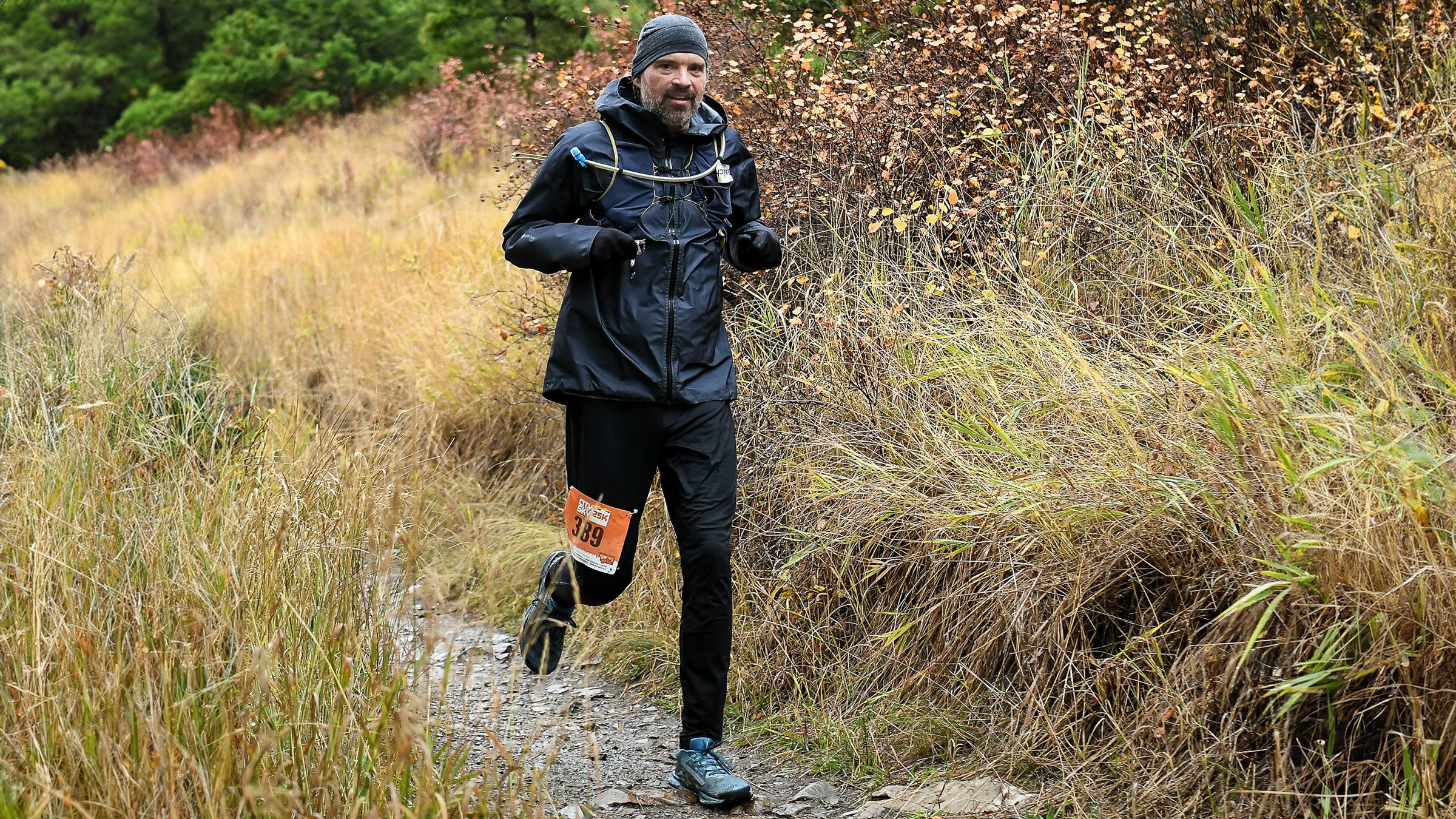
We’re all for gram-counting, but not at the expense of staying dry—we’ve been caught in squalls while testing gossamer shells that handle precipitation no better than lingerie. The Guardian Air jacket is a well-crafted compromise: it’s feathery enough (7 ounces) to still be considered “ultralight,” with robust weatherproofing that outperforms most competitors in its weight class.
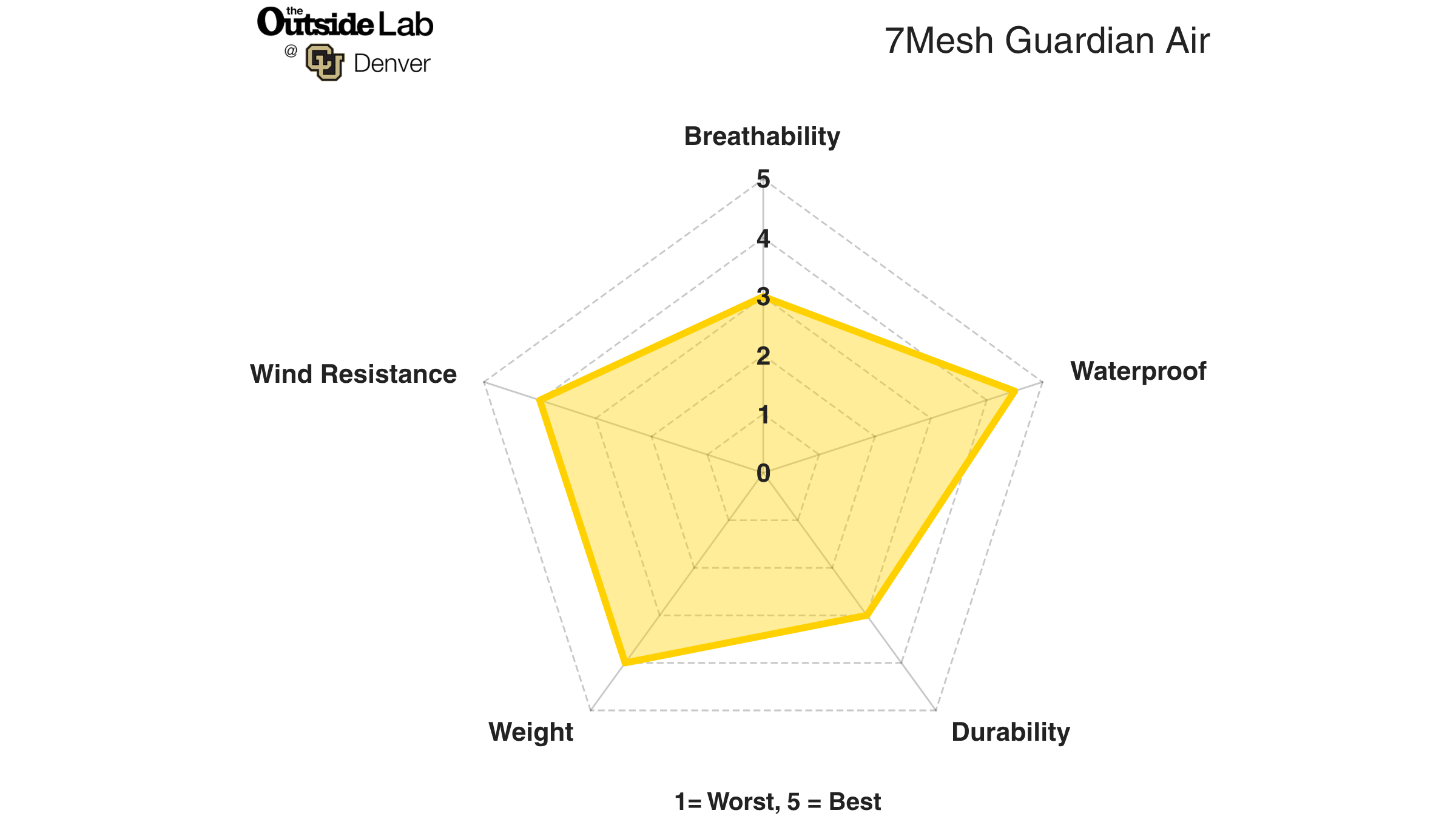
The Guardian Air features a Gore-Tex ePE membrane sandwiched between a 15-denier ripstop nylon exterior fabric and a C-knit recycled backer. “Weatherproofing was as good or better than any of the shells I’ve worn in this weight category over the past 20 years,” commented a Montana-based bikepacker and trail runner. In combination with a PFC-free DWR, the Guardian Air’s membrane kept him dry during wet runs and adventures in the Bitterroot and Lolo National Forests. Through a season of testing, we’ve found that this shell handles prolonged precipitation as well as heavier three-layer jackets, like the 15.2-ounce Montane Alta XT.
While the shell doesn’t feature pit zips—a common omission in the ultralight weight class—our Montana tester used the two-way front zip for ventilation, and was impressed by the jacket’s moisture-wicking abilities. “I’ve owned plenty of lightweight shells that feel like running in a garbage bag, and did not feel that way in this shell.” Our tester reached the jacket’s limit during a three-hour trail race with 2,650 vertical feet of gain in heavy rain—not bad for a pitless jacket.
Unsurprisingly, the 15-denier fabric isn’t the most durable alpine armor in this guide—it’s thin and lightweight, especially compared to more durable rain shells like the 50-denier Patagonia Torrentshell. But usual wear-and-tear from backpack straps and running vests caused no abrasion issues over a fall and winter of heavy use. “Considering the amount of use, I’m surprised it still looks and feels brand new,” said one tester.
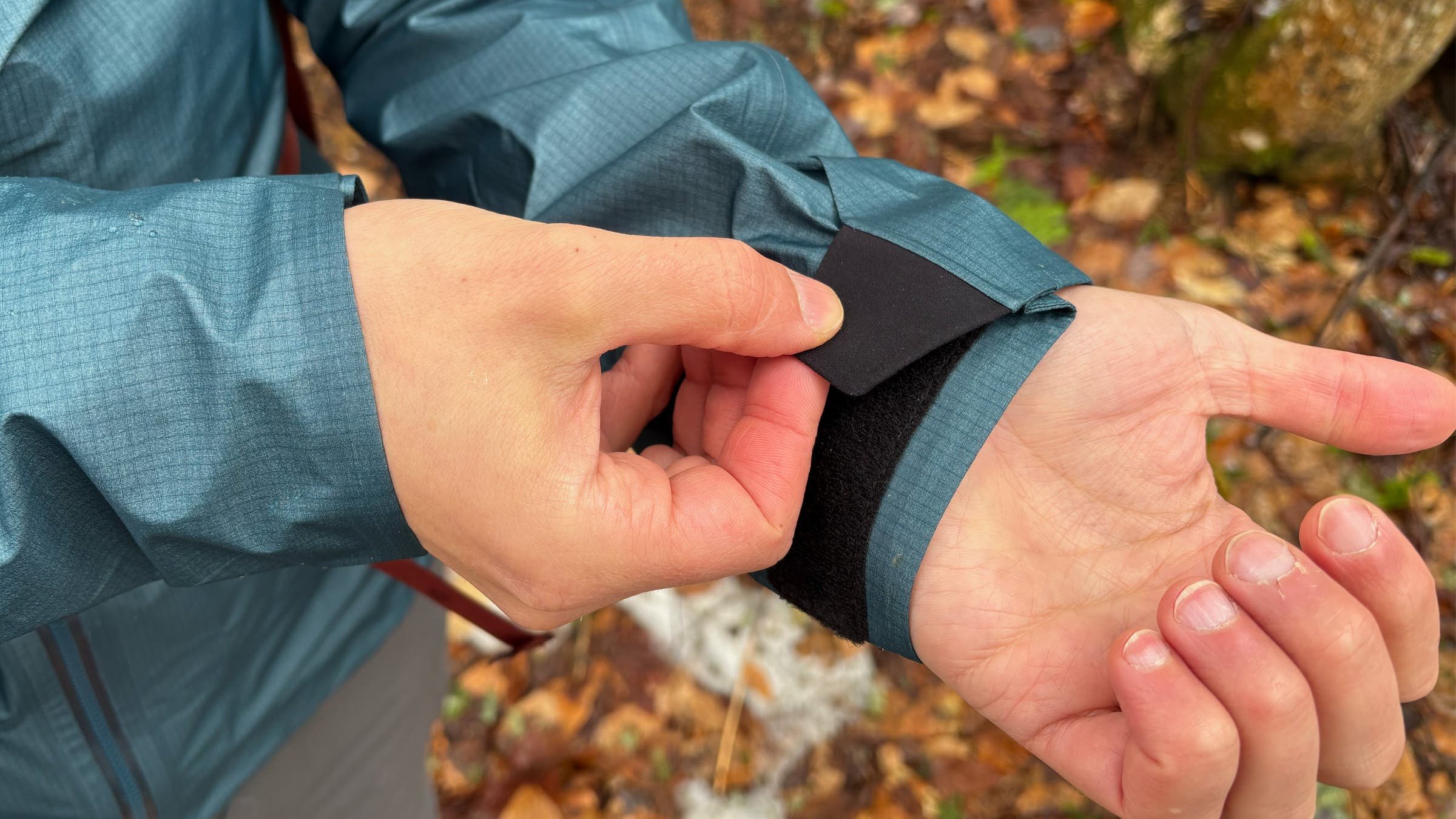
While minimal, the Guardian Air’s feature set is well-designed. Our testers loved the scaled-down, easy-to-operate Velcro cuffs, which were secure and prevented leakage. The simplified hood cinch system was extremely easy to use, while the hood itself is helmet-compatible and stashes into the collar in high winds. The entire jacket stuffs into the internal dump pocket, and packs down to the size of a small handlebar bag.
Apart from its top-shelf price point, there are few drawbacks to a jacket this light and waterproof. Yes, pit zips would help dump moisture, but the ultra Gore-Tex sandwich performs admirably while keeping weight down. For backpackers and trail runners who need a lightweight shell that’s actually waterproof, the Guardian Air is hard to beat. One fit note: this jacket runs large—our 6-foot, 165-pound tester rocked a medium and still had plenty of room to layer.
Best for Trail Running
Patagonia Storm Racer
Weight: 7.2 oz (M)
Sizes: XS-XL
Pros and Cons
+ Versatile
+ Lightweight for three-layer hardshell
– No pit zips
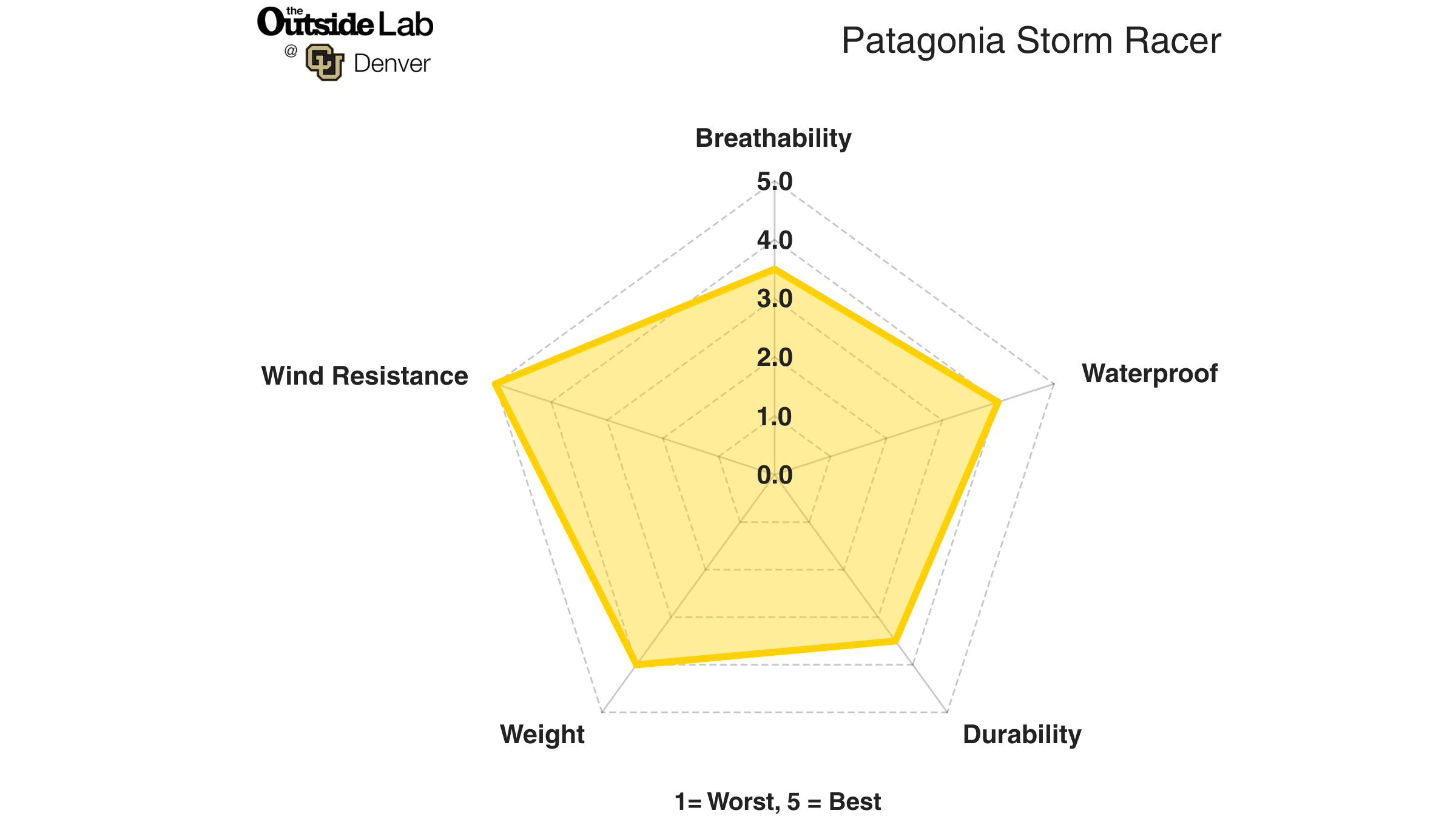
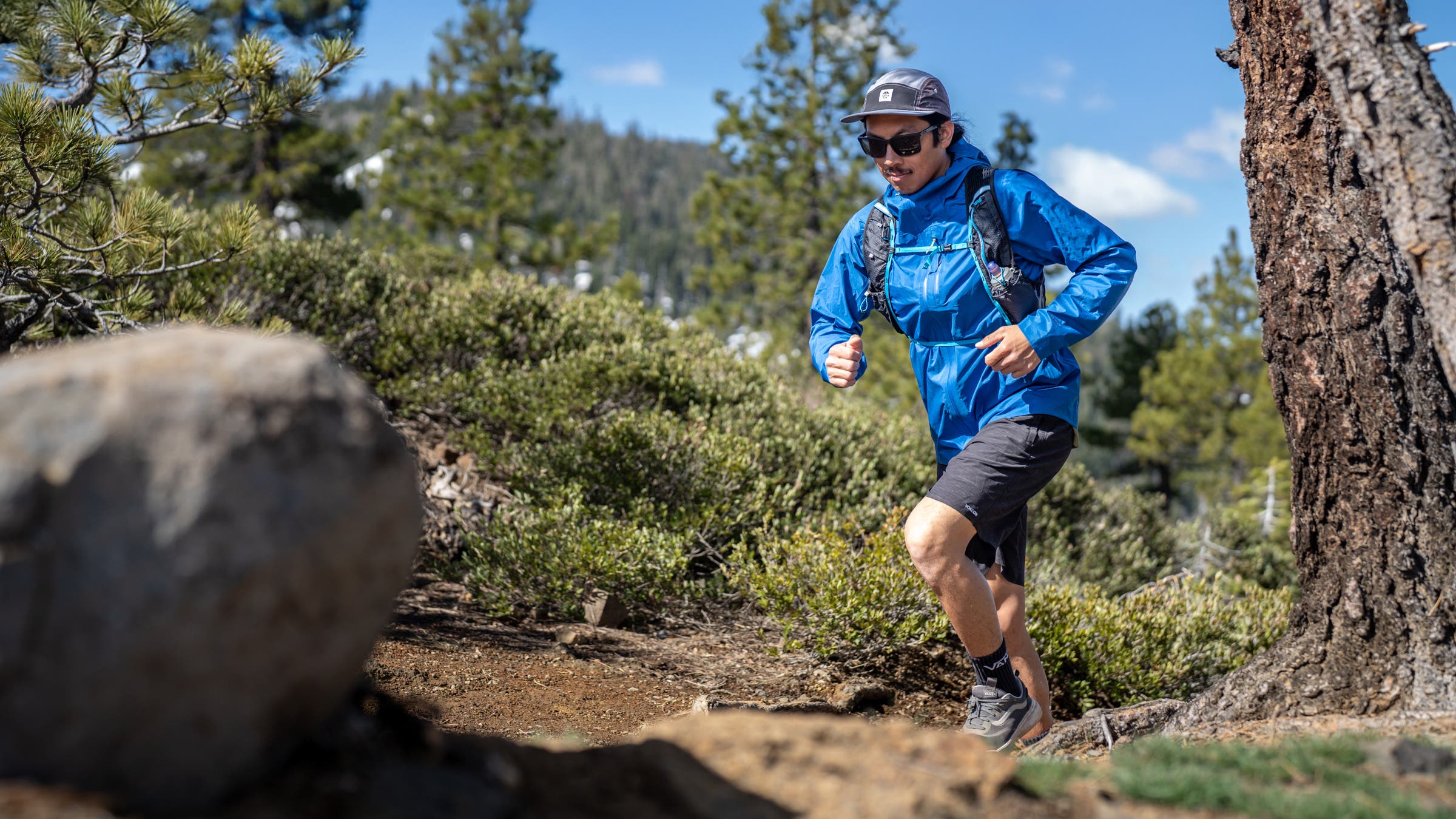
The most substantial layer in Patagonia’s trail-running line, the recently redesigned Storm Racer is a fully waterproof, three-layer shell that weighs under a half-pound in a size medium. In 2024, Patagonia reverted from a unique, vest-accommodating, dual-zippered design to a more standard front chest zip—a change that makes the shell more versatile and better-suited for additional pursuits, from backpacking and fly fishing to gravel biking and strolling around town. Another noteworthy update: The addition of a chest zip pocket, which fits a phone and pair of light gloves.
All testers appreciated the Storm Racer’s weatherproofing-to-weight ratio, especially compared with other running shells. One tester gushed that the 7.2-ounce men’s medium felt “almost weightless” whether it was stuffed in his pack or draped over his shoulders, and reported that the jacket packs down to the size of a hockey puck.
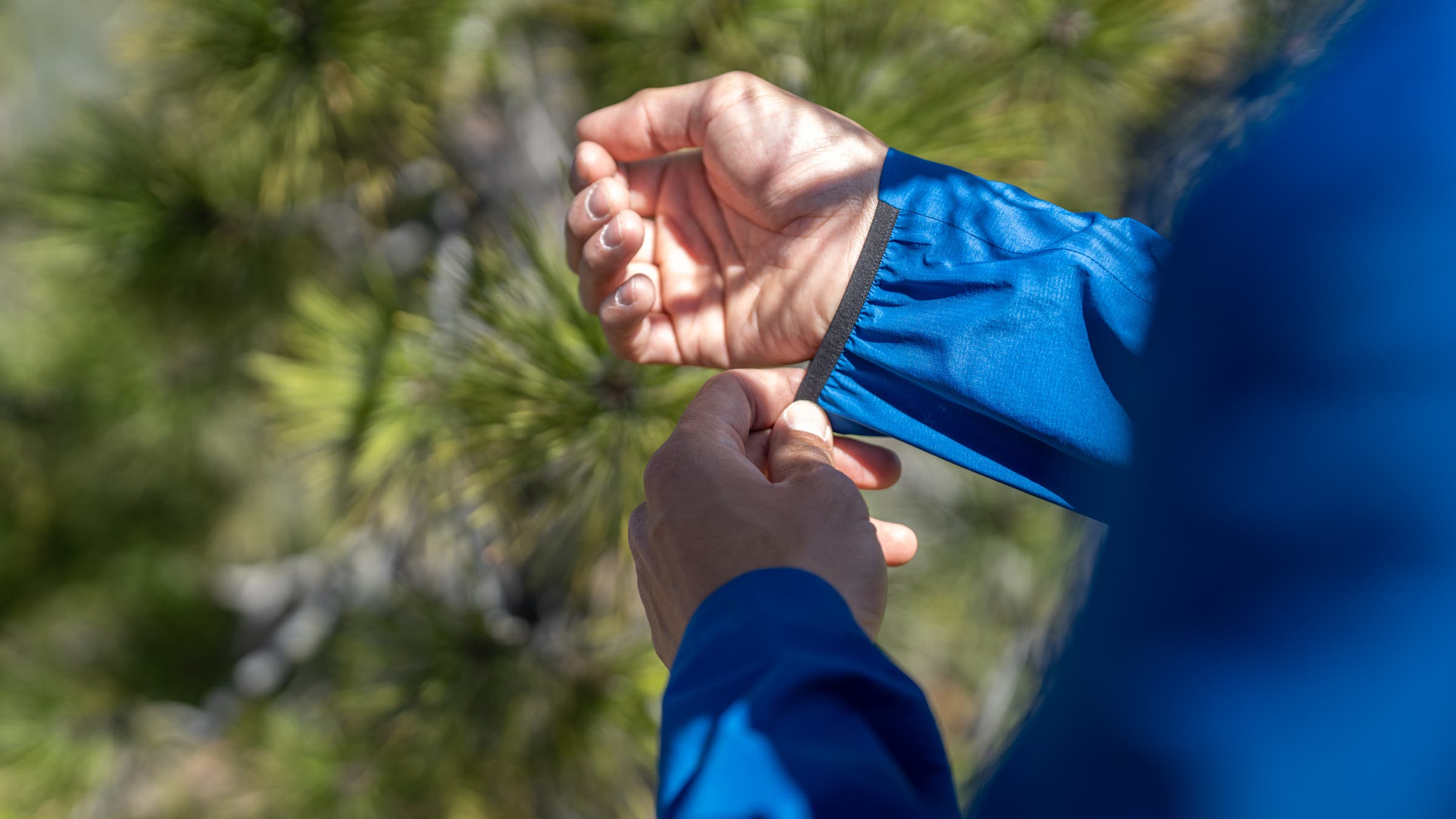
The current regular-zip version is slimmed down and intended to fit under a running vest, although one of our svelter testers did manage to pull it over his vest for drizzly trail runs in Tahoe.
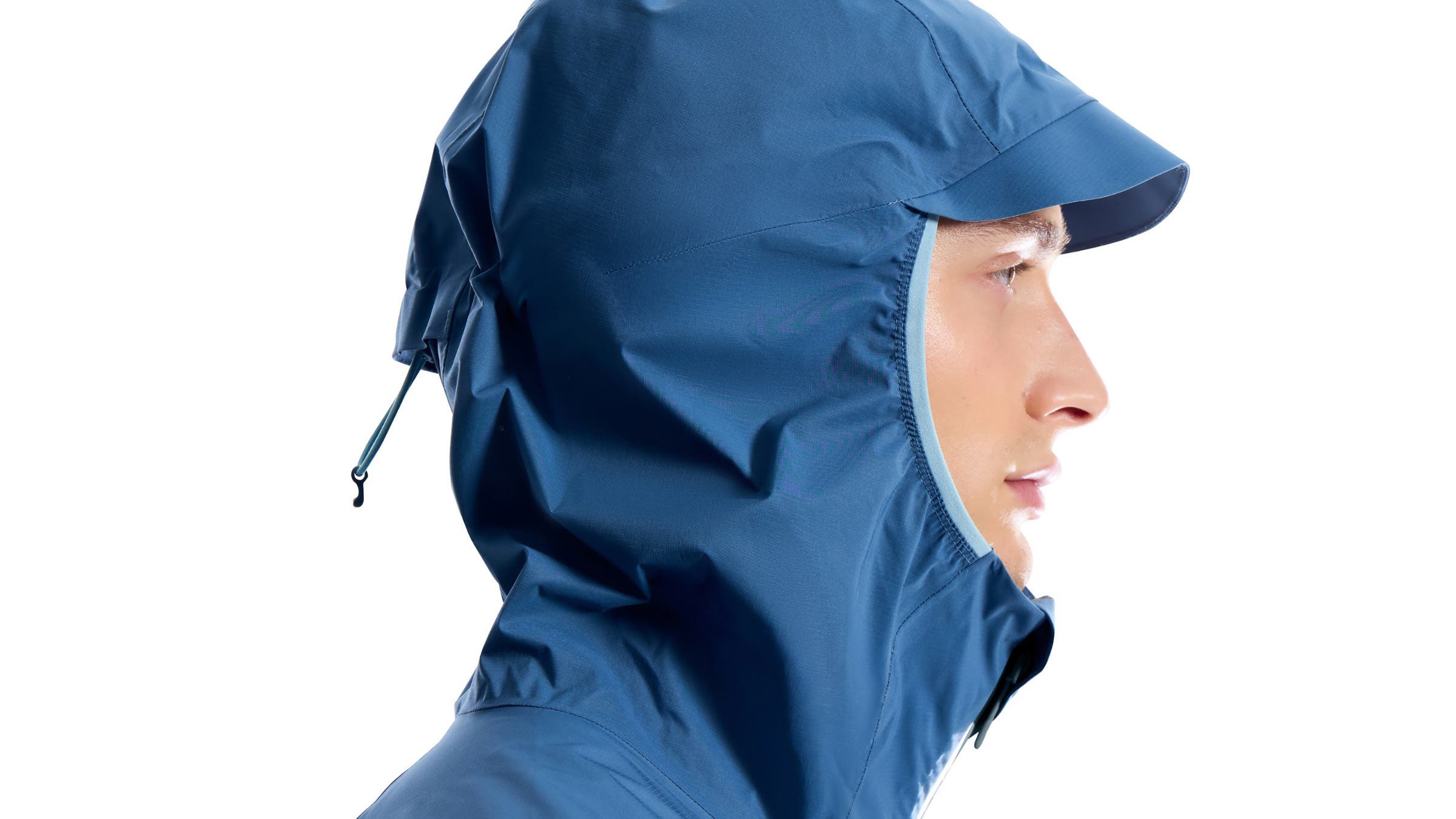
Unlike skimpier trail running shells, the H2No membrane and 20-denier nylon ripstop face fabric can actually handle extended soggy sojourns. The hood sports a pull-tab in the back, which I found easy to adjust while jogging on off-camber trails. Thanks to that adjustability and the structure of the fabric, the stiff hood provides reliable coverage during downpours. Breathability isn’t as compromised as you might expect, either. “It kept the rain out without locking the heat in, capturing the balance that every high-altitude runner seeks,” said one Colorado tester after running the famed Four-Pass Loop. Still, we wouldn’t mind the addition of pit zips, especially in a trail-running focused shell.
Paid Advertisement by Berghaus
Berghaus Rain-Motion Jacket
Full waterproofing meets serious breathability in the rain jacket designed to keep you dry without keeping you constrained. Built around a 3-layer Pertex®️ Shield construction it can withstand the wettest and wildest adventures, and the internal stormflap helps to cool you down when the effort ramps up. The stretch-bound hood, cuffs and hem are designed to let you move without restriction, and the cap-style hood keeps the elements off your face without sacrificing your field of vision, so you can push forward in even the harshest conditions.
Best Heavy-Duty Shell
Montane Alta XT
Weight: 15.2 oz (M)
Sizes: S-XXL
Pros and Cons
+ Exceptional weatherproofing
+ Tough and durable
+ Simple yet sufficient pocket configuration
– Not the lightest option
– Expensive
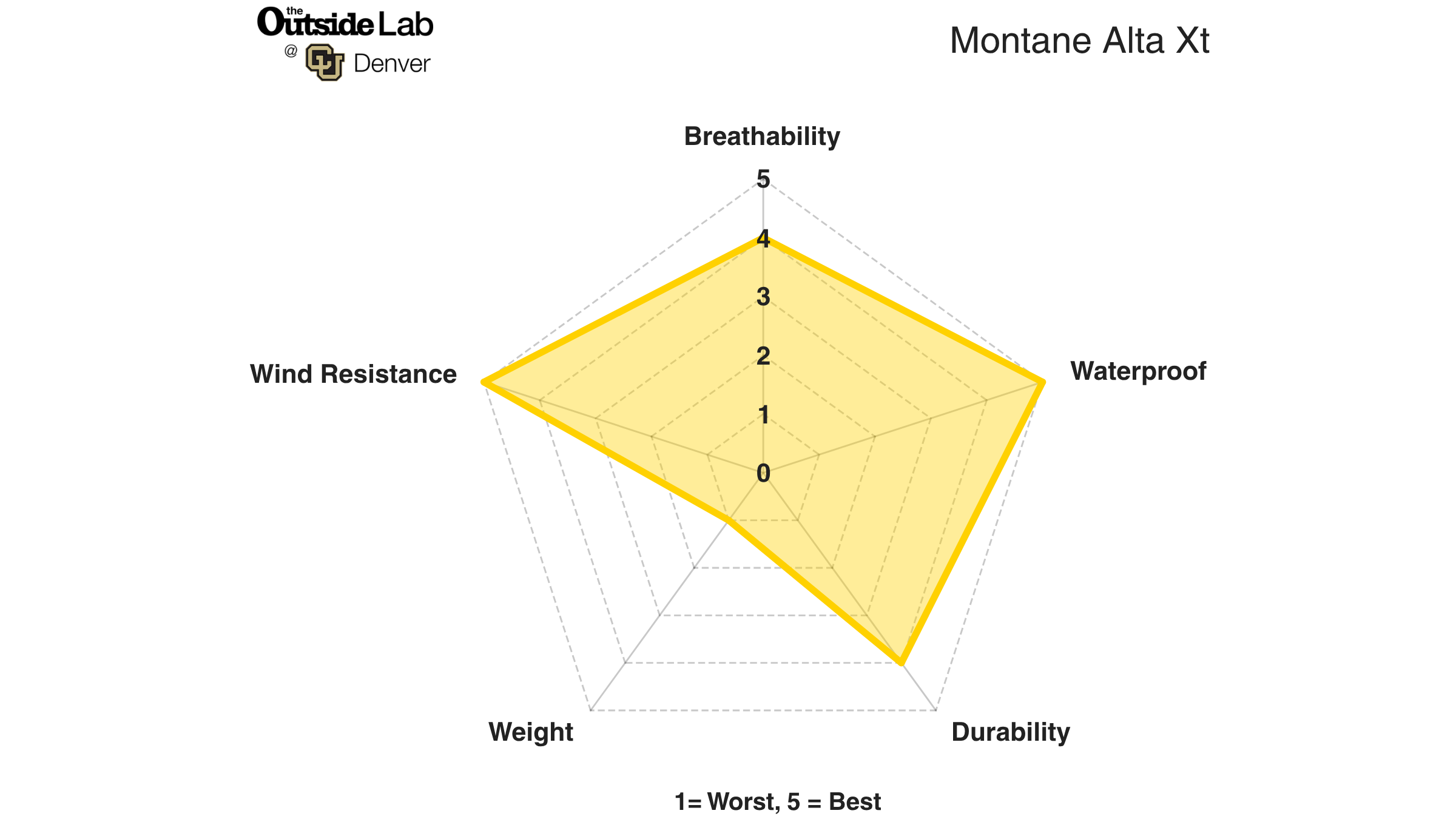
Tuned to the needs of alpinists and backcountry skiers, the Montane Alta XT is admittedly overkill for most summer hike and backpack applications. But for backpackers who hit the trail year round—and anyone who regularly spends long days in extreme weather—the Gore-Tex Pro shell is as good as it gets in terms of waterproofing and durability.
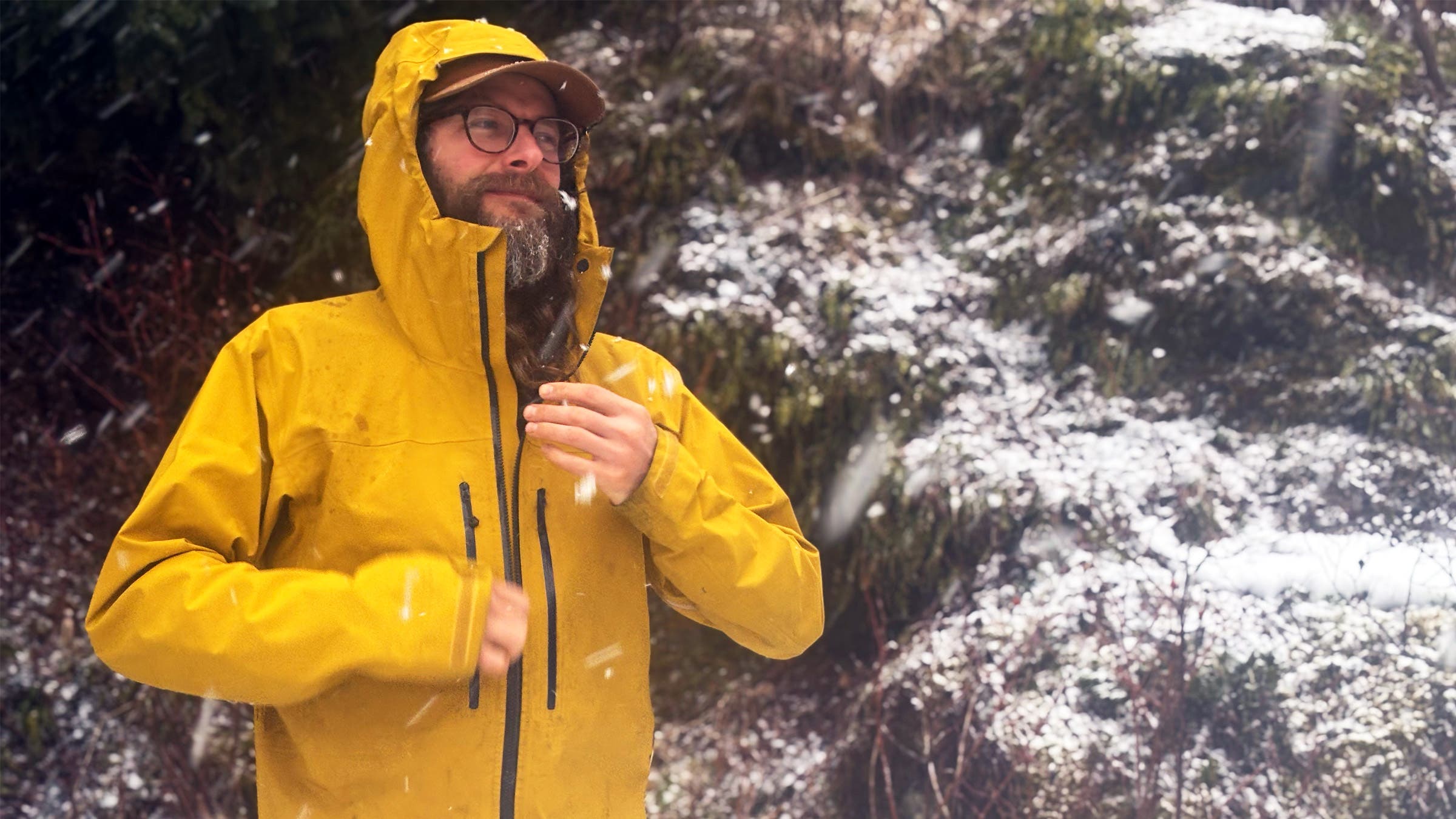
What stands out about the Alta XT is the fabric. A supple-yet-tough 70-denier face fabric and woven microgrid backer sandwich a best-in-class Gore-Tex ePE laminate, while bonded pockets and zippers and a front zip placket help fortify common weak points. Ryan Irvin, a multisport, mountain-loving tester based in Alaska, was impressed with the Montane shell after fall hikes, early winter ski tours, and snowmobile missions. But what truly secured the Alta XT top scores in the weatherproofing department was a two-week stint of construction work in Southeast Alaska. While Irvin laid 12,000 square feet of roofing, temperatures hovered in the mid-30s and one to two inches of monsoon-like rain fell each day. “In these absurd conditions, I noticed some face fabric soaking, but the laminate continued to do its job. Extremely protective,” he affirmed.
He found the membrane breathable, and with nearly 16-inch pit zips, he was able to manage moisture well, even during ski tours and steep hikes. The face fabric proved burly and snag-free, withstanding Alaska’s notorious alders and thick brush, as well as unforgiving metal roofing edges and sharp tools.
Irvin gave high marks to the Alta XT’s details, too. A tall, slender mountaineer with long arms, he called the dropped-hem silhouette a “good alpine cut that never felt claustrophobic,” noting the Alta XT felt equally comfortable with a t-shirt or a heavy puffy underneath it. (While wearing a t-shirt, he did note that the liner wasn’t as plush as some.) Easy-to-operate Velcro cuffs accommodated multiple glove sizes, and the long sleeves kept him dry, even when he was lifting his arms overhead. He gave kudos to the helmet-compatible hood, too, which features front and rear adjustment points and a flexible brim. A simple pocket configuration—dual harness- and pack-friendly chest pockets, an internal zippered chest pocket, and stretchy mesh dump pocket—also scored highly.
Testers had just two critiques. First, the Alta XT is quite expensive for a hardshell. Gram counters will also note that the jacket isn’t the lightest shell in this guide. But as Irvin noted: “You can get more uber-light, but not with the protection this shell offers.” An added bonus? The earthy mustard colorway we tested looked suave on Alaskan ridgelines and Anchorage city streets alike. Said Irvin: “I’ve never gotten so many compliments on a jacket before.”
Best Emergency Layer
Montane Featherlite Nano
Weight: 1.8 oz (M)
Sizes: XS-XXL
Pros and Cons
+ Ultralight
+ Surprisingly durable
+ Surprisingly weatherproof
– No hood or chest pocket
– Tight fit
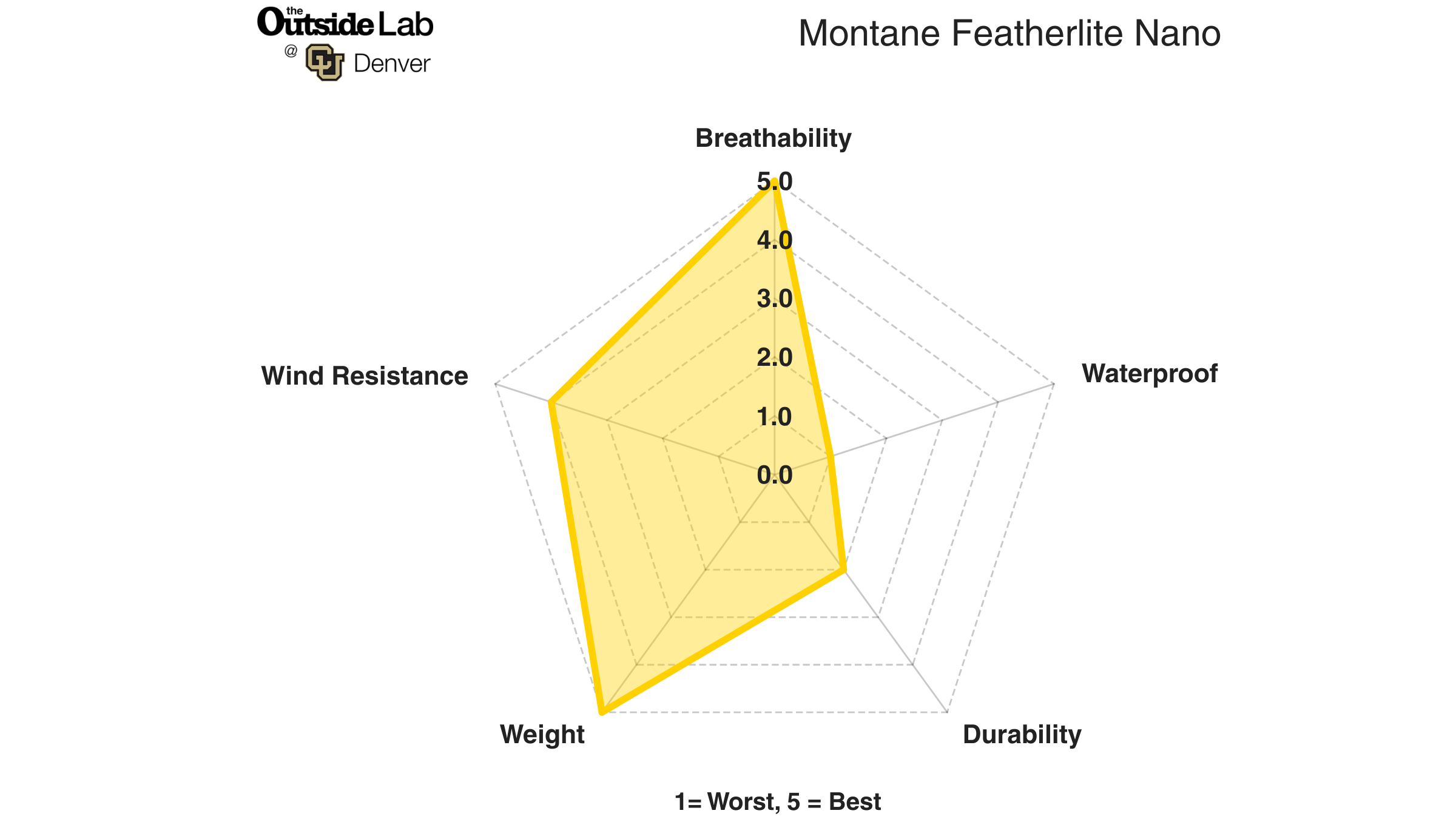
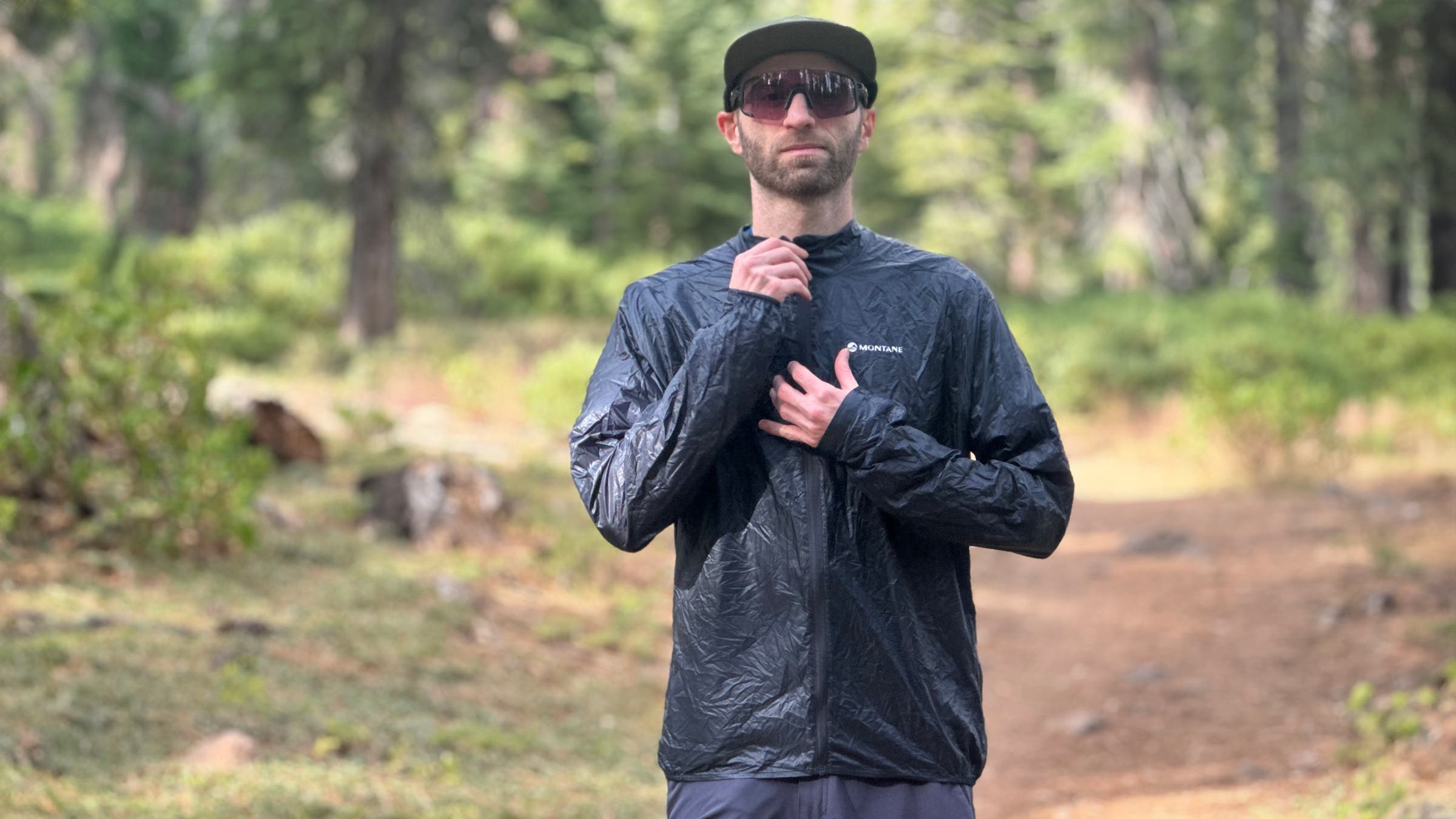
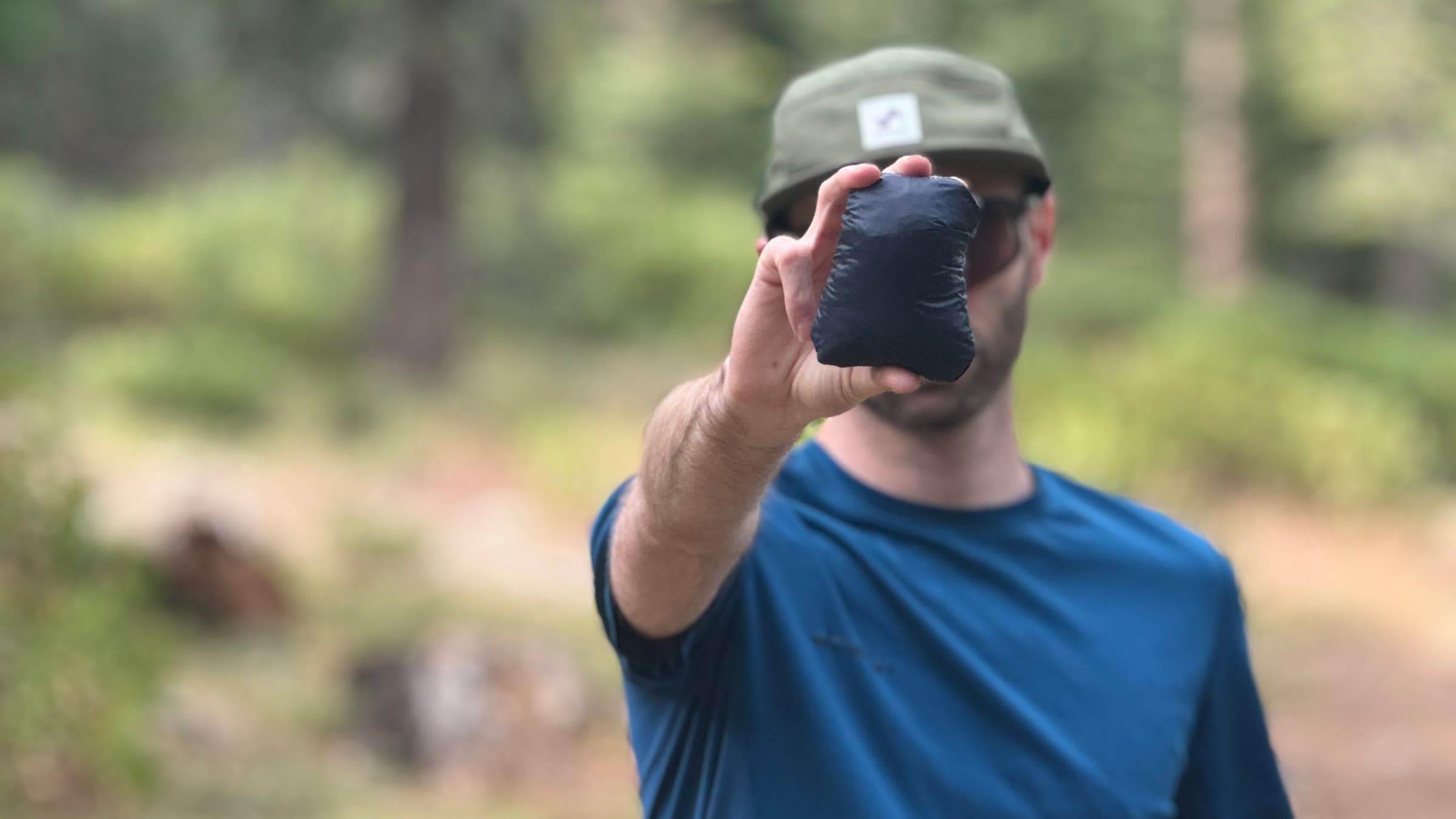
Montane’s Featherlite Nano is just a few grams heavier than the Crazy Jacket Fly, the lightest shell we’ve ever tested. While the bare-bones Nano doesn’t sport a hood like the Fly, the fabric is more durable and weatherproof, making it an attractive emergency layer. Smitten tester Jeff Schwartz, a Grand Canyon National Park backcountry ranger, called it “virtually weightless.” On a seemingly temperate day hike up Wyoming’s Medicine Bow Peak, Schwartz ditched a heavier shell and packed the baseball-sized Nano just in case. The Pertex Quantum 10-denier recycled nylon kept him dry when a 10 percent chance of rain turned into 100 percent during an intense downpour.
Breathability is exceptional, which Schwartz confirmed biking along the Grand Canyon’s South Rim—an adventure that resulted in him dubbing the Nano his “new favorite jacket for road biking.” More shockingly, he reported that the gossamer fabric emerged from three days of bushwacking and backpacking in Idaho’s Sawtooths completely unscathed. For the most part, Schwartz was content to jettison features for minimal weight and packability, but he did miss a chest pocket to house his tunes on trail runs. Lastly, he judged fit on the tight side—consider sizing up if you’re between sizes.
How to Choose a Rain Jacket
If we had to describe the perfect rain jacket, it’s one that can handle any adventure in every condition, from trail runs on breezy ridgetops to backpacking missions in snow and sleet. Unfortunately, the perfect shell doesn’t exist. Subsequently, if there’s one word to keep in mind when shopping for a shell jacket, it’s “compromise.” Here are the most important factors to keep in mind when deciding which features to prioritize.
Specialized Shells vs. All-Around Shells
Specialized shells that crush a particular type of condition or activity are woefully under-gunned—or over-gunned—for other types. For instance, a high-denier three-layer shell is overkill and too heavy for most hikes and backpacking trips. Vice versa, all-around shells that can handle multiple activity types are often not the best at those activities. The Helly Hansen Verglas 2.0, our favorite “quiver killer” shell, can handle ski tours and moderate hikes, but it’s not our favorite in either category.
Weight vs. Durability
Weight is another aspect that requires compromise. The lightest shells, like the Montane Featherlite Nano, sacrifice elements like durability (and/or waterproofing). Heavier shells like the Patagonia Torrentshell can scrape against rocks without worry, but it’s not breaking any records for weight.
Budget vs. Quality
Of course, compromise is also at play when it comes to budget. While we’ve included our top budget pick—the REI Rainier, which provides excellent protection at a $100 price point—you generally get what you pay for. If you’re buying a cheap shell, you may be making a compromise on performance, or at the very least, technical ability.
As you step into the realm of more technical, higher-quality three-layer fabrics (a sandwich of a bonded inner liner, waterproof and breathable membrane, and protective face fabric that’s widely accepted as the best armor in extreme conditions), expect to pay more. Case in point? Our favorite trail shell, the Montane Alta XT, which is seven times the price of the REI budget pick.
Waterproofing vs. Breathability
Waterproofing and breathability are discussed ad nauseam in shell jacket product descriptions and gear reviews because they’re some of the most critical elements. The best shell jackets will keep you dry from both precipitation and perspiration, and manufacturers use different semi-permeable membranes, most famously Gore-Tex, to defend against precip while allowing sweat to escape. Again, this comes down to compromise: more waterproofing comes at the cost of breathability, and vice versa.
Softshell vs. Hardshell Jackets
No discussion of waterproofing versus breathability is complete without touching on the designation between hardshell and softshell jackets. Hardshells are typically stiffer in hand, more waterproof, and less breathable. Softshells are, as the name suggests, softer to the touch, and they usually provide better active wicking, but are less trustworthy in serious precipitation. Oftentimes, hardshells are only deployed when weather rolls in, while softshells can be worn all day long because they’re more breathable. There are Pros and Cons to each, so we like to have both in our closet. That said, if you’re only going to get one shell, our recommendation is that it should be a hardshell, which is more adaptable year-round.
Compromising and the Art of the Quiver
If you’re a skier or snowboarder, mountain biker or surfer, fly fisherman or kayaker, you’re likely familiar with the art of the quiver. The average skier, for instance, may be content having one pair of all-mountain skis, but advanced skiers will often build a quiver of multiple pairs to better react to changing conditions and objectives. In addition to their all-mountain skis, they may have a pair for powder, a pair for the terrain park, and a pair for backcountry—you get the picture. The same concept can be applied to shell jackets.
If you’re a dedicated specialist, like a trail runner or a mountaineer, it makes sense to start with a specialized shell. But if you’re an indiscriminate outdoor enthusiast who bikes one weekend and hikes the next, it makes sense to start with an all-arounder, like the Helly Hansen Verglas 2.0. Then you can add specialists: an ultralight emergency layer like the Montane Featherlite Nano, or our top pick for trail runners, the Patagonia Storm Racer.
Final Tips for Shell Shopping
- When shopping for a shell, it’s important to keep fit and layering in mind. If you’re supporting your local gear shop and you plan to wear a puffy underneath your shell, bring your puffy with you when you shop.
- If you’re planning to use the shell while climbing or biking, make sure you try it on with a helmet.
- If you’re shopping online, shop from a place like REI or Backcountry that has a customer-friendly return policy.
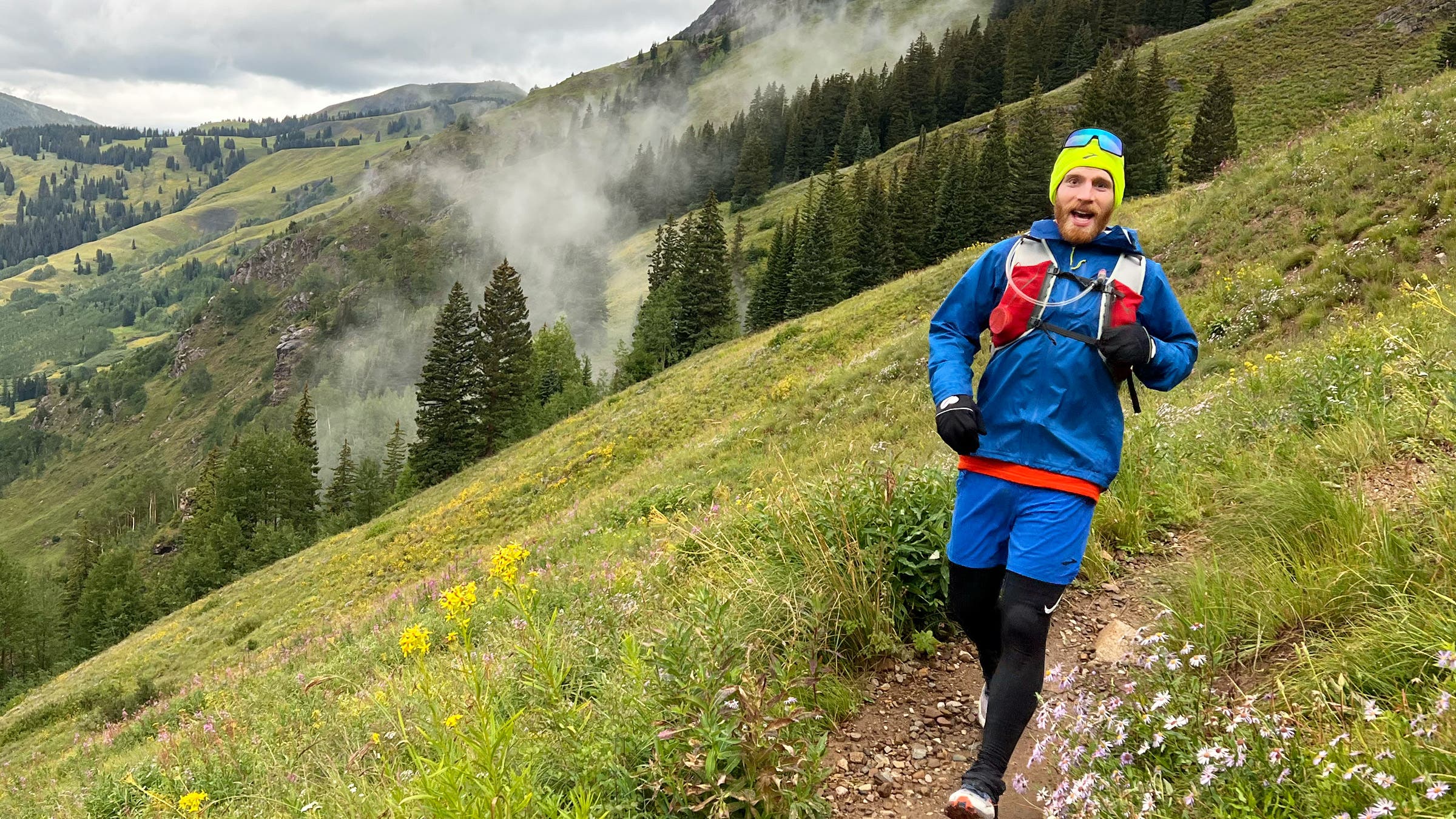
How We Test Men’s Rain Jackets in the Field
- Number of Testers: 40
- Number of Jackets: 69
- Highest Elevation Climbed: 14,344 feet on Colorado’s La Plata Peak
- Most Consecutive Days of Precipitation: 15 during a stretch of monsoon-like rain in Southeast Alaska
- Lowest Temperature: -5 degrees Fahrenheit, also in Southeast Alaska
- Fastest Wind Weathered: 60 mph
- Most Mushrooms Harvested: 2.5 pounds of chanterelles
- Most Wild Hogs Encountered: 8
- Stray dogs rescued: 1
- Most days spent splitting firewood while testing: 4
Last summer, we put the call out to brands big and small, asking them to submit their best rain jackets to our annual test. They ranged from ultralight trail running shells and emergency layers to heavy-duty softshells and three-layer armor better suited to alpine pursuits. We sent those rain shells out to a network of testers across the country. Testers ranged in age and location, from young whippersnappers in Tahoe to gray-bearded mountain men in Alaska. The most heavily represented hubs were Anchorage, Alaska, Salt Lake City, Utah, and Truckee, California.
Our testers used the shells during work trips, from a hut-keeper doing his morning chores in the Sierra to a kayak guide paddling along the coast of misty Maine. They also tested shells on regular adventures and daily outings, like a wet, foggy surf trip on the Northern California coast, muddy bike park laps at their local ski resorts, and a rainy trail run on Aspen’s famed Four Pass Loop.
After putting shells through the wringer, we asked testers to fill out detailed review forms. They scored shells quantitatively on aspects like durability, waterproofing, and breathability. Then, they answered in-depth, qualitative questions. Afterwards, I sifted through the review forms and tested top contenders myself. Finally, we compared the newest batch of jackets to our tried-and-tested favorites.
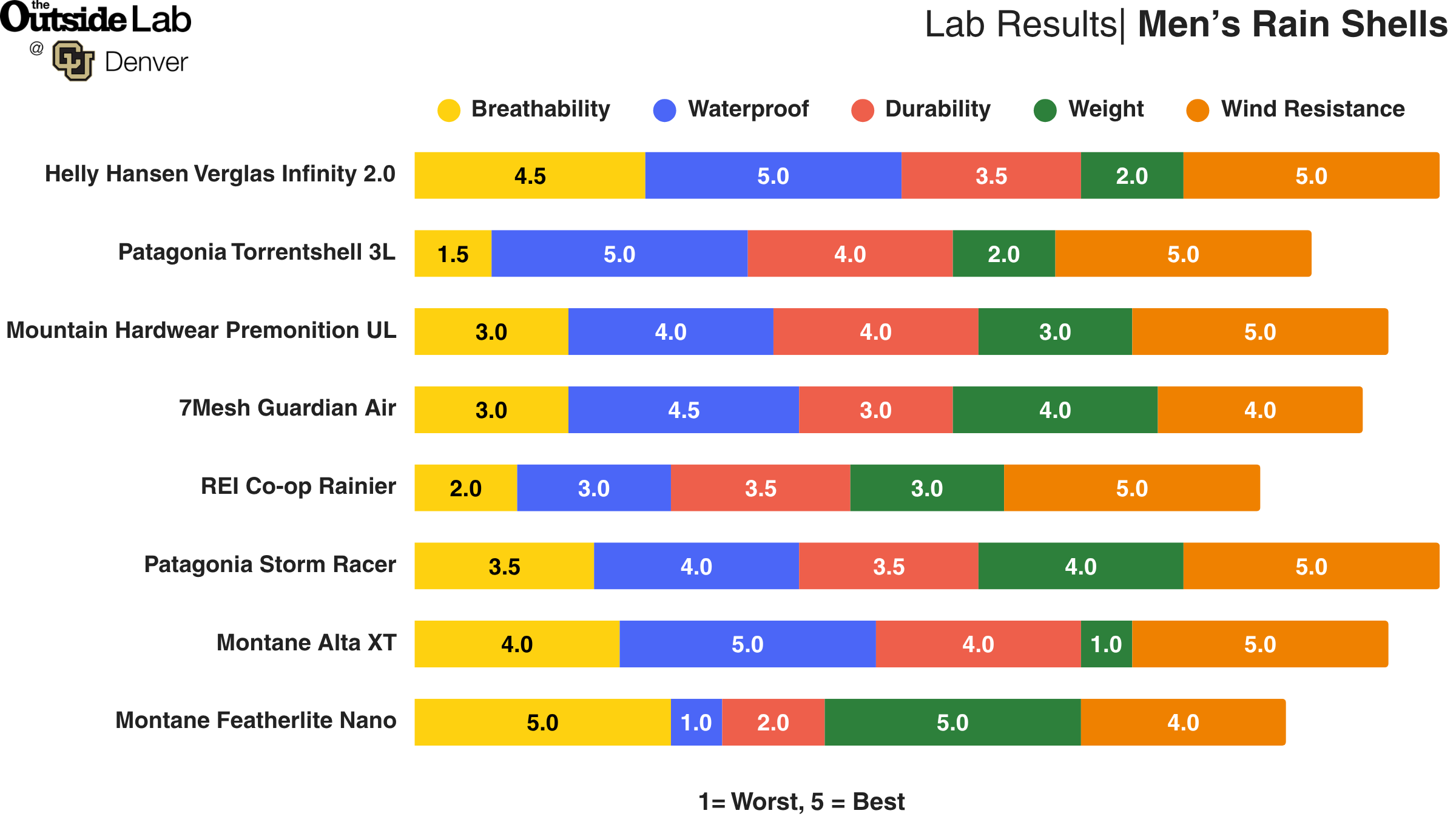
How We Test Men’s Rain Jackets in the Outside Lab
Want to learn more about the Outside Lab at CU Denver? Check out our deep-dive.
Waterproofness (Hydrostatic Head Pressure)
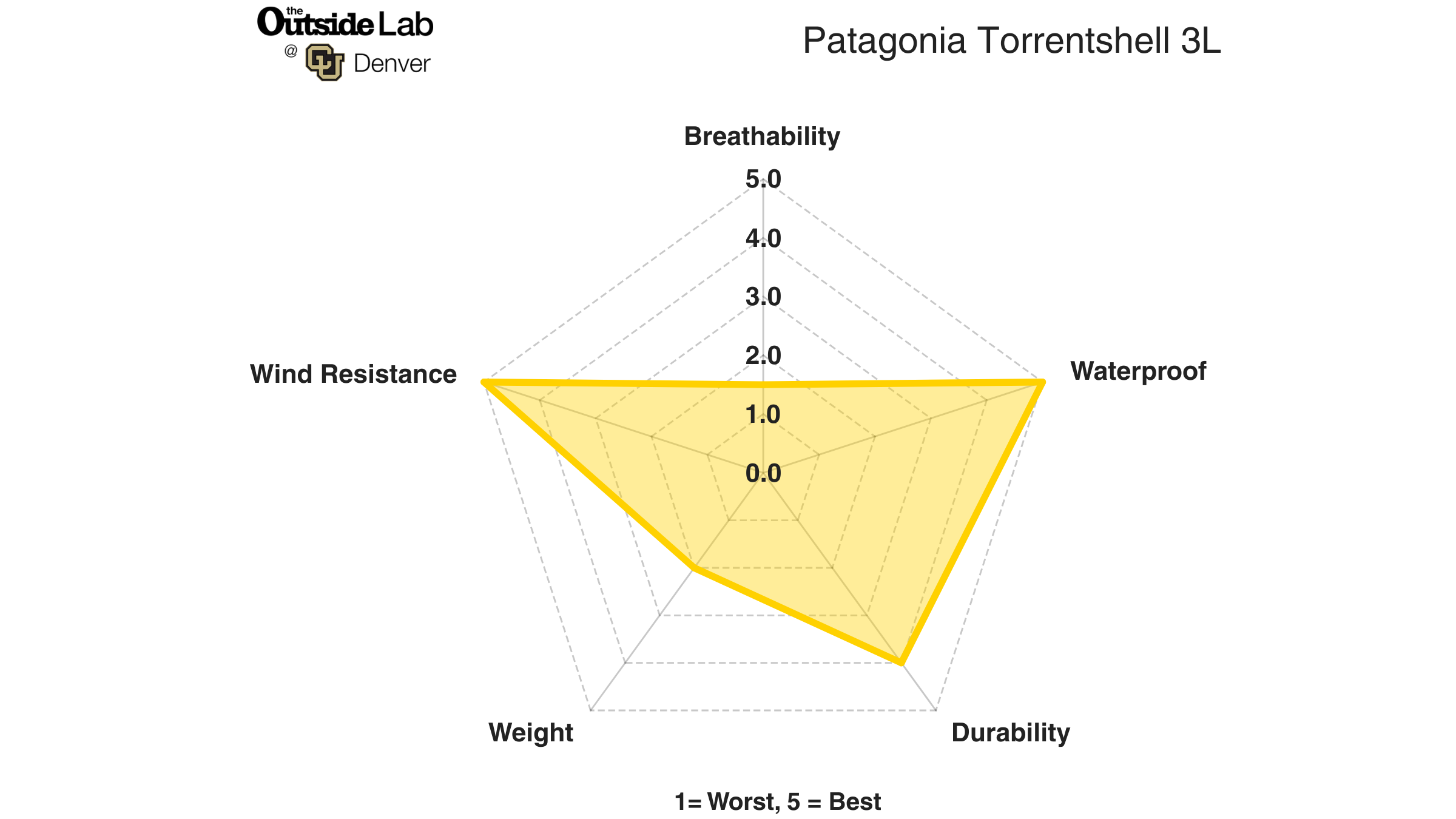
In the Outside Lab at CU Denver, we test waterproofness using a hydrostatic head pressure machine—a standard piece of equipment used to rate waterproof fabrics with a score from 5K to 30K for jackets, typically. This method increases air pressure to push water through the shell until it permeates, giving you a result in thousands of millimeters of water (15,000 mm=15K). While this is a good, standardized method, it does come with a caveat: Rain shells aren’t typically under pressure, and that machine-generated pressure can cause lighter fabrics to burst before water penetration occurs, though this is rare. If a material bursts, a new sample is tested in a continuous rain shower for up to eight hours, inspecting for leaks every hour. The pressure at which the fabric burst is combined with the result of the shower test to give a waterproof score.
Samples were cut from each shell and tested in two scenarios: “New” condition and “Washed” condition. For the latter, we follow the label’s care instructions and clean the fabric swatch to see if performance drops. Using only the results from the rain shells in our test, a 1 to 5 scale was created (1=least waterproof, 5=most waterproof) and each jacket was given a score based on the combined performance from each condition.
Durability (Abrasion-Resistance)
To test shell durability, we used a Martindale abrasion machine, which rubs materials together to look at wear. We conducted six different test scenarios that included both wet (with constant soaking) and dry environments. Each abradent (thing rubbed against the shell fabric) was tested in each environment. Aggressive abrasive pads were used in some tests to accelerate wear mimicking “worst case scenario” situations, like squeezing through a tight slot canyon, scooting on rocks, and rough bushwhacking. Other tests pitted the jackets against materials they encounter on a regular basis: the mesh found on backpack straps and hip belts, or the shell material rubbing against itself, which mimics when your arms rub against the sides while hiking.
The tested samples were graded on a visual scale of 1 to 5, worst to best. Top performers with very little or no change to the material scored a 5, while samples that ripped or completely changed in appearance and feel received a score of 1. An overall score was calculated as the average from all 6 tests for each jacket.
Breathability
In reference to outerwear, breathability is defined as the movement of moisture vapor (sweat) through a material. To test breathability, we use a modified version of the standard ASTM “Cup Method,” which works by sealing a sample of the fabric over a bowl of 100-degree water (to simulate human body temperature) and placing it in a low-humidity environment. Moisture loss is recorded by measuring the bowl’s weight over a period of time. Two versions of the test were performed: Upright Cup and Inverted Cup—the latter to test breathability when the fabric is pinned against sweating skin or a deluge. The Upright Cup method leaves a small air gap between the water surface and fabric to simulate breathability in less extreme conditions.
It’s important to note that our test in the Outside Lab only accounts for the fabric itself, not taking into consideration the fit or venting of a jacket. Secondly, our test only evaluates moisture vapor transfer, which is the most important metric for standard waterproof-breathable layers, but can’t fully evaluate alternative waterproofing systems (while rare.) Rain shells were given a score on a scale of 1 to 5, least to most breathable, based on their average from the 2 tests.
Air Permeability (Wind Resistance)
Air permeability is a measure of how much air (in volume) is able to move through a fabric, which can also be looked at as “wind resistance” for rain shells. The more air-permeable, the more wind makes it through your jacket, potentially increasing the risk of hypothermia in the wrong circumstances. Air permeability is not the same as “breathability” which measures how much moisture vapor (created from sweat) moves through fabric. To test wind resistance, we use a James Heal AirPro, a machine that employs a vacuum pump to pull air through fabric clamped between plates with a controlled flow rate and pressure. Results graded on a scale of 1 to 5, worst to best. Note: most rain jackets perform very well with wind resistance given their construction—we’ve never tested a rain jacket that has significant air permeability.
Meet Our Testers
Drew Zieff
Drew Zieff is a Tahoe-based freelance writer and Backcountry Magazine’s Rider In Chief. He also writes for REI, Gear Junkie, and Forbes, among others. A regular Outside contributor, he heads up our snowboard gear coverage in the winter. In the summers, he covers men’s shells, car camping accessories, and car camping kitchen gear. To test, he explores his backyard, takes road trips in his custom-built Chevy Express, or ventures further afield.
Scott Simper
Scott Simper is a Utah-based, world-traveling director of photography. His resume is as impressive as it is broad: he’s climbed Everest twice, won the Banff Film Fest audience award a whopping three times, worked on Deadliest Catch, and added an Emmy to his shelf thanks to his work on NBC’s coverage of the 2011 Ironman World Championship. Simper put shells to the test in his backyard in Utah’s Wasatch, on both coasts during film projects in the Pacific Northwest’s Cascades and Maine’s North Woods, and abroad in Africa and New Zealand.
Chris Cloyd
Chris Cloyd is a June Lake, CA, based devotee of the Eastern Sierra and a longtime Outside snowboard tester. A former touring musician, professional ultra-runner, and physical trainer, Cloyd now spends his summers hut-keeping for the Truckee Donner Land Trust’s immaculate Frog Lake Backcountry Huts and directing the occasional trail race for the Donner Party Mountain Runners. He tested shells while hut-keeping at Frog Lake and scrambling ridges and rock high in the Sierra.
Related


