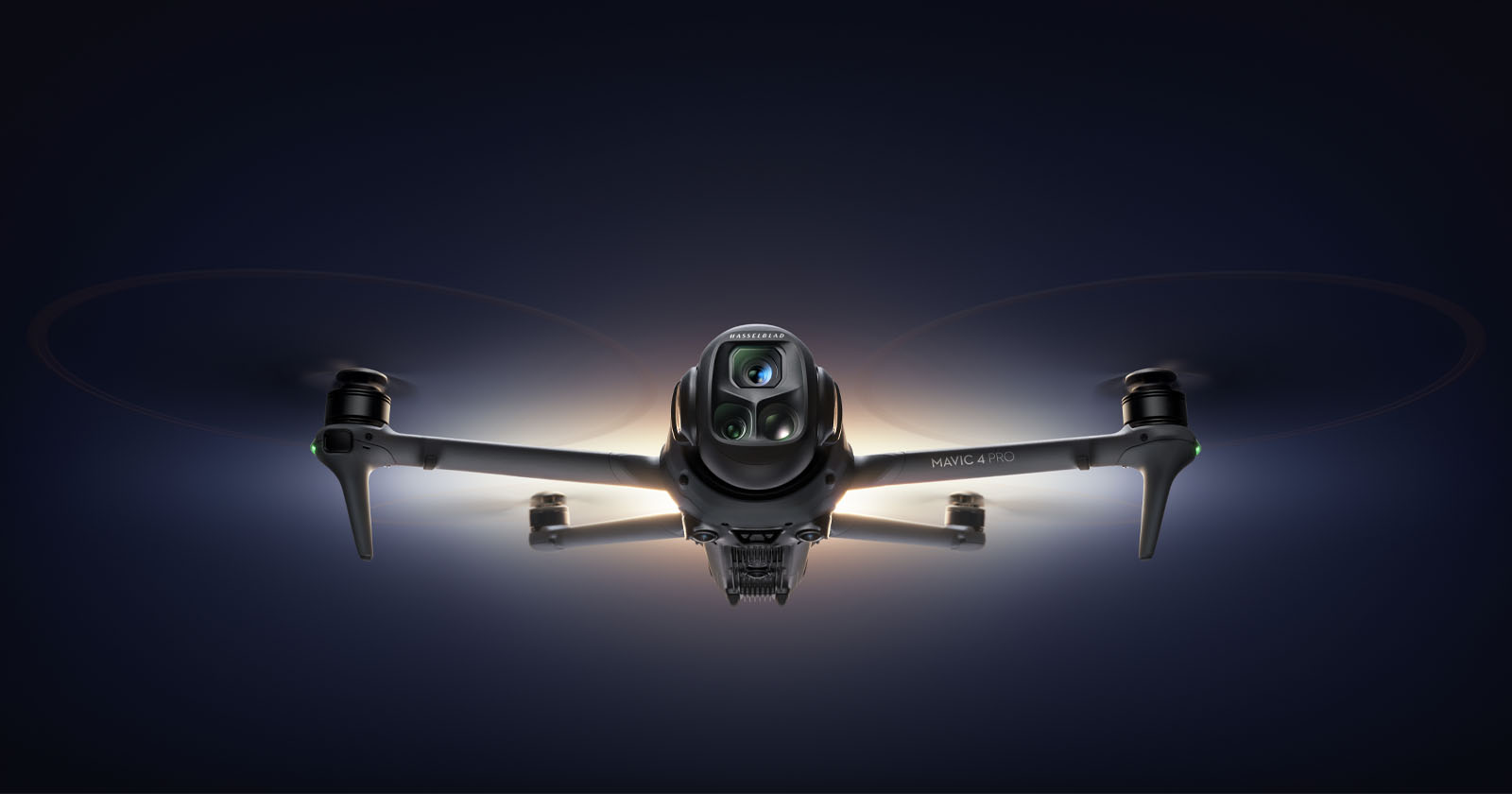
The Federal Communications Commission (FCC) recently proposed a law to ban the import and sale of some foreign-made drones with “military-grade” technology on “national security” grounds. During a public comment period, which ended last week, 3,824 comments were filed. 98.6% of the comments oppose the FCC’s rule as written.
Pilot Institute, an educational group that has helped over 450,000 people become airplane and drone pilots, has created a detailed online record of all 3,824 comments, including 202 verbatim quotes and analysis of every filer’s position on the FCC’s foreign-made drone ban.
“We did this because we train the people this rule actually lands on: the sheriff’s deputy flying a thermal camera on a night search, the farmer spraying their own fields, the one-person mapping business,” Greg Reverdiau of Pilot Institute tells PetaPixel.
“The record is damning: small businesses say they will close, public safety agencies say lives will be lost, and the agriculture sector says this will hit crops and yield,” Reverdiau continues.
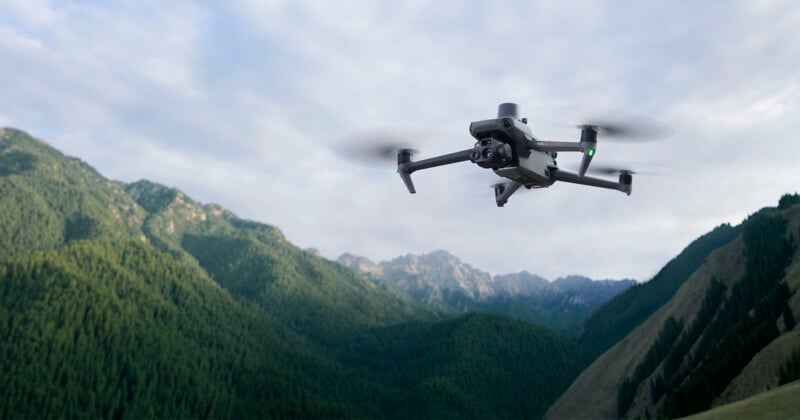
The FCC’s proposed rule targets “military-grade” drones, but the issue for many is that nearly every drone that is actually useful for anything falls under the federal government’s broad definition of what “military-grade” means. If a drone has a LiDAR sensor, it’s military-grade.
What makes this proposed law different from one the FCC proposed last year is that it would apply not only to new drones, but also to ones already on the market that were previously approved for sale and use in the United States.
As DJI told PetaPixel in July, this would make it very difficult, if not impossible, for Americans with previously approved drones to repair them.
The FCC says this proposed law will make the American public safer. Those who use drones, nearly all of which are foreign-made, to do things like search and rescue missions, industrial and agricultural inspections, and law enforcement surveillance overwhelmingly disagree.
Of the 1,584 filings that specifically addressed the FCC’s definition of a foreign-made military-grade drone, 99.4% said the definition went too far. Just four people said it didn’t go far enough.

Of 1,701 public comments that addressed the economic impact of the FCC’s drone ban, which the FCC itself said would be “relatively minor and contained,” only one comment agreed with the FCC. One.
The FCC argues that the national security goals of its very widely panned drone ban outweigh any potential costs. 98.5% of commenters disagree. 41% of filed comments believe the FCC’s drone ban will damage or destroy small businesses.
“Federal policy should address legitimate cybersecurity and national-security concerns while preserving proven public safety technology,” commented a member of the South Hadley Police Department in Massachusetts.
“Thermal imaging, LiDAR, autonomous flight, and docking capabilities are dual-use technologies employed every day for lawful, lifesaving, and distinctly nonmilitary purposes,” added the Ohio Chapter of the Law Enforcement Drone Association.
“We support Buy American. We do not support Buy American by market elimination,” wrote ANC Aerial, LLC.
“My opinion is the proposed regulation is like trying to use a sledgehammer to kill a fly,” commented Don’s Drones of Denver LLC.
One of the largest companies most affected by the FCC’s proposed foreign drone ban is DJI, which has been adamant that it is not a military company and does not pose any criminal or security threat to the United States.

“As the industry leader, DJI has advocated for an open, competitive market that benefits all US consumers and commercial users, and will continue to do so. DJI products are among the safest and most secure on the market, supported by years of reviews conducted by U.S. government agencies and independent third parties. Concerns about DJI’s data security have not been grounded in evidence and instead reflect protectionism, contrary to the principles of an open market,” DJI told PetaPixel last year as part of a much broader statement on the FCC’s decisions.
The FCC’s proposed military-grade drone restrictions are not yet in effect. It remains unknown what will happen, but one thing is clear: actual Americans overwhelmingly oppose the FCC’s proposed law as written. If the law is adopted, companies will have 180 days to stop importing and marketing affected drones.
Image creditsDJI, unless otherwise noted
Affiliate Disclosure PetaPixel articles may include affiliate links; we may earn a commission if you buy through one.


