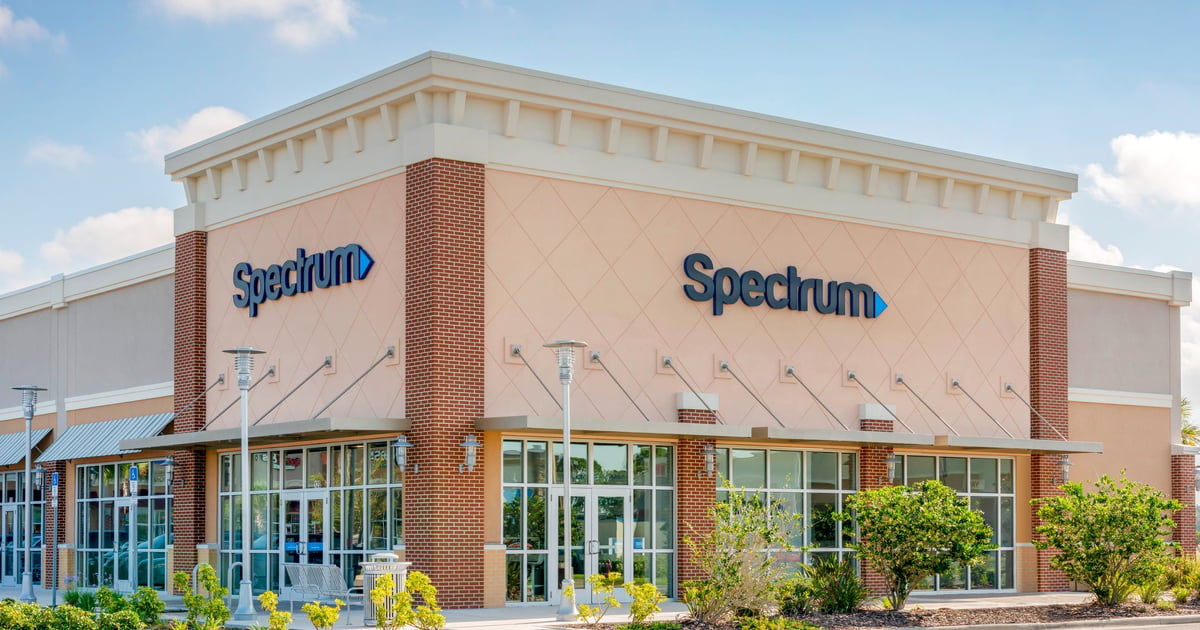
The recently closed merger of Charter Communications and Cox Communications is apparently delivering some early dividends. There’s been a “sales uplift” ahead of this week’s Spectrum rebrand and the introduction of new products and packaging in the former Cox Communications markets, Chris Winfrey, CEO of the newly combined companies, said last week at the Goldman Sachs Communacopia + Technology Conference.
With that uptick occurring late in the third quarter, Winfrey suggested that investors should not “take this for more than it is.” But he did say the sales rise came as the newly merged company started off by offering a free mobile line for a year, along with improved Internet pricing in the former Cox markets.
More is on the way amid this week’s “Spectrum Week” overhaul, as the former Cox markets are rebranded as Spectrum and customers there gain access to the pricing and packaging currently offered in the legacy Charter markets.
“I expect us to sell more and I expect us to have lower churn as a result,” Winfrey said. He also revealed that the company expects that operational expense synergies generated by the Cox-Charter merger will exceed $1 billion, up from an earlier estimate of $800 million.
That result is expected to include video as Charter starts to make the Xumo Stream Box the go-to device for new video subs in the former Cox areas and as the company starts to offer several ad-supported video streaming services, including Disney+, Peacock, Paramount+ and HBO Max, to pay-TV customers for no additional cost.
“I predict we’re going to grow video for a period of time in the former Cox markets simply because of the value and the utility that’s there and the low penetration that exists today,” Winfrey said. He noted video penetration in the former Cox footprint stands at just 10%.
Broadband subscriber growth remains the goal
But Winfrey also stressed that the goal there is not to grow video subscribers, but to use video to gain and retain broadband subscribers, much as it is also doing with mobile.
“We’re not in it for some Pyrrhic victory to go pound our chest on growing video,” Winfrey said. “It’s really about making sure that we and the programmers can do everything we can to support the ecosystem so we can support our broadband ecosystem.”
Winfrey also made it clear that fixing the broadband business represents the company’s greatest urgency.
“We’ve got to return to growth,” he said. “Everything that we do is really about prioritizing broadband growth … It’s not a north star; it is exactly what we have to do.”
One of the people he’ll be looking at to help Spectrum achieve it is Nick Jeffery. Jeffery, the former Vodafone and Frontier Communications exec, started as Spectrum’s COO on September 1.
“He’s going to move fairly quickly and we’re open-minded to do things differently, and I think we need to,” Winfrey said. “We’re impatient and that’s good. We want to do better now.”
Seeking an infrastructure edge
Winfrey also expanded a bit on Spectrum’s plans to take further advantage of its edge infrastructure for AI and other types of apps and services that require low latency and high bandwidth.
He estimated that Spectrum has more than 1,200 local edge data centers – largely former headends and hubs – that have been virtualized and are equipped with the space, cooling, fiber and backup power needed to support the strategy. Winfrey said there’s about 250 megawatts of capacity available across 600 of those data centers at current investment levels.
“We’re thinking about the right way to partner with other people to be able to … occupy that space in a way that provides the best ROI [return-on-investment] for the assets that we have,” Winfrey said.


