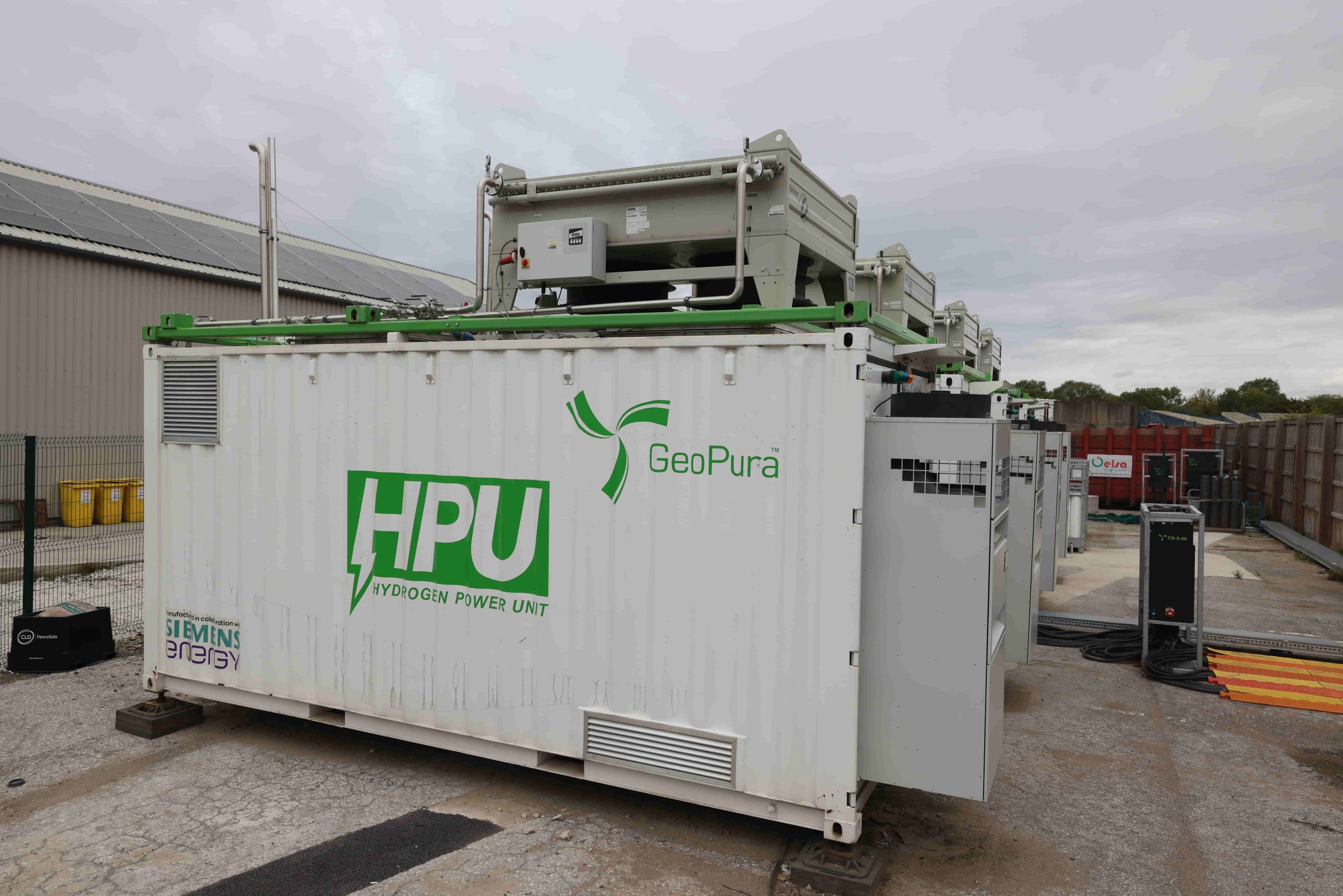


A recycling facility in Stockport has replaced two diesel generators with a combination of hydrogen power units, solar generation and grid electricity, in an attempt to meet peak power demand while reducing reliance on diesel.
Elsa Recycling, which processes plastic, cardboard and paper waste, has replaced two 400kVA diesel generators at its main facility in Greater Manchester with Hydrogen Power Units (HPUs) supplied by GeoPura.
Developed with renewable energy specialist Geo Green Power, the system integrates the HPUs with the site’s existing grid connection and solar generation.
Rather than using diesel generators when electricity demand exceeds the capacity available from the grid and solar installation, the system balances supply between the three sources. The hydrogen units provide additional electricity during periods of peak demand and continuous power for essential equipment.
The approach is intended to allow Elsa to make greater use of its existing grid capacity and on-site renewable generation without constraining production.
Recycling facilities can have substantial and fluctuating electricity requirements, with equipment such as balers, shredders and automated sorting systems contributing to peak loads. Electrification and increasing processing requirements can consequently present difficulties at sites where additional grid capacity is limited or expensive to obtain.
Elsa and GeoPura suggest the Stockport installation could provide a model for other recycling and industrial facilities facing similar constraints.
Gordon Anderson, head of development at Elsa Recycling, said the company’s challenge had been not simply to replace diesel but to accommodate growing electricity demand while making better use of its existing grid connection and investment in solar.
“Working with GeoPura and Geo Green Power has allowed us to create an integrated energy system that delivers reliable power exactly when we need it, without compromising production,” he said.
“We believe this is a model that many recycling facilities could adopt to reduce emissions while improving energy resilience and cost certainty.”
GeoPura’s HPUs use hydrogen in a fuel cell to generate electricity, rather than burning it in an engine. The company says the units can provide an alternative to diesel generators for temporary, supplementary or off-grid power applications.
Matt Barney, VP strategic partnerships at GeoPura, said the approach had potential for other recycling facilities and energy-intensive industrial sites.
“This model has enormous potential across the recycling sector and many other energy-intensive industries,” he said.
The companies say replacing the diesel generators is expected to reduce CO2 emissions and improve local air quality, although no estimate of the annual emissions saving was provided in the announcement.
Hydrogen’s putative low-carbon status obviously depends on the generation method used. GeoPura’s announcement describes the system as using “green hydrogen” units at the Stockport site.



