

The EU’s first full-scale CO₂ storage facility has entered commercial operation in Denmark, with initial capacity to permanently store up to 400,000 tonnes of CO₂ a year beneath the North Sea.1
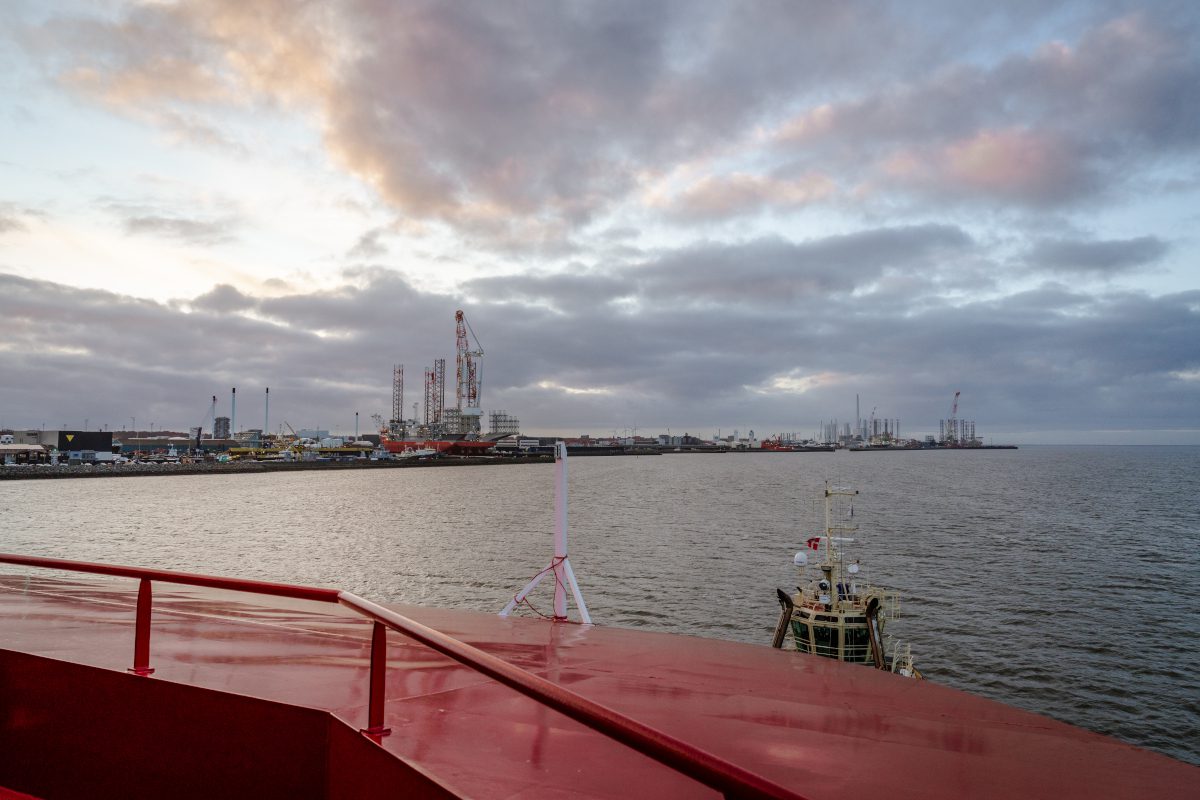
King Frederik X of Denmark officially opened the Greensand facility on 18 September at the Port of Esbjerg. The project is led by INEOS Energy in partnership with Harbour Energy and the Danish North Sea Fund (Nordsøfonden).2
The opening marks Greensand’s transition from demonstration project to commercial-scale operation. The project first injected CO₂ into the Nini West reservoir in 2023, demonstrating the cross-border transport and offshore storage of captured CO₂.3 In September 2024, the consortium announced that the pilot phase had been completed and independently verified, and outlined plans for a large-scale facility capable initially of storing up to 400,000 tonnes per year.4
In its first commercial phase, Greensand is expected to store up to 400,000 tonnes of CO₂ annually, with the developers identifying potential for capacity to increase to between 4 million and 8 million tonnes per year as demand and infrastructure develop.5
Initially, the CO₂ will come primarily from Danish biomethane plants rather than large industrial emitters. The captured CO₂ is liquefied and transported by road to a dedicated terminal at the Port of Esbjerg before being carried offshore by Carbon Destroyer 1, a purpose-built CO₂ carrier.6
It is then injected into the depleted Nini West oil reservoir, around 250 kilometres offshore and approximately 1,800 metres beneath the seabed, for permanent geological storage.7
The European Commission approved the proposed storage permit for Nini West in 2025. Documentation submitted for the project envisaged the injection of 2.4 million tonnes of CO₂ over an eight-year period beginning in 2026.8
David Bucknall, CEO of INEOS Energy, said the project brought the EU’s “first full-scale CO₂ storage site and value chain into operation”, providing infrastructure on which future carbon capture projects could build.9
INEOS chairman Sir Jim Ratcliffe said: “This is not a pilot project, a concept or a political ambition. It is a fully operational carbon transport and storage business. The technology works. The storage is ready. The challenge now is creating the right conditions for carbon capture to scale across Europe.”

The development comes as the EU seeks a substantial expansion in CO₂ transport and storage infrastructure to support the decarbonisation of industries where emissions are difficult to eliminate.
Under the EU’s Net-Zero Industry Act, the bloc is targeting at least 50 million tonnes of annual CO₂ injection capacity by 2030. The European Commission estimates that approximately 250 million tonnes of captured CO₂ could need to be permanently stored each year from 2040 to support the EU’s climate-neutrality objectives.10
Greensand’s initial 400,000-tonne capacity is equivalent to around 0.8% of the EU’s 2030 injection-capacity target, illustrating the scale of additional infrastructure that would be required over the remainder of the decade.11
The Commission says three CO₂ storage sites in the EU have already been permitted and another seven are in the permitting process, with dozens of projects under development. It has nevertheless said additional projects, faster permitting and greater investment will be needed to reach the 2030 target.12
European Commissioner for Energy and Housing Dan Jørgensen described the Greensand opening as “an important milestone for Europe”, saying it demonstrated a move from CCS demonstration to deployment.13
While the initial Greensand volumes are principally biogenic CO₂, INEOS says the facility is intended eventually to receive captured emissions from industries elsewhere in Europe as industrial capture projects develop.14
Norway’s Northern Lights project began storing CO₂ in August 2025, making it an earlier European landmark in the development of commercial CO₂ storage, albeit outside the EU. Greensand is the first project of its scale to enter operation within the EU.15
Notes
[1] INEOS Energy, “INEOS opens the first full-scale CO₂ storage site in the EU”, 18 September 2026; [2] Ibid; [3] Envirotec, “Denmark’s first CCS facility is ready to receive CO2”, September 2024; [4] Ibid; [5] INEOS Energy, “INEOS opens the first full-scale CO₂ storage site in the EU”, 18 September 2026; [6] Ibid; [7] Ibid; [8] European Commission, Commission Opinion on the draft permit for the permanent storage of carbon dioxide in the Nini West depleted oil field, 19 November 2025; [9] INEOS Energy, “INEOS opens the first full-scale CO₂ storage site in the EU”, 18 September 2026; [10] European Commission, “The EU’s 2030 carbon storage target”. The Net-Zero Industry Act sets a target of at least 50 million tonnes of annual injection capacity by 2030; the Commission estimates approximately 250 million tonnes of CO₂ will need to be permanently stored annually from 2040; [11] Calculation based on Greensand’s stated initial capacity of 400,000 tonnes per year and the EU target of 50 million tonnes per year: 400,000 ÷ 50,000,000 = 0.8%; [12] European Commission, “The EU’s 2030 carbon storage target”; [13] INEOS Energy, “INEOS opens the first full-scale CO₂ storage site in the EU”, 18 September 2026; [14] Ibid; [15] Reuters, “INEOS says EU’s first full-scale carbon storage project to start operating”, 18 September 2026



