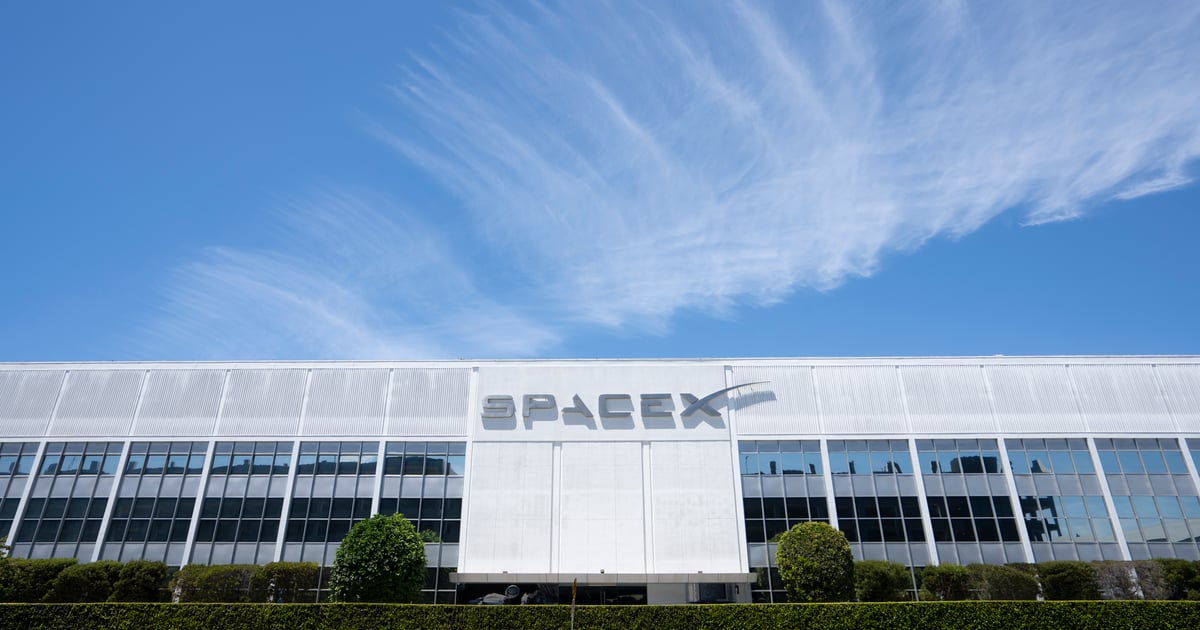
SpaceX is continuing to pursue its case with the FCC that the proliferation of low-Earth orbit (LEO) satellite service renders rural broadband subsidies obsolete, while depicting the opposing arguments of “subsidy-dependent incumbents” as “unfounded” and “implausible.”
The company’s most recent remarks on the matter came in the form of reply comments to the FCC’s proceeding on modernizing High-Cost, a program operated under the Universal Service Fund (USF) that helps subsidize telecom network deployment and maintenance in rural areas. Initial comments were due on August 4, with reply comments due September 3.
SpaceX had previously filed initial comments on the High-Cost modernization proceeding in August, urging the FCC to “wind down and sunset” the funds, saying they have “outlived their purpose” in an era of ubiquitous LEO access.
The idea that the widespread availability of satellite service should render High-Cost obsolete was not well received by industry groups representing terrestrial service providers in rural communities, which broadly argued that LEO operators cannot meet the universal service standards set out in Section 254 of the Telecommunications Act. Groups like NTCA–The Rural Broadband Association and USTelecom pointed to satellite’s inconsistent performance, lack of voice services and fiber broadband’s long-term superiority.
‘Unfounded’
Taking aim at those and similar arguments, SpaceX in its reply comments this month lashed out at “subsidy-dependent incumbents” for their claims.
“Subsidy-dependent incumbents, apparently regarding this success as a threat, seek to manufacture complexity, delay action, and preserve an outdated corporate-welfare program. These incumbents’ rehashed attacks on alternative technologies like satellite broadband are unfounded and grow more implausible as these new technologies continue to scale,” said SpaceX in its September 3 filing.
In addition to arguing that the “Commission’s own data confirms that unsubsidized high-speed residential broadband is now effectively universally available,” SpaceX also pointed to the general availability of voice services and the FCC’s support of tech-neutral policies as reason to support its view that the fund should end.
“Voice service, another purported justification for retaining costly subsidies, is now a commoditized offering available to every American with a broadband connection via mobile and interconnected VoIP, and an overwhelming majority of Americans have already moved on from legacy switched voice services,” argued SpaceX. “Notwithstanding the incumbents’ efforts to overcomplicate this matter, the Commission’s longstanding support of technological neutrality and its policy limiting subsidies to locations that are not served by unsubsidized competitors compel the conclusion that High-Cost support should be retired.”
SpaceX also reiterated its argument that the FCC should divert existing High-Cost funds to a broadband affordability program.
“The Commission should freeze further reliance-based High-Cost investment, implement an orderly wind-down, and redirect scarce Universal Service resources toward affordability programs that actually help consumers. Broadband access is no longer the problem that needs solving; affordability is. Continuing to fund duplicative, commercially unsustainable networks while starving more effective programs is clearly contrary to the public interest,” said SpaceX.
A waste of prior funds
Still, other commenters added their voices to the chorus of those saying that it would be detrimental to abolish High-Cost and essentially tack a Mission Accomplished banner to a satellite dish (I’m paraphrasing).
In reply comments filed by the Wireless Internet Service Providers Association (WISPA), on September 3, the group argued that “LEO should be a limited option for locations where terrestrial deployment is demonstrably infeasible.”
WISPA specifically referenced and refuted SpaceX’s filing in its comments.
“SpaceX argues that next-generation satellite service is ubiquitously available throughout the United States and that continued subsidies where unsubsidized alternatives exist distort competition and waste limited resources. But broad availability does not establish that LEO provides qualifying, affordable, and sustainable service with sufficient capacity at every location. The record’s concerns regarding capacity, affordability, reliability, and other service characteristics therefore counsel against treating LEO availability alone as dispositive,” stated WISPA.
Meanwhile, a separate filing, from the National Tribal Telecommunications Association (NTTA), takes aim at the idea that LEO service renders high-cost support (HCS) unnecessary – citing the “well-documented problems with low-earth orbit (LEO) satellite service meeting universal service requirements and the service’s ability to deliver consistent service speeds and latencies” – while also pointing out that eliminating the fund would amount to wasting a whole lot of previously invested public dollars.
“Finally, to eliminate HCS, as some commenters recommended, completely ignores the fact that in most instances funding for the deployment of these networks was through federal and state sources. Once deployed, these networks, which to reiterate are operated in high-cost areas where an independent business case does not exist to provide service to everyone, will need ongoing sustainability funding to continue providing services at affordable rates. To eliminate HCS would then, in essence, ensure that previous funding is wasted,” said NTTA.


