
These board games are fun, engaging experiences that also happen to exemplify a specific game mechanic or play style. Their relative simplicity helps beginners learn basic board game concepts, and while they’re easy to learn, they’re still fun to master.
Tour our National Parks on your tabletop: Parks (2nd Edition)


Top pick
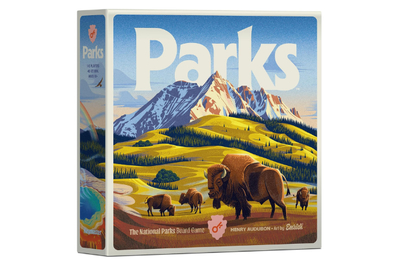
A simple worker placement game that brings nature’s beauty to the tabletop.
How it’s played: Parks is a worker placement and set collection game where you explore the wonders of the United States’ National Parks by moving your hikers down the trail and collecting resources, which you’ll spend to visit different parks.
You can also take photos along the way (earning a point per photo and a bonus if you take the most shots by the end of the round), and pursue passions that grant end-game bonuses or gear.
Your hikers can only land on a space occupied by another player’s hiker once per “season” (the game’s rounds) and the season ends once all but one player’s hikers have reached the end of the trail. Whoever has the most points after three seasons (and after all the end-game points have been doled out) wins.
Why it’s great: Like the bucolic parks that it’s themed around, Parks draws you in with pastel beauty. And despite its seemingly simple rules, it keeps you there by showcasing a surprising depth.
The setup makes you feel like you’re taking a casual stroll through nature, but optimizing your path and balancing getting resources with collecting parks is a satisfying mental workout — much the same way that a hike can be both relaxing and a vigorous workout.
There’s just enough player interaction — most of which comes in the form of blocking access to resources — that the game is engaging without boiling over into mean-spiritedness. And this recently released second edition adds some game modes that were previously only available as expansions, delivering more complexity and variety.
A rowdy racing game: Magical Athlete


Top pick
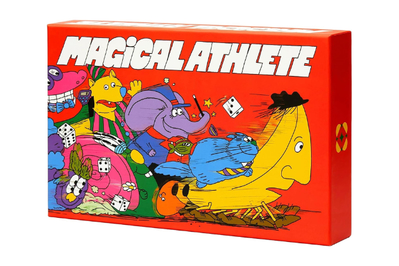
While the premise might seem basic, watching these wacky racers use their game-breaking powers during a race is tons of fun — even when you’re in last place.
How it’s played: Magical Athlete is a roll-and-move game that incorporates a bit of card drafting. At the start, you draft four racers from 36 options, each of which comes with a power that can turn the game on its head. For instance, the Banana racer trips anyone who passes by, the Flip Flop can choose to switch spaces with another racer, and Legs can simply choose to move five spaces instead of rolling a die.
Once every player has four racers, each secretly selects one of their four, and all reveal their choices at the same time. Those racers are placed on the starting square, and the race begins.
You roll a die, move your racer that number of spaces, activate any relevant powers, and then the next player goes. This continues until two racers have reached the finish line, and points are awarded for first and second place.
The game goes on like this until all four races are run, two on the basic course side of the board (the Mild Mile), and two on the more interesting course (the Wild Wilds). The latter includes spaces that have different consequences when racers land on them.
The player with the most points after all four races wins.
Why it’s great: This is a nonsense game. It takes one of the most rote and boring game mechanics — roll and move — and stacks so many weird twists on top that it quickly becomes a rollicking and rowdy mess.
That’s because it devolves into an exercise in ridiculous rule-parsing, as players try to figure out the cascading effects of the racers’ powers as they interact. As a result, Magical Athlete has a surprising amount of energy, and gives players more agency than I’d expect in a game that seems so straightforward.
Everyone — regardless of age — will have a good time, no matter where they place in the races. While there’s some strategy in drafting your racers and choosing when to deploy them, this is mostly a game about watching ridiculous powers bounce and rebound off each other.
- Players: two to six
- Duration: 30 to 45 minutes
- Rules: N/A
- Digital version: N/A
A satisfying, nature-centered puzzle: Cascadia


Top pick
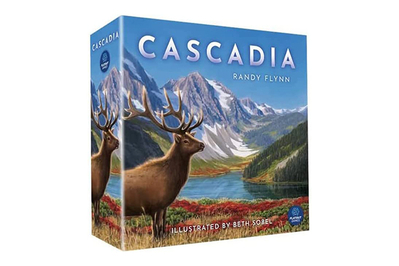
This relaxing game seems simple on its face but quickly becomes a tricky, interesting puzzle that’s entertaining to play with gamers of all experience levels.
How it’s played: Cascadia is a drafting puzzle game in which you work to build a perfectly functioning biome by pairing animals with their ideal habitats. But here’s the twist: Perfection in Cascadia is defined as specific patterns of animals—patterns that change from game to game.
To create those patterns, you draw one of four sets of randomly paired tiles and tokens from a common market on each turn. Each tile represents a certain kind of habitat (grassland, mountains, river, marsh, or forest), while the wooden tokens represent five types of animals (bears, elk, foxes, hawks, or salmon).
You earn points by arranging the animal tokens into the patterns you need to create. The game ends once each player has drawn and placed 20 tiles and tokens, and whoever has the highest score wins.
Why it’s great: We originally tested Cascadia for our guide to strategy games, but we found it to be more chill and less complicated than what most people look for in a strategy-heavy game. That doesn’t mean it’s shallow or simplistic, though, and it still involves some strategy. The tricky balance between planning ahead and executing that plan on the fly makes it remarkably satisfying when a tile-and-token combination that you need finally comes up.
Although Cascadia always presents you with interesting decisions, they’re rarely anxiety-inducing. During testing, every group we played with commented on how relaxing the game was—both in its theme and in how it calmly progresses as each player builds out their own little display.
Cascadia also comes with rules for a solo-gameplay mode, complete with campaign challenges that can make the original puzzle a bit deeper and more rewarding.
- Players: one to four
- Duration: 30 minutes
- Rules: PDF
- Digital version: Tabletopia
Fast-paced gem collecting: Splendor


Top pick
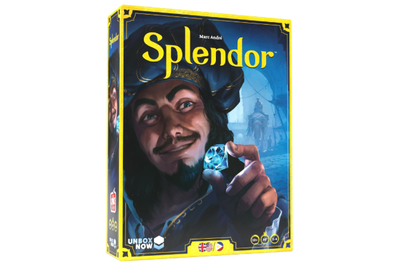
This gem-collecting game is easy to learn but requires enough strategy that it keeps players enthralled over multiple rounds.
How it’s played: Splendor is a Renaissance-themed engine-building game. Players act as gem merchants, using tokens to purchase gem cards and to attract the attention of nobles later in the game to gain even more points.
On their turn, each player chooses between drawing gem tokens, buying a card, or reserving a card for later purchase and taking a gold token. As players stockpile gem cards, they get discounts on other card purchases. The first player with 15 prestige points (earned by purchasing higher-level gem cards and winning over nobles) wins the game.
Why it’s great: Learning Splendor’s rules takes only about 15 minutes, which means you have more time to play several rounds—and you’ll want to. After we played Splendor with three new gamers, everyone requested it again.
Splendor isn’t as interactive as some of the other games we played, because players don’t share a board or have to barter with one another. But it was simple enough that we could chat with friends while playing and still pay attention to other people’s actions.
We enjoyed playing with the eye-catching gem coins and cards, and we appreciated that this game was easily portable for game nights or trips.
An intro-level strategy game: Carcassonne


Top pick
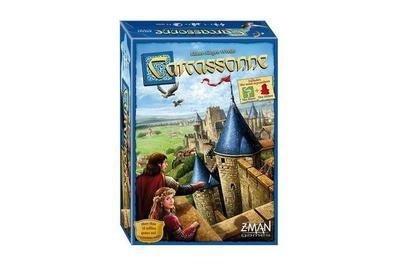
This strategic game of medieval city, road, and countryside building has easier rules and a shorter play time than Catan.
How it’s played: Carcassonne is a city-building area control game that involves strategically placing tiles and workers. It’s a little easier to learn than Catan, with light strategy and a shorter play time. On each turn, players draw and place a random tile to build medieval fortifications including roads, cities, cloisters, and farms, and they place their followers on those locations to gain points. Scoring depends on the size of completed developments with followers placed on them. The player with the most points at the end of the game wins.
Why it’s great: Since all players build the map together, Carcassonne is particularly interactive. The rulebook is easy to navigate for players of all skill levels—senior staff writer Doug Mahoney has played with his elementary-school-aged child, who had no problem catching on. Turns go quickly, and we enjoyed playing the game with three and five players. (We didn’t play it with two, the minimum it requires.)
Although developing a peaceful French countryside is a less-striking theme compared with those of some other games we tested, the included optional River and Abbot modes add complexity once you’ve mastered the basic game.
A standout train-themed game: Ticket to Ride


Top pick
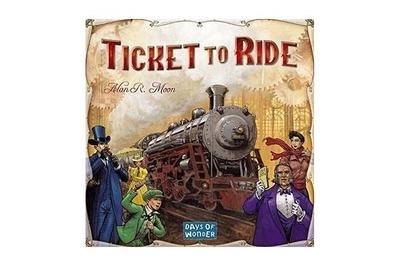
This simple-to-learn game challenges players to build the best train routes across North America, and it’s fun to play again and again.
How it’s played: Ticket to Ride is a train-themed, cross-country hand-management game. Players use cards to claim railroad routes and travel to cities across North America, and they gain points by connecting destinations and creating longer routes.
Players can cut each other off, forcing competitors to take longer routes. Once a player is down to two (or fewer) trains to claim routes, the other players get one more turn, and then the game ends. Players tally their points and subtract the value of any incomplete routes from the total, and the person with the most points wins the game. (Ticket to Ride comes in several variations, if you want more-advanced options; writer Alex Arpaia recommends Ticket to Ride Europe.)
Why it’s great: Both Wirecutter staffers and our interviewed experts recommended Ticket to Ride as an accessible game that’s fun to play again and again—like Catan, Ticket to Ride has become a game-night staple. The concept is easy to grasp, but we felt challenged to keep on top of our routes and to complete all of our destinations before running out of trains.
This game doesn’t have as much interaction as games that involve trading, but everyone builds on the same board, and we were delightfully frustrated when other players thwarted our plans. We like the compelling train-traveling adventure narrative, and the brightly colored pieces and board are fun to look at (although the board is quite large on a table). With two players, the game took us 45 minutes, though rounds can drag on with more players.


