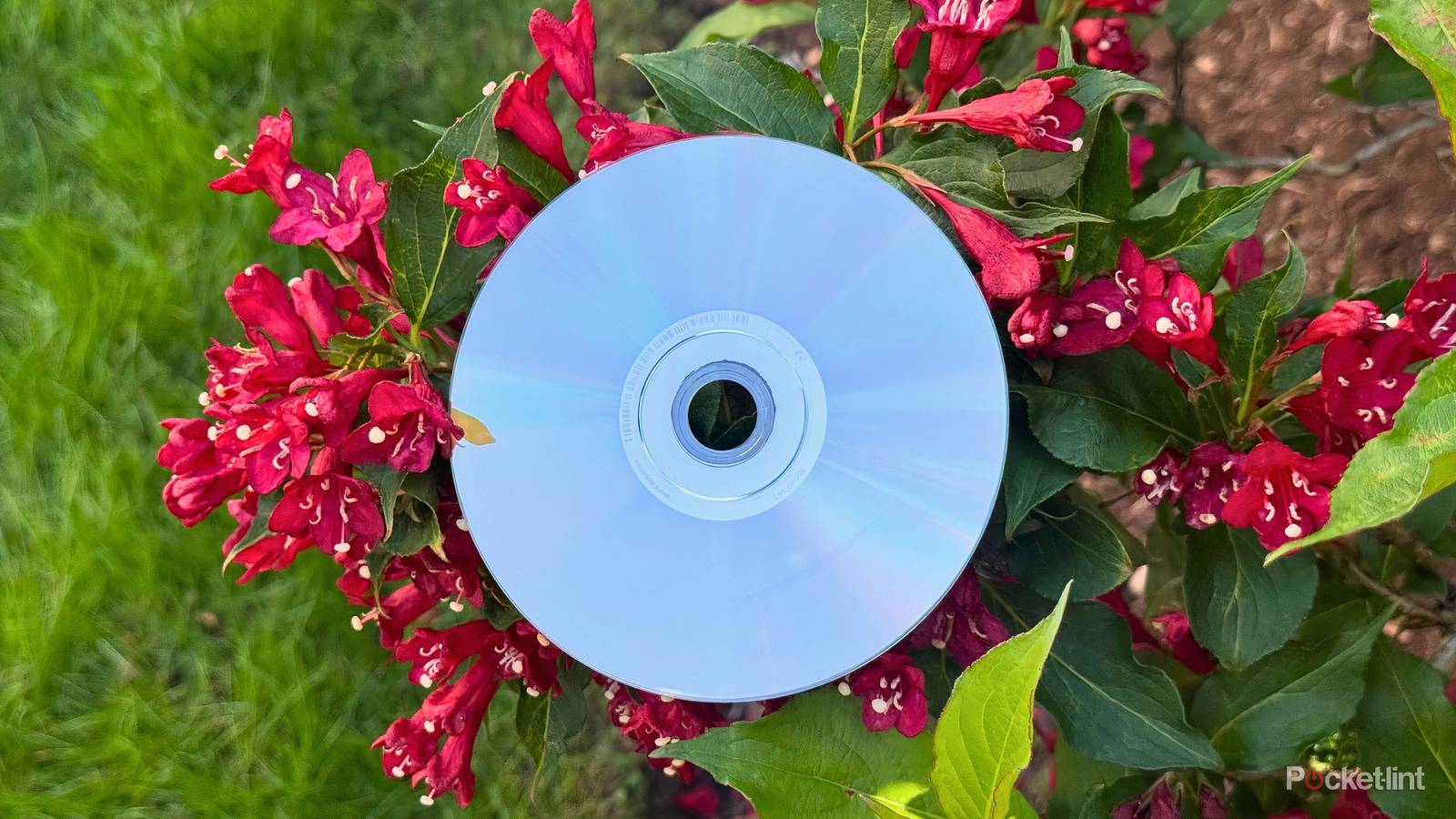
As a major fan of physical media formats, I’ve come to appreciate optical-based technologies for what they are. While certainly imperfect, they’re nonetheless impressive on a technological level — much more so than many people give credit for.
In fact, there are a lot of misconceptions swirling around when it comes to optical media like CDs, DVDs, and Blu-ray discs. Some of these unflattering myths are rooted in previously true realities, while others are completely and utterly incorrect right from the get-go.
Here are three overarching optical disc myths that I’d like to dispense with once and for all, for the sake of promoting the genuine merits of Blu-ray et al.
Optical discs scratch easily
Anti-scratch coatings are now commonplace

Yes, it’s true: traditional CDs and DVDs are highly scratch-prone and therefore are considered quite fragile on the whole. A single gash on the readable surface of a CD is enough to render it inoperable, or at the very least to cause it to skip and stutter during playback.
The truth is, however, that scratches aren’t inherent to the optical disc experience. Anti-scratch coatings and layers are standard on Blu-ray and its 4K UHD successor, for example, substantially reducing the occurrence of disc damage.
Different manufacturers have come up with unique anti-scratch solutions of their own, with perhaps the most notable being TDK’s Durabis and Durabis 2 technologies. At the time of release, Durabis was a true revelation, transforming optical media from a delicate piece of equipment to one capable of being used and abused.
Optical discs degrade quickly
Many modern discs are archival-grade

Disc rot is a well-publicized phenomenon in which the organic elements within an optical disc begin to deteriorate over time. If a disc isn’t stored in a cool, dry, and climate-controlled environment, it’s at a higher risk of having its layers peel apart or bubble up.
Of course, things are a bit more nuanced than they might appear on the surface. As it turns out, there are a variety of different materials used within different optical discs, with newer inorganic compounds allowing for a much longer shelf life.
In fact, some companies like Millenniata specialize in creating long-lasting optical discs. The M-Disc or Millennial Disc is specifically designed with longevity in mind, theoretically being able to archive data for up to 1,000 years.
Optical discs lack storage capacity
The sky’s the limit, theoretically speaking

When CDs first hit the market, they were hyped up for their large-for-the-time storage capacity — especially within the context of the video game market, where traditional cartridges were instantly put at a data disadvantage.
Fast-forward to today, and the CD’s measly 700MB of capacity is considered paltry. Even multi-layered Blu-ray discs cap out at a round 100GB, which is a far cry from the terabytes of flash-based data that can be stuffed into a solid state drive (SSD) or even into a Secure Digital (SD) card.
This may all be true, but researchers are also continuing to push the boundaries of optical storage capacity by adding additional three-dimensional layers of digital data into the mix (via Nature). Sony, too, has created a unique multi-disc Optical Disc Archive Cartridge solution, which can store anywhere from 300 GB to 1.5TB of data when all is said and done.


