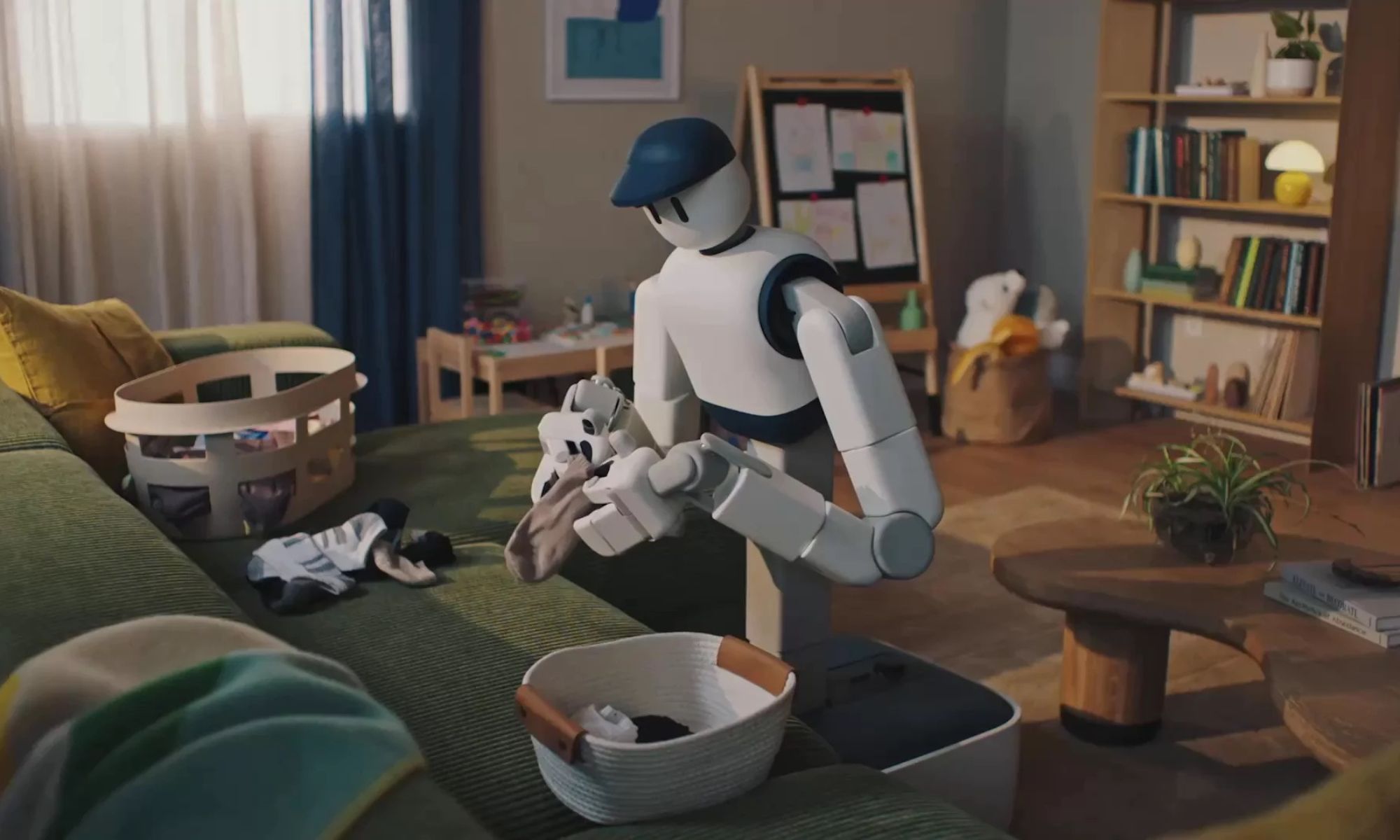
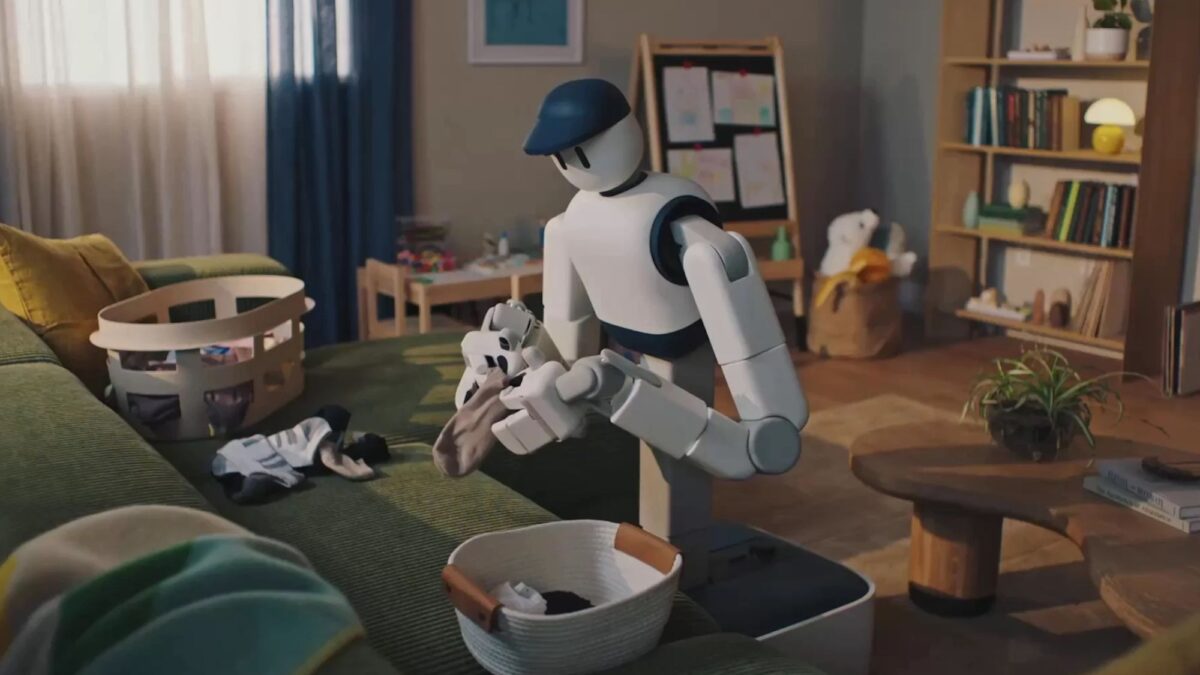
Last week, US regulators banned a range of Chinese-made robots from import, and the machine you were hoping to become your personal cook or stylist may never clear customs. So whether you intended to or not, you’re looking for a company that designs, builds, and supports a home robot in the United States.
I went through product announcements, launch materials, and supply chain interviews to answer that question. You still have several strong options, as long as you know what you’re buying.
What buy-American shoppers need from a home robot
Do you remember when Tesla’s Optimus poured drinks for attendees and even played rock, paper, scissors at the We, Robot showcase in 2024? Word on the street is that the robots had help, with a bartender Optimus confirming that someone controlled him from afar.
Today, some of the friendliest demo videos you see on Instagram were driven by a person in a VR headset in another building. So I recommend asking yourself how many of the advertised chores run without a human pilot, and chances are the answer today is fewer than the reel implies.
You should also insist on a published price and a delivery window you can hold someone to because plenty of robotics companies will take a deposit while describing shipping in seasons. Know that a deposit page with no ship date is closer to a donation than a purchase. While some of the machines I recommend below don’t have a specific shipping date, rest assured that reputable companies are behind them.
My top picks
1. 1X NEO
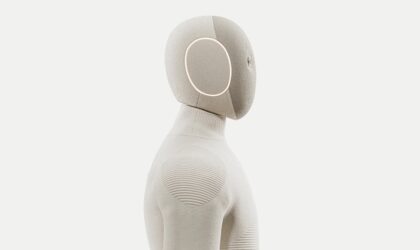
1X is a Palo Alto company delivering the NEO to US and Canadian homes in 2026 and expanding to other markets from 2027, which puts it ahead of every rival on the calendar. Pricing runs $20,000 for Early Access with priority delivery in 2026 (and premium customer support), or $499 a month on subscription, with a $200 deposit to hold a slot.
Last month, 1X announced 25 degrees of freedom (DOF), tendon-driven hands for the NEO humanoid platform, achieving what the company claims “near human-level dexterity, strength, safety, and reliability.” For your information, a human hand has 27 degrees of freedom (DoF) when including wrist movements.
With a simple voice command or the press of a button, NEO can handle household chores such as folding laundry, organizing shelves, and tidying living spaces.
One warning before you tap the deposit button. Early NEO owners get Expert Mode, where a 1X operator guides the robot through chores it has not learned, so the first year of ownership involves periodic remote access to your home. Go in comfortable with that arrangement or wait for the software to catch up.
2. Weave Robotics Isaac 1
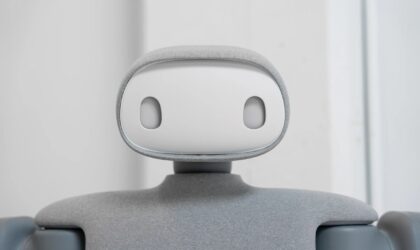
California-based Weave Robotics’ Isaac 1 folds laundry, tidies rooms, and makes beds. Unlike the earlier Isaac 0, which could only fold laundry from a fixed location, the Isaac 1 is mobile, with a wheeled base that provides stability as it moves around your home and completes tasks.
I’d probably consider getting the Weave Robotics Isaac 1 at some point. However, I’ve always been cautious about cameras inside the home. After all, smart speakers are already common household devices that collect, store, and process voice recordings and interactions. That’s the reason I appreciate the Isaac 1’s camera shutters, as they give me a physical sign of when the robot is working.
3. Sunday Robotics Memo
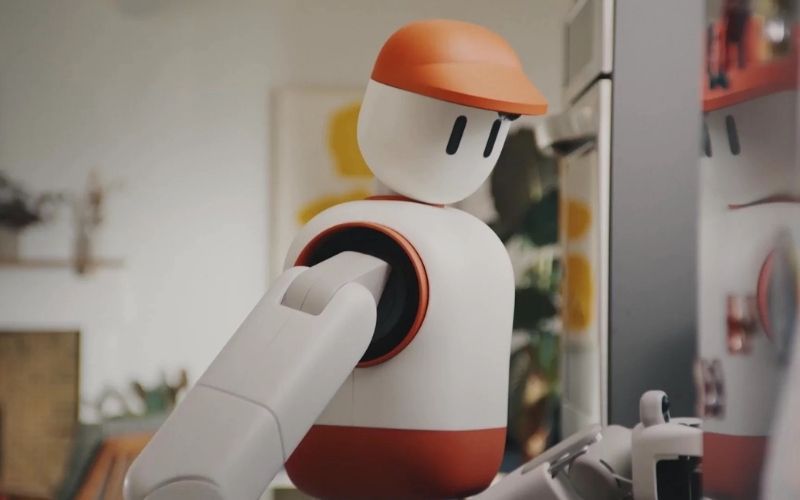
If you aren’t happy with the 1X NEO’s teleoperation feature, the Sunday Robotics Memo is the one built to avoid a remote pilot altogether.
Sunday Robotics trains it on data captured by $400 gloves worn by paid workers doing chores in around 500 homes, which teaches dexterity without a human driving your robot in the moment. Memo has been shown pulling an espresso shot start to finish, clearing a table, and lifting two wine glasses in one hand, all on its own.
Co-founder Tony Zhao has framed the goal as building robots that “free people from laundry, from the dishes, from all chores,” a fair description of the shortlist most households would write.
The company works out of Mountain View and plans a beta program before wider shipping, so expect a queue. Memo also broke a wine glass on one attempt during a press demonstration, which tells you the reliability curve has some way to run.
4. Tangible Robots Eggie
Do you have a department budget, a room of students, and a teaching kit that has stopped holding anyone’s attention past the second week? The Eggie, from US maker Tangible Robots, was built for that room.
The Eggie can guide visitors, deliver small objects, or assist with simple workflows. For example, in an X video, the robot wipes up a coffee spill from a countertop with a cloth. I also love that the open design allows users to tweak everything from gestures and voice interactions to how it moves around a space.
5. Figure 03
Some buy-American shoppers should keep their money in the bank a little longer, and Figure is the reason why. The Figure 03 is manufactured in San Jose, California, at BotQ, the company’s own facility, whose first line targets up to 12,000 robots a year and 100,000 over four years, which is a manufacturing base none of the smaller startups can match yet.
Figure’s third-generation humanoid robot has several new features, including soft goods, wireless charging, and an improved audio system for voice reasoning.
Each hand features an embedded palm camera with a wide field of view and low-latency sensing, which offers redundant, close-range visual feedback during grasps. So when the main cameras are blocked or focused elsewhere, the palm cameras help Helix track nearby objects and adjust movements in real time.
Availability is the catch, and… a big one. Figure went to partners for testing rather than to shoppers, and the company has framed home readiness as a target rather than a current capability.
What to skip
Some of the smoothest clips I’ve watched involve remote human operators, a detail the companies tend to leave out of the edit, so regard a polished reel as a statement.
Remote assistance sounds harmless until you remember what a robot sees inside your house. It can pass the dining table with unopened mail, roll past a child’s bedroom, or overhear a private conversation. That’s not much different from letting a stranger walk through your home whenever the company decides the robot needs a little help.
Quick-start advice
Write down the three chores you’d hand over tomorrow, then price them. At $499 a month, the NEO costs about $6,000 a year, so the list has to be worth that. Should the value you’re getting make sense, put money only against a robot with a US delivery window, and check the FCC status of any robot vacuum or mower you already own while you’re at it.


