Reducing your pack weight is smart—but these cuts probably go too far for all but the most dedicated ultralighters.
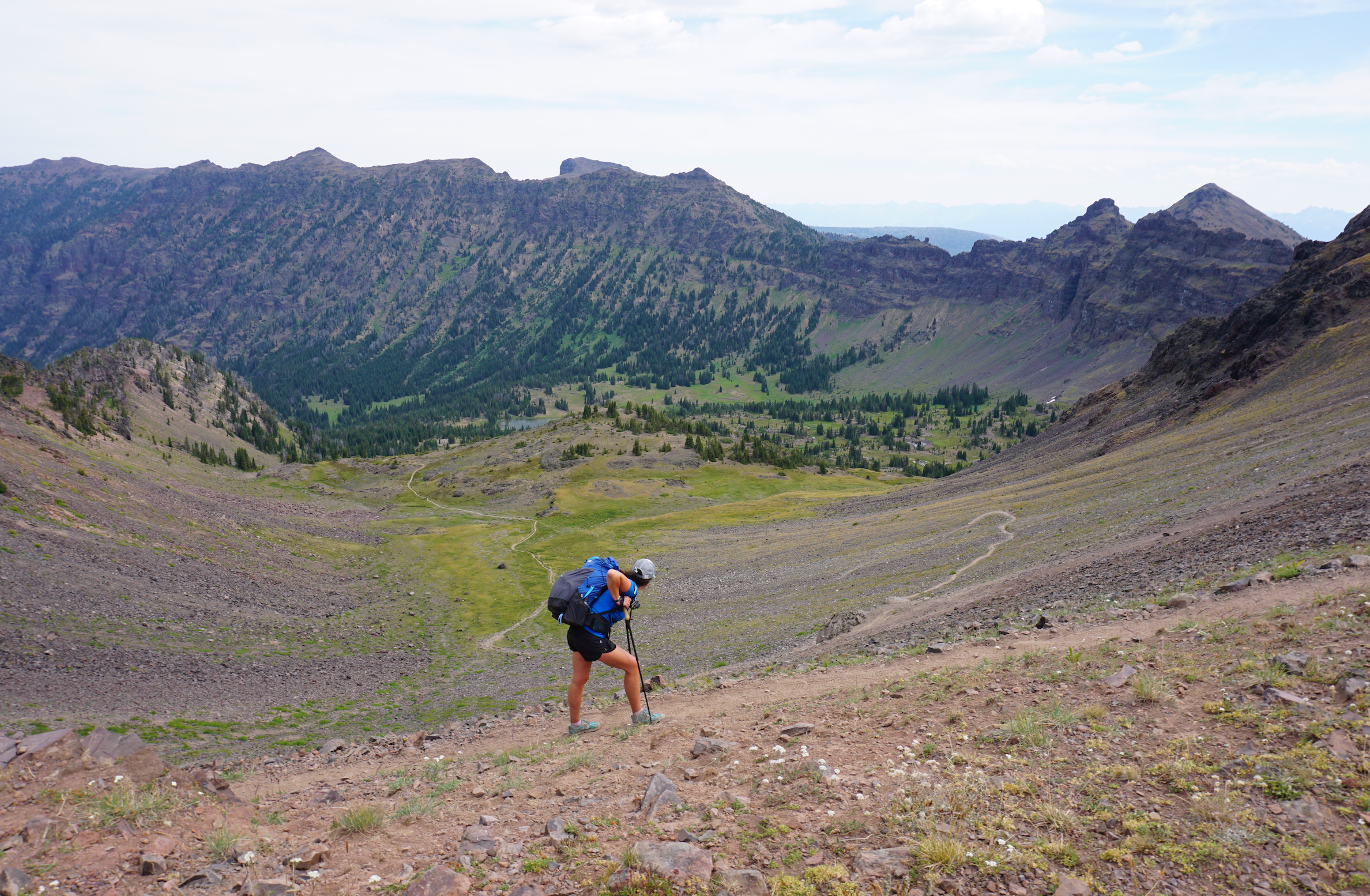
Shortly after this photo was taken, Maggie snapped one of her carbon fiber poles. (Photo: Maggie Slepian)
Published August 6, 2026 03:38PM
My pack weighed around 35 pounds when I started my first thru-hike. By the time I finished that hike, I had cut that weight in half. This could have been good enough, but like many other hikers, I wasn’t immune to the allure of seeing how far I could take ounce-counting.
But I was never meant to be a true ultralighter: By the time I slashed my gear down to 10 pounds, I was absolutely miserable at camp every night. Keep in mind this was five years ago, and it’s gotten easier to stay comfortable while going light, but you get the idea.
It’s true that trail miles are easier with a lighter load: I’m a lot happier carrying 20 pounds instead of 40 pounds. But much of the time, you’re paying for those easier miles when you get to camp. Major props to the people who can sleep on two squares of foam under an open-sided tarp staked down with rocks, but that will never be me. My weight savings need to balance on-trail comfort with camp necessities, and unless you’re aiming for an FKT or are truly in the ultralight weeds, yours probably do too. Here are five semi-ridiculous ultralight gear choices I recommend you avoid in 2026.
Cutting a Closed-Cell Foam Pad in Half, or Thirds
The closed-cell foam pad versus inflatable debate is a classic, though I’d personally rather pass out inflating a NeoAir than sleep on an egg-crate-patterned torture plank. I get the appeal for some people. What I don’t understand the appeal of is carrying a half-sized foam pad as your sleeping pad, or, like I saw a dedicated UL friend doing, carrying two small sections of the pad on the CDT. This wasn’t an extra section for a ground cushion—this was the entirety of his sleeping pad. The Therm-a-Rest Z-Lite Sol folds into 14 sections and weighs 14 ounces. Wouldn’t you rather lose 5 to 7 ounces elsewhere and keep your entire body at least a half-inch off the dirt?
Ultralight Tent Stakes
Truly dedicated ultralighters will balance the pros and cons of flimsy, ultralight, bendy tent stakes, but most of us do not need to do this. It’s not worth whacking one with a rock, bending it at a 30-degree angle, using the rock to whack it straight again, and repeating until it finally snaps mid-pitch. There are plenty of stakes out there that are lightweight but will still survive the length of a trip in rocky terrain. My favorites are the MSR Groundhog stakes, which are 7.5 inches long and weigh 14 grams a piece.
Flaccid Frameless Packs
I’m seeing fewer of these packs on the trail these days. They haven’t totally disappeared—dedicated ultralighters with low base weights still find a lot to like in modern, vest-style frameless packs—but internal-frame pack systems have now gotten light enough that there are fewer reasons for most people to go fully frameless. Most lightweight internal frames weigh between 3 and 4.5 ounces, which seems like a small weight penalty for the added support. Plus, there will likely come a time when you need the pack’s frame and hip belt. It might be a desert trip with a huge water carry, or a resupply for a long stretch of trail, but adding six liters of water into a frameless floppy 30-liter sack with no hip belt is going to wrench your shoulders clear off your torso.
Floorless Tarps
Your shelter might be the category where you can save the most weight with a single piece of gear: Many two-person tents weigh upwards of four pounds, while you can slim down to an 18-ounce trekking-pole shelter without losing much interior space. The next level down, though, is where we start sacrificing basic protection needs, such as bug netting. Like many weight-saving strategies, there is a time and place where the lightest option will work—cowboy camping in the desert, open-sided tarp on a bug-free trail—but for the most part, you’re going to want the added assurance of full-length mesh to keep creepy-crawlies out and a bathtub floor to defend against splashing rain.
Carbon Fiber Trekking Poles
I feel conflicted about this one, because I still love my featherweight eight-ounce set of poles. But I also have a lot of carbon-fiber poles in my gear graveyard: I snapped three poles in one summer before realizing I am too clumsy and do too much off-trail hiking to rely on them on any sort of rough trail. Carbon fiber trekking poles are indeed lightweight with excellent shock absorption, but they also lack the lateral strength of aluminum poles, meaning you cannot load these things sideways. Now, when I know my route has boulder piles or rock-hopping, I bring my trusty aluminum set instead.


