The Unapologetic Soul: Why I Keep Returning to the 14-Year-Old Leica M9 Monochrom

0
1
The Unapologetic Soul: Why I Keep Returning to the 14-Year-Old Leica M9 Monochrom


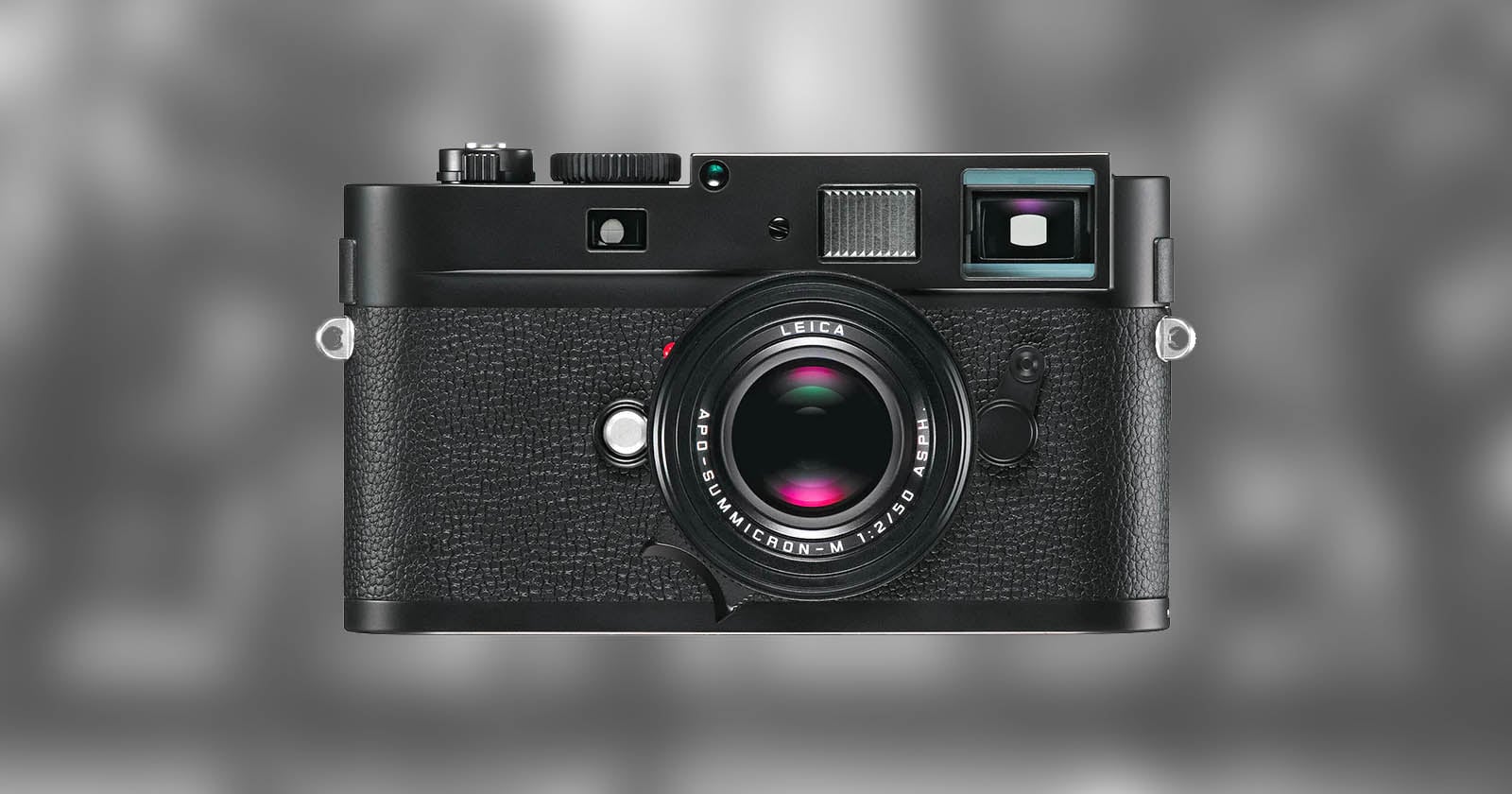
A black Leica digital camera with a textured grip, prominent lens, and various dials is centered against a blurred gray background.

In an era where we are obsessed with megapixels, AI-driven autofocus, and high-ISO performance, I find myself regularly putting down my Leica M10-R and my Leica M11-P to pick up a tool that, on paper, has no business competing in 2026: the Leica M9 Monochrom.

Released in 2012, this camera is technically “inferior” by every modern metric. Its screen is dim, its buffer is slow, and its ISO performance, at least by modern standards, is primitive. Yet, every few months, I return to it. When I look back through my Lightroom catalogs, I don’t see the technical limitations of a 14-year-old camera. I see a profound journey of growth, captured in pure, unadulterated luminance.
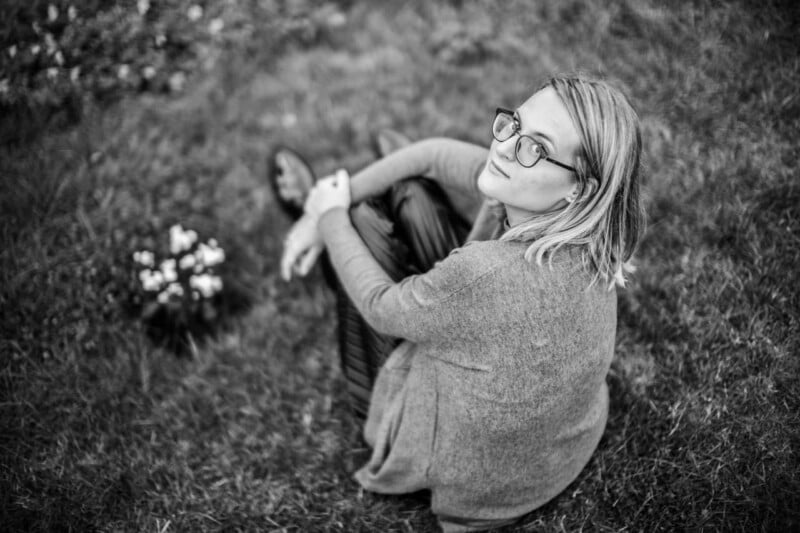
A person with glasses and shoulder-length hair sits on grass, looking up at the camera. They wear a long cardigan and are near a small bunch of flowers. The image is in black and white.

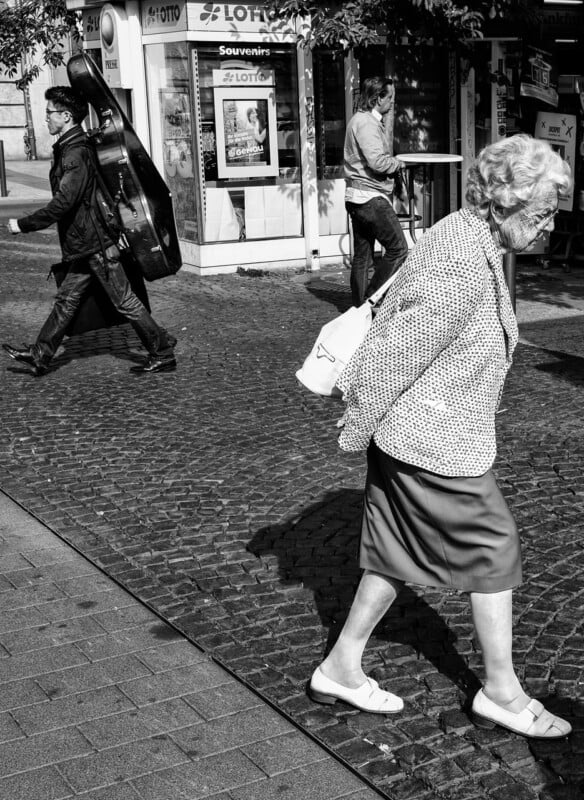
An elderly woman walks on a cobblestone street, while a man carrying a large instrument case walks behind her. Another man stands by a shop with "Souvenirs" and "Lotto" signs. The scene is in black and white.

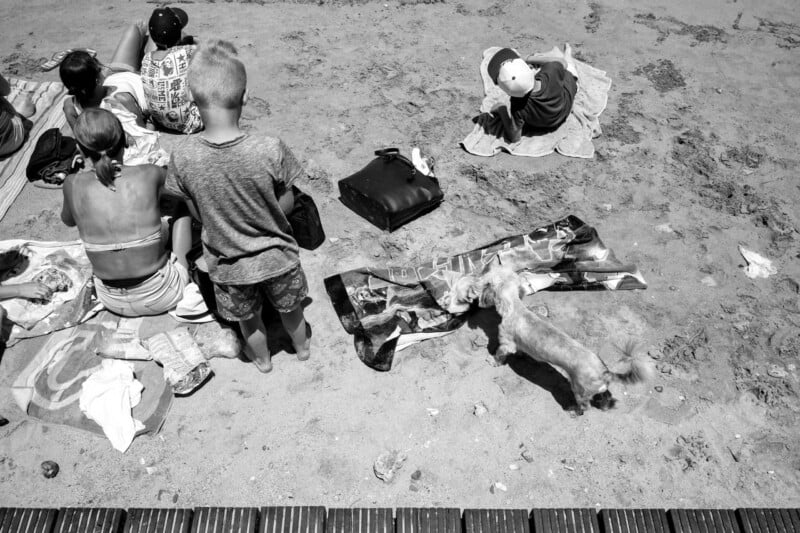
Black and white photo of people sitting on towels at a sandy beach, with children facing away, a small dog sniffing a towel, and personal items like bags scattered around.

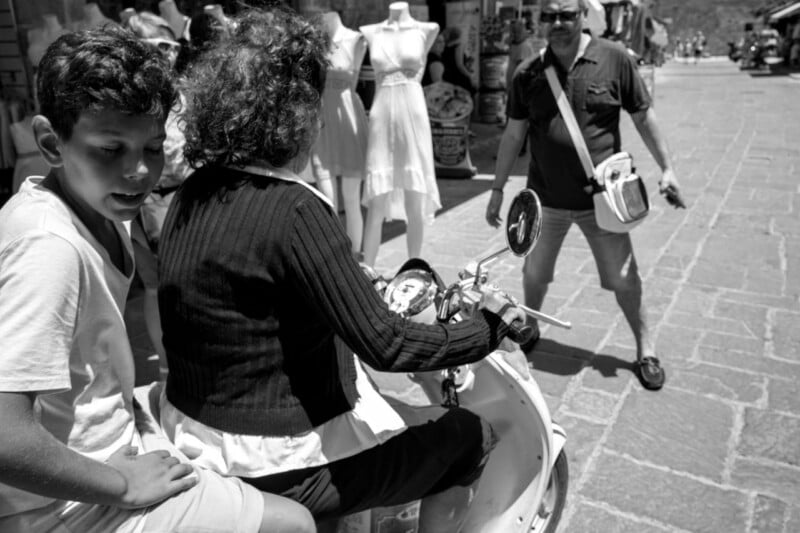
A black-and-white photo shows a boy and a woman sitting on a scooter. Mannequins in dresses stand behind them, while a man with sunglasses and a shoulder bag walks toward them on a sunlit, cobblestone street.

The CCD Magic

The heart of this obsession lies in the sensor. While modern CMOS sensors offer incredible dynamic range and noise control, there is something irreplaceable about the Kodak-made CCD sensor in the M9 Monochrom. It renders light with a tactile, almost organic quality that feels less like a digital capture and more like a physical impression. It doesn’t just record the scene; it interprets it with a unique micro-contrast and a mid-tone richness that modern sensors, with all their computational power, often fail to replicate. It captures light with a “biting” sharpness that feels grounded, immediate, and honest.
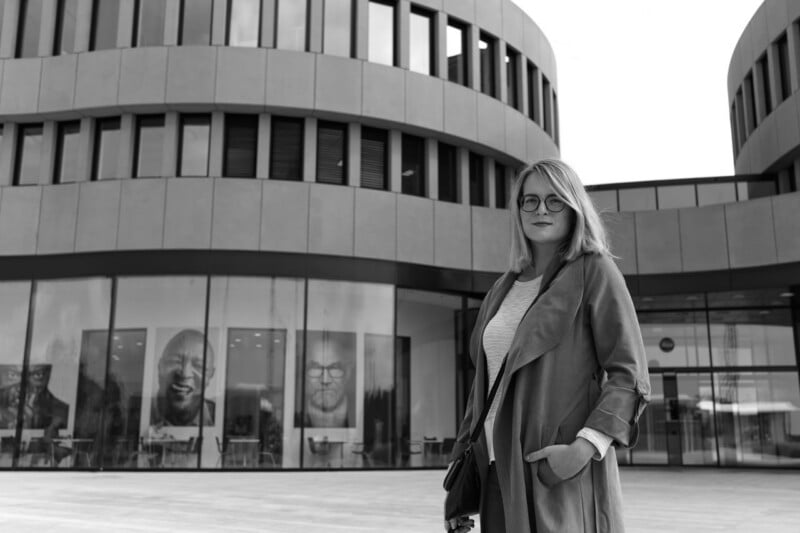
A woman wearing glasses and a long coat stands outside a modern building with large windows and round architectural features. Portraits are visible on display inside the building. The image is in black and white.

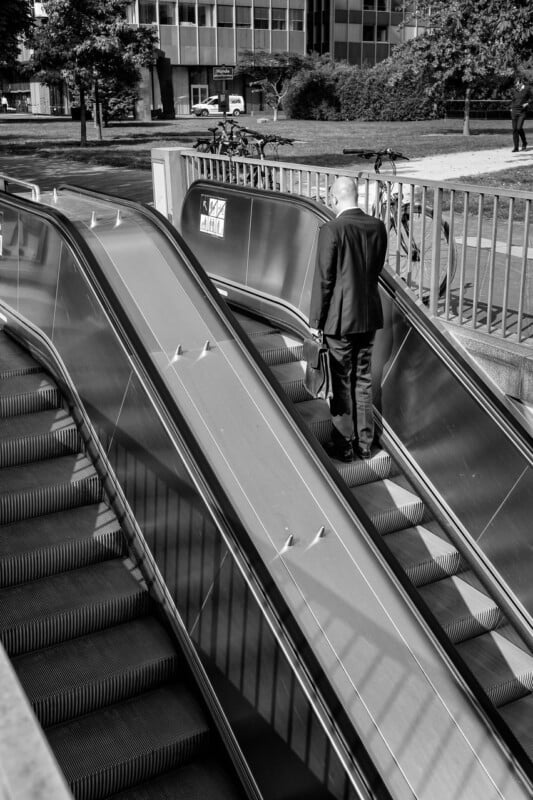
A man in a suit carries a briefcase while walking up a stationary escalator outdoors, next to a working escalator. The scene is in black and white, with buildings and trees in the background.

An elderly man sits on stone steps beside a wall, looking at a cat standing on its hind legs, reaching up to a small faucet. The scene is in black and white, conveying a calm, contemplative mood.

Two boys, each riding a donkey, are surrounded by people on a cobblestone path. The scene is busy, with adults and other donkeys nearby. The image is in black and white.

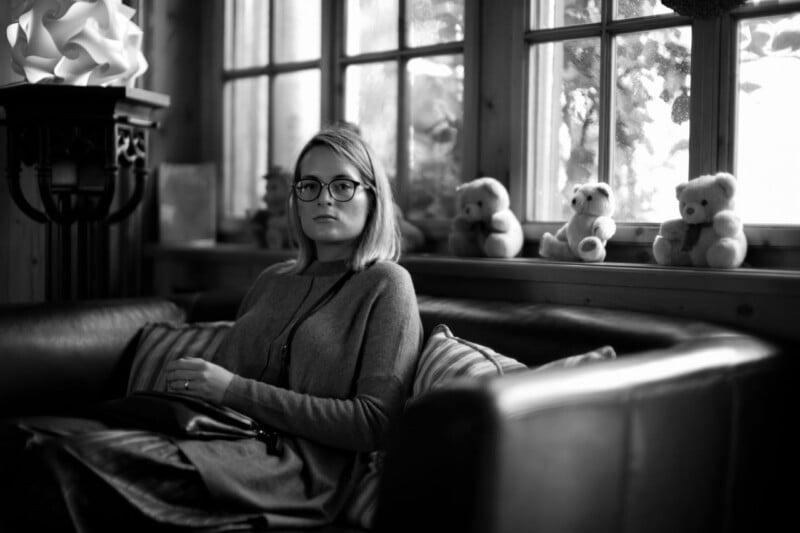
A woman with glasses sits on a couch in a cozy room, looking at the camera. Plush teddy bears are lined up on the windowsill behind her. The image is in black and white.

The Color Paradox

Those who know my work know that I am obsessed with color. My process isn’t typically about strict adherence to the “rules” of composition or perfect geometry; rather, I hunt for that elusive “Leica look”, the specific way light interacts with color to create a visual pop.
I’m the first to admit I’m not the most technical photographer in the room. My style relies heavily on how color defines the mood and carries the frame.

Because of this, picking up the M9 Monochrom feels like a radical act of vulnerability. Every time I head out with it, I’m plagued by a constant internal debate: Will I actually find a frame that works, or am I missing out on a scene that screams for color? I often find myself hovering over my camera bag, wondering if I should bring a color body along as a safety net just in case.

Yet, in that limitation, something surprising happens. Without the crutch of my usual color-driven aesthetic, I’m forced to slow down and truly see. The Monochrom strips away the “pop” I usually rely on and demands that I find a different kind of strength in the image. And time after time, I’m stunned to find that when I stop hunting for colors, I actually start finding the frame. It’s a strange paradox: by losing the color, I gain a sense of composition that I often overlook when I have the full spectrum at my disposal. It’s not just a camera; it’s a corrective lens for my own eye.
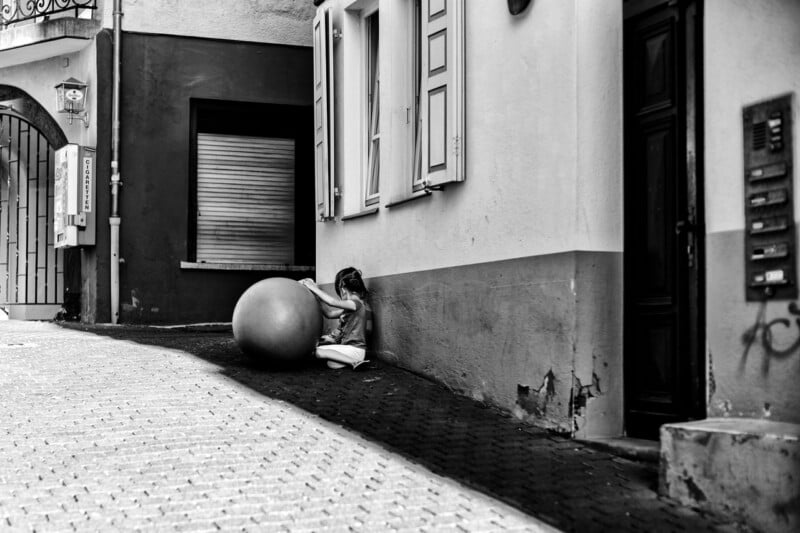
A young girl sits on a cobblestone street, leaning against a building with closed shutters, and touches a large exercise ball beside her. The scene is in black and white.

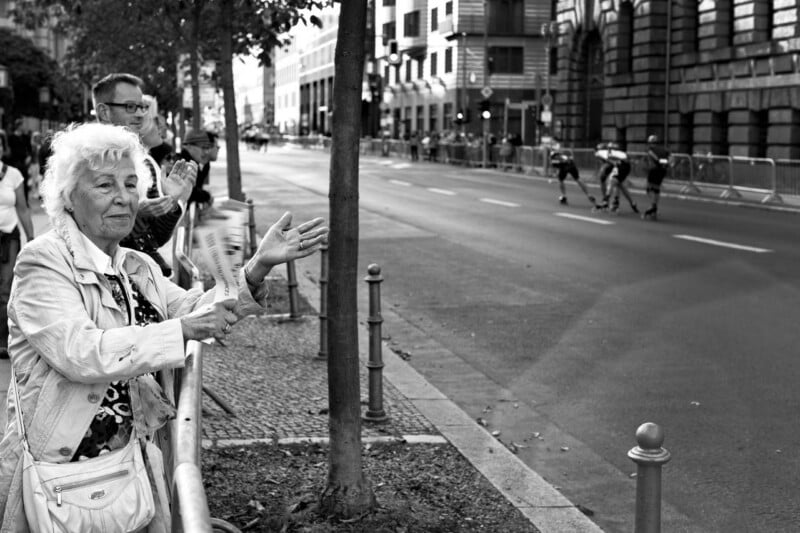
Elderly woman and man stand on a city sidewalk, clapping as rollerbladers race down an empty street lined with buildings and barriers. The scene is in black and white.

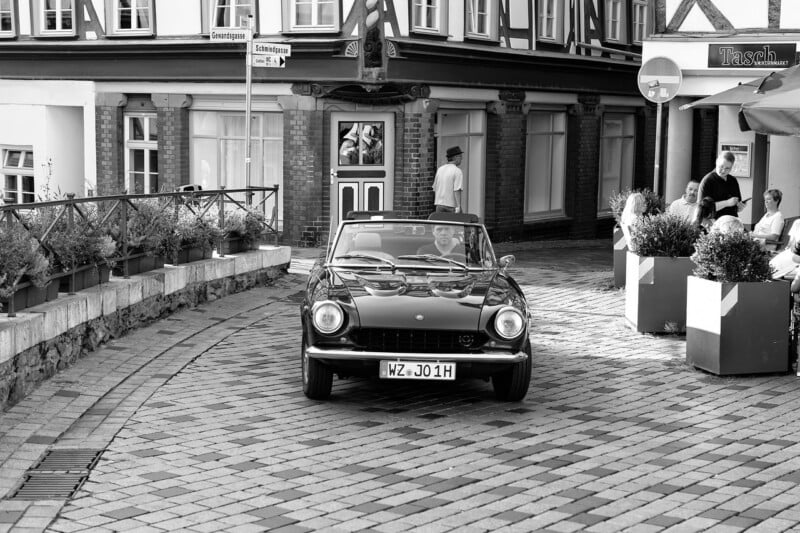
A classic convertible car drives on a cobblestone street in front of historic buildings, while people sit and relax at outdoor tables nearby. The image is in black and white.

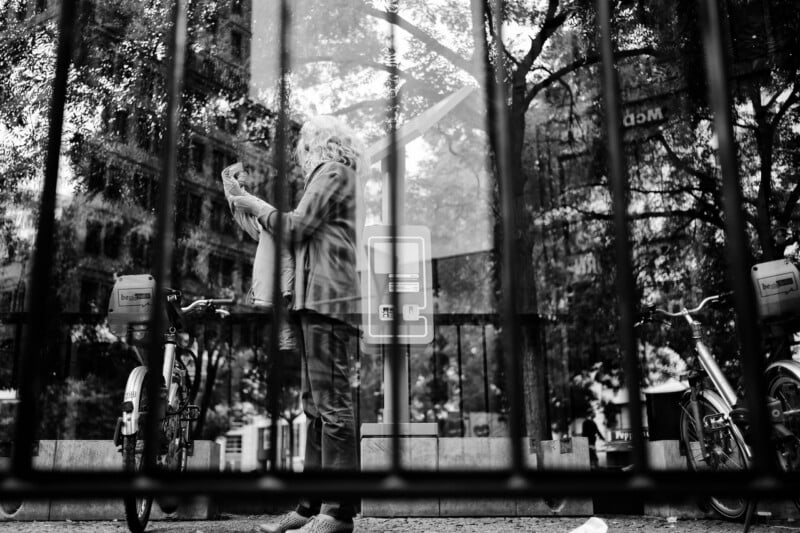
Black and white photo of a person reading a newspaper outdoors, seen through vertical metal bars. Two bicycles are parked on either side, with trees and buildings in the background.

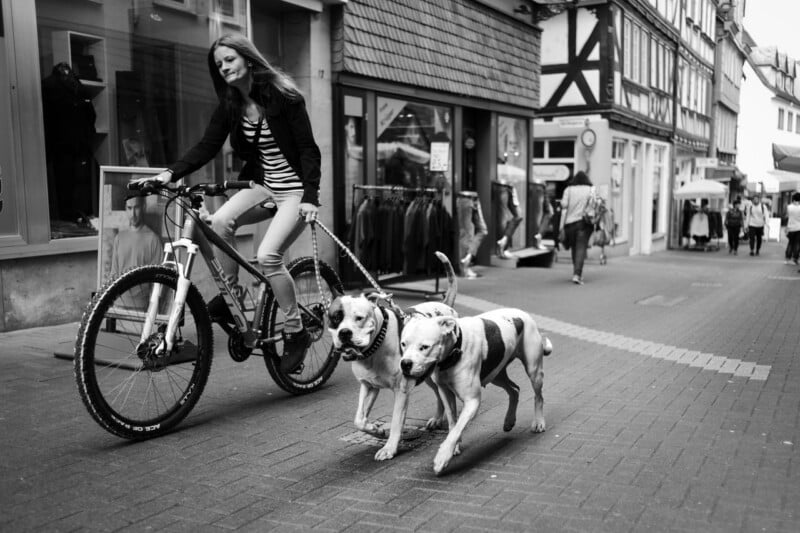
A woman rides a bicycle down a city street while holding leashes attached to two large dogs walking beside her. Shops and pedestrians are visible in the background. The image is in black and white.

Post-Processing: The Beauty of Limitation

The post-processing experience with the M9 Monochrom is similarly transformative. With my modern sensors, the raw files are so malleable that they often invite endless adjustments. With the M9, the files are lean and demanding. I spend significantly less time “managing” the image and more time curating the light. The lack of a color filter array, the very essence of a monochrome-only sensor, results in a luminance purity that requires very little post-production manipulation to pop. It is a brutal, beautiful, and deeply human way to see the world.
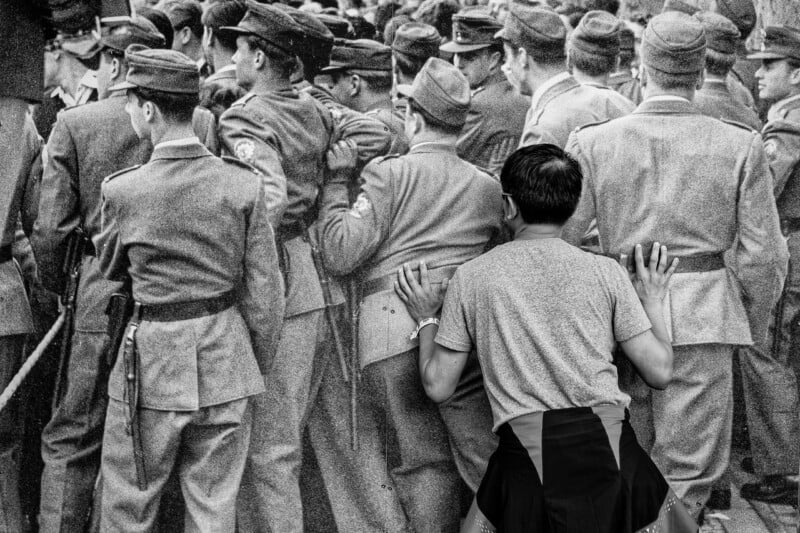
A person in a t-shirt and jacket leans against a large black-and-white photo of uniformed soldiers, pressing their hands to the image as if trying to interact with the scene.

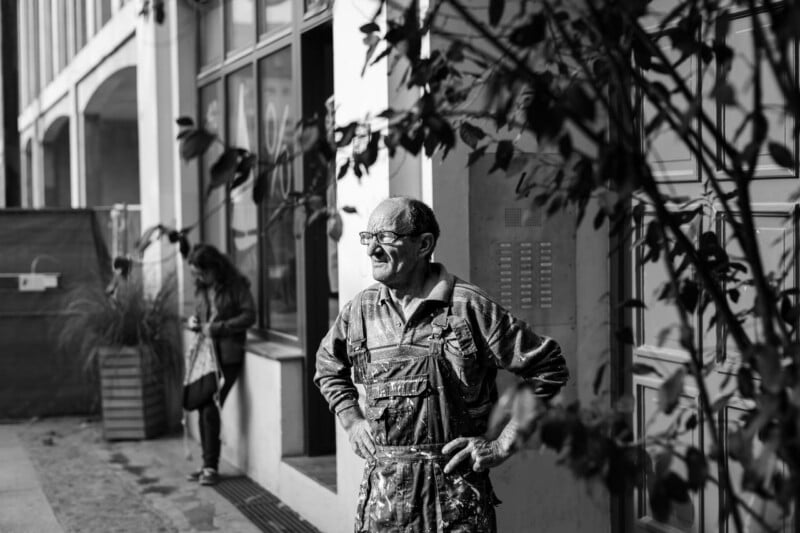
A man wearing paint-splattered overalls stands with his hands on his hips outside a building, looking to the side. Another person stands in the background near a window, partially obscured by plants. The image is in black and white.

Two people lie side by side on towels at the beach, wearing swimsuits and caps. Sandals and personal items are placed near their heads on the sand. The photo is in black and white, viewed from above.

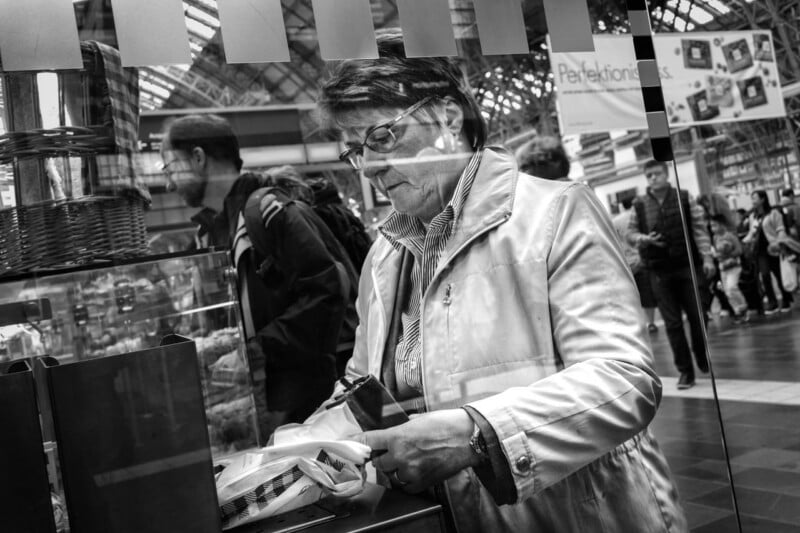
A woman wearing glasses and a light coat handles a container at a market or store counter, with people walking and shopping in the busy background. The image is in black and white.

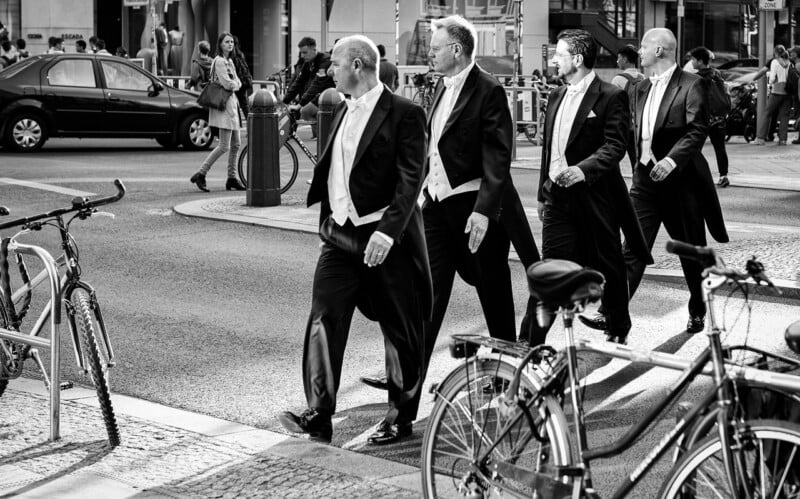
Four men in formal tailcoats and bow ties walk across a city street, passing by parked bicycles and pedestrians on the sidewalk. The scene is in black and white and set in an urban environment.

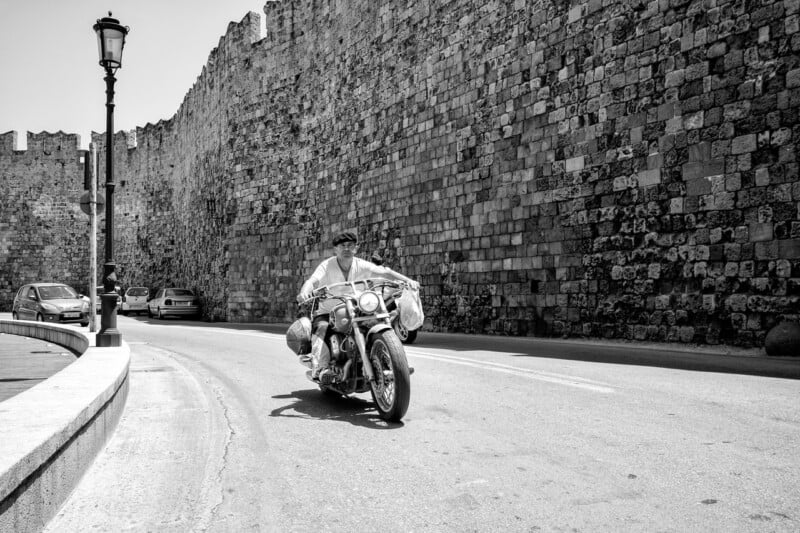
A man rides a motorcycle along a curving road next to a large, ancient stone wall. Parked cars are visible along the wall, and a streetlamp stands on the left. The scene is in black and white.

A cat sits beside an open sheet music book on a stand, appearing to look at the pages. The background is blurred, and the photo is in black and white.

Embracing the “Inferior”

There is a unique thrill in knowing the camera in your hands is “obsolete.” When you shoot with the M9 Monochrom, you stop chasing perfection and start chasing the moment. You learn to embrace the noise, the limitations of the dynamic range, and the slow, deliberate pace of the rangefinder.

My journey with this camera has been one of refining my eye. It doesn’t hide behind colors; it exposes the truth of the scene. And honestly? I wouldn’t trade that 14-year-old camera for anything.


About the author: Tomer Vaknin is a street photographer. The opinions expressed in this article are solely those of the author. You can find more of Vaknin’s work on his Instagram.