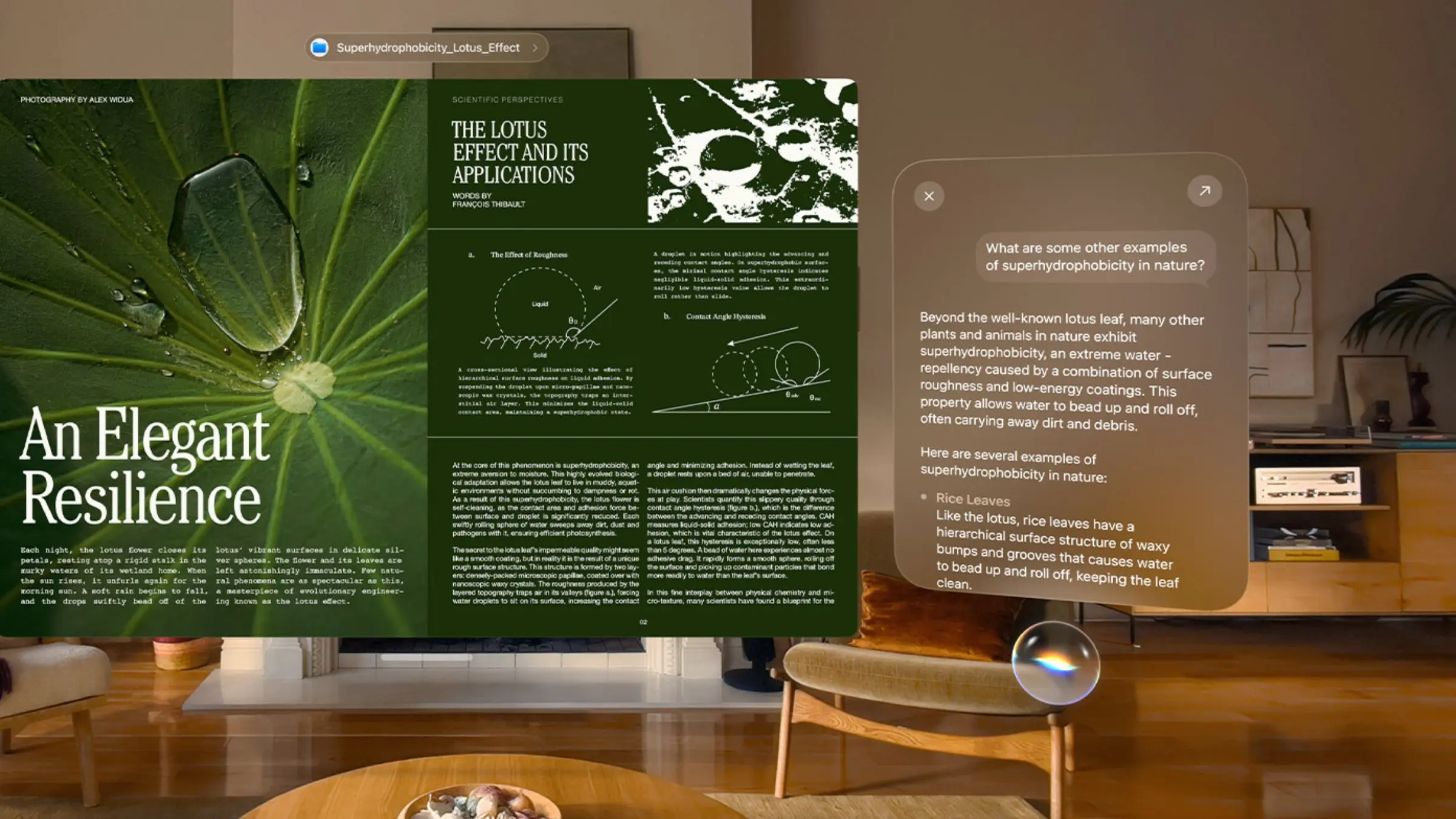
While visionOS 27 is coming to every Apple Vision Pro ever sold, two of its standout features will only work on the second-gen headset with an M5 processor.
What both Vision Pro models get with visionOS 27
Both the original Vision Pro and the M5 model will get the same baseline visionOS 27 update. It features a redesigned Control Center, the new Siri AI experience, and the ability to turn panorama photos into spatial environments.
Apple also detailed new accessibility features for visionOS 27 back in May, which include an eye-tracking power wheelchair control and Vehicle Motion Cues to reduce motion sickness.
Siri with personality and on-device AI
If you own the original Vision Pro, here are the visionOS 27 features you won’t get.
Siri voice customization. Beyond the flat, one-size-fits-all voice assistant that Vision Pro uses now, the feature lets you fine-tune how expressive and fast Siri sounds. On paper, it looks like a minor feature, but M2 Vision Pro users won’t see the option at all.
Advanced on-device AI. The second feature exclusive to the M5 Vision Pro is related to the first. The second-gen headset can use AFM 3 Core Advanced, Apple’s new 20-billion-parameter on-device AI model. And while Apple hasn’t said the M2 Vision Pro will lose out on Apple Intelligence features outright, the chip might not be capable enough to run the model.
Why can’t the M2 Vision Pro keep up?
The short answer is silicon and the processing demands of the Apple Foundation Models that enable advanced AI features. Apple’s AFM 3 Core Advanced model requires more processing power than the M2 possesses — even though the chip meets the requirements for everything else visionOS 27 offers.
This means it will rely heavily on Apple’s cloud-based processing for tasks that the M5 can handle locally. And that means requests on the M2 Vision Pro could run a bit slower than on-device requests.
The base iPhone 17 faces the same problem, missing out on these features for the very same reason.
In fact, the pattern looks like Apple’s new normal. The features you get now depend on whether the chip in your device can handle AFM 3 Core Advanced, irrespective of the device’s launch date.
For the Vision Pro, that’s a pretty rough deal, as the 2-year-old flagship headset is already hitting its ceiling after just one generation.

Anurag Chawake is a tech-focused writer specializing in smartphones, apps and consumer technology. His interest in computers began during the Windows 98 era, eventually leading him to explore everything from operating systems to mobile devices and PC hardware. Anurag previously contributed to The Indian Express, covering Apple, Android, gaming and the broader technology landscape.


