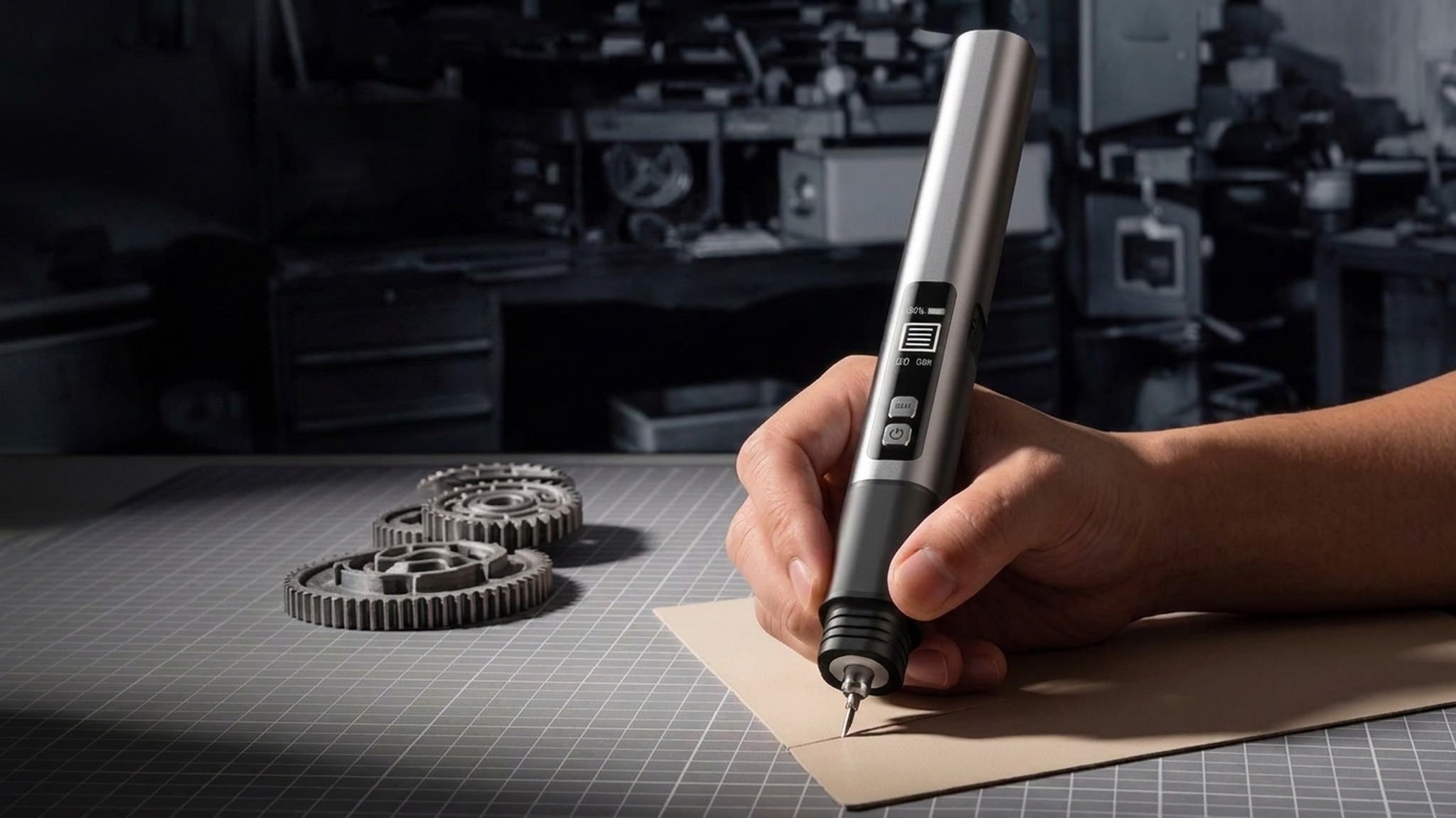
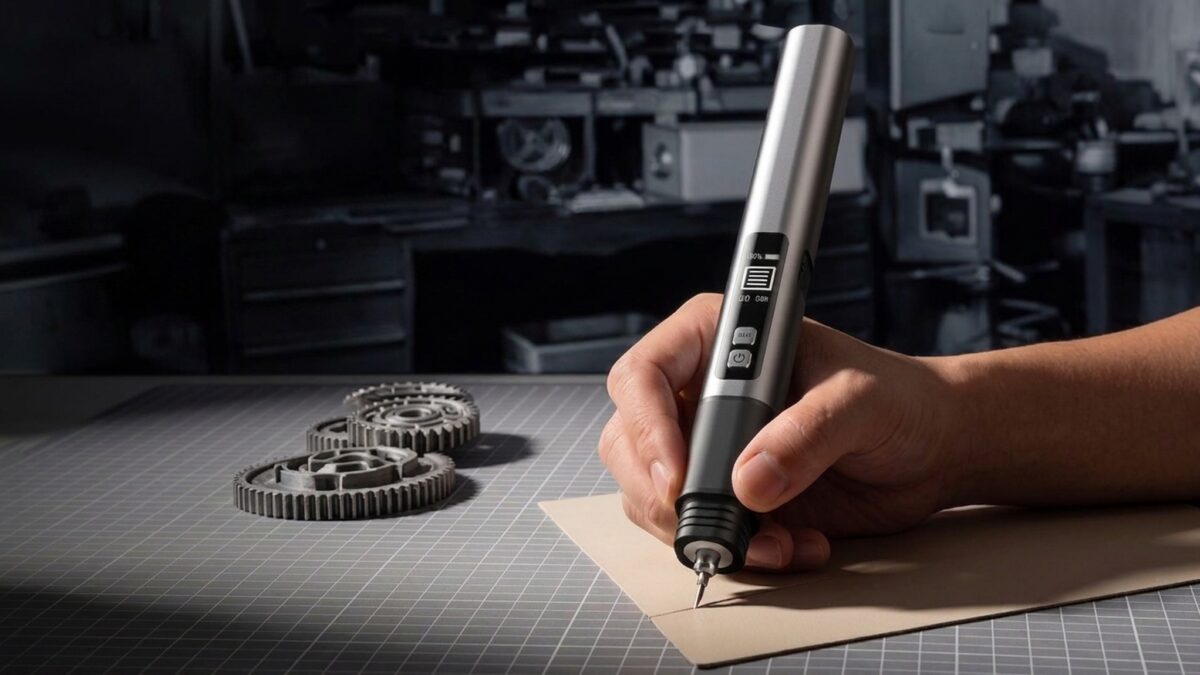
I’ve lost count of how many ultrasonic cutter pitches start with the same forty-thousand-vibrations-a-second line. It’s a good number. It’s just not the number that matters once you’re ten minutes into a project and the thing has gone uncomfortably warm in your hand, the battery meter’s dropping faster than it should, and the edge you just cut has that faint melted look plastics get when a tool’s running hotter than it should. SonicMax’s pitch for the Slice 10 is basically this: nobody’s mad at the concept of ultrasonic cutting, people are mad at the hardware that keeps failing to deliver on it. That’s a fair thing to say. It’s also easy to say on a Kickstarter page. Whether it holds up is a different question, and one we can’t answer yet since nothing’s shipped. Here’s what’s actually on the table.
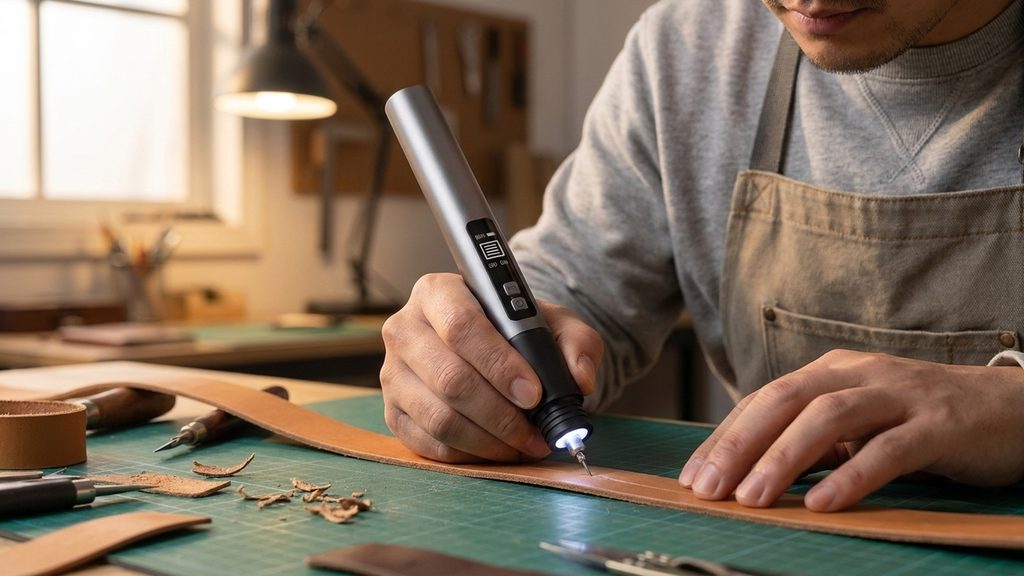
Heat is the whole problem, basically.
Ask anyone who’s owned one of these tools what bugs them and heat comes up almost every time. SonicMax says as much themselves, tools that need a break every five or ten minutes, runtime that quietly falls short of the spec sheet, heat bleeding into whatever’s being cut until plastics warp and print detail turns to mush.
Their fix isn’t one clever trick. It’s three things stacked together: a redone transducer, a redone power system, and better cooling. The spec they keep pointing back to is Q value, or quality factor. For those of you who are not aware, it is a rough way of measuring how much energy actually goes into cutting versus how much just turns into wasted heat. Most cutters land around Q≈200. Slice 10 is claiming over 500. That’s more than double what’s typical, and if that number’s real, it’s probably doing most of the heavy lifting for everything else on this list.
The power adjusts while you’re mid-cut
Most cutters just run at whatever fixed power you set and leave you to compensate manually. Slice 10 reads resistance as you’re cutting and adjusts power and frequency on its own. This is what makes the job so effortless and easy. You can watch it happen live on a little OLED screen. Sounds like a gimmick until you realize it’s just showing you what the tool’s doing instead of leaving you to guess.
What I really liked about the product is the smooth cuts; which results in more consistency across foam, leather, EVA, plastic. Most importantly, it also sounds good on paper. Whether it reacts fast enough to actually matter under a moving blade, I genuinely don’t know yet, and I’m not going to pretend I do.
Battery life is where this entire product becomes best from good
A 5000mAh 21700 battery, replaceable, rated for up to four hours cordless. If you’ve used a cutter that dies before the hour mark, four hours sounds almost too good. But the replaceable part matters just as much as the hours, maybe more. A swappable battery means a dead cell doesn’t end your work session, and it skips the slow decline sealed batteries go through where the tool just quietly gets worse for months until you finally give up and buy a new one.
Prefer staying plugged in? It charges over USB-C while you use it, and SonicMax says a full charge takes about 70 minutes. Fast enough to top off between sessions without eating your whole afternoon.
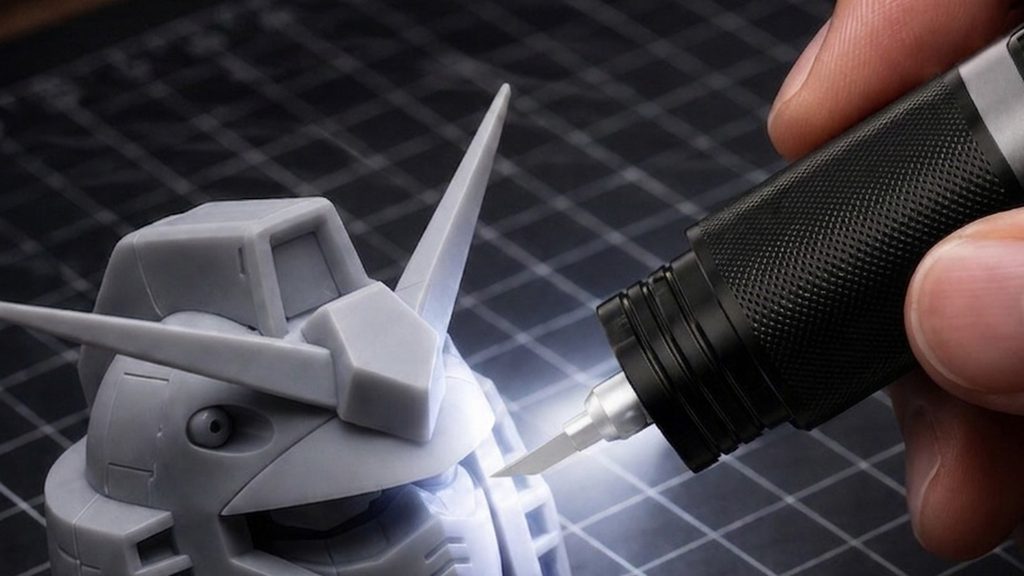
There’s also just a fan in there, and that’s fine
Alongside all the transducer engineering, Slice 10 has a built-in active cooling fan pulling heat off the blade area while you work. It’s almost funny how simple that sounds next to everything else, but it’s smart. You don’t want to bet the whole product on one clever redesign holding up under real use. A fan is boring. Boring works.
A couple small things that are also worth mentioning
Lift-to-Activate turns the tool on when you pick it up and off when you set it down flat. This is definitely convenient but also a decent safety feature since nothing’s left running unattended on a bench. There’s a built-in LED for the cut line too. This makes the whole thing useful if you’re working in a dim corner or doing anything detailed. Neither of these is going to sell the campaign by itself. But they’re the kind of small stuff that decides whether a tool stays on your desk or ends up in a drawer by week three.
Which pledge is worth a try from the crowdfunding campaign
The base pledge is just the Slice 10 itself. Bundles add extras from there. The Maker Complete Bundle, for instance, comes with all five blade types plus a spare battery. This is totally worth it if you already know you’ll want backup power from day one.
Let’s get down to pricing and shipping details
Early-bird pricing is $119. Once that’s gone, there’s a Kickstarter Special tier at $149, and bundles go up from there depending on what’s included. SonicMax is estimating October 2026 for delivery.
Where I land on this, for now
SonicMax is making a claim you can actually check once units start shipping, that the real problem with ultrasonic cutters was never the idea, just how badly most of them were built. The Q value jump, the adaptive power, the four-hour runtime, they all point the same direction, and none of it reads like padding for a crowdfunding page. It reads like someone who actually sat with the complaints and tried to fix them one at a time. Whether it survives an actual afternoon of cutting foam and leather back to back is a question only a real unit can answer, and we’re not there yet.
I’ll be keeping an eye on this one as it moves toward shipping.
Madhurima Nag is the Head of Content at Gadget Flow. She side-hustles as a parenting and STEM influencer and loves to voice her opinion on product marketing, innovation and gadgets (of course!) in general.


