Published September 21, 2026 08:00AM
September 2026: Our favorite ultralight sleeping bag is the Sea to Summit Spark Pro Down 30 for its light weight and packability without any compromises. Our top quilt is the Neve Gear Waratah -2C (28F) for its accurate temperature rating, smartly-designed pad straps, and unbeatable price point. This fall, we added the Cumulus Neo Quilt 150 (Best Superlight Quilt) to our list for its scant weight and excellent value.
Every year, more and more hikers embrace an ultralight kit in order to cover more ground, travel more efficiently, and give their shoulders and hips a break during long days on the trail. When it comes to lightening the load, big-ticket items like sleeping bags are among the most important to upgrade. Thanks to ever-higher fill powers and ever-lighter nylon shells, today’s ultralight bags and quilts can keep you warm in freezing temperatures while weighing well under two pounds. After a year of testing, from desert thru-hikes to rainy overnighters, these are category leaders.
At a Glance: The Best Ultralight Bags and Quilts
Best Ultralight Bag
Sea to Summit Spark Pro Down 30
Weight: 21.8 oz (regular)
Size: Regular, Long
Pros and Cons
+ Lightweight
+ Ultra-compact
+ Ample ventilation options
– Expensive
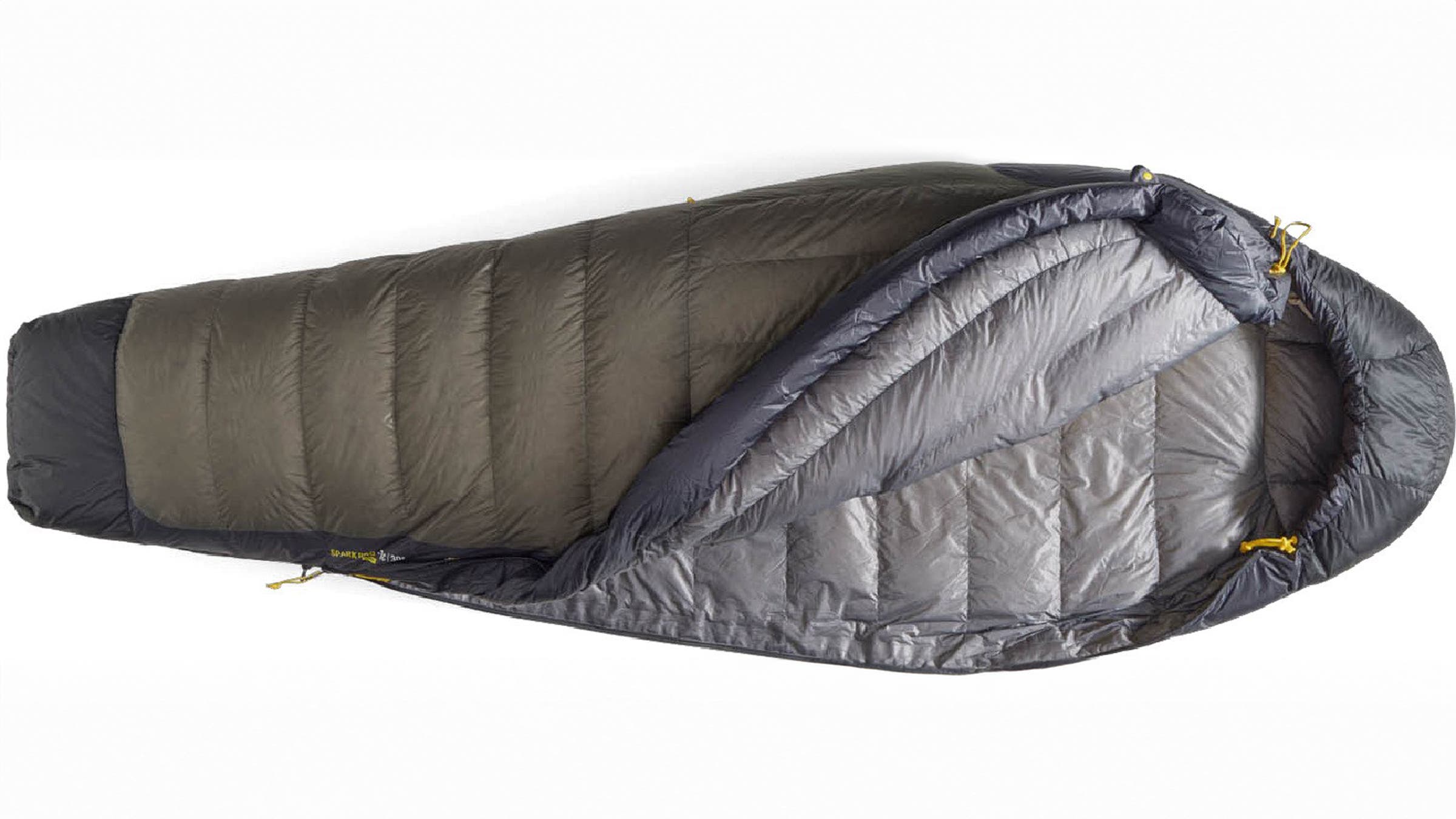
Sea to Summit’s top-of-the-line bag, a whopping 900-plus fill power goose down mummy, comes with a price tag that’ll make your eyes water. But for backpackers looking for a unicorn—a roomy, feature-rich mummy bag that can still get lost in your pack—it’s worth it. Longtime tester and former sleeping bag category manager Stephanie Pearson was especially enthralled by the Spark Down Pro’s packed size and weight: roughly the dimensions of a cantaloupe and a bit over a pound—impressive for a bag with a multitude of zippers, a thick draft tube, and deep hood pocket.
Three zippers of varying lengths down the sides and at the foot of the bag allow finicky hikers to throw out a leg or switch positions. During an uncharacteristically hot, dry, 60-degree night in Michigan’s Isle Royale National Park in August, Pearson was able to vent every zipper, but still bury her head in the extra-deep hood. One downside to the setup: With so many configurations, some testers found themselves fumbling for the right zipper pull for bathroom breaks. On chillier fall nights while cowboy camping in northern Minnesota, the Spark Pro kept one tester warm down to its 30-degree rating thanks to the high fill count and a clever baffling system: vertical baffling in the chest and horizontal on the lower half of the body and base of the bag help reduce down migration.
Testers appreciated the lightweight bag’s cut and materials: It has a roomy fit with 61 inches of shoulder space for restless sleepers and a silky-soft, breathable 10-denier interior nylon fabric. The 10-denier nylon shell is coated with water-resistant treatment at the hood and footbox, providing further protection for the hydrophobic down. Ellie Hoffman, who tested the bag in Minnesota’s Boundary Waters, found that the bag was breathable enough that she never became a hot, sweaty mess, even on unexpectedly warm nights.
Best Ultralight Quilt
Neve Gear Waratah -2C (28F)
Weight: 22.7 oz (regular)
Size: Short, Regular, Long
Pros and Cons
+ Affordable
+ Accurate warmth rating
+ Great pad strap design
– Less comfortable and water-resistant fabric
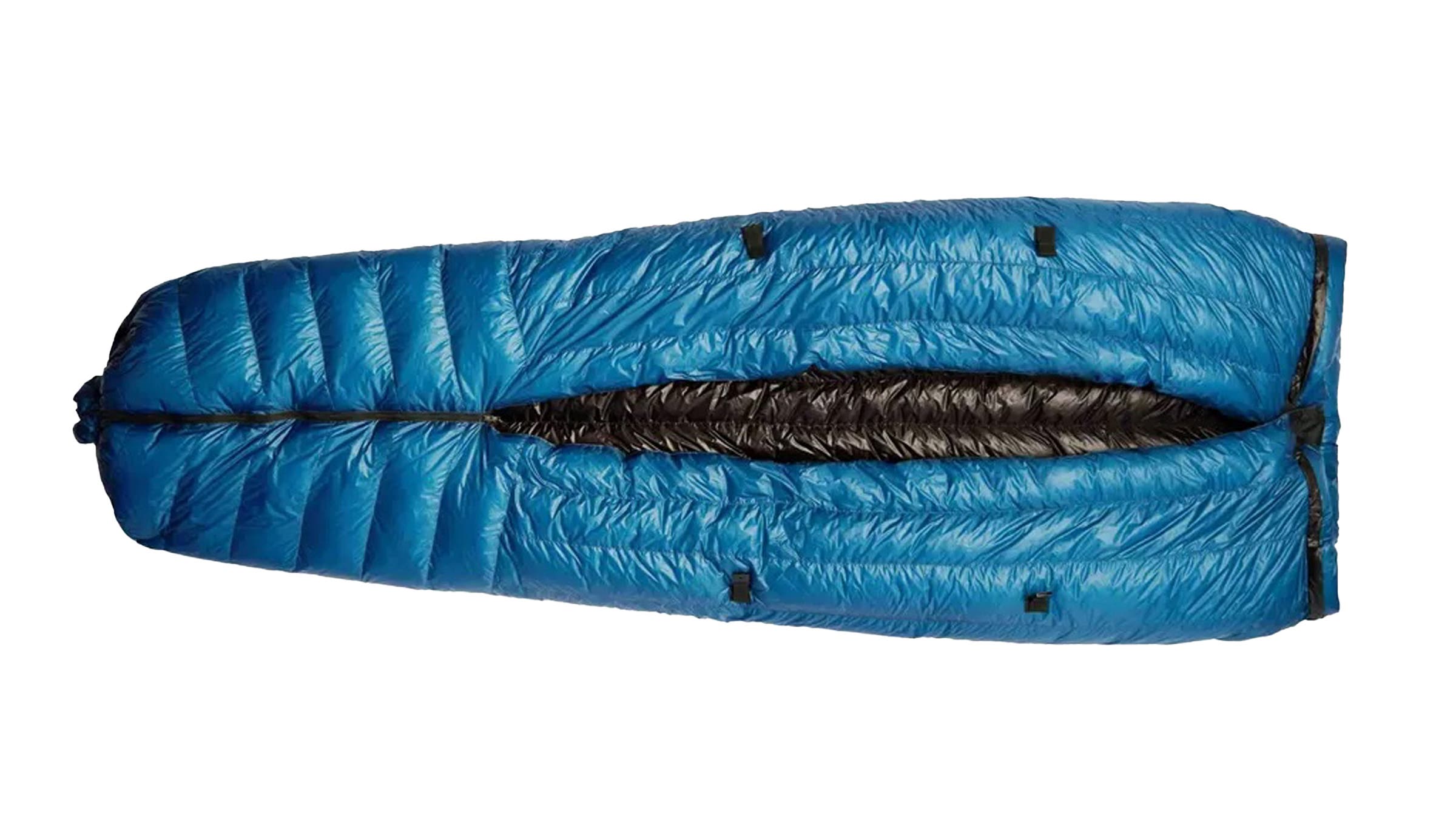
A sleeping bag or quilt is often a big purchase, and doubly so when you’re after an ultralight model with high fill-power down and cutting-edge fabrics. But that doesn’t have to be the case, and the Neve Gear Waratah quilt, which rings in at just $280, is proof of that. But more importantly, it’s as warm as its advertised rating.
The main reason for that is the impressive fill weight—a measure of the actual amount of down insulation stuffed inside the baffles. By and large, ultralight quilts are not known for accurate temperature ratings. But with 14.3 ounces of 850-fill duck down in regular size, the Waratah’s insulation is in line with many 20-degree quilts, including our best overall quilt pick, the Katabatic Flex 22. The Flex 22 is warmer overall, thanks to its best-in-class pad attachment system and draft tubes, but the Waratah isn’t far behind. Add in box baffles, which allow for better loft compared to the sewn-through baffles found on many budget 30-degree quilts, and the Waratah punches well above its weight (and price) on warmth. One tester found himself sleeping comfortably in dry 25-degree conditions by pairing the Waratah with a set of baselayers and a wool beanie.
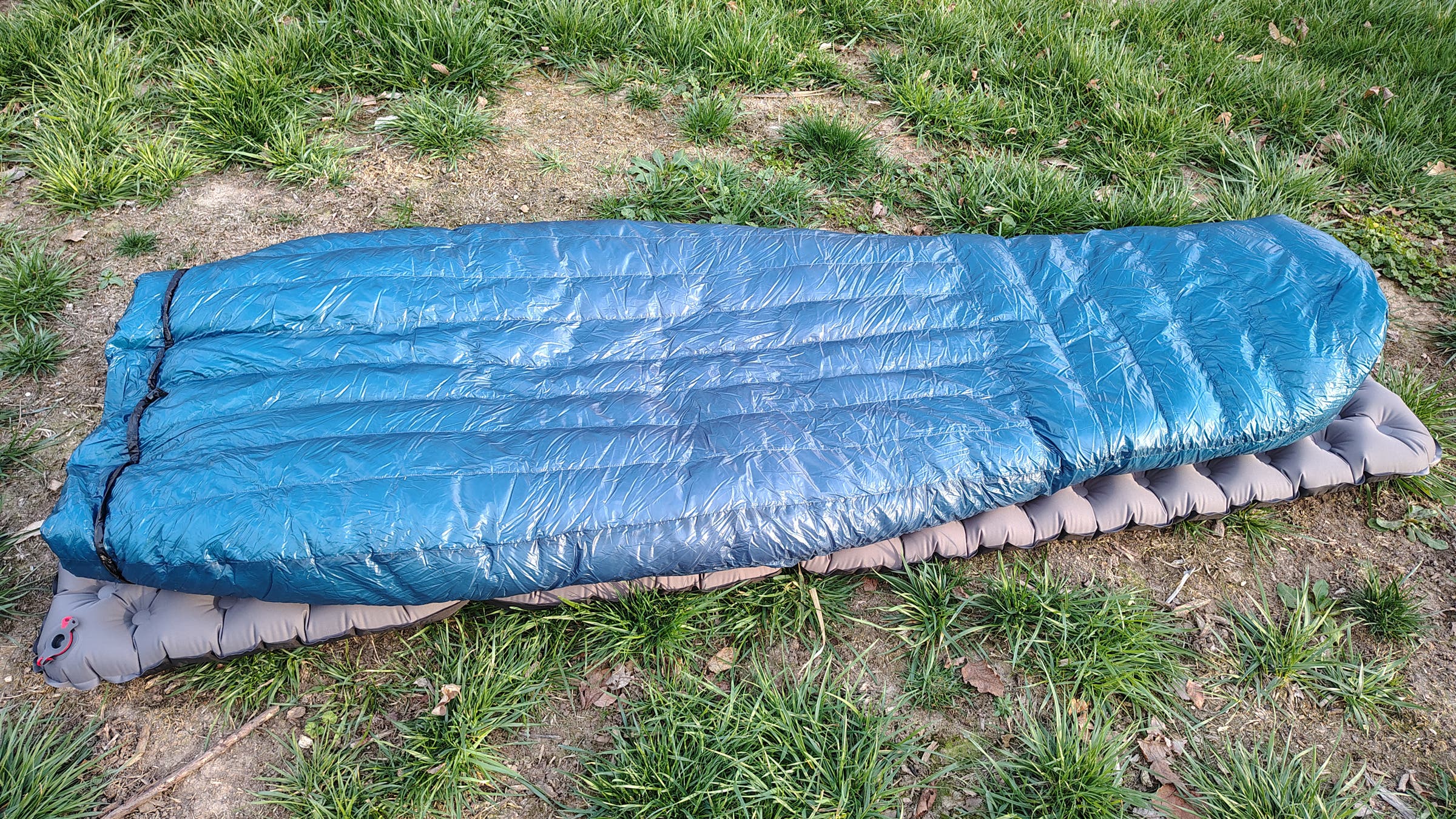
The Flex 22 has other perks that the Waratah lacks (including more sizing options, the choice of loftier 900-fill goose down, and better fabrics), but the Waratah isn’t devoid of features. One nice design choice is the location of the pad straps, which attach a few inches in from the quilt edges, making it easier to tuck the edges beneath you and keep out drafts. There’s also overfill in the footbox (nobody likes cold feet) and underfill along the quilt edges, which are generally tucked under your body and not contributing much to your warmth. Otherwise, the design is similar to other quilts, with a snap and cinch cord to keep things snug around the neck and a zippered footbox that allows the quilt to lay completely flat when unzipped.
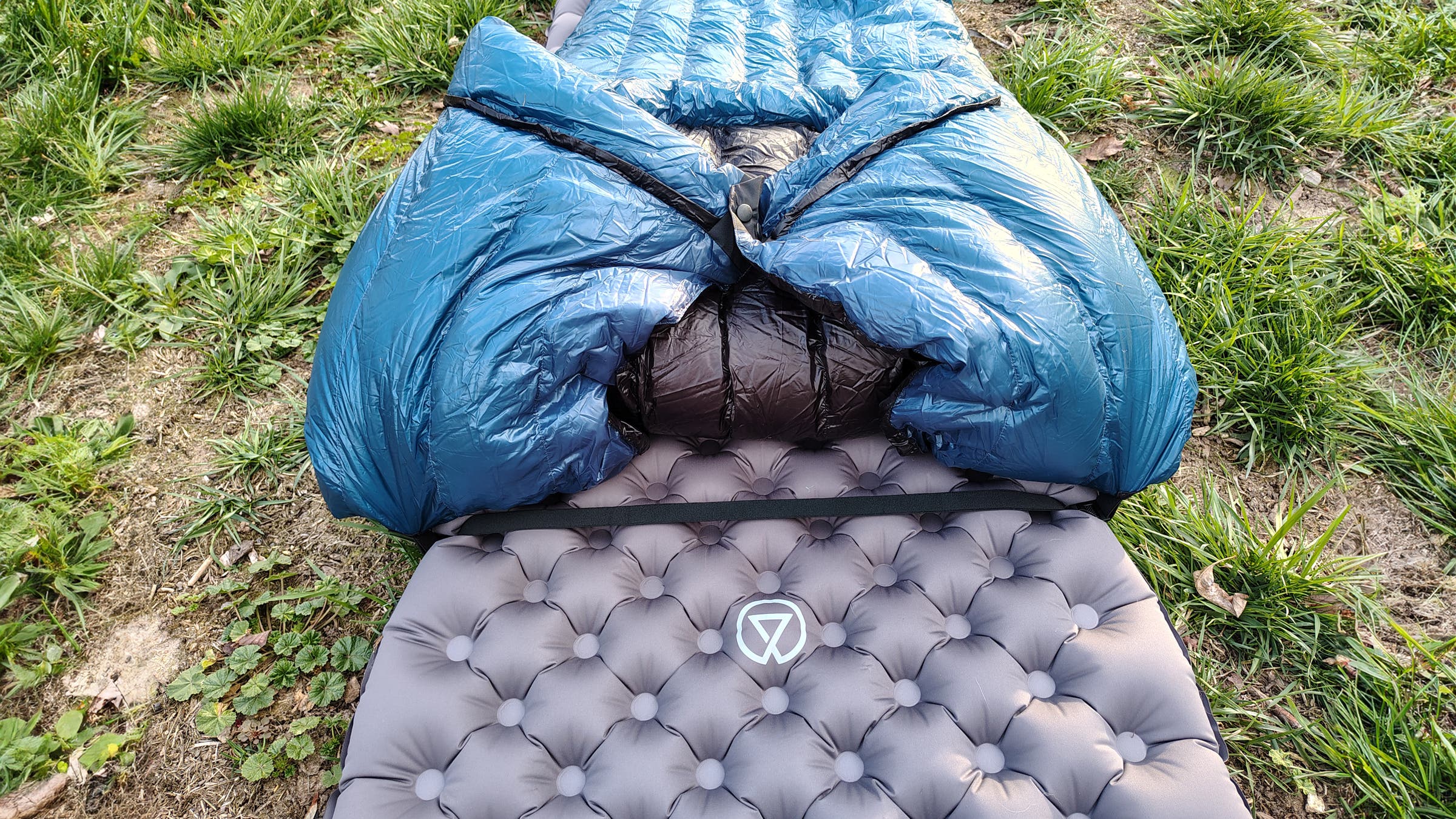
Neve Gear updated the Waratah for Fall 2026, and the changes are all positive (minus the $20 price increase. For ultralighters, the most notable is the one-ounce weight savings from a slightly narrower cut, making the Waratah a very respectable 21.7 ounces in total. There are also wider baffles, which allow for slightly better loft, and an upgraded fabric. It’s still 10-denier, but the switch to a taffeta nylon makes the handfeel considerably smoother and less slippery. Still, the Waratah’s fabric does leave something to be desired, especially compared to more water-resistant models from Feathered Friends and Western Mountaineering. As for construction, the Waratah is decent but not extraordinary. We found a few loose threads at the ends of seams, but never dealt with a blown seam or torn baffle.
The Waratah is no longer the outright steal it used to be—when it originally debuted in the Gear Guide, it cost just $225. But the price increases have come with real improvements to design and fabrics, as well as a lower overall weight, and the Waratah remains not only the best quilt for the price, but one of our favorites at any price point.
Comfiest Bag
Big Agnes Fly Creek UL 25
Weight: 26 oz (regular)
Size: Regular and Long
Pros and Cons
+ Great warmth-to-weight ratio
+ Smooth inner fabric
– Half-length zipper
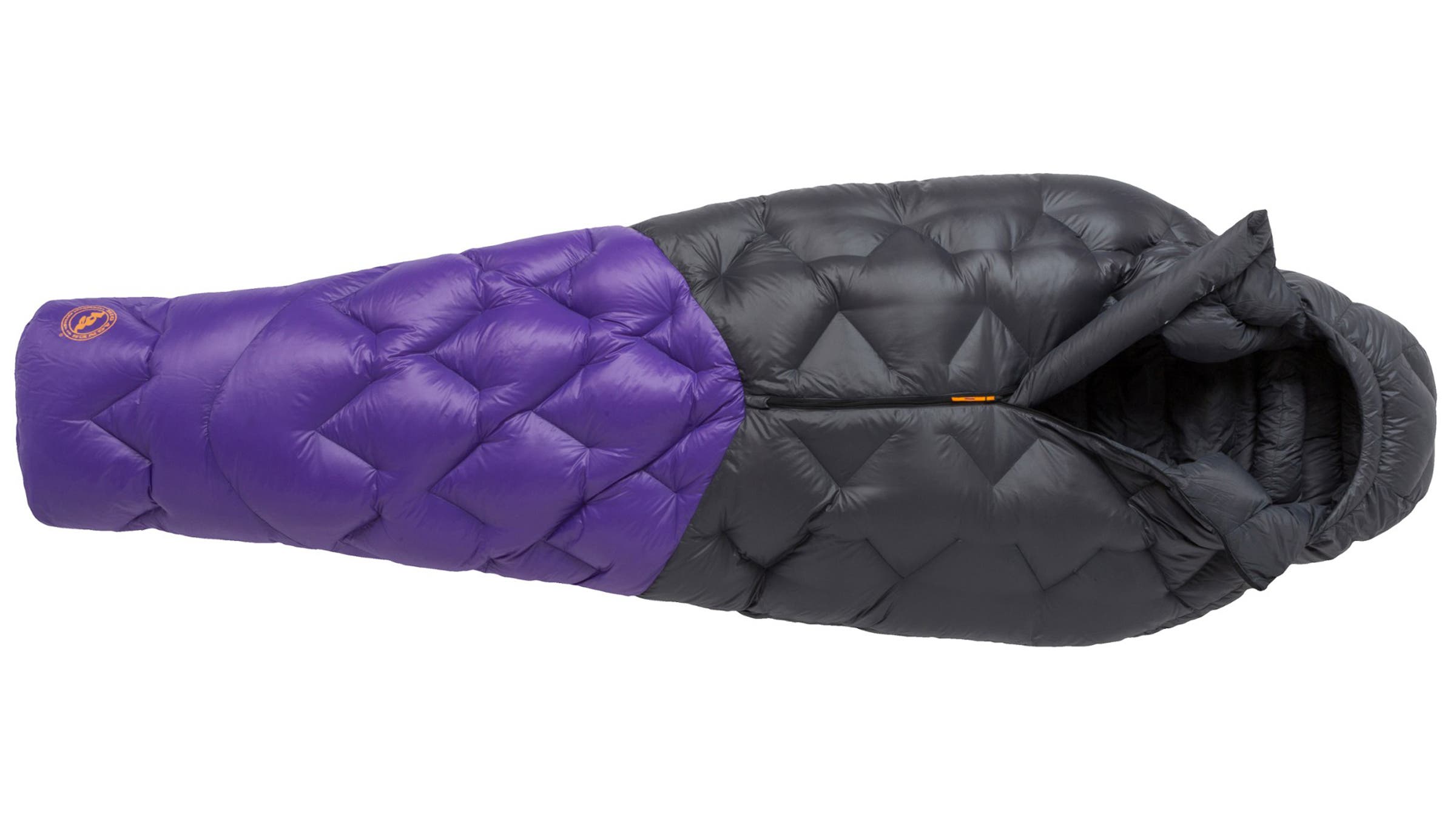
Ultralight gear isn’t exactly known for being comfortable. Even fluffy ultralight sleeping bags can be guilty of this, especially when they’re made with hyper-thin nylon that winds up feeling sticky and clammy. The Big Agnes Fly Creek UL sets itself apart, first and foremost, in the comfort department. That’s thanks in part to its lining, made with a supersoft 10-denier ripstop nylon (recycled from fishing nets) that felt more like a heavier, softer polyester taffeta; it’s rare to find such a thin fabric with great feel.
Aside from the silky interior, the Fly Creek has a lot going for it. There’s 17 ounces of water-repellant Downtek down stuffed inside, which kept our testers warm down to about 30 degrees—right in between Big Agnes’ comfort rating of 35 and limit of 25. And the cut of the mummy design felt perfect. “There was enough room for me to switch from side to side without the bag twisting, or feeling like I was swimming in extra fabric,” one tester reported after a fall hunting trip in Idaho’s Sawtooth Mountains. We also appreciated the diamond-shaped baffle design, which presented a good middle-ground between saving weight (because the design uses fewer seams) and allowing for loft, while also stopping down migration in the baffles. The cinchable hood fit snugly, with a puffy draft collar at the zipper that felt secure without being constricting. We did miss having an internal stash pocket, and came away uncertain of the half-length front zipper. While we liked the double tab that allowed easy access from inside the bag and the weight-savings of a shorter zipper, it made entry and exit a bit more complicated than a standard side zipper.
Best Premium Quilt
Best Premium Quilt
Weight: 22.8 oz (regular)
Size: Small, Regular, Long, Small Wide, Regular Wide, Long Wide
Pros and Cons
+ Water-resistant
+ Compact
+ Feature-rich for a quilt
– Expensive
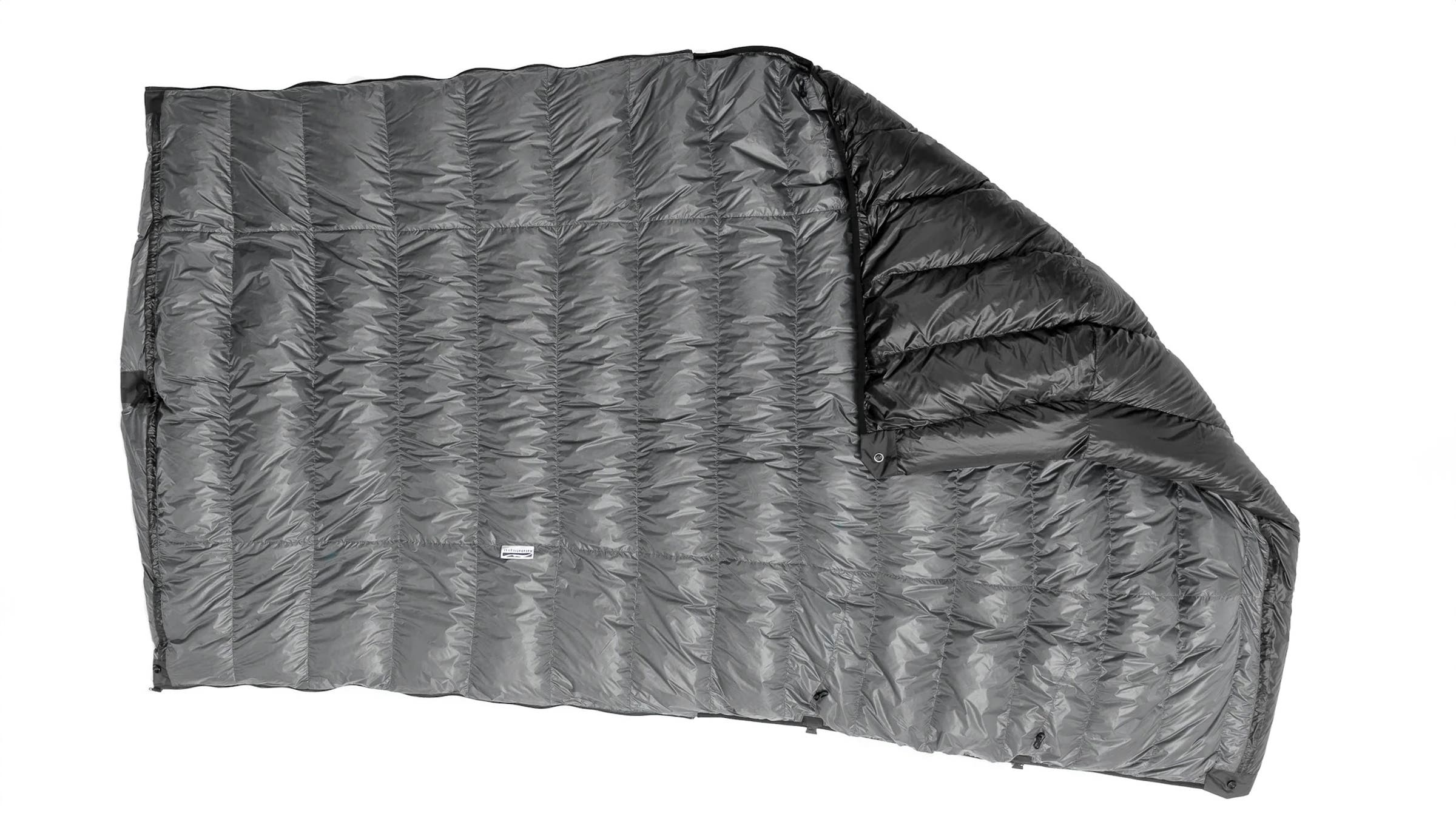
The Katabatic Flex 22 was our top pick among ultralight quilts for several years running. This year, the Neve Waratah edges it out for one reason—price. But for anyone willing to shell out extra, we still think the Flex 22 is an excellent choice. It has better, more water-resistant fabric, and comes with a best-in-class strap attachment system that keeps out drafts and excels in cold weather.
Tester Pat Greehan used the Flex 22 for The Wolf, a two-night, 325-mile bikepacking race through northern Minnesota, during which he rode through a torrential thunderstorm that led to a very damp night. Even with all that moisture, Greehan was comfortable, thanks to the quilt’s water-resistant, quick-drying materials. The Flex 22’s 900-fill goose down is bonded with gold particles (really!) to aid in the evaporation of water molecules, and the quilt’s exterior is made from 10-denier Pertex DWR ripstop for added protection, while an interior 20-denier Pertex taffeta liner keeps the skin cool and wicks away sweat. The Flex 22 is also available with 850-fill duck down, which adds about an ounce compared to the goose down version we tested, but cuts the price down to $379.
Greehan was also impressed with the quilt’s simple versatility: The Flex 22 comes with two elastic straps with clips that wrap around sleeping pads of all sizes, preventing shifting while cinching the sides down for warmth. They can attach in two ways: One clip allows the straps to rotate, keeping the pad loosely attached to the pad, while the second locks the quilt in place on top of the pad, preventing drafts. A zipper in the center lower half opens to allow the quilt to function like a blanket. On cold nights, the quilt snugs up with a drawstring and simple snap-closure. In general, we like sewn footboxes for cold-weather quilts, but the Flex’s zippered lower end is an exception, with a lofty draft tube that seals out air. That’s not the only feature that makes this quilt punch above its weight in frigid temps. There’s also the differential cut (the interior fabric is cut narrower than the exterior, which helps prevent loss of loft when the interior fabric is stretched) and overstuffed baffles in the neck collar and footbox.
For such a warm, compact quilt (the Flex 22 packs down to the size of a Nerf football) it’s surprisingly feature-rich, with a down-filled draft collar and interior pocket that fits a phone. On Greehan’s final two-night bikepacking test in rainy late October, the temperature dipped into the mid-30s. Even in those hypothermic conditions, he was comfortable wearing just a long-sleeve wool top and bottom, and other testers have pushed the quilt into 25-degree temperatures with no issues. “I didn’t see a negative,” said Greehan. “I found this quilt to be versatile, breathable, and it compresses really well.”
Best For Fastpacking
Feathered Friends Tanager CFL 20
Weight: 18.9 oz (regular)
Size: Regular, Regular Wide, Long, Long Wide
Pros and Cons
+ Great warmth-to-weight
+ Packs down small
– No ventilation
– Constricting in warm weather
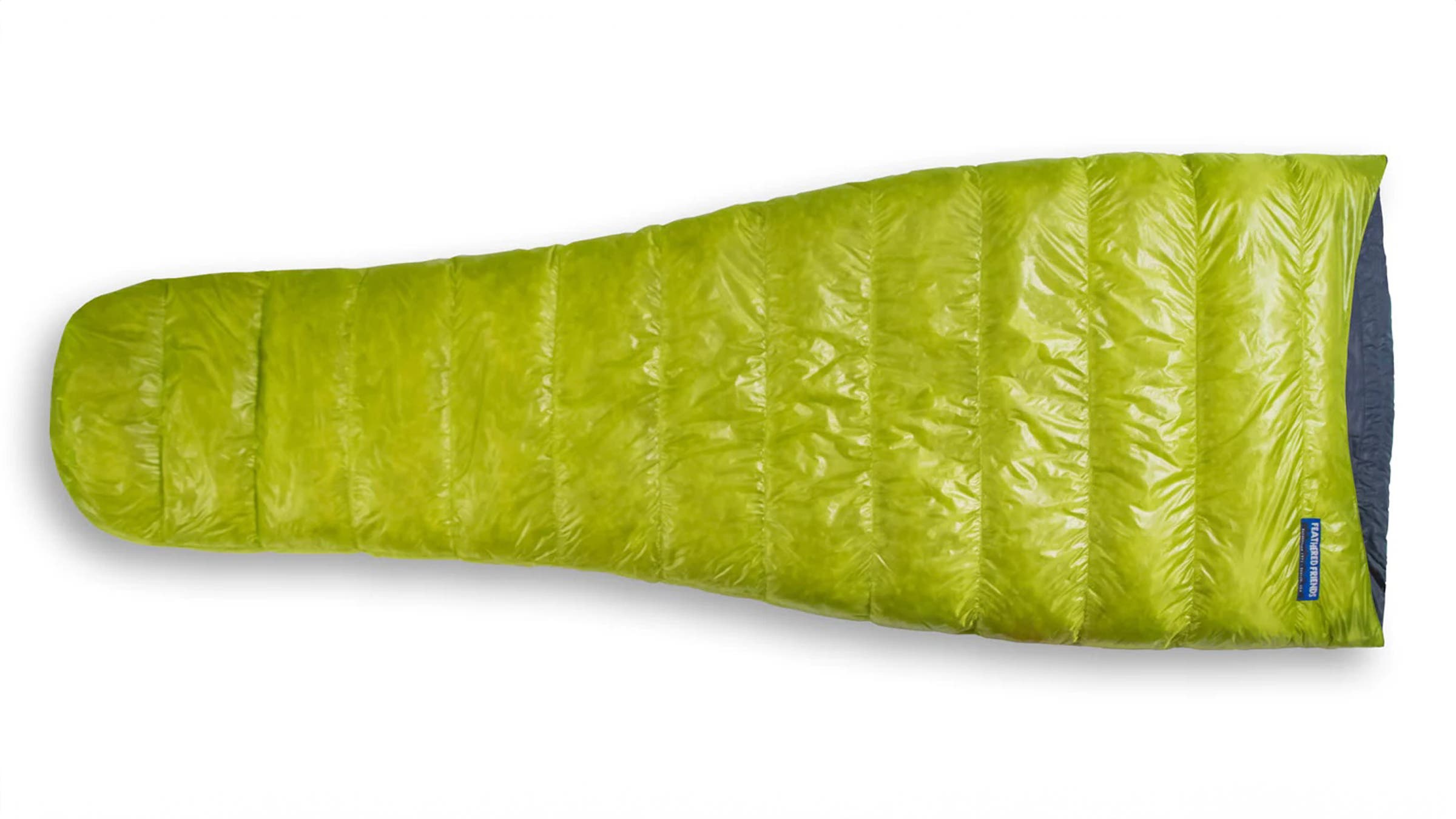
The Feathered Friends Tanager CFL 20 is a hoodless, zipperless sleeping bag that gives new meaning to the concept of “keeping it simple.” This pared-back design, coupled with uber-thin 7-denier Pertex Quantum fabric and 950-fill down, creates one of the warmest ultralight bags we’ve ever tested. Of the Tanager’s 18.9-ounce total weight, 12.7 ounces are down fill weight, leaving just 6.2 ounces of fabric. In other words, there’s almost no wasted weight.
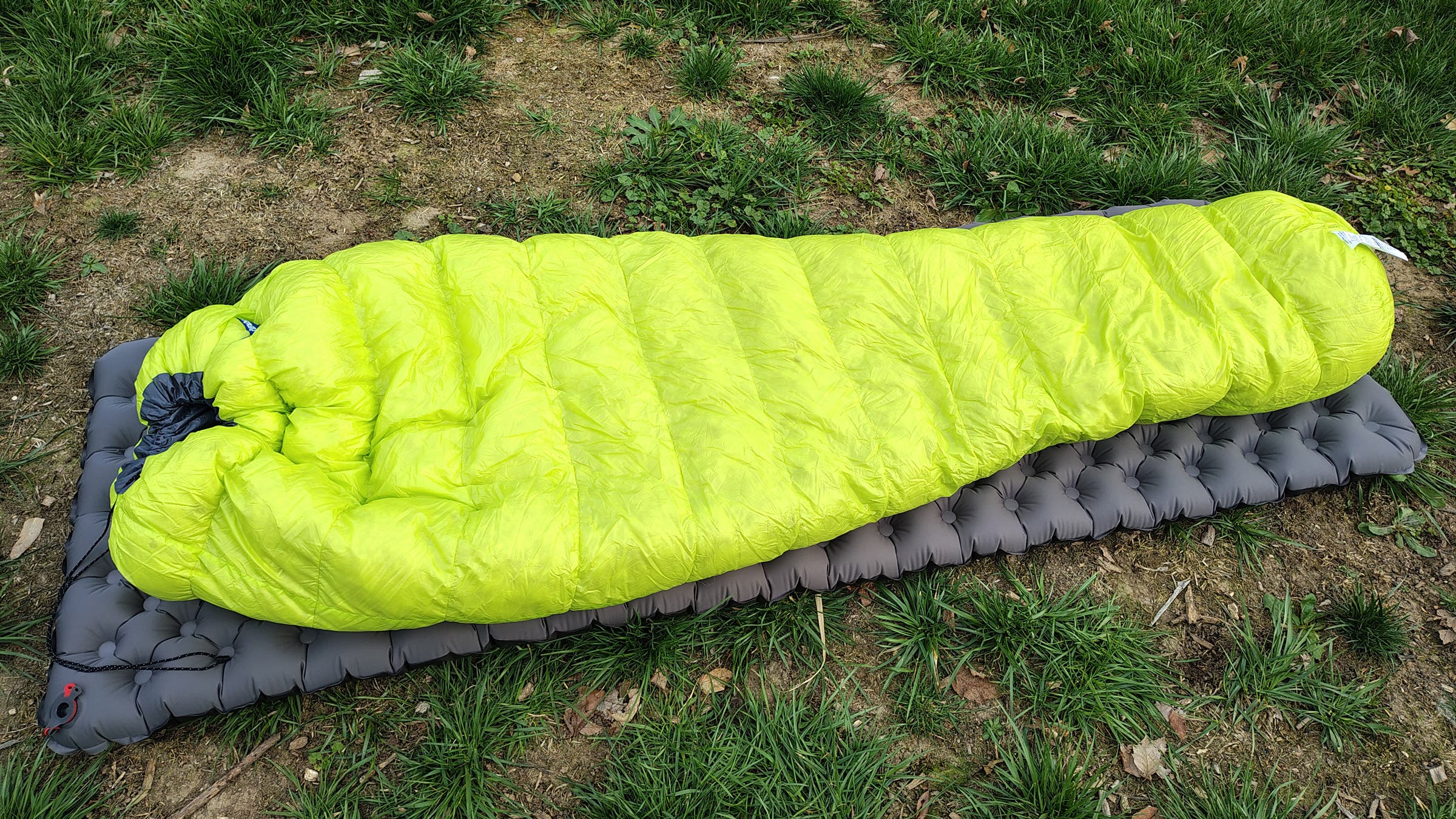
Adapting to a zipperless bag isn’t for everyone, and even our veteran testers had a learning curve with the Tanager. They described getting into the bag as feeling like putting on a full-body sock; it takes some wriggling around, which wasn’t always easy in small, one-person shelters. The lofty down and thin shell fabrics give this bag solid breathability, but ventilation is subpar, since there’s no way to unzip to dump heat. For that reason, testers agreed that the Tanager is best suited to shorter trips where nighttime temps aren’t expected to vary widely. “In 20- to 30- degree temps, this bag is everything I need. But if temps are in the 40s or 50s, it will leave you sweaty and sad,” one tester explained. Think fastpacking and high alpine trips, not summertime thru-hikes.
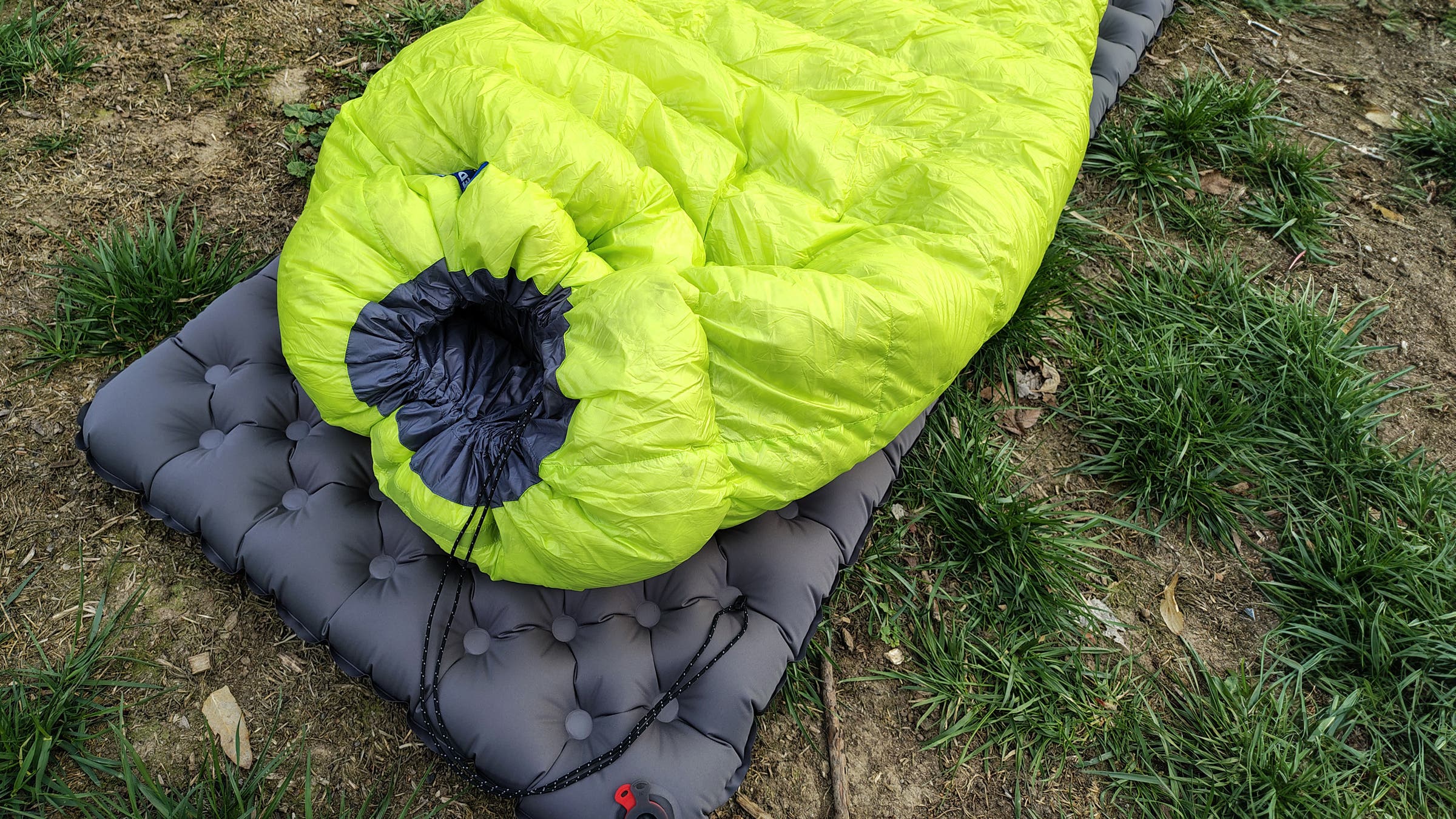
Used in the proper conditions, the Tanager is a solid performer. It packs down to about cantaloupe size—smaller than most 30-degree bags we’ve tested, let alone a 20-degree bag. Once testers slithered into the bag, it proved roomier than expected, with a 63-inch width at the elbow that’s fairly standard for a mummy shape (the wide width measures 70 inches at the elbow).
The Tanager CFL’s lone feature is a drawstring at the neck, which is easy to operate from inside and helps retain heat in cold weather. Since this is a hoodless bag, we recommend the long size for anyone over 5’9’’ to have enough length to secure around your neck. Feathered Friends designed the Tanager to be used in conjunction with a hooded down jacket, and we’d consider a jacket necessary in temps under 30 degrees. Still, when paired with a suitably warm jacket, the Tanager lives up to its 20-degree temperature rating.
Best Superlight Quilt
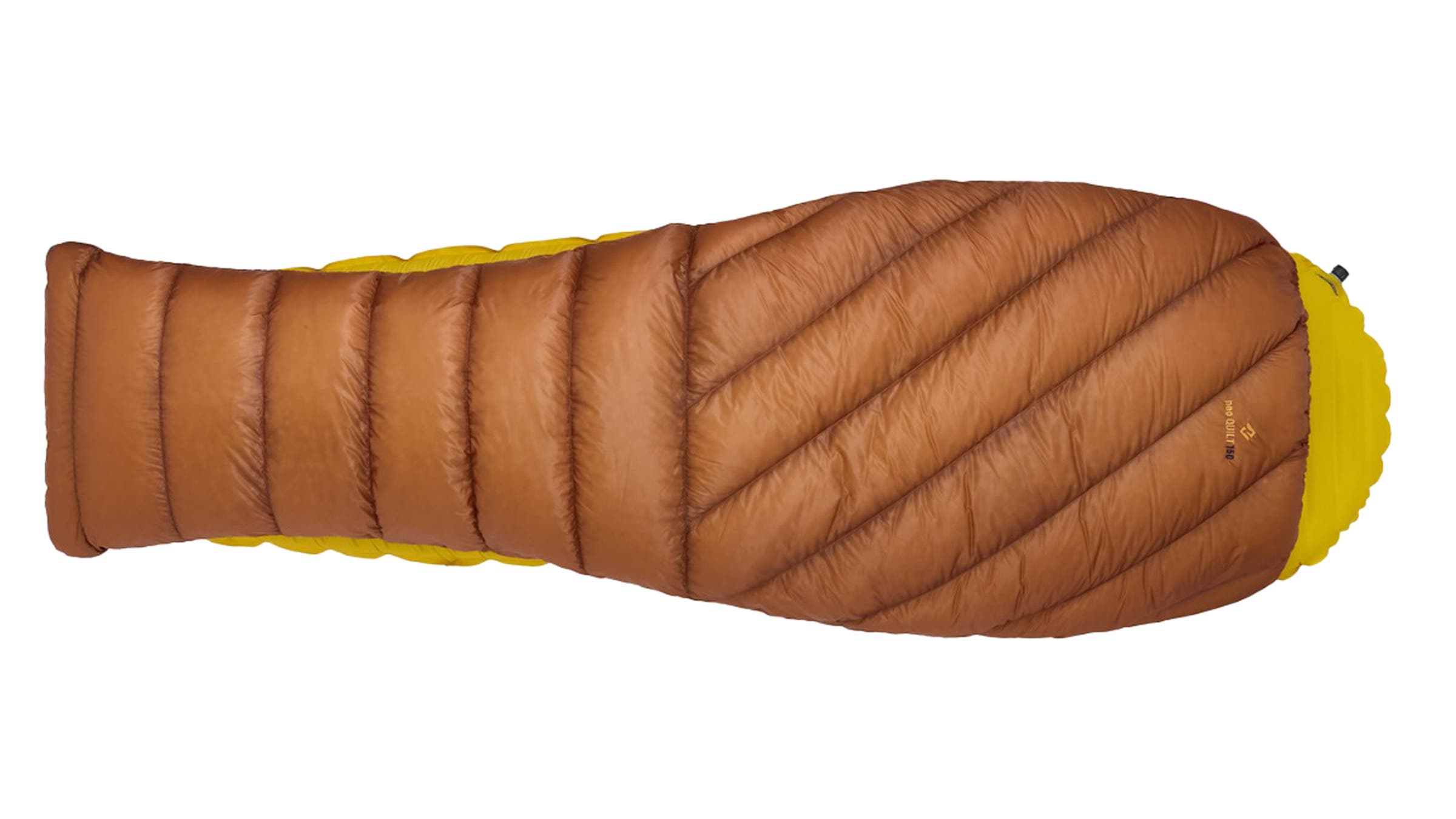
Cumulus Neo Quilt 150
Size: XS-XL with three width options
Weight: 9.5 oz (regular)
Pros and Cons
+ Extremely lightweight
+ Relatively affordable
– Leaks down
Buying a dedicated quilt or bag for warm weather trips is one of the best ways to cut weight as an ultralighter. This year, our new favorite summer quilt is the Cumulus Neo Quilt 150, appropriate for conditions above 45F and weighing in at just 9.5 ounces.
Simply put, this is one of the lightest quilts we’ve ever used. Compared to our previous top pick, the Zpacks Summer Quilt, the Neo 150 only cuts 0.2 ounces, but adds a few features we really appreciated. It has a better overall fit, a second pad strap attachment, shorter baffles that keep down from migrating, more customization options, and a lower price tag.
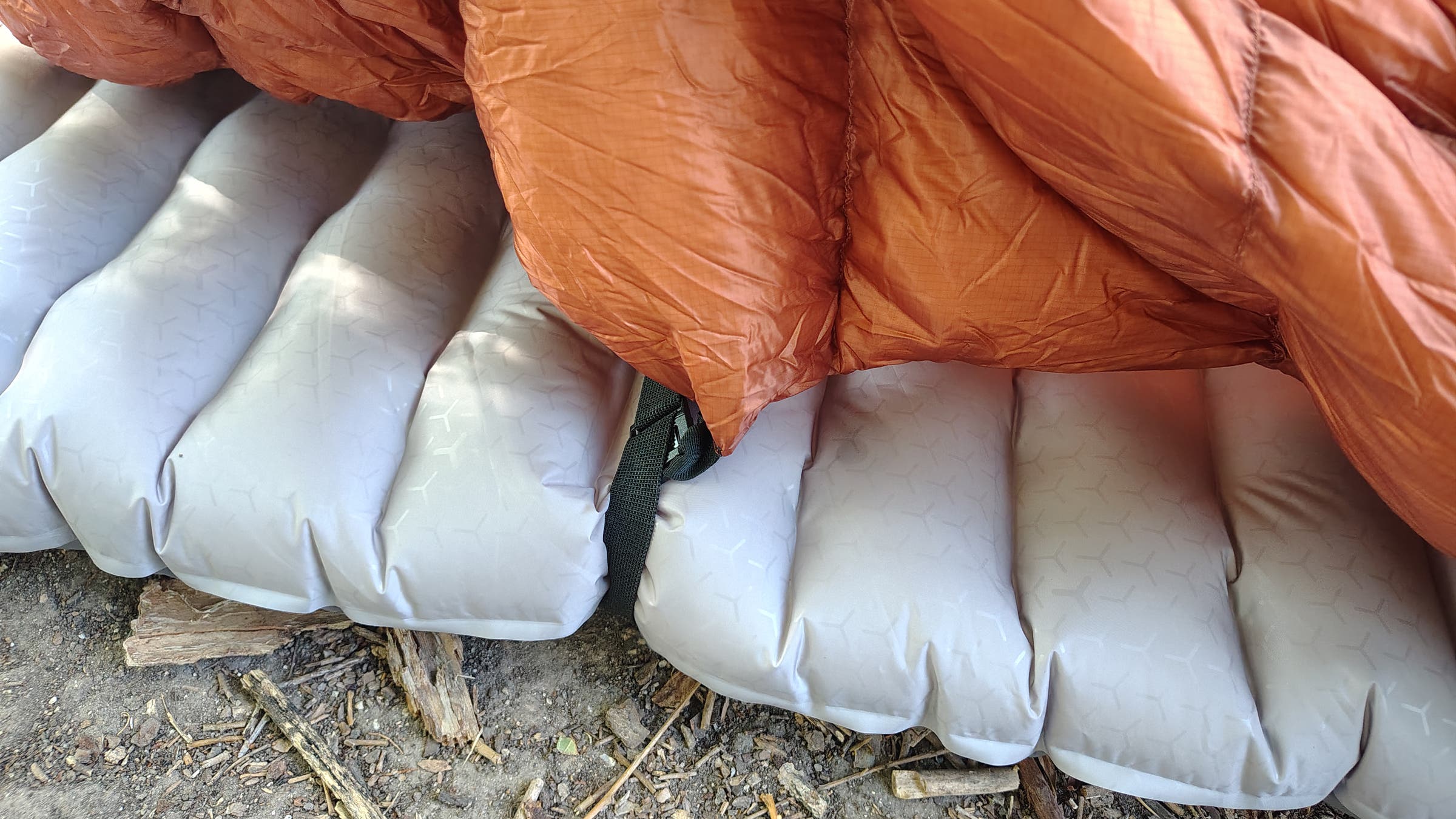
The basic ingredients of the Neo 150 are about as ultralight as they come, pairing 900-fill down with a 7-denier nylon shell and lining. There’s the standard set of pad strap attachment points and a cinch cord around the neck. If this were a three-season quilt, we’d deduct points for what’s missing: no differential cut, no draft collar, and sewn-through baffles instead of box baffles. But as long as we didn’t push the temperature rating, those features weren’t missed. Surprisingly, even the barebones two-dimensional footbox (there’s no bottom panel to add height) worked just fine for our testers. Instead, the quilt simply widens slightly around the feet. In a heavier bag or quilt, this would feel constricting, but given just how light the Neo 150 is, we had no issues stretching out.
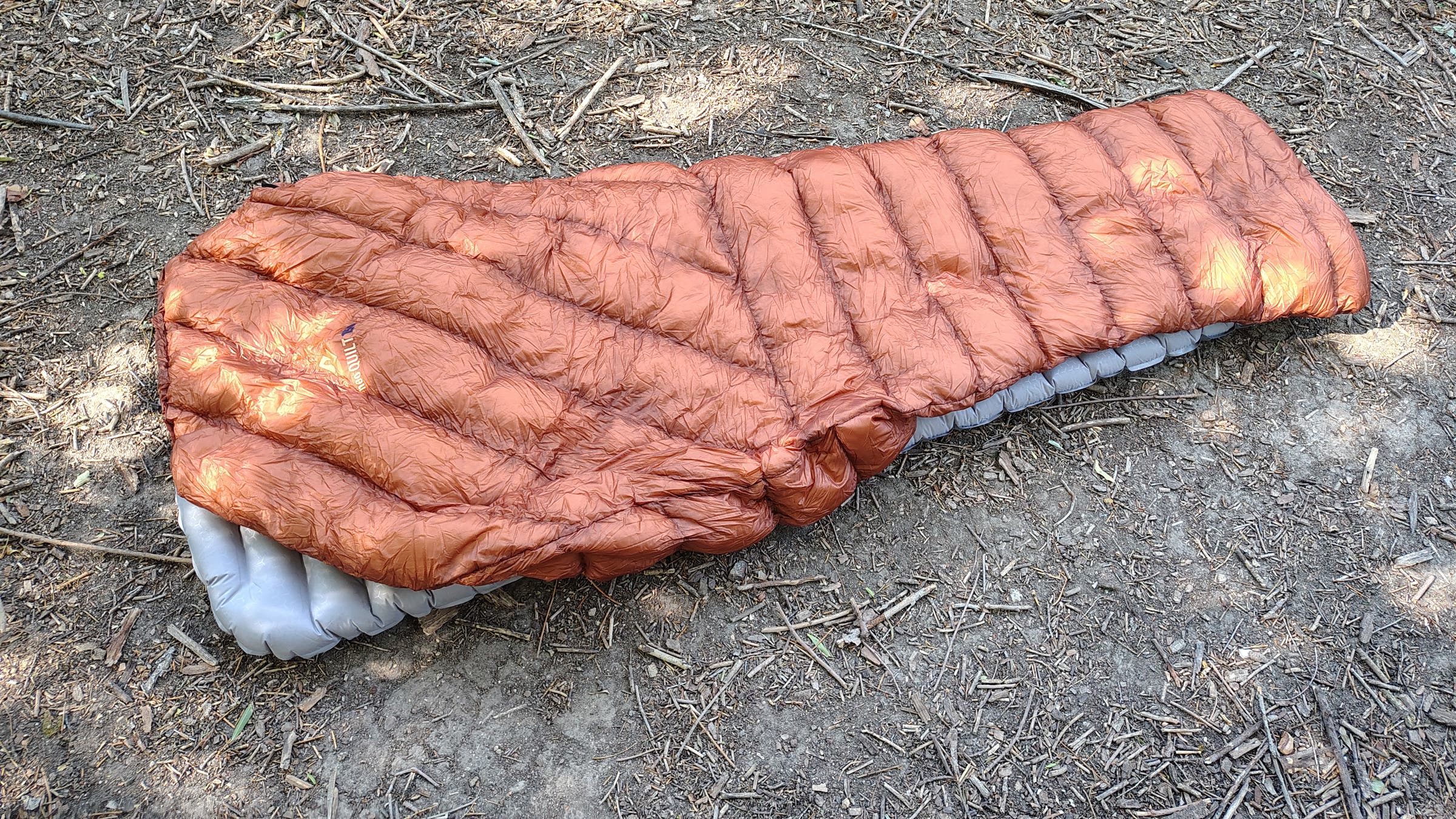
One of the biggest perks with the purchase of a Cumulus bag or quilt is the sheer number of custom options available. There’s five length and three width options to choose from. Plus, you can pick your shell and lining fabrics, the amount of down overfill or underfill, choose between standard and hydrophobic down, and add down overfill in just the footbox. If you know exactly what you want, it’s hard to beat Cumulus’ custom quilt creator. If not, rest assured that the standard options for the Neo 150 are about as ultralight as possible.
Best Warmth-to-Weight
NEMO Pulse Quilt
Weight: 18 oz (regular)
Size: Regular, Long
Pros and Cons
+ Great warmth-to-weight ratio
+ Innovative baffle system
– Very expensive
– Static attachment straps
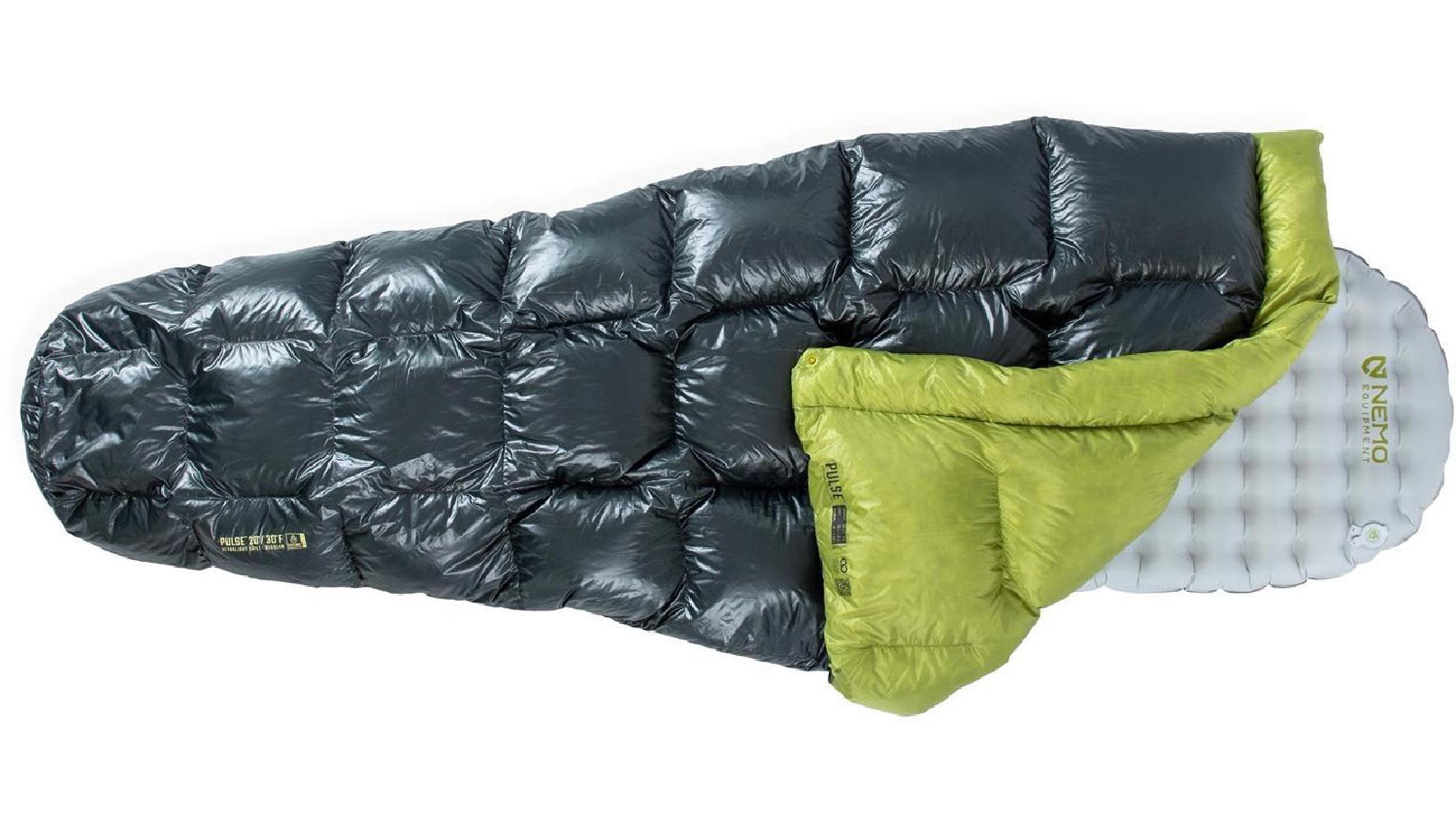
Here’s one thing the NEMO Pulse is not: affordable. But for those willing to shell out for best-in-class gear, the Pulse is hard to beat. The stats alone are impressive: 1000-fill ExpeDRY down, a claimed temperature rating of 20 degrees, and a total weight that tips the scales at just 18 ounces.
That list is sure to raise eyebrows, and it’s also not entirely accurate according to our testing. As is the case with many quilt temperature ratings, we didn’t stay warm in the Pulse down to 20 degrees. But we did find it warm and comfy down to a few degrees below freezing, which is impressive for any quilt, let alone one that barely weighs more than a pound.
How does it achieve such a great warmth-to-weight ratio? The combination of a gossamer 10-denier polyester shell with 1000-fill down plays a part. So do the “Karo Step” baffles. Rather than using the sewn-through baffles often found on summer quilts or the box baffles found in many cold-weather bags, Karo Step is a square or diamond-shaped series of baffles that aren’t fully enclosed (each corner is open). This allowed for plenty of loft, kept down from migrating between baffles, and contributed to a lighter overall weight. The permanently sewn footbox, the simplest and warmest way to enclose the bottom of a quilt, helped keep things toasty, as did the thick, cinchable draft collar at the neck.
According to our testers, it’s a winning combo: It kept us warm down to the same temperatures as the similarly-rated Katabatic Flex 22 while being 5 ounces lighter. If you’re an ultralighter who prioritizes weight above all else, the Pulse is definitely worth a look.
Best Synthetic Quilt
Enlightened Equipment Revelation Apex 30
Weight: 25.6 oz (regular)
Size: Short, Regular, Regular Wide, Long Wide
Pros and Cons
+ Excellent in damp conditions
+ Affordable
+ No cold spots
– Heavier than equivalent down quilts
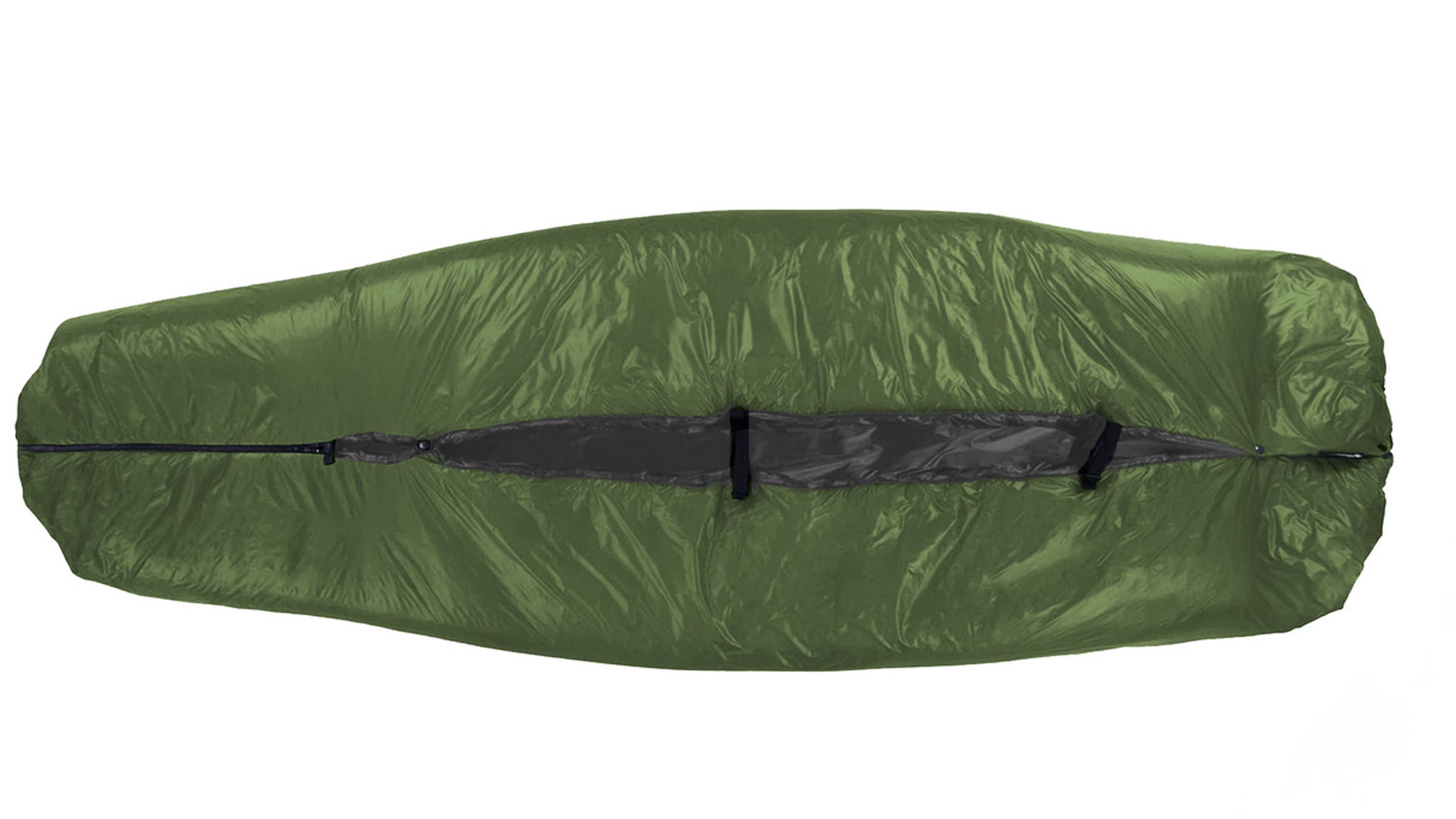
For backpackers devoted to finding the best and lightest gear available, down is hard to beat. But experienced hikers also know there are exceptions to every rule. When conditions are damp, humid, or rainy, synthetic insulation easily bests down, thanks to its ability to retain warmth and loft while wet and dry out quickly once the sun is out. For trips in humid environs, a synthetic bag is a must, and our favorite ultralight model is the Enlightened Equipment Revelation Apex 30. That’s largely down to the Climashield Apex insulation found inside, which we’ve concluded is one of the most durable, warmest, and cost-effective synthetic insulators on the market. After testing numerous synthetic quilts and bags on trips as long as six-month thru-hikes, the Apex came out on top, especially when it came to retaining loft and warmth after long-term use. Compared to down, though, it’s no match: Packed down, it’s nearly twice the size of a comparable 30-degree down quilt and testers resorted to using a compression sack to get the Revelation Apex down to a manageable size.
The Revelation Apex shares a design with the down version of the Revelation quilt, a longtime Backpacker favorite, with a zippered footbox that allows the quilt to lay flat—a godsend on hot, muggy nights when you need all the airflow you can get. Add in the 10-denier nylon shell and liner fabrics, and this quilt hit our benchmarks for breathability. “My AT thru-hike totally changed when I swapped out a down bag for this quilt,” one tester said. “I was instantly so much more comfortable at night.” Other features include two sets of elastic pad straps with wafer clips, an adjustable collar with both a cinch cord and snap button (but no draft tube), and a complete absence of sewn-through seams, allowing the Apex insulation to loft to its full potential.
Best Emergency Bag
Cumulus Aerial 250
Size: XS-XL length; Regular, Wide, and Extra-Wide
Weight: 13.6 oz (men’s regular)
Pros and Cons
+ Very light
+ Great warmth-to-weight ratio
– Only for back sleepers
– Hard to get in and out of
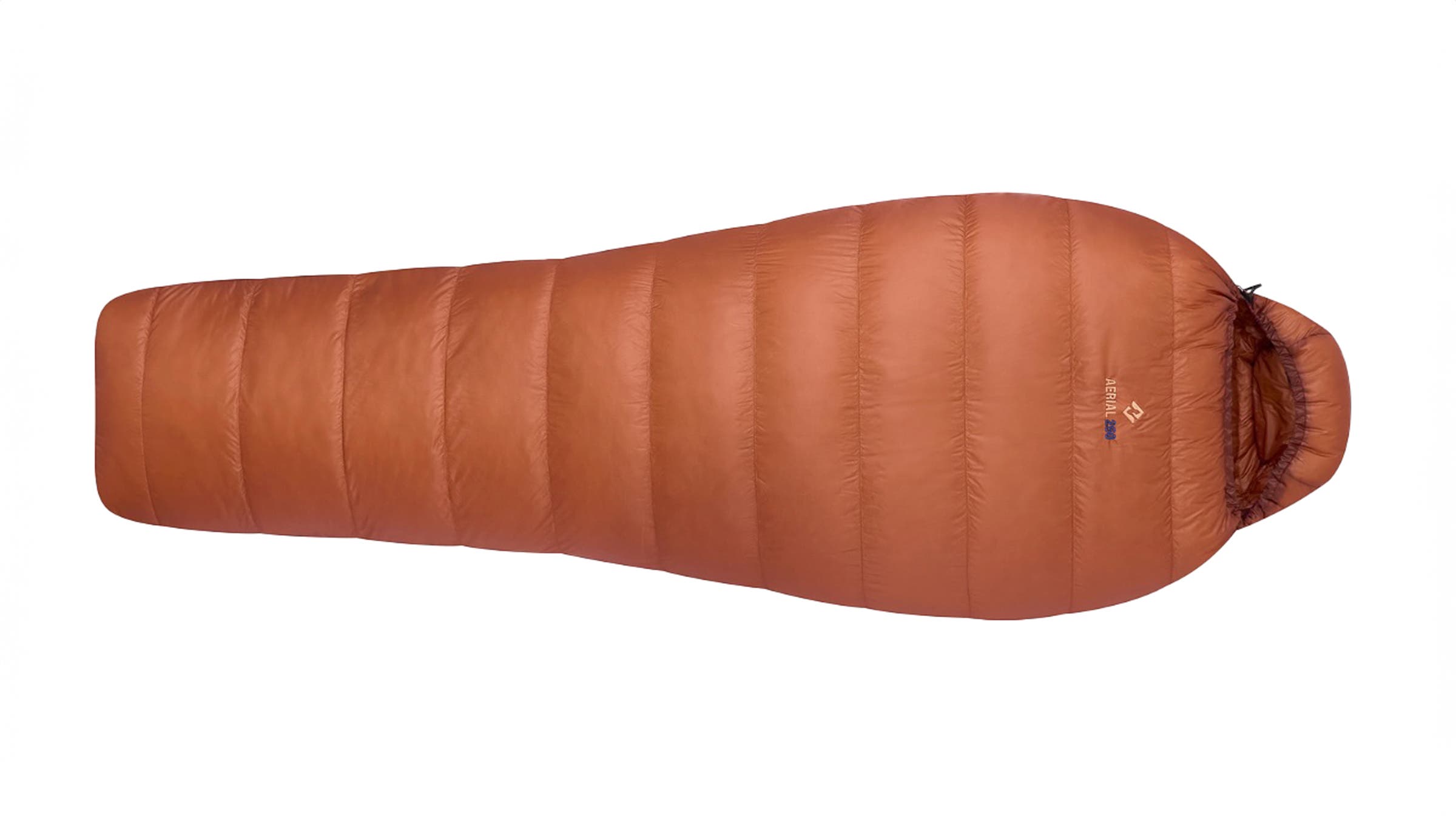
There was a time when backpackers who wanted to shave ounces on their sleep system had one choice to make: ultralight mummy or quilt? Today, there’s a lot more variety when it comes to slumber on a weight budget. One of the more intriguing options we’ve tested is the Cumulus Aerial 250, which combines features of both bags and quilts to create a zipperless mummy with a fully-featured hood and an uninsulated “false bottom.” It’s incredibly light and packable, but the difficult entry and exit, lack of venting, and narrow cut will frustrate all but the most hardcore ultralighters. It’s best for dedicated ounce-counters willing to sacrifice versatility for weight savings, or as an emergency bag for endurance races or questionable day hikes.
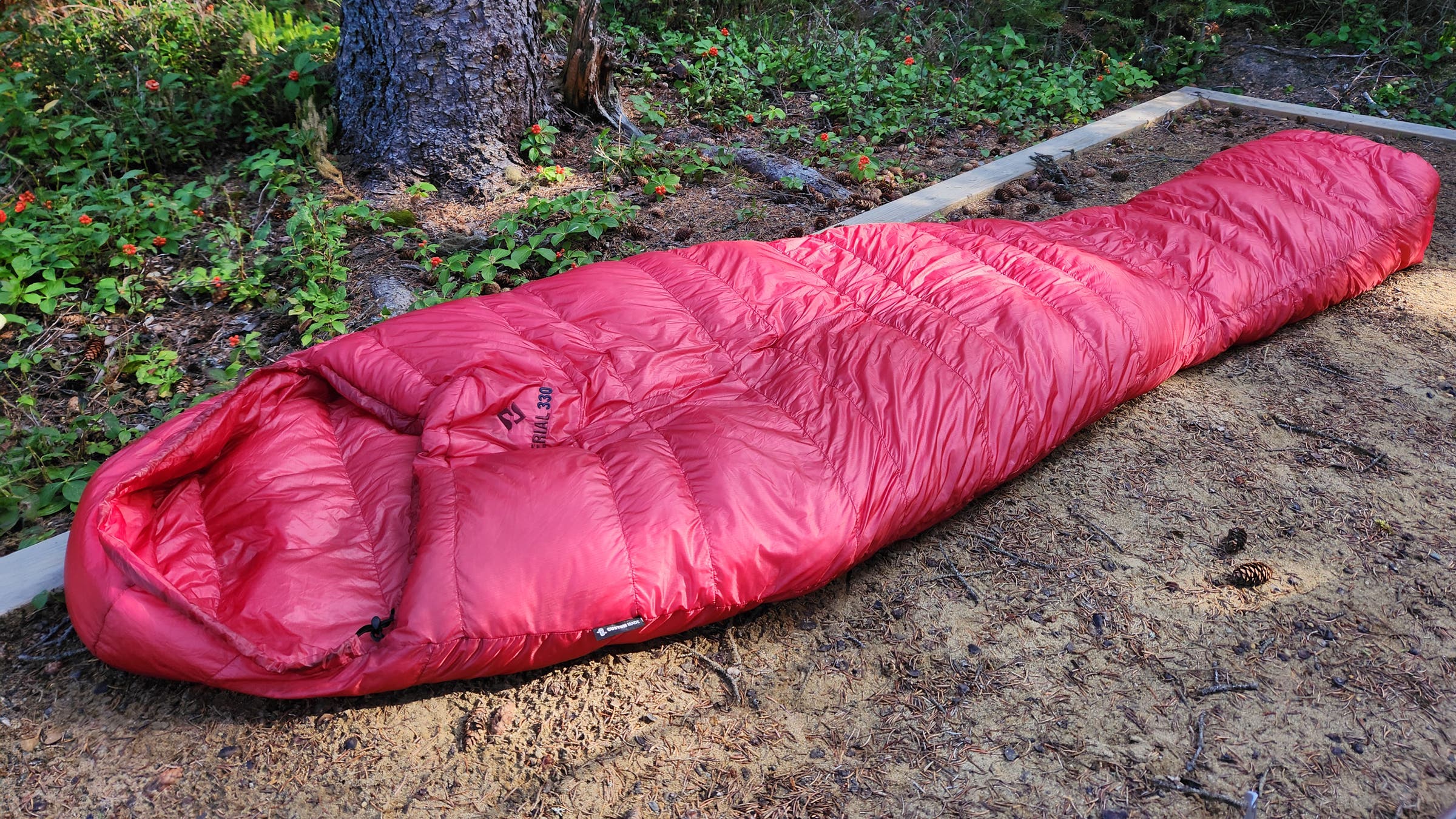
Cumulus is a Polish brand known for bags and quilts that employ high-quality down, superlight fabrics, and—occasionally—daring designs. The Aerial is no exception. It’s constructed of Toray Airtastic, a 7-denier nylon that’s about as light as sleeping bag fabrics can get (0.56 ounces per square yard), and stuffed with 900-fill Polish goose down. There’s a loft-endowing differential cut —where the outer shell is slightly wider than the inner lining—a feature common to all our favorite cold-weather bags. The hood is surprisingly warm and snug for such a lightweight bag, and widely adjustable thanks to two separate cinch cords around the opening. In the name of weight savings, the regular-size bag has a fairly narrow cut (about 59 inches at the shoulders) and a snug footbox, though Cumulus offers a host of custom options, including five lengths, three widths, and down overfill.
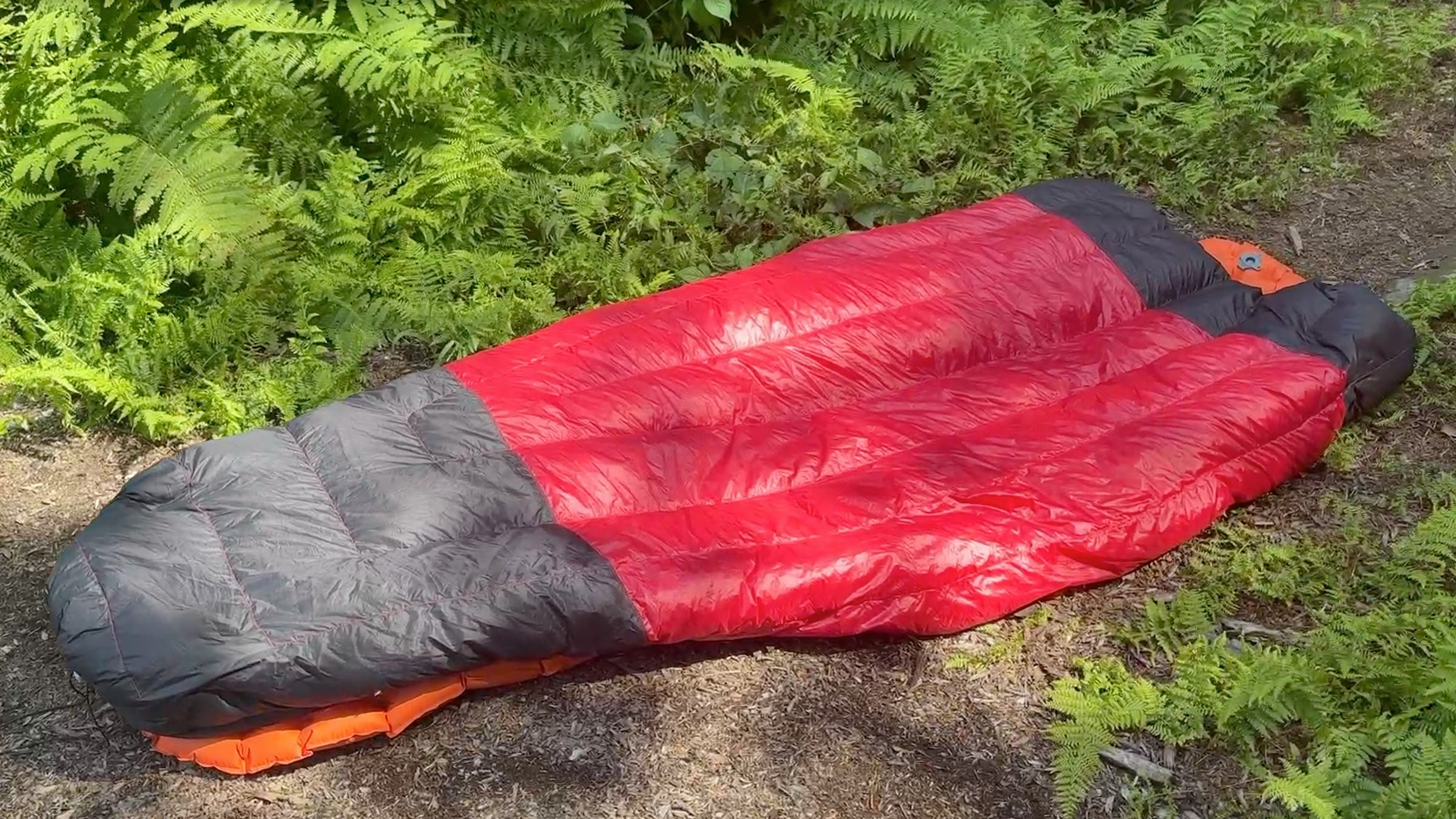
The false bottom is the biggest design departure from the norm, which can make the bag cold and drafty for side- or restless sleepers. When our testers didn’t shift from side to side often, it was easy enough to keep the uninsulated bottom securely between body and the pad. But unlike a quilt, which is easy to keep aligned as you turn over, the fully-enclosed Aerial mummy tends to move with you, exposing the uninsulated section to cold air. “The idea is to let the warmth come from your pad,” reported tester Alan Verona, a wildland firefighter based in northern British Columbia. “But I found the non-insulated strip chilly. When I turned over, it took an awkward shuffle to rotate the bag and keep the false bottom between me and the pad.”
Back-sleeping testers, meanwhile, found the Aerial to be far warmer than expected, given the bag’s scant 13.6-ounce total weight. While it has a comfort rating of 36 degrees, we felt its limit to be around 40 degrees without a down jacket, still giving it an outstanding warmth-to-weight ratio. It’s not the absolute lightest bag or quilt we tested: At 9.7 ounces, the Zpacks Summer Quilt is lighter and far more comfortable in hot climates, but not nearly as warm.
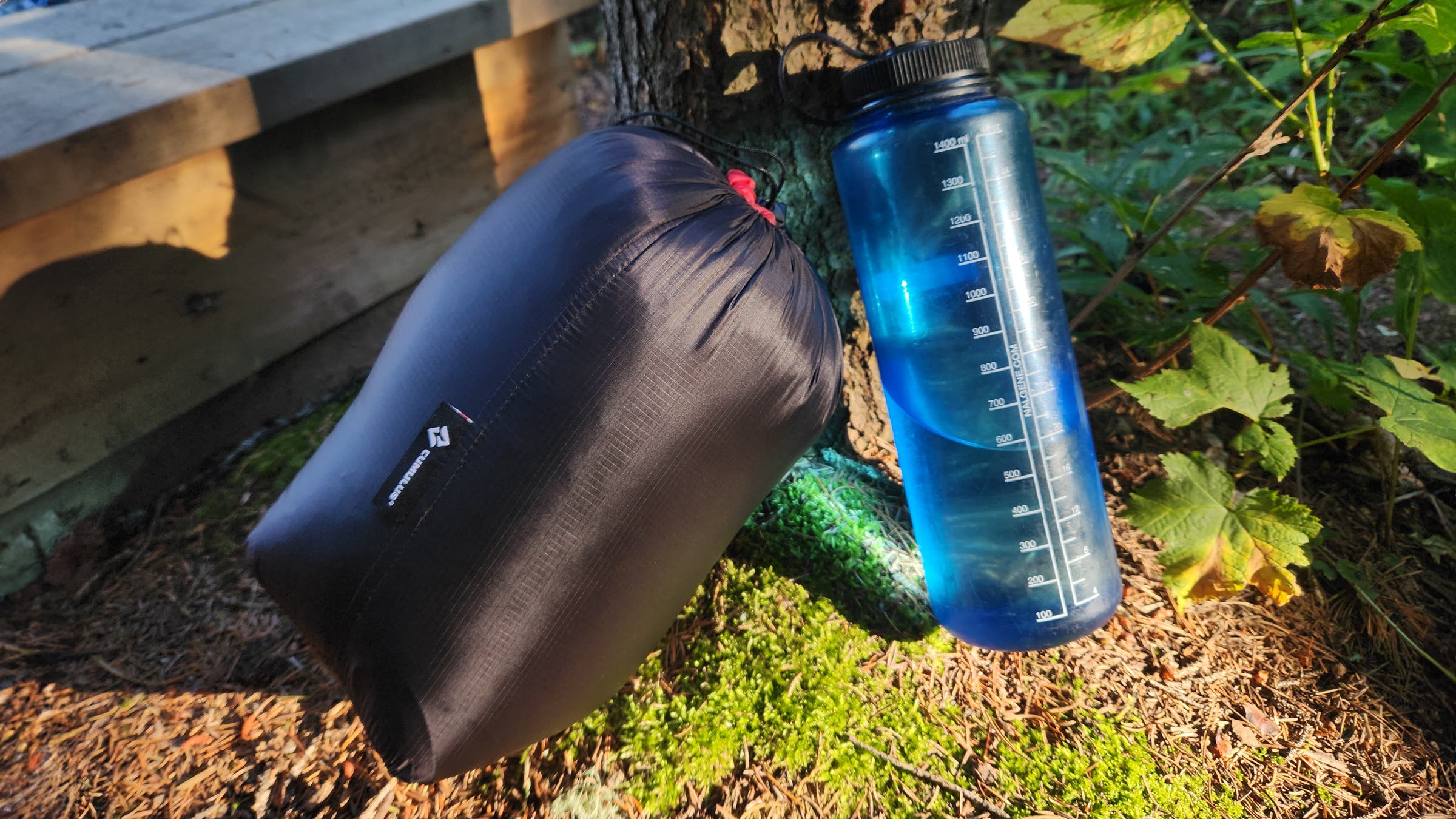
The other main departure from a standard bag is the zipperless design. This is a big weight- saver, but it makes getting into the bag cumbersome. The only way in is to shimmy through the narrow opening at the hood. Once inside, the only way to vent heat is to pull the bag down until you cool off. On a 55-degree night, one tester said he was comfortable with the bag pulled down to his hips and a down jacket draped over his torso. Still, it’s a hassle compared to a quilt, where venting heat is as easy as sticking a leg out to the side. In general, we much prefer the zipperless design of the less finicky Feathered Friends Tanager.
In all, while this bag is terrifically warm and lightweight, it’s highly specialized for back-sleepers in cold—but not freezing—temps.
Honorable Mentions
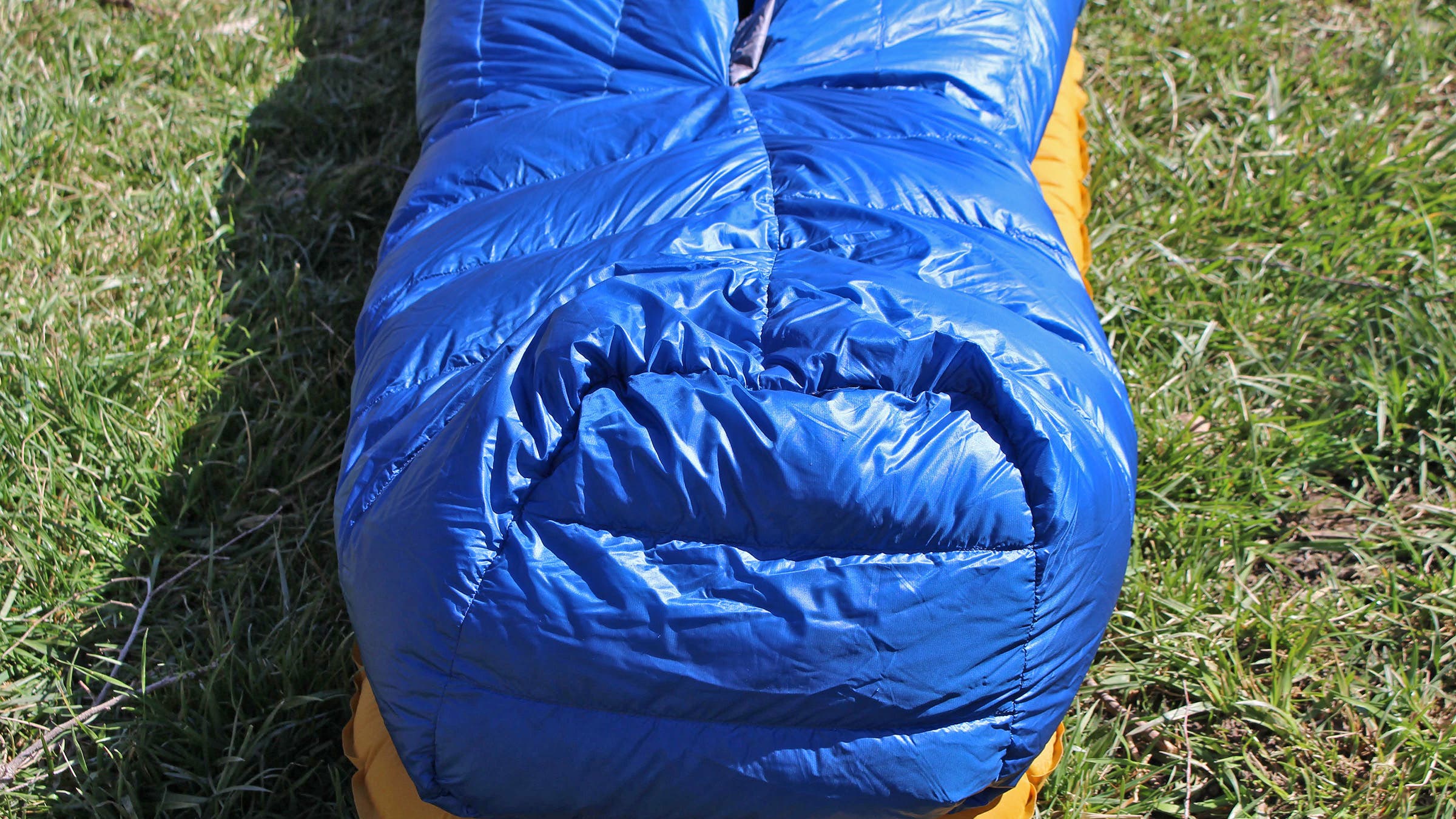
- Feathered Friends Flicker 30 ($529): This range of hoodless bags with full-length zippers is a versatile intermediate option between a quilt and a bag. They perform admirably, especially when temperatures are at or near the Flicker’s comfort rating, but our testers preferred the weight savings of a true quilt on most trips.
- El Coyote AlphaLite ($335): If you’re after a made-in-the-USA alternative to Cumulus quilts, look no further than the AlphaLite. Like Cumulus, El Coyote offers a bevy of custom options, from color to size to overfill. The only downside is the price, which is just slightly higher than the Cumulus range.
- Mountain Hardwear Ghoul ($775): This new 20-degree bag from Mountain Hardwear is very light (1 lb, 6 oz) and warm down to its temperature rating thanks to 950-fill down and heat-reflective fabrics. At $775, it’s also more expensive than our favorite 20-degree bags without offering any real upgrades. Look elsewhere, unless it’s on sale.
How to Choose an Ultralight Sleeping Bag or Quilt
Choosing a high-quality bag or quilt is a tough decision. It has a big impact on both your wallet and baseweight, and there are more options to choose from than ever. Here are some questions to consider before pulling the trigger.
Should I Buy a Bag or Quilt?
For fans of ultralight gear, choosing between a bag or a quilt is no easy call. The main difference to note is that a quilt does not have a bottom. Instead, the sides tuck between you and your sleeping pad, usually with the help of straps. At the limits of a quilt’s temperature rating, this can lead to a draftier and colder night of sleeping than a comparable bag. That said, modern quilts have features like pad attachment straps, differential cuts, and draft collars that go a long way to boosting cold-weather performance. While everyone’s tolerance of cold weather is different, our testing team generally agrees that quilts perform well in conditions down to about 20 to 25 degrees before the lack of insulation under the body and occasional drafts leave us wishing for a traditional bag instead.
In warmer conditions, the opposite is generally true. Using a quilt makes it easier to vent heat and prevent a sweaty night’s sleep compared to a zippered bag. Our side-sleeping testers also appreciate quilts, which allow them to shift tangle-free, while a sleeping bag might twist as they move throughout the night. If you’re looking for a do-it-all quilt or bag, remember that bags can also be unzipped and used as a quilt. There’s a sizeable weight penalty for the zipper and hood, but it’s a perfectly valid option if you like the security of a bag when temperatures drop.
If you’re making the move to a quilt, it’s worth considering that quilts usually offer more customization options, and getting these right might make the difference between whether you become a full-time convert. Here are a few things to consider:
The bottom of the quilt, or the “footbox,” can be constructed in different ways to prioritize warmth or versatility. The simplest option is a sewn footbox. Quilts with a sewn footbox are sewn together at the bottom, usually with a circular or square panel on the end to give it a three-dimensional shape. Sewn footboxes are generally about two feet in length, and you’ll be fully enclosed to about your knees (depending on your height.) These are the lightest and warmest style of footbox. The next option is a zippered footbox, which can be unzipped to lie flat. Quilts with zippered footboxes also have a cinch cord at the bottom (the zip will connect the edges, while the cord will gather everything together). Some zippered footboxes also have a draft tube to fill in the empty space created by the cinch cord. In general, zippered footboxes are heavier, not as warm, but allow the quilt to be used as a flat blanket in warm conditions.
Then there are pad attachment systems. Most quilts use a system of clips and straps to keep the edges of the quilt secured to your pad. Finding an attachment system you like is especially important when you’re near the temperature rating of your quilt.
There are several different types of straps, but our favorites have some stretch. The most common are either flat elastic webbing and wafer clips, or elastic cord and toggles. Less commonly, some quilts use static cord and toggles, simple fabric ties, or forego straps entirely (this last option is usually only found on quilts designed for use in hammocks). For three- or four-season use, look for straps that loop around the entire pad (rather than only the bottom of the pad). We’ve found that this style of strap offers more security and does a better job of blocking drafts. Some cottage brands that offer custom quilts will offer a strap system as an add-on, so be sure to check if it’s included.
In What Season(s) Will I Use the Bag?
Bags and quilts generally fall into three temperature categories: Summer (rated 30 degrees F and warmer); three-season (rated between 15 and 30 degrees); and winter (rated 15 degrees and lower—some expedition bags are rated as low as -40 degrees). These temperature ratings are based on “average” sleepers and don’t consider external factors like the thickness and rating of your sleeping pad; climatic factors like wind or humidity; or how quickly your body regulates heat loss or gain. Unless you know that you consistently sleep hot, we recommend buying a bag that’s rated 10 degrees warmer than your expected low. You can always open zippers, but you can’t make extra insulation appear out of nowhere.
What Is Fill Power and Fill Weight?
In addition to sleeping bag temperature ratings, fill power and fill weight are two statistics that can help you determine how a sleeping bag might perform. Often, the two terms are used interchangeably. As a result, they are often misunderstood.
Fill power is a metric—mostly used in reference to down insulation—that measures how much space a certain amount of insulation will occupy. For example, 800 fill power means that one ounce of down will loft enough to “fill” 800 cubic inches of volume. It’s important to note that fill power is a measure of down quality, not warmth. Higher fill power means that a sleeping bag manufacturer can use less down to fill a sleeping bag, but it doesn’t mean that every 800-fill power bag is warmer than every 650-fill power bag.
Fill weight is more straightforward. It’s a simple measurement of how much down is used in a product by weight. By itself, this also can’t tell you how warm a bag or quilt is, because fill power plays a part, too. However, once you account for both metrics, they’ll start to provide some useful information. If two sleeping bags have the same fill weight, it’s generally safe to assume that the one that uses higher fill-power down will be warmer. Likewise, if two bags both use 850-fill power down, the one with a higher fill weight is likely to be the warmer of the two.
What Type of Insulation Is Best for Me?
Down bags and quilts are generally warmer for their weight and more compressible than bags with synthetic insulation. But down bags get wet, take longer to dry out than synthetic bags, and —most importantly—lose insulating capacity when they take on water. Many manufacturers use down processed with a hydrophobic chemical that prevents it from absorbing as much water, while others keep the insulation dry with a water-repellant finish or fabric. In our experience, these are not perfect, and synthetic bags outperform down in consistently humid conditions.
How Much Space Do I Need?
Bags and quilts come in many shapes and sizes, but for ultralight consideration, sleeping bags are generally mummy-shaped. Some brands will offer two different bags that are identical in every way except for width. Other brands simply have regular and wide sizes of the same bag. Quilts and some ultralight bags don’t include hoods. When choosing a quilt, it’s important to figure out the proper length you’ll need. If you use the bag alone, it should be able to cover your face for extra comfort in cold weather. If you plan to pair a hoodless bag with an insulated jacket or standalone hood, you might be able to save some extra weight with a bag that only reaches your neck.
When it comes to quilts, it’s tempting to save some weight by choosing a narrower model. Unless you’re absolutely sure of the width you prefer, this is a risky choice. Quilts first came to popularity among hammock users, who pair a top quilt with an underquilt, and therefore don’t need as wide of a quilt as ground sleepers. Many quilts, especially from cottage makers, still offer narrow sizes that aren’t appropriate to use with a tarp or tent. For ground sleepers, quilts should be at least 54 inches wide at the shoulders, and many people, including anyone with wider than average shoulders or committed side sleepers, will be better off with a 60-inch width.
How We Test
- Number of Testers: 15
- Number of Bags and Quilts Tested: 38
- Number of Nights Slept Outside: 178
- Coldest Night: 14
- Warmest Night: 78
Every year, we gather the latest sleeping bags and quilts from ultralight brands both big and small. Once testing begins, it’s all about one thing: sleeping outside as often as possible. This year’s testers ranged from experienced thru-hikers to brand-new backpackers, and we took trips in Alaska’s Denali National Park, little-known state parks in Pennsylvania, and many places between and beyond—ten states and three countries in total.
During testing, our team takes detailed notes about everything, from minute details like fabric and zipper quality to important questions like, “Will this keep you warm in sub-freezing temperatures?” In all, our reviews take into account comfort, ease of use, warmth, durability, and price.
Meet Our Testers
Nathan Pipenberg is our category manager for backpacking sleeping bags, pads, and trekking poles. He’s also Backpacker’s ultralight columnist, an AT thru-hiker, and a one-time trail builder and wildland firefighter. He enjoys making his own backpacking gear in his free time.
Dorn van Dommelen is a geography professor who lives in Anchorage, Alaska. His outdoor exploits include backpacking, orienteering, and putting his GIS skills to use for community mapping projects.
Bruce Etter is an AT and PCT thru-hiker who now lives near the White Mountains in Bethlehem, New Hampshire.


