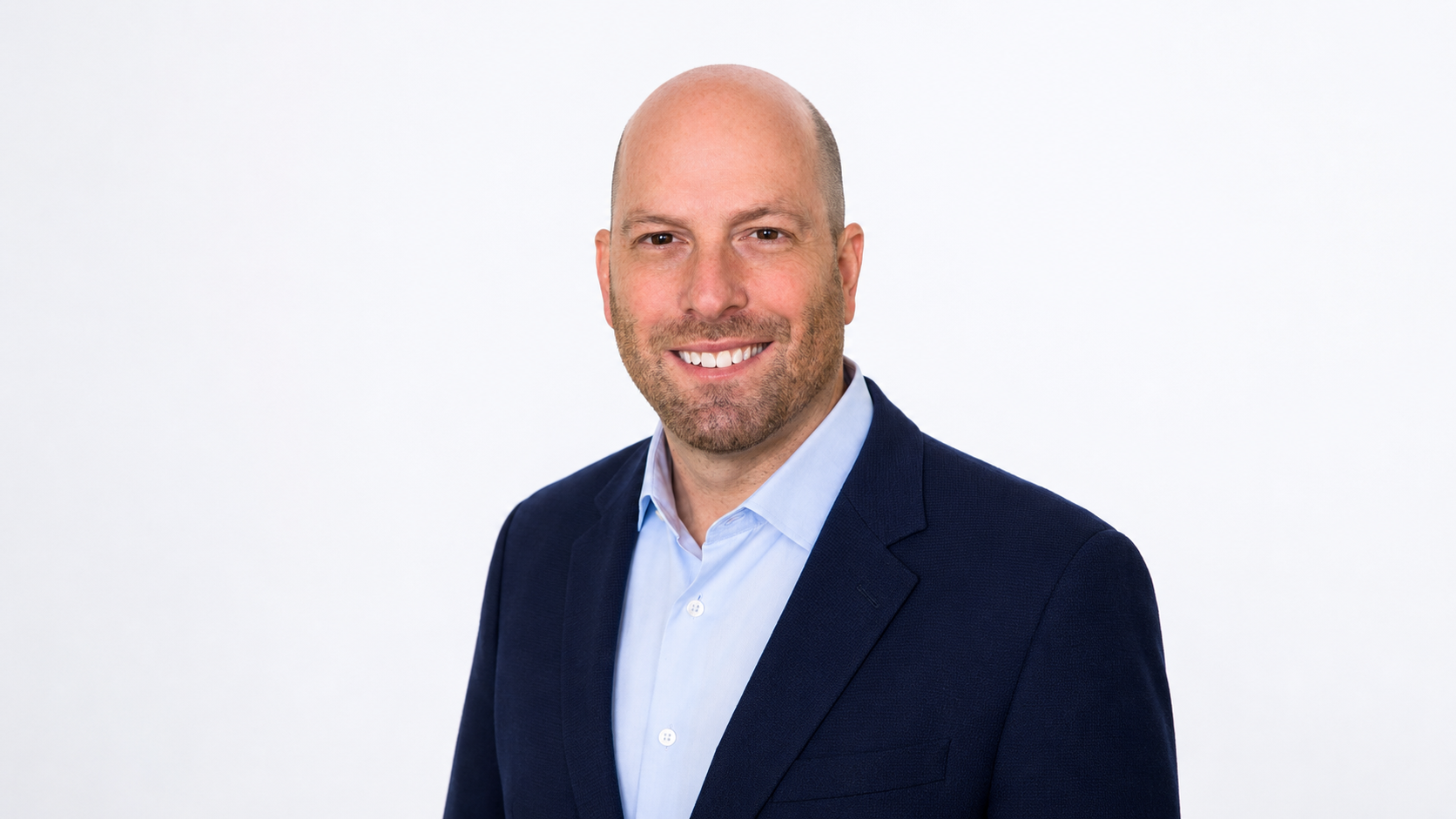
Adam Gross, Co-Founder and CEO of HarmonEyes, is a serial entrepreneur with nearly three decades of experience building and scaling technology-driven businesses across healthcare, financial services, and data analytics. He co-founded RightEye in 2013, developing an eye-tracking technology platform used across healthcare, professional sports, and military performance applications, before co-founding HarmonEyes with Dr. Melissa Hunfalvay in 2024 to extend that expertise into AI-powered human-state intelligence. Earlier in his career, Gross co-founded healthcare cost-containment company KeyClaims, which was acquired by Stratose/Zelis Healthcare in 2012, and financial analytics platform Trending123.com, acquired by InvestorPlace Media in 2007. He also founded financial technology company KeepMore and co-founded Eastern ATM, which operated a private ATM network across the U.S. East Coast before being acquired in 1998.
HarmonEyes is developing Theia, an AI foundation model designed to infer aspects of a person’s cognitive, emotional, and physical state from eye movements in real time. The technology can measure signals including cognitive load, attention, mental readiness, fatigue, stress, distraction, motion sickness, and user authentication, with potential applications spanning AI assistants, automotive systems, extended reality, defense, healthcare, education, industrial safety, gaming, and market research. Theia is designed to operate at the edge on ordinary camera-equipped devices without requiring specialized eye-tracking hardware, with HarmonEyes stating that video and personal data are not stored. The company traces its technology back to RightEye and says its models draw on more than 585 billion eye-movement data points across 16.3 million records, providing a large proprietary dataset for training and refining its human-state intelligence technology.
You co-founded RightEye in 2013 and spent more than a decade developing eye-tracking technology for healthcare, sports, and military applications before launching HarmonEyes in 2024. What convinced you that this underlying technology and dataset could support a broader foundation model for human-state intelligence, and why was HarmonEyes the right vehicle for that vision?
With more than a decade of experience developing eye tracking products for a variety of fields, there were three changes that prompted our vision for HarmonEyes to bring human state intelligence to billions of devices:
- Over the past decade we have procured the largest validated and labeled eye-tracking database, which includes over 130 datasets spanning demographics (e.g., age, sex), performance, attention, emotion, vision and health conditions, etc.
- With the proliferation of AI, techniques to train real-time models were suddenly available to us – and we had the data to train them.
- Eye-tracking signals are captured by cameras. Recently, and for the first time ever, consumer grade cameras became better, faster, cheaper and powerful enough to extract these signals. Through our team’s innovations, we can now deploy eye-tracking models on any camera-based device, including laptops, phones, tablets, automobiles, etc.
Ofcom has distinguished behavioral age inference, which requires observing how someone uses a platform, from age checks that can work before access is granted. How does estimating age from eye movement differ technically and ethically from analyzing browsing history, content preferences, language, or other behavioral signals?
Our technology only requires a small sample of eye movements from a subject to place an individual in an age range or to confirm someone is younger/older than a specific age. We are able to collect eye movement data passively, continuously, and non-invasively without storing or collecting any personally identifiable information. Furthermore, all eye-tracking data is destroyed once the outputs are delivered. We also have the capability to perform liveness detection and spoof protection, thus assuring people cannot game the system.
Ethically, this means we are not profiling a person’s behavior, habits, decisions, or preferences—unlike behavioral inference, which by definition builds a picture of someone from how they act over time. We deliver age assurance without collecting or retaining that kind of personal information, so users and parents can be confident they are being protected rather than tracked or profiled.
HarmonEyes’ published research analyzed eye movements from 45,696 people and reported 94.67% classification accuracy across 12 age groups. What exactly does that accuracy figure measure, and how much additional validation is required before the model can reliably determine whether someone falls above or below a specific threshold such as age 16?
The accuracy measures any person’s data added to the dataset and 94.67% of the time that person’s eye movements will correctly categorize the age group they are in (out of 12 groups). The ability to measure above or below 16 years of age is less burdensome than identifying a specific age range. However, the data used for the study excluded people with vision disorders or neurological conditions so additional validation needs to include people with certain non-functional eye movements.
Can you walk us through what happens technically when a developer calls Theia’s age-estimation capability, from capturing eye movement through an ordinary camera to returning an age-range result, and explain which stages occur entirely on the user’s device?
The camera first calculates the gaze vectors, which help determine where the user is looking. These gaze vectors are then processed through our SDK where they are converted into eye tracking features, such as velocity (how fast the eyes are moving) and fixations (where the eyes are focusing).
Once these features are generated, they are fed to our ML and AI algorithms to determine the user’s age-range.
All of this processing is edge-based and can be performed directly on a user’s device or, depending on the deployment strategy, in the cloud.. No raw eye-tracking data is retained; it is discarded immediately after each output is generated.
Age estimation systems can perform differently depending on lighting, camera quality, glasses, contact lenses, eye conditions, disability, ethnicity, and the user’s proximity to the device. How are you testing Theia across these variables, and what evidence will developers receive regarding accuracy for different populations and environments?
It is true that age estimation accuracy varies depending on conditions . To deliver age assurance models to the general population, HarmonEyes tests, validates, and reports results transparently so that Theia is used responsibly. This includes expanding and generalizing our models using larger and more diverse datasets.
- We provide guidance on the accuracy rates and if, for example, low data sampling rates impact age assurance output latency.
- Consideration and real-time monitoring for many aspects of data quality.
How will Theia defend against circumvention attempts such as prerecorded video, photographs, synthetic faces, an older sibling completing the check, or a user deliberately altering their gaze, and will liveness detection be built directly into the software development kit?
All HarmonEyes age assurance models will include liveness detection and spoofing checks. Eye movements are unique to an individual and HarmonEyes is able to determine if the eye movement for an account matches the person who set up the account, or is a different person, an older sibling for example.
No age-estimation model will be perfectly accurate, particularly for users close to a legal threshold. How should developers handle uncertain results, and do you envision Theia being used as the primary check, a risk signal, or part of a layered process that escalates certain users to another verification method?
No age estimation model is perfect. We provide a confidence level with every result.. This level of accuracy and confidence may be enough to confirm age assurance. However, if for example the confidence level for a specific measurement is below a certain level, it could be used as a way to trigger a secondary verification. Our age assurance model may be used as one of a number of methods to validate an individual’s age, where multiple methods must be passed. Finally, risk tolerance and if the use case requires a specific age, versus an age range, or even an age threshold (e.g. 16 or younger) then this will determine if the solution is a primary check or a layered process.
HarmonEyes says Theia processes information at the edge and discards eye-tracking data once an output is delivered. How can developers, auditors, or regulators independently verify that architecture, and how will the company improve its models without collecting raw eye-tracking data from deployed applications?
Our model development process, and subsequent model improvement, is performed within our proprietary eye-tracking pipeline. We do not utilize customer data for this – we use existing (and growing) validated data.
This allows us to deliver our solutions at-the-edge (no cloud) if desired. Under these edge-based environments, compute and storage are usually constrained and there is no ability to store data on device. We deliver our age assurance outputs every second – and our policy is to destroy eye-tracking data every second (after each output is delivered).
We recognize that architectural claims are only as credible as the ability to confirm them externally. We are pursuing third-party certifications and attestations designed to let developers, auditors, and regulators verify that eye-tracking data is not collected or retained in deployed applications.
The United Kingdom is developing criteria for highly effective checks, while the European Union is emphasizing anonymous proof-of-age systems that disclose as little personal information as possible. How will HarmonEyes demonstrate that physiological age estimation meets these emerging requirements rather than simply introducing a different form of biometric surveillance?
Each model we ship comes with a white paper documenting development methodology, model accuracy, and known limitations, and we make Theia available for live, remote testing so regulators or auditors can evaluate real-world performance directly.
As age assurance moves from individual social platforms toward operating systems, app stores, and device-level infrastructure, where do you believe Theia should sit in that technology stack, and what would responsible adoption look like across consumer apps, gaming, social media, and other age-restricted services?
We are pursuing many types of integrations for our age assurance capability. We envision Theia operating within a company’s private tech stack such as a social media platform; within device infrastructure,such as an operating system; within commerce infrastructure, such as a payment network; or directly at the app level.
To us, responsible adoption means delivering accurate age assurance capability with transparency of the validation processes, data diversity within the model, and delivering this in a way that is private and cost effective to deploy.
Thank you for the great interview, readers who wish to learn more should visit HarmonEyes.


